Wednesday, September 10, 2008

Obama Served On Board That Funded Pro-Palestinian Group By Aaron Klein

Source: http://www.jewishpress.com/content.cfm?contentid=30283

Feb 27 2008


JERUSALEM - Democratic presidential frontrunner Sen. Barack Obama served as a paid director on the board of a nonprofit organization that granted funding to a controversial Arab group that mourns the establishment of Israel as a "catastrophe." (Obama has also reportedly spoken at fundraisers for Palestinians living in what the United Nations terms refugee camps.)


The co-founder of the Arab group, Columbia University professor Rashid Khalidi, is a harsh critic of Israel who reportedly worked on behalf of the Palestine Liberation Organization when it was labeled a terror group by the State Department.


Khalidi held a fundraiser in 2000 for Obama's failed bid for a seat in the U.S. House of Representatives.


In 2001, the Woods Fund, a Chicago-based nonprofit that describes itself as a group helping the disadvantaged, provided a $40,000 grant to the Arab American Action Network, or AAAN, at which Khalidi's wife, Mona, serves as president. The Fund provided a second grant to AAAN for $35,000 in 2002.


Obama was a director of the Woods Fund board from 1999 to Dec. 11, 2002, according to the Fund's website. According to tax filings, Obama received compensation of $6,000 per year for his service in 1999 and 2000.


The $40,000 grant from the Woods Fund to AAAN constituted about a fifth of the group's reported grants for 2001, also according to tax filings. The $35,000 Woods Fund grant in 2002 made up about one-fifth of AAAN's reported grants for that year as well.


Headquartered in the heart of Chicago's Palestinian immigrant community, AAAN describes itself as working to "empower Chicago-area Arab immigrants and Arab Americans through the combined strategies of community organizing, advocacy, education and social services, leadership development, and forging productive relationships with other communities."


Speakers at AAAN dinners and events routinely have taken an anti-Israel line. The group co-sponsored a Palestinian art exhibit, titled "The Subject of Palestine," that featured works related to what Palestinians call the "nakba" or "catastrophe" of Israel's founding in 1948.


The theme of AAAN's Nakba art exhibit, held at DePaul University in 2005, was "the compelling and continuing tragedy of Palestinian life ... under [Israeli] occupation ... home demolition ... statelessness ... bereavement ... martyrdom, and ... the heroic struggle for life, for safety, and for freedom."


Another AAAN initiative, "Al Nakba 1948 As Experienced by Chicago Palestinians," seeks documents related to the "catastrophe" of Israel's founding.


Although AAAN co-founder Rashid Khalidi has at times denied working directly for the PLO, he reportedly served as director of the official PLO press agency WAFA in Beirut from 1976 to 1982, a period during which the PLO committed scores of anti-Western attacks and was labeled by the U.S. as a terror group. Khalidi's wife, Mona Khalidi, reportedly was WAFA's English translator during that period.


Khalidi also advised the Palestinian delegation to the Madrid Conference in 1991. During documented speeches and public events, Khalidi has called Israel an "apartheid system in creation" and a "racist" state. Critics have accused him of excusing Palestinian terrorism, a charge he denies.


He dedicated his 1986 book, Under Siege, to "those who gave their lives ... in defense of the cause of Palestine and independence of Lebanon."


While the Woods Fund's contribution to Khalidi's AAAN might be perceived as a one-time contact with Obama, there is evidence of a deeper relationship between the presidential hopeful and Khalidi.


According to a professor at the University of Chicago who said he has known Obama for 12 years, the senator first befriended Khalidi when the two worked together at the university. The professor spoke on condition of anonymity. Khalidi lectured at the University of Chicago until 2003; Obama taught law there from 1993 until his election to the Senate in 2004.


Asked during a radio interview with this reporter on WABC's John Batchelor program about his 2000 fundraiser for Obama, Khalidi said he "was just doing my duties as a Chicago resident to help my local politician."


Khalidi said he supports Obama for president "because he is the only candidate who has expressed sympathy for the Palestinian cause."


Khalidi also lauded Obama for "saying he supports talks with Iran. If the U.S. can talk with the Soviet Union during the Cold War, there is no reason it can't talk with the Iranians."


Concerning Obama's role in funding AAAN, Khalidi claimed he "never heard of the Woods Fund until it popped up on a bunch of blogs a few months ago." He terminated the interview when pressed further about his links with Obama.


Contacted by phone, Mona Khalidi refused to answer questions about AAAN's involvement with Obama.


The Obama campaign did not reply to a list of questions sent by e-mail to the senator's press office.


In addition to questions about his relationship with Khalidi, Obama may face increased scrutiny over his ties to William C. Ayers, a member of the Weather Underground terrorist group that sought to overthrow the U.S. government and took responsibility for a string of bombings in the early 1970's.


Obama served on the Woods Fund board alongside Ayers (who is still on the board). Ayers, a professor at the University of Illinois at Chicago, has written about his involvement with the Weather Underground's bombing of U.S. governmental buildings including the Capitol in 1971 and the Pentagon in 1972.


Although charges against him were dropped in 1974 due to prosecutorial misconduct, Ayers told a newspaper reporter several years ago that he had no second thoughts about his violent past. "I don't regret setting bombs. I feel we didn't do enough," Ayers told The New York Times in an interview published, ironically, on Sept. 11, 2001.


In his memoir, Fugitive Days, Ayers wrote: "Everything was absolutely ideal on the day I bombed the Pentagon" - though he continued with a disclaimer that he didn't personally set the bombs but his group placed the explosives and planned the attack.


Besides serving with Obama on the board of the Woods Fund, Ayers contributed $200 to Obama's senatorial campaign fund and has served on panels with Obama at several public speaking engagements.

Social (In)security

Source: http://www.ibdeditorials.com/IBDArticles.aspx?id=305852438594528

By INVESTOR'S BUSINESS DAILY | Posted Tuesday, September 09, 2008 4:20 PM PT


Election '08: The country could use an honest debate on Social Security, particularly in an election year. From comments made over the weekend, though, it's clear that Barack Obama is not the man to provide it.


Read More: Election 2008 | Budget & Tax Policy


Speaking Saturday via satellite to an AARP group, Obama, who might not always know what city he's in or how many states make up the union, but knew well to whom he was talking, warned that his opponent John McCain would "gamble" their retirements by privatizing Social Security.


As if teleprompted on cue, he said that McCain embraces "George Bush's failed privatization scheme."


And with those comments, honesty left the building.


Bush's Social Security privatization plan is not a failed policy. It cannot be "failed" because it has never been tried, with the exception of three Texas counties where private systems are flourishing.


The president once had Washington talking about a partially privatized system in which Americans would voluntarily place a part of their retirements into private accounts. But the plan never became law, thanks to congressmen from the party of Obama who were in lockstep opposition, and some squishy Republicans.


What we are left with is a Social Security system that in nine years will begin to pay out more in benefits than it takes in via the payroll tax. By 2041, the "trust fund" will be exhausted and the system broke — unless Congress follows a plan such as Obama's, in which case the majority of Americans will be broke because the tax hikes needed to fund benefits will wreck the economy.


But that's not the case in Chile, which reformed its public pension system in 1980. Legislation passed that year let workers opt out of the government-run system that is funded by a payroll tax and instead deposit a piece — at least 10% — of their earnings into a personal retirement account.


The average return has been about 10% a year and 95% of the Chilean workers opt for the private system. They are free to stay in the government scheme, but it's not unusual to hear them say they are happy with their private accounts. But then the 95% participation rate says as much. And it destroys, as well, the Democrat-media complex argument that the system's flaws are being exposed.


Great Britain, with a newer system, set up in 1986, has also had success with personal accounts, as has Australia, Sweden and numerous other nations.


Obama complained Monday the Republicans are "shameful" for the way they have characterized his effete approach to terrorism.


But what could be more shameful than forcing Americans to pay into a retirement system in which the return on investment is a mere 2%?


Even worse, we have to pay a larger ratio of our earnings — 12.4% when employers' "shares" are included — than the Chileans, whose return on investment is likely to be five times higher.


Obama, possibly the next U.S. president, has decided that Americans can't have the same freedom to choose as Chileans, Britons, Australians and others. Those who support the "progressive" candidate in this race need to know that less freedom is not progress.

Tuesday, September 09, 2008

Swing Vote (2008) movie trailer

Source: http://www.youtube.com/watch?v=vtTHkZBxY-o&feature=related


SWING VOTE follows the story of Bud Johnson (KEVIN COSTNER), an apathetic, beer-slinging, lovable loser, who is coasting through a life that has passed him by. The one bright spot is his precocious, over-achieving twelve year-old daughter Molly. She takes care of both of them, until one mischievous moment on Election Day, when she accidentally sets off a chain of events which culminates in the election coming down to one vote… her dad’s.

An American Carol - Official Trailer

An American Carol - Official Trailer


Description: From the director of "Airplane!" and "The Naked Gun" comes a right-thinking, side-splitting comedy about a cynical, anti-American filmmaker who is on a crusade to abolish the 4th of July... until he's visited by three spirits who take him on a hilarious journey in an attempt to show him the true meaning of America.

Sojourning Socialists

Source: http://www.ibdeditorials.com/IBDArticles.aspx?id=305851942725035

By INVESTOR'S BUSINESS DAILY | Posted Tuesday, September 09, 2008 4:20 PM PT


Election '08: Barack Obama has joined forces with a white socialist he calls a "good friend" — the Rev. Jim Wallis, founder of "Sojourners." He too believes in "liberation theology," sans the black nationalism. In fact, Wallis is the white version of Jeremiah Wright, sans the black rage.


IBD Series: The Audacity Of Socialism


In addition to publishing "Sojourners" magazine, Wallis runs Call to Renewal — a network of liberal churches and activist groups "committed to ending poverty and racism."


Wright once joined Wallis at the U.S. Capitol in an anti-poverty "preach-in" sponsored by Call to Renewal.


Jim Wallis is more eloquent than Obama's former mentor, Jeremiah Wright, but preaches the same anti-American message.

Jim Wallis is more eloquent than Obama's former mentor, Jeremiah Wright, but preaches the same anti-American message.


Wallis and his Washington-based operation have essentially replaced Wright and his militantly Afrocentric Chicago church, which Obama expediently dumped in the heat of the primary race after videos surfaced of his fire-breathing preacher damning America.


The avuncular, noncombative Wallis offers Obama a voting bloc that Wright could never help deliver: white Christian evangelicals, if in Birkenstocks.


At the Democratic National Convention in Denver, Obama tapped Wallis to oversee the drafting of the faith-based plank of the party platform (which, by the way, champions outreach programs for "ex-offenders").


"This is a very faith-friendly convention," Wallis said. "I think Democrats have really gone through an important change." But their newfound faith is not one most mainline Christians would even recognize, let alone embrace.


Like Wright and Obama, Wallis believes that biblical faith compels radical social action. Their political ministry is called the "social gospel," but it's really just socialism dressed up in a cheap tunic. They refuse to separate personal faith from political activism, whether at home or abroad.


In the '80s, for example, Wallis and Wright rallied to the cause of the communist regime in Nicaragua, and protested the U.S. arming of the Contra rebels. Wallis, in fact, marshaled thousands of "Witnesses for Peace" and joined them in Nicaragua, making it known they were willing to take a bullet to stop the anti-communist insurgency.


Wallis is more eloquent than Wright, but he preaches the same anti-American message. According to discoverthenetworks.org, he once called the U.S. "the great power, the great seducer, the great captor and destroyer of human life, the great master of humanity and history in its totalitarian claims and designs."


Like Obama, Wallis got his start in Chicago, where he too was involved in community organizing. He forged ties with black gang leaders, including at least one known cop-killer.


While agitating in Chicago, Wallis published a newspaper called the "Post-American," which was printed by the same radicals who put out the Black Panther paper. Now in D.C., he presides at funerals of gangbangers and runs a commune in the ghetto that romanticizes blight and mocks efforts at urban renewal.


"I don't know which is the worst evil," he said in a 1994 interview with the Los Angeles Times magazine, "the crackhouse or the gentrified house."


Wallis agrees with Obama that American racism and capitalism are to blame for inner-city poverty, and echoes his oft-repeated call for "economic justice." They share a spread-the-wealth vision, including subsidizing the working poor beyond expanded tax credits and minimum-wage hikes.


"The Bible says prosperity has to be shared," Wallis said in a January 2000 interview with IBD. "It's very simple."


"So far the rising tide is lifting all the yachts, but not the boats the poor inner-city kids are in," he said, adding that the stock market has created a "casino economy."


Wallis likes to think of himself and his sojourners as "progressives." But "they're really just socialists," said David Kelley, director of the Objectivist Center in New York.


Wallis may couch his Bolshevist views today. But in 1979, he was quoted in the journal "Mission Tracks" saying he hoped that "more Christians will come to view the world through Marxist eyes."


Obama is one who's seen the light. While delivering the keynote address for Wallis at his Call to Renewal 2006 conference in Washington, he condemned the "idolatry of the free market" and professed: "I believe in the power of the African-American religious tradition to spur social change."


Wallis says Obama is the kind of leader he's been searching for, one who's "responsive to social movements." "Barack Obama talks about 'being our brother's keeper' and how he finds a faith that does justice to be compelling to him," he said in a recent interview.


But it's not just "movements" that Wallis has in mind. He recently wrote the foreword to a leftist book titled, "The Revolution: A Field Manual for Changing Our World."


Wallis is also an anti-military pacifist who fasted for 47 days to protest last decade's popular Gulf War.


Like his fellow traveler Obama, he believes 21st Century America is guilty of "structural injustice and social oppression" aimed at blacks. His Sojourners magazine features radical professor Cornel West as a contributing editor. West, a black Marxist, is working as an adviser to Obama's campaign.


Wallis put another radical professor, James Cone, on his Sojourners editorial board. Cone is Wright's mentor and the father of black liberation theology, a Marxist version of Christianity that worships a white-hating black Jesus.


"Together," Cone said, "black religion and Marxist philosophy may show us a way to build a completely new society."


Wallis, who once regularly attended black liberation churches in his hometown of Detroit, has no problem with that. He says his mission is to "sojourn with others in different faith and traditions" toward a common goal of "social justice."


Now he's hoping to sojourn his way into the White House with Obama, whose favorite scripture happens to be a verse from Chronicles referencing sojourners: "For we are strangers before thee, and sojourners, as were all our fathers." (He quotes from it in his first memoir; in fact, it sits strangely alone on what should be his dedication page.)


Such foes of capitalism and apologists for communism belong in communes, not national leadership. Better they sojourn their way completely out of American politics.

Think Again: Bush’s Legacy By David Frum


Source: http://www.foreignpolicy.com/story/cms.php?story_id=4426

September/October 2008


He may be the most unpopular president in modern times: a reckless, unilateralist cowboy. But history will be kinder to George W. Bush than contemporary caricatures. After eight years, he leaves behind much more than a defeated dictator in Iraq. Closer ties to India, a pragmatic relationship with China, and the pressure he applied to Iran will pay dividends for years to come.

“Iraq Is Bush’s Only Foreign-Policy Legacy”


Hardly. There’s no denying that the war in Iraq has defined the presidency of George W. Bush in important ways. But history is unlikely to remember the war as negatively as most assume.


It’s now likely that the war will stagger to an inconclusive ending. The insurgency will shrink but not disappear. The government will function but will be divided. The U.S. military presence will be reduced but not entirely withdrawn. And Iraq’s neighbors will be bruised but their geopolitical policies will stay intact. Yet, by overthrowing Saddam Hussein and replacing him with a nonaggressive, albeit weak, elected regime, the United States will have achieved a real improvement in the region. It will have come at a high cost in money and lives. But it will also falsify the worst predictions of the war’s opponents. As the Iraq war recedes into history, it will come to be seen more like the frustrating Korean conflict, or the Philippine insurrection, rather than the debacle of Vietnam. It will be an important part of Bush’s legacy, but hardly all-defining.


As time passes, other crucial decisions of the Bush years will come into sharper focus. Among the most important will be the formation of a U.S.-India military alliance. Under Bush, the United States and India (along with Australia, Japan, and Singapore) have begun joint naval exercises. The United States and India signed a treaty to share nuclear materials in 2007. The United States is offering India fighter planes, warships, and other equipment sales that could total as much as $100 billion during the next 10 years. Otto von Bismarck once famously predicted that the most important geopolitical fact of the 20th century would be that the United States and Britain spoke the same language. Now, the values shared by the United States and India may emerge as the most important geopolitical fact of this century.


Other foreign-policy legacies of the Bush years include the signing of new bilateral trade agreements, the world’s first convention on cybercrime, the wise decision to give Hugo Chávez enough rope to hang himself, and the continued successful management of the U.S.-China relationship. Conversely, if Iran is allowed to follow North Korea into the nuclear weapons club, it could well be the failure to act against the other two thirds of the “axis of evil,” not the willingness to act in Iraq, that will be regarded as the most important decision of the Bush years.


“The Iraq War Has Made America Less Safe”


Prove it. In the two decades leading up to Bush’s presidency, the United States and its allies were struck by a rising number of increasingly ambitious, aggressive, and deadly terrorist attacks. The hijacking of TWA Flight 847 in 1985. The Berlin disco bombing in 1986. The Buenos Aires bombings in 1992 and 1994. The assassination of Kurdish exiles in Berlin in 1992. The World Trade Center bombing in 1993. The Paris subway bombings in 1995. The plots to attack New York monuments and Pacific Ocean jetliners in 1995. The Khobar Towers bombing in 1996. The East Africa embassy bombings in 1998. The USS Cole in 2000. 9/11.


Now compare that with the period since the invasion of Iraq. Since 2003, former state sponsors of terrorism have behaved much more cautiously. Libya, for instance, has retired from the business altogether. Where terrorism has existed outside the Middle East, it has steadily declined in both effectiveness and sophistication. The Madrid bombing of 2004 was less sophisticated than 9/11. The London subway bombings in 2005 were less sophisticated than Madrid. And the plots foiled in Germany, in Canada, and at Heathrow Airport in the summer of 2006 were all less sophisticated than the London bombings.


The U.S. homeland has enjoyed almost complete immunity from acts of international terrorism, and the plots that have come to light have been reassuringly amateurish in their conception and attempted execution. Even in the Islamic heartland, terrorism is waning. Abu Musab al-Zarqawi’s attack on a wedding at a Jordanian hotel in 2005 soured Arab Middle Easterners on the al Qaeda movement. Al Qaeda’s commanders in Iraq have publicly acknowledged that their bloodthirsty tactics have alienated local residents—and left their movement in dire straits. It would be absurd to attribute this improving trend line solely to President Bush. But it would be equally absurd to deny that things are improving.


“Bush Has Wrecked America’s Alliances”


Wrong. Yes, the Western alliance system is in trouble. But it was in trouble well before Bush. NATO’s tensions, for instance, were already noticeable during the Balkan crisis in the late 1990s. And remember that President Bush was met with mass protests on his first European trip in the summer of 2001—before either 9/11 or the war in Iraq. Among the issues irking the United States’ allies then was Bush’s decision not to stay the execution of Timothy McVeigh, the terrorist who killed 168 Americans by detonating a truck bomb outside the Oklahoma City federal building in 1995. It would be far more accurate to say that American unilateralism is a symptom of alliance troubles rather than a cause.


Many have argued that the Bush administration somehow squandered Europe’s goodwill toward America by going it alone in Iraq. Not so. Polls conducted in the weeks after 9/11, well before the Iraq war, showed that only about one sixth to one quarter of Europeans supported the use of force against state sponsors of terrorism. That did not prevent NATO from approving the mission in Afghanistan—the first conflict approved under Article 5 of the NATO charter. It has, however, made it difficult to gain serious commitments for NATO troops from many member countries. And the reason NATO must ask for those extra troops in the first place is that all too many of the European troops already deployed in Afghanistan have been carefully positioned out of harm’s way. Even those allies who have sent troops to Afghanistan often insist on rules of engagement that preclude almost all serious missions.


There were many instances of tactlessness in the Bush years. The administration too often lost sight of the value of diplomatic decorum. But every American president, Bush included, always prefers to work with allies, if only for the political cover they can provide. That’s why Bush worked through the six-party talks to tackle North Korea’s nuclear ambitions and through the “Quartet” to address Israel-Palestine. And it is why he has put a smiling face on his assurances that Arab allies have done everything America has asked them to do in the fight against terrorism. If anything, it can be argued that Bush has been overly influenced by allies, at least certain allies. From 2003 to 2006, he outsourced Iran policy to Britain, France, and Germany. Today, the United States’ Iran policy is largely driven by the anxieties and political needs of its Sunni-majority Arab allies in the Middle East. Similarly, Bush’s North Korea policy has retreated from red line to red line, in deference to South Korea.


“Bush Has Pushed Democracy Over All Else”


False. It’s fair to say the president’s rhetoric on democracy has sometimes soared into the empyrean. Actions, however, have not followed words. In Egypt, Pakistan, and Saudi Arabia, the Bush administration has followed a very traditional American policy that attaches relatively little importance to democracy promotion. The same can be said of Iraq, in fact. The war there was fought for a very traditional balance-of-power reason: to overthrow a hostile and dangerous regime believed to be seeking weapons of mass destruction.


The debate over democratization in the Middle East is basically a debate over the causes of extremism. Antidemocratizers see Middle Eastern extremism as a response to grievances arising from the encounter between the Middle East and the West. It is best met, they argue, by some form of conciliation. In practice, this usually means the pursuit of Palestinian statehood. Democratizers, on the other hand, have stressed that extremism originates from dysfunctions within the Middle East itself: tribalism, authoritarianism, and corruption. They argue it can only effectively be addressed by internal reforms. Democratizers have tended to be skeptical of Palestinian statehood. As they see it, extremism is often deliberately stoked by Middle Eastern governments for their own ends, and the creation of a Palestinian state that is anything less than wholeheartedly moderate will most likely exacerbate rather than mitigate the region’s instability and violence. In this debate, the Bush administration has subtly but unmistakably shifted its alignment. Having begun in 2002 by arguing that Palestinian statehood should follow Palestinian reform, it has now reversed itself to pursue Palestinian statehood as a precondition of reform.


Democracy has of course been an important priority for Bush, as it was for most of his predecessors. And like them, the president was often obliged to subordinate that priority to other concerns. In his policy toward Libya, the president put disarmament ahead of democratization. In China, he has followed past policy by emphasizing stability and trade over political reform. An increasingly authoritarian Russia remains a welcome eighth in the club formerly known as the G-7, despite having an economy that now ranks behind those of China and India, who remain uninvited. Nor has Bush hesitated to levy powerful threats to deter Taiwan from asserting its right to self-government. That is hardly the pursuit of democratization above all else.


“While Bush Was Distracted, China Surged”


Not exactly. If the U.S. economy continues to grow at its recent average of 3 percent a year, even a booming China will not overtake U.S. GDP for half a century. If China’s growth rate slows, the moment of “catch up” recedes even further into the future. Such a slowdown seems inevitable. China’s financial sector is rickety to the point of collapse, inflation is accelerating, and the country is quickly bumping up against the limits of low-wage manufacturing. Energy and water shortages are rampant. Environmental degradation is escalating into a serious political issue. Political tensions between the central and regional governments are intensifying. And, very soon, China’s aging population will have to leave work and begin tapping into its savings. Even if China somehow escapes the laws of economic gravity, what precisely is an American president to do about it? Try to stunt China’s growth? How? And to what end?


Unlike its economic growth, China’s strategic assertiveness is a proper American concern. Here the Bush administration acted both decisively and prudently, continuing the long-standing U.S. policy of hoping for the best and preparing for the worst. It cultivated closer strategic ties with Australia, India, Japan, Singapore, and other regional powers, including Vietnam. U.S. warships now once again call at Cam Ranh Bay. If China decides to act out, it will soon find itself hemmed in, thanks in part to these relationships—a reality that is all the more acute thanks to recent elections in Japan, South Korea, and Taiwan that have brought pro-American leaders to power. Bush is bequeathing to his successor an Asian strategic environment much friendlier to the United States than the one he inherited.


“America Has Never Been More Hated”


Says who? On what basis could one even begin to decide whether such a statement is accurate? Global opinion surveys are inexact, to put it mildly. A survey of international public opinion by the Pew Research Center, for example, suggests that one fifth of the population of Spain changed its view of the United States in the 12 months between the spring of 2005 and the spring of 2006. Any polling expert knows that strongly held views do not shift that rapidly. A number that bobs up and down reflects, at best, a transitory impression, if not statistical noise. Outside the developed world, in poor countries that are predominantly rural and illiterate, such global public-opinion surveys tell us even less.


Even if we choose to believe these assessments, what they mostly tell us is that the United States faced serious image problems well before Bush. The Gallup Organization conducted a wide survey of Islamic public opinion between December 2001 and January 2002. It found that a majority of those surveyed regarded the United States unfavorably, with Pakistan, Saudi Arabia, and Iran being the most hostile. Significant numbers regarded the 9/11 attacks as justifiable. Barely one fifth of those surveyed accepted that the 9/11 attacks were carried out by Arab men—two thirds denied it outright. In Saudi Arabia, the government refused to allow the question to be asked at all.


Americans like to tell themselves that the world rallied in sympathy to the murder of some 3,000 Americans on Sept. 11, 2001. In fact, the attacks triggered a spasm of delight across the Middle East. The Middle East Media Research Institute has compiled an archive of grisly press clippings. Many of the worst come from Egypt, a key Middle Eastern ally. In an Islamist opposition newspaper, columnist Salim ’Azzouz wrote, “We have been prohibited from showing the happiness and joy that we feel, so as not to hurt the Americans’ feelings—although, in this case, rejoicing is a national and religious obligation.” This kind of malignancy has deeper roots than any one president.


“The Next President Will Radically Revise Bush’s Policies”


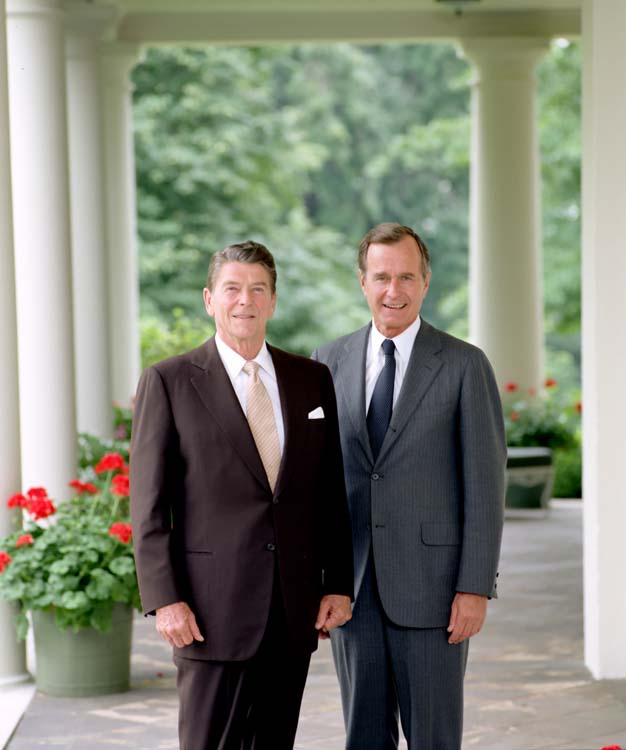
Unlikely. Granted, the next president will feel the need to create an appearance of distance between himself and the unpopular Bush. But that’s hardly new. George H.W. Bush did exactly the same thing when he followed the highly popular Ronald Reagan. No doubt, climate change will assume a higher priority under a President McCain or a President Obama. Guantánamo Bay will, in all likelihood, be closed. The United States will take a more active role in international organizations. And the next president will probably try harder to broker an Israeli-Palestinian peace deal.


Yet the continuity between Bush and his successor will be strong. A U.S. drawdown from Iraq will proceed more slowly than most expect. Relationships with India, Japan, and Vietnam will continue to grow. The United States will continue to spend much more on military power than all other major countries combined. Financial pressures on Iran will continue to intensify. The United States will still press for more open trade. And even democracy promotion, Bush’s most maligned foreign-policy goal, will continue to figure prominently in presidential addresses for years to come.


George W. Bush’s political opponents will surely revile him long after he’s gone. But you can be sure of this: Just as the Bush presidency led Democrats to express an unexpected nostalgia for Ronald Reagan, the next Republican president can expect to hear from pundits and academics alike that he falls far short of the high standard set by the last one.


David Frum, a former speechwriter and special assistant to President George W. Bush, is a resident fellow at the American Enterprise Institute and author of Comeback: Conservatism That Can Win Again (New York: Doubleday, 2007).
Palin Rises Above "Shrill" Media By Ruben Navarrette

Source: http://www.realclearpolitics.com/articles/2008/09/palin_rises_above_shrill_media.html

September 07, 2008

SAN DIEGO -- Anyone who heard Sarah Palin's rousing speech at the GOP National Convention should now understand why Democrats have been trying to destroy her. And why, luckily for the country, they've failed.

You mess with a hockey mom -- and even go after her family -- and you're bound to lose some teeth.

Such as when Palin drew a distinction between "candidates who use change to promote their careers," and "those, like John McCain, who use their careers to promote change." Or when she said that "a small-town mayor is sort of like a community organizer, except that you have actual responsibilities" and small-town folks don't know what to make of candidates who talk about them "one way in Scranton and another way in San Francisco." Or when she described Barack Obama as "a man who has authored two memoirs but not a single major law or even a reform" and someone who "can give an entire speech about the wars America is fighting and never use the word 'victory,' except when he's talking about his own campaign."

Don't feel bad for the Democrats. They asked for it. The bunch that President Bush aptly described as "the angry left" has been high-sticking Palin since Day One with a series of assists from their friends in the news media.

As you may have noticed, this has not been the fourth estate's finest hour. Reporters, anchors and pundits have mocked Palin and belittled her accomplishments. They've turned tabloid by going nuts over her pregnant teenage daughter, even demanding -- according to top McCain strategist Steve Schmidt -- DNA and blood tests to see if there is truth to the blogger-conceived conspiracy theory that Palin's youngest child really belongs to her oldest daughter. Some even shamefully descended into sexism by calling her a product of political affirmative action, depicting her as a pretty face with no substance -- McCain's "trophy vice," according to New York Times columnist Maureen Dowd -- and asking 1950s-type questions about how she expected to balance family and a new gig as vice president.

The sexism continued after Palin's speech. A spokesman for Senate Majority Leader Harry Reid called the speech "shrill and sarcastic." That brought some members of the media back to their senses. CNN's Campbell Brown and Gloria Borger were among the female journalists who cringed at the word "shrill" and pointed out that -- while that was a term leveled at Hillary Clinton -- you don't often hear it directed at a man.

Palin used her speech to Republican delegates to admit she is not a member of the D.C. insider's club but has no interest in joining.

"I'm not a member of the permanent political establishment," she said. "And I've learned quickly these last few days that, if you're not a member in good standing of the Washington elite, then some in the media consider a candidate unqualified for that reason alone."

Then Palin took a well-deserved shot at the elite media.

"Here's a little newsflash for those reporters and commentators: I'm not going to Washington to seek their good opinion. I'm going to Washington to serve the people of this great country."

The governor of Alaska has figured out what many in our nation's capital either never knew or have long since forgotten: "Americans expect us to go to Washington for the right reason and not just to mingle with the right people."

The crowd loved it, as I'm sure did millions of people watching around the country -- who work hard, pay taxes, raise kids and start businesses and then have to put up with constantly being told that Washington knows best.

Not surprisingly, the media were not nearly as enthusiastic. The same folks who victimized Palin were suddenly playing the victim. One television anchor asked if her attacks on the media didn't make her less likable.

I wouldn't worry. Even Obama campaign spokesman Bill Burton called the speech "well-delivered" although filled with the kind of "divisive, partisan attacks we've heard from George Bush for the last eight years."

It's funny. When it came to defending himself, communicating his message and attacking his critics, I don't remember Bush being this engaging, energetic and effective. Over the next few weeks, Democrats may find themselves wishing they were running against the current president -- and not the woman trying to become vice president.

ruben.navarrette@uniontrib.com

Monday, September 08, 2008

Whining + Arrogance = Barack Obama By Joe Magdeburger


Source: http://www.rudistettner.com/2008/09/whining-arrogance-barack-obama.html

Sunday, September 7, 2008

Barack Obama expresses his real feelings among close friends. At a $38,800.00 a plate cozy little dinner at Bon Jovi's mansion in New Jersey, Obama defiantly declared that "We're not going to be bullied, we're not going to be smeared, we're not going to be lied about," further declaring that. "I don't believe in coming in second."

Obama has achieved a dizzying fluency in a twenty first century dialect of Orwellian Newspeak. In the Obamian reality warp, it is impossible to speak anything against the "Great One. (Obama)"

Following are definitions in the Obamian-English dictionary. Should Obama win the election, it will be a required language from Kindergarten through college.


bully Function: verb 1. To oppose politically. 2) to best your opponent in a debate

smear: Function: verb,noun 1) To make a statement that hurts the feelings of or impacts negatively upon one's political opponent's electoral prospects 2) a statement that hurts the feelings of or impacts negatively upon one's political opponent's electoral prospects.

lie: Function: verb,noun, ( a more emphatic form of smear)1) To make a true statement that hurts the feelings of or impacts negatively upon one's political opponent's electoral prospects 2) a true statement that hurts the feelings of or impacts negatively upon one's political opponent's electoral prospects.

When speaking of a Democrat, standard dictionary definitions apply. ie; I am campaigning against John McCain. When speaking of a Republican, one reverts to Obamian Newspeak. ie; John McCain is bullying Obama.

Even tenses are confused in the Obamian dialect. In standard language, one believes in an event in the past or in a prophetic revelation of the future. Barack Obama's future lies not in his own hands, but those of the voters. With the downward trajectory of Democratic poll numbers, an Obama victory seems highly debatable. If an Obama defeat indeed occurs then Obama's statement , "I don't believe in coming in second." could be seen as a negation of his stated belief in "the future". This might seriously undermine his credibility with voters.

Given the introduction of an additional language by the Democratic Presidential campaign, it might be a good idea to run Obama's campaign commercials with standard English subtitles. Anyone with a multicultural world view would welcome such a change in the terms of public discourse.

Unfortunately for the Democrats, the only thing that matters in a political contest is one's past record. McCain and Palin have their prior record. Biden have their baggage as well. The record is there to be googled. The McCain campaign will let the facts speak for themselves in plain common English. And if Obama doesn't like it, he can take a page from Bon Jovi and "Have a nice day."


Obama: I Don't Believe in Coming in Second


Source: http://thecaucus.blogs.nytimes.com/2008/09/06/obama-i-dont-believe-in-coming-in-second/

September 6, 2008, 9:41 am By Jeff Zeleny

MIDDLETOWN, N.J. – For Senator Barack Obama, the television image of his day on Friday took place on the floor of a glass manufacturing plant in the small Pennsylvania town of Duryea. But by nightfall, he was a world away from that scene, as he arrived here for a pair of high-dollar fund-raisers.

The singer Jon Bon Jovi and a nearby neighbor hosted back-to-back events for Mr. Obama. While his message was largely the same – criticizing Republicans for their convention message – he steeled his supporters for a tough battle ahead in the final 60 days of the campaign.

“I hope you guys are up for a fight. I hope you guys are game because I haven’t been putting up with 19 months of airplanes and hotel food and missing my babies and my wife – I didn’t put up for that stuff just to come in second,” he said. “I don’t believe in coming in second. The American people can’t afford for us to come in second.”

As he stood beneath a tent on the expansive Bon Jovi compound, which resembled an Italian villa, Mr. Obama criticized the message of the Republican convention. He even suggested that his rival was running a negative race – perhaps more so than Mr. McCain would like, but offered no evidence to bolster his point.

“I think some of you saw this week the strategy of the other side,” Mr. Obama said. “A strategy that I’d be willing to venture that if you asked John McCain, ‘Is this the kind of campaign he intended, he might have said no.”

Neither the images nor the words from his evening will ever appear on television.

The campaign of Mr. Obama, like many other candidates including Mr. McCain, almost never allows cameras inside fund-raising events. The images advisers prefer to see on the evening news and cable television are of Mr. Obama wearing shirtsleeves and safety goggles, not shaking hands with Mr. Bon Jovi and a few hundred other top contributors at riverside mansions.

To a crowd of already committed supporters, who paid either $2,300 or $30,800 to attend, he spent more time talking about his opponents than his own message. He did not mention the names of either vice presidential running-mate – even his own – as he warned his contributors for a blistering two months to come.

“For the next 60 days,” Mr. Obama said, “their assignment is going to be to see if they can snuff out that spirit in this campaign and to knock me down more than one peg.”

The evening was awash in politics, with no singing from the suit-and-tie wearing Mr. Bon Jovi. He did, however, deliver a few remarks as he introduced Mr. Obama.

“You don’t have to be 72 to have experience,” he said, referring to the age of Mr. McCain. “It’s the end of an era and the beginning of a new one. This 21st century man has an aura of hope wrapped around him.”

McCain Camp ‘Rescues’ Flags From Obama Rally

Source: http://elections.foxnews.com/2008/09/06/mccain-camp-to-chastise-dems-for-discarding-american-flags/

by FOXNews.com
Saturday, September 6, 2008


John McCain supporters wave flags that were allegedly found at the site of Barack Obama's nomination acceptance address. (FNC)


Democrats are not caring for their Stars and Stripes. At least that’s the message out of John McCain’s campaign.


McCain supporters, claiming they rescued 12,000 miniature American flags from the site of Barack Obama’s nomination acceptance speech last Thursday, redistributed the orphan flags to audience members ahead of a McCain rally in Colorado Springs on Saturday.


The move was an overt swipe at Obama from a campaign whose motto has been “country first.” But Democratic convention organizers claimed the flags were not going to be discarded — but instead were snatched from the site of Obama’s historic address to carry out a “cheap political stunt.”


McCain supporters said the flags were discovered by a vendor at Denver’s Invesco Field after the conclusion of the Democratic National Convention. The vendor supposedly found trash bags full of flags in and near garbage bins, and turned them over to the McCain campaign.


Boy Scouts were sorting through 84 bags of flags in Colorado on Saturday, before a McCain supporter had veterans distribute them to the audience.


“We want to find good homes for these flags,” radio host Dan Caplis said at the rally, adding that whatever flags remained would be placed at memorials throughout Colorado.


Audience members, who booed when Caplis announced that the flags were left in Denver, waved the flags and chanted “U.S.A” before McCain arrived at the rally with his running mate, Sarah Palin.


Damon Jones, spokesman for the Democratic National Convention Committee, released a statement saying McCain should applaud the fact that thousands of American flags were “proudly waved” at their convention.


“But instead his supporters wrongfully took leftover bundles of our flags from the stadium to play out a cheap political stunt calling into question our patriotism,” he said.


Obama has faced attacks on his patriotism since the beginning of the Democratic primary race and has set up a Web site specifically designed to fight such charges.


The McCain campaign has denied questioning Obama’s patriotism, and even released a statement Friday calling Obama’s most recent comments on the matter “hysterical.”


Obama said Friday that Republicans are trying to make the election a personality contest, and that “what they’re really saying is ‘we’re going to try to scare people about Barack. So we’re going to say that you know, ‘Maybe he’s got Muslim connections or we’re going to say that, you know, he hangs out with radicals or he’s not patriotic.’”


U.S. Code says the proper method for disposing of an American flag is actually burning, provided it is “no longer a fitting emblem for display.”


The United States Flag Store, which sells full-sized and miniature flags, says on its Web site that flags can also be put in the trash, when they are “worn, damaged or tattered beyond repair.”


FOX News’ Carl Cameron and Bonney Kapp contributed to this report.