Monday, June 29, 2020

Ronald Reagan's Pre-Presidential Wilderness Years As Conservative Policy Powerhouse


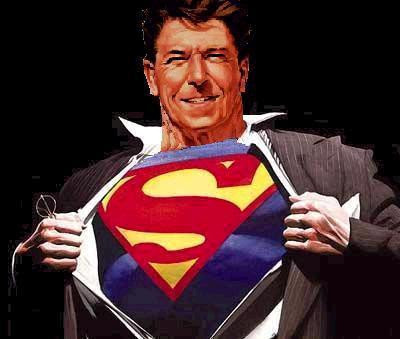
1/11/1976 Ronald Reagan smiling in his Los Angeles office.

Joyce Comments: Nestled in the Gubernatorial Papers of Governor Ronald Reagan uploaded to the Digital Library of The Ronald Reagan Library, was this December 30, 1974 press release of Reagan's statement at the Los Angeles Press Club where he talked about life after the California Governorship:

"I have said before that 'government works if the people work at it.' In these eight years, I have tried, to prove that it is true. Hundreds of men and women left major jobs in the private sector to join us for periods ranging from a few months to several years to help make government more efficient; to keep in under control. When I came to office in 1967 I said that I wanted to find common sense solutions to problems. Not every problem has been solved, of course, and new ones have come along, but on balance I think we have accomplished something. we brought a runaway welfare system under control and, based on our welfare reform experiences, many other states are success-fully emulating California. Now, California has even proposed a blue-print for reform nationwide. When we leave there will be virtually the same number of state employees as when we came. This means that productivity has increased sharply in most departments and agencies of state government. And, for the first time in more than twenty years, the outgoing governor will leave the new governor a surplus---in this case approximately $400 million.

"Individual liberty depends upon keeping government under control. I have learned that you must guard constantly against the government's tendency to want to grow and grow. This is coupled with the tendency of those groups with a vested interest in big government to campaign ardently for such growth, to the exclusion of virtually any other consideration.

"What we have experienced and learned I want to communicate to others when I leave office. I want to share one of my disappointments, too, for I think it is an idea whose time is here. That is, a limitation on the percentage of the people's total income that government may take to run its affairs. Our tax limitation initiative did not pass in 1973, but today some eleven other states have similar plans under consideration.

"The hour is late in America for freedom and liberty.

"The doomsayers keep telling us that America's problems can be solved only by government regulation. So, slowly but certainly, we are allowing government to intrude more and more into our lives; to dig deeper and deeper into our pocketbooks. America and its people have great strength. They can reverse this erosion of freedom; and I want to do everything I can to help.

"There has been much speculation about my activites when I leave office. Now, I would like to share some specific plans with you:

"As you know, I will have a daily radio program of commentary which goes on the air January 20. It is being syndicated nationally. I was delighted to learn that a station serving my hometown of Dixon, Illinois was the first one to sign up. There are some other important markets, too, among the first 100 to sign: WHO, Des Moines; WOC, Davenport, Iowa, where I got my first job; San Diego, Seattle, Denver, Phoenix, Kansas City, and San Antonio, to name a few. The producer tells me he expects most of the nation's major markets to be included by the time we go on the air.

"Beginning the week of January 13, I shall also be writing a weekly newspaper column for the Copley News Service.

"I will begin my first speaking tour in just two weeks in Dallas, San Antonio, Nashville and Richmond, Virginia.

"Several offers have come to me to write a book in 1975 and they are under serious consideration.

"Two of my assistants, Michael Deaver and Peter Hannaford, are opening a new public relations firm, Deaver & Hannaford, and I have retained their services to manage and coordinate my program of activities. They have assembled a small support staff for me. Included in it will be my secretary since 1969, Helene von Damm; Nancy Reynolds, who. has served as a Special Assistant to the Governor since 1967; Willard Barnett, retired California Highway Patrol Officer, who has served as my driver for eight years; Dennis LeBlanc, from the security detail; and clerical personnel. My office will be in the Westwood area of Los Angeles."


Reagan Seeks Platform for White House Bid

Source: https://www.nytimes.com/1975/01/26/archives/reagen-seeks-platform-for-white-house-bid.html Posted: Jan. 26, 1975

SAN FRANCISCO, Jan. 25—Heads turned to follow the slender, square‐shouldered man who moved in graceful strides across the hotel lobby, a thoroughbred walking between his aides, two exercise ponies.

A word has been much over used to label the quality Ronald Reagan shares with so many others who were produced by what he calls “my former occupation.” The word is “glamor” and refers to what is involved when these persons pass and draw stares.

Ronald Reagan. Former Governor. Former actor.Former New Deal Democrat. Conservative political activist. Once and future Presidential candidate.

Ronald Reagan now searches for a platform and recognition device that will keep him alive in the political marketplace.

Presidential Prospects

QUESTION: They say that you're drawn to the Presidency. Is that right?

ANSWER: No. And no more than I was drawn to the governorship, and believe me, I set out in 1965 to prove to those people who were pressing me to run for Governor that I shouldn't run, that I should campaign for someone else. I have never been able to understand the person who could just within himself say, “I want to be President of the United States. I'm going to go out after it.”

So his style as he looks toward the White House during thenext 18 months will be somewhat as it was in 1968. He will tend his political flock with speeches of the sort it likes to hear. He will speak out frequently and he will be critical of those who may be in the field against him. Perhaps it will not end this time as it did in 1968, when his campaign fell apart at the convention.

Q. What do you think of Ford's performance up to now?

A. He was an instant President so I think he's entitled to a little longer honeymoon. And particularly when he's come in under, not only the circumstances, but the situation as it prevails.

Q. Your answer suggests that there may be some things that he's done that you don't approve of?

A. To be very frank about that, yes. I'm in agreement with his tax rebate idea, and I was opposed to the original trial balloon about a surtax. Raising taxes to cure inflation is like giving a drunk another drink to sober him up. But this present plan, the energy thing, I do not believe that tax is the way to go unless there's something in the international chess game that I don't know about. I believe that the National Government and the Presidency could be used to persuade the people of the seriousness of this [energy crisis] and ask them to engage in a voluntary conservation program.

Pardon Defended

As with most of his constituency in the Republican party, Mr. Reagan defended President Ford's pardon of former President Richard M. Nixon.

“I thought the punishment fit the crime,” he said. “I don't think that anyone has yet evaluated what an actual punishment that was—that was Napoleon to Elba.”

Mr. Reagan has abandoned his defensive position about Mr. Nixon.

“I don't want to jump on the guy,” Mr. Reagan said:

“I think he made great mistakes.”

As the evidence closed in against Mr. Nixon in 1973 and 1974, Mr. Reagan said such things as “I think he's entitled to be believed” and argued that talk of impeachment helped the nation's enemies.

Mr. Reagan was asked if he considered himself the chief conservative Republican spokesman since Spiro T. Agnew resigned the Vice‐Presidency after pleading guilty to income tax fraud.

“I think I am one of them,” he said.

He named Senator Barry Goldwater of Arizona, Senator James L. Buckley of New York, Senator John G. Tower of Texas, Gov. Meldrim Thompson Jr. of New Hampshire and Gov. Arch A. Moore of West Virginia as others.

“Maybe I'm the most active now because I've made up my mind to go out on the road and do this sort of thing which I have done so many years before and speak the philosophy which I believe in,” he said.

‘Mashed Potato’ Circuit

He returns to what he calls the “mashed potato circuit” out of need for a platform. That same need has caused him to return to his professional origins—radio—through syndication of a three‐minute commentary that will be supplied to subscribing stations five days a week.

The money earned from these efforts will fund his staff, it has been explained. About 130 stations have signed up for the radio program. The syndication is handled through the firm of Michael Deaver and Peter Hannaford, who were members of Mr. Reagan's staff in the Governor's office.

They are also offering a oncea ‐ week newspaper column, through the facilities of Copley Newspapers of San Diego. About 121 newspapers have signed up for Mr. Reagan's column, Mr. Hannaford said.

Q. What would you have done with these past” years if you'd gotten beat in the primary in 1966?

A. Oh, I'm sure I would have continued in the career I was in. I had taken over the hosting and was starring in a certain number of the Death Valley Days series. Bob Taylor replaced me. Out of the General Electric years had come, fairly regularly as a sideline, tours on the mashed potato circuit.

Age a Liability

But he did not lose the primary and founded his political base in eight years as Governor. His most serious liability as a potential Presidential can didate is his age. He was born Feb. 6, 1911; will be 65 years old when the Republican National Convention is held in 1976. Also, his record as Governor is controversial.

Q. Ten years from now, what are they going to look back at and say, “Oh, yeah, Reagan did that”?

A. We've had one Governor in California, the great reformer, Hiram Johnson, who came in and did turn the state around. Others and in a case or two like that, I don't think any one governor—or even President—can do that because all you can hope is that if you accomplish something, maybe it sets a tone that others will want to continue.

Mr. Reagan took office promising to cut expenditures. But the budget he inherited in 1966 was less than half his last budget eight years later.

Q. In those years, there was an inflation factor of 45 per cent, which would have raised your first budget to $6.7‐billion in 1974 dollars but it was actually $10.8‐billion in 1974. Why?

A. Over a billion dollars was to subsidize local government, which depends on property tax so as to relieve the homeowner. An another thing: Pat Brown had been spending money more than was budgeted so we had to come in for a tax increase. And you've left out the cost of state growth.

Fight on Crime

In 1966 he also campaigned with a promise to cut crime rates, which he could not deliver. He attributed the failure to the Democrats who controlled one or both houses of the legislature most of his term in office. They would not pass any anticrime bills, he said.

Mr. Reagan's positions on national issues have moderated slightly. An example is the Vietnam war. He once proposed that it be legitimatized by a formal declaration by Congress.

He is critical of President Kennedy for having sent troops to Vietnam.

“My position was that once we did that,” he said, “once you committed young men to fight and die, you have no moral justification for not turning them loose to win it and get the damn thing over with. You can't ask a man to fight and die in the cause that is not worth winning.”

Mr. Reagan and his admirers assert that he has successfully reformed California's welfare system.

In the Jan. 17 issue of the National Review, Charles Hobbs, who used to take special assignments for Governor Reagan, wrote, “In the spring of 1971, Ronald Reagan singlehandedly cleaned up the federally created ‘welfare mess’ in California.”

Mr. Hobbs wrote that Mr. Reagan's move within 30 days leveled off the soaring increase in welfare rolls and that there were now 400,000 fewer people on welfare in California than there were in February, 1971.

Contention Disputed

This is disputed by Mr. Reagan's critics.

In The Nation issue of June 22, a Larry Agran, former legal counsel to the California State Senate Committee on Health and Welfare, wrote that Mr. Reagan had filled his first administration with “novices and incompetents.”

Mr. Agran wrote that Mr. Reagan's welfare changes were declared illegal by courts of review and that “thousands of poor families were brutalized by Reagan's bureaucratic thugs.”

In 1973, Mr. Reagan put all his prestige behind an attempt to revise California's Constitution and to change the method of tax collection and state finance. The proposal was defeated. It might have been his monument.


Ronald Reagan, Author

Source: https://www.hoover.org/research/ronald-reagan-author Posted: April 1, 2001

Kiron K. Skinner, Annelise Anderson, Martin Anderson, editors.
Reagan, In His Own Hand. The Free Press.
549 pages. $30.00

Not long ago, an assistant professor at Carnegie Mellon University, Kiron Skinner, stumbled upon a box tossed in among Ronald Reagan’s private papers. It turned out to be a treasure chest: It was one of several boxes of handwritten drafts of radio broadcasts, speeches, correspondence, and other documents. From 1975 to 1979, Reagan gave a daily syndicated radio broadcast, a commentary on politics and policy. He gave over a thousand of these commentaries. And as the contents of the boxes demonstrated, some 670 were written by Reagan alone, with no assistance. No speechwriters, no ghostwriters, just Reagan.

Reagan researchers (myself included) have dug and dug and never thought we’d find these broadcasts. I was told they didn’t exist. But they do, and what emerges from them is a far fuller portrait of the mind of Ronald Reagan than the public has ever had before — and the complete discrediting of the caricature of him as an ill-informed and half-witted actor dependent on others for his lines.

The editors of Reagan, In His Own Hand are Skinner and Annelise and Martin Anderson, all three of whom are fellows at the Hoover Institution. Martin Anderson was a key Reagan economic advisor and has done some of the best work on the president. Annelise Anderson was a senior advisor to Reagan’s 1980 campaign and served in his Office of Management and Budget.

Of the 670 broadcasts, this book publishes 220, many with photos of the handwritten copy. Included are all abbreviations, misspellings, notes, carats, crossed out lines — everything. Each is roughly 500 words in length. The photos are remarkable. Among them is a picture of one of Reagan’s famous 4x6 cards, which contains a speech in itself. What Reagan was able to do with the shorthand, nonsensical mish-mash on this card, in terms of delivering a clear, well-communicated speech, is extraordinary. We only have the copy because one of the book’s editors, Martin Anderson, was shrewd enough years ago to retrieve it from the wastebasket after seeing Reagan fold it in two and pitch it.

First and foremost, Reagan, In His Own Hand is a major research document. Perhaps its greatest value is as a primary source for Reagan scholars to mine and apply to their own research. I speak here from personal experience. This could be viewed as another Reagan diary — a contemporaneous memoir of his thoughts from 1975 to 1979, a historically neglected period in Reagan scholarship. This book shows how crucial that period was in focusing and formulating his policy positions for his 1980 presidential run and presidency.

The book shows that much of what happened in the 1980s is traceable to Reagan himself. Second, and more important, is that the book backs its claim — which I first suspected was hype, and I say this as an admirer of Reagan — that the broadcasts show that in the late 1970s he was a “one-man think tank.”

What emerges is the Reagan hardly anyone but Nancy knew, not even many of his own speechwriters — Reagan the writer. The prolific writer.

Nancy Reagan relays: “[H]e was a very, very good writer. All of his ideas and thoughts were formulated well before he became governor or certainly president.” On the writing of the radio broadcasts from 1975 to 1979, she recalled:

He worked a lot at home. I can see him sitting at his desk writing, which he seemed to do all the time. Often he’d take a long shower because he said that was where he got a lot of his thoughts. He’d stand in the shower and think about what he wanted to write. And then, when he got out, he’d sit down and write….Nobody thought that he ever read anything either—but he was a voracious reader. I don’t ever remember Ronnie sitting and watching television. I really don’t. I just don’t. When I picture those days, it’s him sitting behind the desk in the bedroom, working.

The book provides pages of similar testimony from Reagan assistants Dennis LeBlanc, Barney Barrett, and David Fischer, as well as Mike Deaver, Ed Meese, and William P. Clark.

LeBlanc, a member of the California State Police, was assigned to the security detail of Gov. Reagan in 1971. He was with Reagan during the three-year period after he left the governorship. He was the only aide to travel continually with Reagan during that time, often traveling alone with him. “He was constantly writing,” LeBlanc remembered. “What was amazing to me was the fact that Ronald Reagan never slept on planes when he was traveling. It was the same way when I was with him in the station wagon. It was like — you’re wasting time if you are sleeping. You know, everyone’s got things to do. And his thing to do when I was with him was his writing.”

Shame on those in the press and academe who portrayed the man as precisely the opposite. They were lazy, not Reagan. They lazily accepted an easy caricature that was easily refutable. It appealed to them because it fed their own biases and agenda. If there’s a mystery, an “enigma” about Reagan, it’s that he contentedly allowed this caricature to be developed without caring to refute it — with such testimonies as these. Why didn’t he? My view is that it was because he was confident and secure enough not to care what critics said about his mind.

This book is also a credit to Reagan’s work ethic. Without assistance, and while maintaining the full travel schedule (including a presidential campaign) of a working politician, he wrote 670 essays, some 335,000 words, in just four years. That’s about one every other day. A syndicated columnist writing twice weekly will produce perhaps 75,000 words a year — less than Reagan’s output, in other words.

The radio transcripts cover just about every policy issue of the day. The detail on taxes is rich. The material on foreign policy is overwhelming, particularly the breadth of countries Reagan analyzed, including the Third World. To give an example of Reagan’s range, one roughly 20-page cluster of transcripts (about 3 percent of the total in the book) includes these titles: “Fish,” “Apples,” “Youth Employment,” “OSHA,” “Rapid Transit,” “Agriculture,” “Transportation,” “Kettering,” “Telescope I,” “Telescope II,” “Technology,” “Phone,” “Bugs,” “Seal Hunt,” “Alaska,” “Federal Lands,” “Land Planning,” and “Property Rights.”

Reagan wrote about these topics articulately and persuasively, with precision, and in single drafts with only a few edits. These essays reveal, first and foremost, a communicator of ideas to the ordinary man. “I know a lot of intelligent people who can’t write,” commented Martin Anderson. “But I don’t know any person who writes this well who is not intelligent.”

One of the most compelling broadcast scripts is one he titled simply, “Communism, the Disease,” written in May 1975. “Mankind has survived all manner of evil diseases and plagues,” wrote Reagan, “but can it survive Communism?” This disease had been “hanging on” for a half century or more. As a result, Reagan felt it imperative to remind us “just how vicious it really is.” This especially needed doing because the practitioners of communism, like many practitioners of medicine, sometimes came up with euphemisms or “double talk” to “describe its symptoms and its effects.” For example, said Reagan, “if you and I in America planted land mines on our borders, ringed the country with barbed wire and machine gun toting guards to keep anyone from leaving the country we’d hardly describe that as ‘liberating’ the people.” This was classic Reagan, on the attack, always speaking candidly, calling evil by its name. “Communism,” he added for good measure, “is neither an economic or a political system — it is a form of insanity.” He then made one of those seemingly wild predictions we’d hear throughout his presidency, mostly greeted by ridicule from his critics: Communism was “a temporary aberration which will one day disappear from the earth because it is contrary to human nature.”

Aside from radio broadcasts, the book contains 20 other Reagan writings from 1925 to 1994, even some poems and college essays. These include a remarkable find from October 4, 2000, by Martin Anderson. On that day, at Nancy Reagan’s request, he examined the papers in the former president’s desk in his office in Century City, Calif. There, he found a gem: a September 23, 1984, memo written by Reagan, titled simply, “Mr. Minister,” which lays out talking points for U.S. strategy for dealing with the Soviet Union.

As an economist, Anderson was most surprised by the February 5, 1981, economic speech given by Reagan in New York shortly into the presidency. “It was a major speech,” he recalled. “I remember it well.” Anderson found the handwritten 15-16 page version by Reagan in his own hand. “I never knew he wrote it,” Anderson told me. “I don’t know that any of us knew. The speechwriters I’ve talked to didn’t even know he wrote it.”

Another remarkable speech he wrote circa 1963 states that an arms race would bankrupt the Soviets. That’s a very important find from the viewpoint of historians and presidential scholars. It means that Reagan had the notion as early as 18 years before his presidency began that an “all out race” could kill the Soviet Union. That was his own view. One can’t argue that it came from the people around him.

Thanks to this book, we now also have access to the full text of Reagan’s remarkable March 17, 1980, speech to the Chicago Council on Foreign Relations, written by Reagan himself on March 13, 1980, titled “‘State of the Union’ Speech.” I knew of the speech and found quotes from it in newspapers and other documents. This, however, is the first full copy I’ve seen. The lengthy speech broadly lays out what would become Reagan administration policy toward the Soviet Union in the 1980s.

He begins by describing the Soviet Union as “an imperialist power whose ambitions extend to the ends of the earth,” which “has now surpassed us in virtually every type of weapon. The Soviets arrogantly warn us to stay out of their way.” And how have we responded? Reagan takes aim at the Carter administration: “by finding human rights violations in those countries which have been historically our friends & allies. Those friends feel betrayed and abandoned and in several specific cases they have been.” Attacking the Soviets, Cuba, and Carter policy, he adds: “A Soviet slave state has been established 90 miles off our coast; our embassies are targets for terrorist attacks; our diplomats have been murdered and half a hundred Americans are captives going into the 5th month now in our embassy in Iran.”

In this vintage Reagan speech, the message is clear: The problem is weakness. “May I suggest an alternate path this nation can take,” Reagan then asks, “a change in foreign policy from the vacillation, appeasement and aimlessness of present policy?

“That alternate path must offer three broad requirements,” assessed Reagan. “First it must be based on firm convictions, inspired by a clear vision of, and belief in America’s future. Second, it calls for a strong economy based on the free market system which gave us an unchallenged leadership in creative technology. Third, and very simply we must have the unquestioned [military] ability to preserve world peace and our national security.” He then details all three, distilling the approach he would take in the 1980s.

Reagan, In His Own Hand offers little in the way of interpretation. That was the editors’ intent. Their aim was to “show not tell,” leaving interpretation to other scholars.

The book holds a lesson for presidential scholars: Quit simply reading and citing each other and start digging into primary sources. To know a president, one must do far more than just read the writings of other scholars who never met the man and, worse, in Reagan’s case, have frequently harbored political biases against him. Also, in Reagan’s unique case, there is a great deal of prepresidential material, far more than for the vast majority of other presidents — itself a telling fact about his intellect.

This book lifts a veil. It offers us a long, careful, extremely informative look. Again, Skinner and the Andersons have shown, not told. Still, the telling needs to be done. If there is fairness in the world and in academe, others will mine this material and begin the telling.


Ronald Reagan's former Campaign Advisor Peter Hannaford was interviewed by Stephen F. Knott, Ph.D. and Russell Riley on January 10, 2003 for the Oral History series at The Miller Center. Hannaford talked about working with Reagan in the mid to late 1970s when he had his syndicated newspaper columns and his popular daily radio commentary that aired from 1975 to 1979. An excerpt of that lengthy interview follows:

Hannaford

He never spoke ill of Ford personally. Well, he took a long time deciding. He came to the conclusion at some point—it must have been by the summer of ’75—that Ford just wasn’t cut out to be the leader of the country. He was a nice man. He was a good man to heal after Nixon had left, because on the congressional side he got along well with the Democrats. But he’d been in the minority so long that he had a minority mentality about doing things and wouldn’t push for bold answers. There were a lot of specific policies on which Reagan disagreed with what the Ford administration was doing. Those just accumulated.

He was going around on the rubber chicken circuit all that year. One of the reasons Deaver and I formed a company the day after Reagan left Sacramento was, among other things, in the Governor’s office in ’74 we were getting a lot of letters from organizations wanting him to speak after he left. As Deaver said to me when he mentioned that, All we can do is send a pro forma response saying, You’ll hear from his private office. Of course, the joke is, there is no private office. And unless somebody does something about it pretty soon, come January 5 or 6, whatever it is, the mailbags are going to be tumbling through the door, and the phone is going to be ringing nonstop, with nobody but Ann, the housekeeper, to deal with it.

And hence was born Deaver and Hannaford, Inc. That’s really the beginning of it right there. I had reported to Mike that I had just come back from L.A. where I had talked to Harry O’Connor, the radio producer, who had persuaded me that there would be a great market for a daily radio commentary by Reagan, conservative commentary. I’d already been in negotiations with Copley News Service—because they’d approached us—for a syndicated newspaper column, and I mentioned this to Mike. That’s when he talked about the speech thing.

So by January, Reagan was scheduled for about ten days a month out on the rubber chicken circuit. And he was just getting an earful everywhere he went about, Oh, you’ve got to get in there and run, and on and on and on. Then these friends all over the country were clamoring. It was growing. And he was uncomfortable with Ford’s brand of leadership.

I’ll tell you another revealing thing about Reagan, and what his mental attitude was. Right after New Year’s ’75, he flew back to Sacramento, on the second of January, toward the end of the week, Thursday, I think. Sacramento was embedded in one of those awful winter tule fogs, which is bone-chilling. You can hardly see a car length in front of you. He was scheduled for an exit interview at one of the TV stations. He was just doing a few mop-up things.

I went with him over to the station. As we got in the car, he said, Ford called me last night. I said, Oh, yes? What did he say? He said, He wants me to join his Cabinet. I said, What job? He said, Secretary of Transportation. And he laughed. I said, What did you tell him. He said, I told him I thought I could do the party and the cause more good on the outside.

I think he had a pretty good idea where he wanted to go even then, but he didn’t say. Ten months later we’re in Washington. Reagan flies in from Dallas, where he’d been giving a speech to some group. Deaver flies in from somewhere. Mrs. Reagan flies in. We’re all coming from different directions. I’d been in Washington for several days working on this announcement speech. They all coalesce at the Madison Hotel, and Deaver and I had arranged for the hotel to send up some champagne. Laxalt came over, and Nofziger was there. It wasn’t a big group.

When the champagne came, I said to Reagan, Governor, we want to propose a toast to you, to success. But I have a question to ask first of all. He said, What’s that? I said, Are you going to run? He smiled, and he said, Well, of course. But you never told us you were. That’s true, he never did. He just let it all happen. He may be the only politician in modern history who has worked that way. We all just kind of knew at various times it was okay to do certain things. That was the way he did things.

Knott

Now the radio broadcasts became very important.

Hannaford

Yes they did. They were very important, and they were big support builders, as it turned out. I must confess that at the beginning, as we were putting it together—because I had come out of a business background, advertising agency, then public relations, public affairs—I was thinking in terms of this as a business assignment. That is, if this is a big success, he’ll make good money at it, and he needed to make a living. We’ll be properly paid for the support work we do, and it will continue to be popular and build upon it. So I didn’t see it as building a volunteer army of campaign workers. I just didn’t think of it in those terms, in those early days. But it turned out to be just that. It was a huge recruitment device.

I think Nofziger sensed that it would be, because after the ’76 campaign, once the dust settled, it turned out we had about a million and a half dollars left in the bank. This is a huge contrast, because in mid-campaign we were poor as church mice. One day, on a trip that would end with the North Carolina primary, we were to fly from Los Angeles very early in the morning to—with the three hour time difference—end up in Salisbury, North Carolina, at about 10 a.m. eastern time. So you know how early we were getting off. We had a chartered United plane. And the plane wasn’t taking off. I said to Deaver, What are we waiting around for? He said, We’re waiting around for the office in Washington to open the mail to see if there are enough checks to pay for the airplane today.

Riley

This was when?

Hannaford

It would have been March ’76. So it was a huge contrast when, in the fall, the dust settled and all the reporting was ready to be done, and we had a million and a half dollars in the bank. Nofziger proposed to form something called Citizens for the Republic, which was formed, I think, in February of ’77, or January. Citizens for the Republic would be a volunteer campaign training organization which would put out educational informational materials, too. But the real thing it was going to do was have regular campaign training sessions for political activists in cities around the country. Reagan would be the bait. That is to say, he would come in and give the keynote speech on a Saturday, and then you’d have these panels, all morning and all afternoon on how to do direct mail, how to do ads, how to run the telephone operations. The nuts and bolts. CFTR would bring in experts to conduct the panels. Reagan would be the chairman of this organization.

Reagan couldn’t receive any contributions from it, but it was, under the law, legal for them to pay for his airline ticket to come to the event and give the speech. It was a stroke of genius on Nofziger’s part, because what was he doing? Creating a volunteer army of campaign workers for 1980. And the radio programs and the newspaper columns were feeding the same process, particularly the radio programs.

I began to change my views from a marketing mode to a political mode, when—I guess by late spring and summer—Deaver took the first several trips with Reagan in ’75. Our contract called for one or the other of us to accompany him on all these trips, because you needed somebody there to sort out all the well wishers and political types who wanted to have a meeting with him. Deaver took the first several ones because I was in charge of the editorial support, and in those days, pre-computer days, your computer was two or three file cabinets. You couldn’t get very far from your database.

But then I started taking some trips. I remember, the first one I took, we landed, I think somewhere in Iowa, maybe it was South Dakota. After a while they all look alike. We landed in a small-town airport, and he was going to give a talk that night to the county committee or something like that. As it turned out, in most cities in those days, you’d have a little tiny motorcade of a couple of cars. It would be the local sponsor of the radio program who would provide the cars and the drivers, and he or she would be one of them, usually.

Then our advance man would go forward, and usually we’d get a policeman to volunteer to escort us into town. But time after time, the volunteer driver in the Governor’s car, which was the one I would be in, would say something along these lines, Oh, Governor, I heard your program today, and it was terrific. You were right on target. Or words to that effect. Others would sometimes say, Governor, I’ve been with you ever since you gave that wonderful speech for Barry Goldwater. It began to coalesce in my mind what was going on here. It was building that whole complex matrix of volunteers. It was quite impressive.

Mrs. Hannaford

Tell them about Reagan’s response to those wonderful accolades on the—

Hannaford

Oh yes. We recorded these radio programs fifteen at a crack, or three weeks’ worth, because they were on the air Monday through Friday. The producer sent them out on discs in those days, and he would just put in a cover sheet with a title of each one. But there was no restriction on how they used them. They could run them in any order they wanted. They didn’t have to run them one through fifteen, so in any given market, we didn’t know what they were running. If the driver said, Oh, Governor, that was a wonderful commentary today. I just think you were terrific. You made all your points so well, we had no idea what they were talking about. So Reagan’s device usually was, Oh, I’m so glad you think that way. Tell me what you think about that. That way he’d find out what the subject was.

Knott

And the newspaper columns, how often did they run?

Hannaford

Well, it was weekly until he declared for the ’76 Presidency, at which time all of that stopped. It all stopped the minute he became a candidate. It resumed again a little while after the convention in Kansas City in ’76. When we started again, I moved it from Copley News Service to King Features, which was the biggest of the syndicates, and we went twice a week from then on. It was popular, it was well received. It didn’t have the impact that the radio had, because you’ve got his voice, reminding people all the time. But it helped.

Mrs. Hannaford

But you wrote most of them.

Hannaford

I wrote most of the newspaper columns. But he and I had frequent editorial conferences, I guess you’d call them, where one or the other of us would say, Hey, here’s an idea. What do you think about it? And he’d say, Yes, I like that. I’ll do a radio spot. You do a newspaper column. Or he’d come to me with one and say, I’m going to do a radio spot on this. You want to do a newspaper column?

Riley

Did that workload ever reverse? Were you ever responsible for any of the radio, or was it—

Hannaford

Oh, I did a lot of radio spots. I wrote a lot of the radio, particularly in the early stages. I probably wrote as many as he did. And we also had three or four outside people who would submit them from time to time. Nofziger wrote a few, John McClaughry wrote a few. There were two or three others. Chuck Hobbs may have written a couple on special topics. And then he would work them over. They would provide the draft. Yes, I did quite a number in the early days, not all of them, but quite a number. But after the convention in Kansas City, he wrote almost all of them from then on until they stopped in mid-November ’79.

Riley

Was there a reason for that?

Hannaford

He had the time. And he liked writing for radio. Remember, he had a lot of experience at it. Right after the convention, the day after— (July of ’76, on the last night of the convention, Ford had asked him to come down and speak to the entire convention.) The next morning the Reagans went around to their youth volunteers, to two or three of the delegations. It was very emotional, his farewell.

Then we went out to our chartered plane at the airport. The Reagans had the first row, and Mike and I had the second row. Once we were airborne and the seatbelt sign went off, the Governor got up, and he said, Well, fellas, I guess we’ve got to go back to work now, don’t we? I said, Yes, sir, your first radio taping will be in two weeks, and your first newspaper column will be a week from Friday. He said, You didn’t think I was going to win, did you? I said, Well, we wanted you to win, and we thought you were going to win, but one always has to make contingency plans. He understood.

But he fell right back into it. All of us at that time—I’m sure you’ll hear this from others you talk to who were involved then—thought that elected politics was all over for him in that fall of ’76.


Reagan As Pundit

Source: https://www.aei.org/articles/reagan-as-pundit/ Posted: November 8, 2004

Reagan’s Path to Victory: The Shaping of Ronald Reagan’s Vision: Selected Writings
Edited by Kiron K. Skinner, Annelise Anderson, and Martin Anderson
Free Press, 538 pp., $35

It has been said that history is too important to be left to historians, and proof of this remark is given by the fact that the most significant work done on Ronald Reagan has come not from historians, but from two economists and a political scientist, Martin and Annelise Anderson, and Kiron Skinner. The trio’s publication in 2001 of Reagan in His Own Hand, a collection of Reagan’s handwritten radio addresses and speeches, marked a watershed in the public’s knowledge and estimation of Reagan. It proved that Reagan was no mere creature of speechwriters and handlers, as his detractors had long alleged, but was in fact the prime mover of his public career.

Skinner and the Andersons followed up last year with a collection of Reagan’s personal letters (he may have written as many as 10,000), and now complete the cycle with a fresh batch of Reagan’s handwritten radio commentaries from the last half of the 1970s, which reflect Reagan working out his views on the full spectrum of domestic and foreign issues. Thanks to the Andersons and Skinner, the slur that Reagan was lazy, uninformed, and ignorant of the details of federal policy should have been consigned once and for all to the ash heap of history.

This prominent aspect of the Reagan story is surprisingly little known. When he left the California governorship in 1975, Reagan began a twice-weekly newspaper column and a five-day-a-week syndicated radio commentary that was carried on more than 300 stations, reaching an estimated 20 to 30 million listeners. It was a way of making a good living as well as keeping his views in front of the public, but it was also a way of making himself the rallying point for the conservative movement that was readying itself for a drive to power. In this respect, Reagan’s media career during his “wilderness years” in the late 1970s resembles Winston Churchill’s “wilderness years” in the 1930s, when he too used his writing to make himself the rallying point against his government’s weakness.

Most of Reagan’s newspaper columns were ghostwritten for him by Peter Hannaford, and it was always assumed that the radio commentaries were ghosted as well. But Reagan, an ex-radio broadcaster, took a keen interest in his radio portfolio and wrote the bulk of those commentaries himself. Over five years, Reagan broadcast 1,027 commentaries; the Andersons and Skinner discovered Reagan’s handwritten drafts of 682 of them. It is likely that Reagan wrote even more than this, but the handwritten drafts were lost or discarded.

The Reagan that emerges from this enormous corpus of writings is full of curiosity: He cast a wide net for information, and went far beyond generalities to discuss the inner workings of obscure government programs and regulations. Reagan displayed a talent for explaining complicated regulations, such as how the Clean Air Act’s “prevention of significant deterioration” policy works, in just three minutes, along with a critique and alternative ideas for achieving the same goals. (On another occasion, he took after the Consumer Product Safety Commission for its regulation of lawn mowers.) Often Reagan would devote three or four commentaries to the same subject over the course of consecutive broadcasts. Stitched together, these serial commentaries offer a complete teaching on issues such as inflation, tax policy, welfare reform, the environment, and foreign policy.

The remarkable range and depth of Reagan’s writings suggests that he was arguably the best-prepared person to enter the White House in modern times. This was not a person who needed to consult polls and policy wonks to decide what was important or what he should think. The commentaries presage several prominent themes of his presidency, especially the centrality of controlling inflation along with the arguments for cutting income-tax rates. One especially significant commentary was his attack in 1977 on the Federal Communications Commission’s “fairness doctrine,” which President Reagan’s FCC abolished in 1987, helping to open the way for conservative talk radio. And scattered throughout are a number of familiar arguments and quips that he used during his presidency. (My favorite is his quip about liberal economists “who have a Phi Beta Kappa key on one end of their watch chains and no watch on the other.” This appeared in one of his first commentaries in 1975, and he used it in one of his presidential speeches in 1981.) Reagan’s remarkable economic literacy shines forth in his domestic-policy commentaries.

Some readers may find the format of this collection slightly difficult, as the editors have reprinted Reagan’s words exactly as he wrote them (and in chronological order), with his changes and crossouts marked in italics or capital letters. The editors do not interpolate Reagan’s lacunae or correct his idiosyncratic shorthand spelling (“burocrat” for bureaucrat). This literalness is useful, however, in illuminating Reagan’s self-editing abilities and his talent for achieving economy of expression. The reader will also appreciate more fully that the Reagan style originated with him and not his speechwriters. The format of Reagan’s commentaries required him to write pithy, one-sentence leads, or “teasers,” after which he’d say, “I’ll be right [or sometimes “rite”] back” before breaking for a commercial. He wrote leads worthy of the best op-ed practitioners. An example: “The ability of Burocracy in the field of self preservation should be an inspiration to all those who teach survival courses. I’ll be right back.”

He was a skillful aphorist. My favorite is one from 1977 that holds up well today: “If words could be burned as fuel Congress would have the energy crisis solved and we’d be in the export business.” Another: “I’ve always suspected the Russian Athletes do as well as they do [at the Olympics] because they think there are real bullets in the starters gun.”

The commentaries were not all-politics-all-the-time. Reagan would often do a “human interest” commentary that sounded more like Paul Harvey than an aspiring president. Commentaries about sports figures, children struggling with debilitating diseases, and the rare uplifting Hollywood movie show the side of Reagan that innately connected the greatness of the nation to its character as well as its principles. But it requires someone not wholly consumed with politics as are most national figures these days to understand this and express it as Reagan did. Remember, this is a man who read the comics and the sports section in the morning before the news pages.

It is rare to have a window into a public figure working out his views in real time. This collection, along with the previous two by the Andersons and Skinner, constitutes a primary source for all future historians and political scientists who evaluate the 40th president. No appraisal of Reagan can be complete without reckoning with the self-discipline and seriousness that is revealed here.

Steven F. Hayward is the F. K. Weyerhaeuser Fellow at the American Enterprise Institute.


Ronald Reagan: Intelligence and the End of the Cold War [Excerpts]

Source: https://www.cia.gov/library/publications/cold-war/ronald-reagan-intelligence-and-the-end-of-the-cold-war

Posted: May 28, 2013

REAGAN’S DEVELOPING VIEWS ON INTELLIGENCE, 1975-1979

Reagan put the knowledge he acquired from his member-ship on the Rockefeller Commission to good use during his “wilderness period” from January 1975, when he stepped down as California’s governor, to October 1979, as he was preparing to announce his candidacy for the Republican nomination for president. During this period, Reagan wrote and delivered hundreds of commentaries for his syndicated radio spot that ran five days a week; he also drafted opinion pieces, private letters, and public remarks.30 In these writings, Reagan commented on a broad range of foreign, national security, and domestic topics, including intelligence and CIA. Early on, in a radio broadcast he titled “CIA Commission,” Reagan in August 1975 highlighted his service on the Rockefeller Commission and emphasized that, though instances of CIA domestic espionage were found, it did not constitute “massive” spying as reported in the media, the misdeeds were “scattered over a 28-year period,” and CIA had long ago corrected them. Reagan reiterated his concern that congressional investigations were assuming the character of “witch hunting” and threatened “inestimable harm” to CIA’s ability to gather intelligence. “There is no doubt,” Reagan warned, that intelligence sources worldwide “have been frightened into silence” and that CIA officer themselves were now less likely to take risks.31

The need for secrecy in intelligence and the potential harm of publicity is a frequent theme in Reagan’s writings and public statements during this period, frequently coupled with statements of enthusiasm for the work of US intelligence officers and of the overall need for a strong intelligence posture to protect US national security in a perilous world. Many of Reagan’s radio commentaries were mostly or entirely devoted to the subject of intelligence: “CIA Commission” (August 1975); “Secret Service” (October 1975); “Glomar Explorer” (November 1976); “Intelligence” (June 1977); “Spies” (April 1978); “Intelligence and the Media” (October 1978); “Counterintelligence” (January 1979); “CIA”(March 1979). Many more touched on intelligence subjects, sometimes to make a broader political point, sometimes for their own sake. Americans have more to fear, Reagan often said, from domestic regulatory agencies like the Internal Revenue Service and the Occupational Safety and Health Administration than from intelligence agencies like CIA or the FBI. The threat from Soviet expansionism, terror, and domestic subversion required robust US capabilities in intelligence collection—Reagan highlighted the need for human and technical collection alike—as well as in counterintelligence. Addressing well publicized intelligence issues of the 1970s, Reagan advocated allowing journalists to volunteer as intelligence sources but declared “the US should not be involved in assassination plots.” He strongly favored covert action programs that might lead to freedom for people living under Communist regimes, and he supported FBI surveillance and infiltration of domestic extremist groups. Not leaving any major intelligence function untreated, Reagan cited intelligence analysis to inform his radio audience of the threat from the North Korean military or from Soviet strategic weapons. He even praised liaison relationships for the intelligence they could provide while US agencies were “hamstrung” by investigations.32

Beginning in 1977, Reagan began to increase his public advocacy for the work of US intelligence agencies as he stepped up his criticism of President Jimmy Carter, who had called CIA one of the three “national disgraces” (along with Vietnam and Watergate) during his presidential campaign. Reagan had supported George H.W. Bush when President Ford had nominated him as DCI in early 1976, and a year later Reagan declared that Bush should remain DCI because of his success in rebuilding CIA’s morale. Reagan was reportedly horrified at Carter’s nomination of former Kennedy speechwriter Ted Sorensen as DCI. “We need someone who would be devoted to an effective CIA” and who recognizes the danger posed by the Soviet military buildup so that the US would not be “flying blind in a dangerous world.” “Let’s stop the sniping and the propaganda and the historical revisionism,” Reagan said, “and let the CIA and other intelligence agencies do their job.”33

The evidence of Reagan’s pre-presidential experiences demonstrate that the man elected in November 1980 to be the 40th President of the United States had a broad knowledge of and deep appreciation for intelligence and CIA and that he had reflected on the wide range of intelligence issues, including its proper missions and activities.

CONCLUSIONS

The view that Reagan was not a reader but at best a casual watcher of intelligence has been perpetuated by political conservatives and liberals, Democrats and Republicans alike. That view is not consistent with the general reap-praisal of Reagan’s intellectual abilities as evidenced by new scholarship over the past decade, but it has persisted. Logic and evidence, rather than political bias or personal opinion, paint a different picture. Logic would support the notion that Reagan, whom recent scholarship has established as an enthusiastic reader, was also a reader of intelligence, and new evidence presented herein has confi rmed as myths the perceptions that Reagan was ignorant of intelligence, read little of it, and consumed it primarily in video form.

The record regarding Reagan’s pre-presidential experiences as an actor, union leader, state governor, and especially as a member of the first high-level investigation of CIA (the Rockefeller Commission) indicates that these experiences gave the future president a background in and an understanding of many areas of intelligence, including espionage, secrecy, oversight and necessary safeguards, and the law. As a prolific radio commentator in the 1970s, Reagan reflected and propounded on intelligence issues of the day, particularly on the balance between democratic values and intelligence operations, the value of espionage and counterintelligence in the Cold War, and the damage to intelligence operations and CIA morale stemming from leaks, media exaggerations, and an overly intrusive Congress more interested in civil liberties than national security. The preponderance of direct and indirect evidence, beginning with detailed observations of Reagan’s reading of the PDB as president-elect, conclusively demonstrates that he was an engaged and appreciative “First Customer” of intelligence who carefully read and used what he learned from intelligence products.

Wednesday, June 17, 2020

MTV Crew Comes to Cinnaminson: Crews were at The Jug Handle Inn Friday night to record a local resident hanging out at his favorite bar. By Michelle Teel

Source: https://patch.com/new-jersey/cinnaminson/mtv-crew-comes-to-cinnaminson

Jan 15, 2011

A film crew for the popular MTV reality series "True Life" came to The Jug Handle Inn from 10 to 10:30 p.m. Jan. 14. The crew was filming "True Life: I'm Allergic to Everything" featuring a local resident hanging out at his favorite bar.

The local subject for the series responded to an MTV casting call last October looking for young people ages 16-23 who suffer from multiple allergies or one severe, life-threatening allergy.

It was Friday night business as usual at The Jug, and although some of the customers knew the MTV reality series was in the corner of the basement level by the dartboard recording segments for its show, no one interfered or overcrowded the film crew's work.

Kevin and Nicole Stone, owners of The Jug Handle Inn, said the crew was discreet and only filmed for about 30 minutes. The Stones said MTV gave them very limited information about the details of the show and the producer did not disclose who was being featured or any other details about the show.

"They (MTV) called one day and told us they were filming about this guy living with multiple allergies," Nicole Stone said.

"They told me they were coming because this kid loves this bar and they are filming his everyday life."

Kevin Stone added, "They were here for a half-hour. You wouldn't even know they were here."

Segments on "True Life: I'm Allergic to Everything" will show how allergy sufferers are affected on a daily basis by constantly wiping their eyes, blowing their noses and using their inhalers.

The series will also show how everyday things like going out to eat or shopping can be dangerous for multiple or severe allergy sufferers. The segments will mention how exposure to common foods and items can cause severe and multiple allergy sufferers to break out in hives, to have a severe allergic reaction or to stop breathing.

Download the movie


Best Wings: The Jug Handle Inn

Source: https://www.burlingtoncountytimes.com/article/20111031/NEWS/310319799

By Ryan Feldman
Oct 31, 2011
The Jug Handle Inn won Best Wings in the reader survey.

The Jug Handle Inn has been at the same location on South Fork Landing Road in Cinnaminson since 1912, but if you haven’t been there in a few years you may want to give it another visit.

New owners Kevin and Nicole Stone have given the Jug Handle Inn a “face-lift” and helped turn its “corner bar” reputation into one that appeals to families but still maintains its sports bar atmosphere.


Nichole and Kevin, owners of the Jug Handle Inn.

“It’s a family atmosphere during the day, and at night we get a young adult crowd,” Kevin said. “It always had the reputation of ‘my grandfather would go to the Jug.’ We changed the reputation. It’s more of a sports bar.”

But one thing certainly hasn’t changed: The wings at the Jug Handle Inn remain among the best in the area. But it’s not just about the wings. The Stones have increased the bottle beer selection and have added many new food items to the menu. According to Kevin, everything on the menu is now home-made.


Some of the staff at The Jug Handle Inn.

“We added full waitress service,” Kevin said. “We increased the food by 20 percent. Families can come here and sit down and eat like at a normal restaurant. It wasn’t like that before. It was like a corner bar crowd mentality before we bought it. Since we gave it a face-lift and started changing things up, it’s been great.”

From 3 to 6 p.m. Monday through Thursday, the Jug Handle Inn offers half-price wings.

″(The best part of working here is) the atmosphere,” Kevin said. “The people are great that I work with. The customers are great. There’s always something different. It always brings surprises.”


Burlington County Times - Forty Under 40 2013 - Kevin Stone, Owner, The Jug Handle Inn

Source: https://www.burlingtoncountytimes.com/fbea2549-9e88-5c15-90d5-664dee460e1d.html


Monday, July 8, 2013 5:31 pm

Kevin Andrew Stone

Q. What high school/college did you attend, and what did you study?

A. Syracuse University, political science.

Q. What is your ultimate goal in life?

A. Become Governor of New Jersey.

Q. What inspires you to do what you do?

A. The ability that I was able to follow in my fathers footsteps in the bar and restaurant business and to follow my passion for great bar food and quality beer.

Q. What is your most fulfilling experience to date?

A. The birth of my children

Q. What one person, living or dead, would you want to spend a day with and why?

A. Chris Christie. Just to see what he does and how he handles the people he has to deal with would be incredibly interesting.

Q. Tell us something that most people don’t know about you.

A. I’m a big kid! I love to have fun and show my silly side.

Q. What in your life helps you get through your day?

A. When I come home to my kids.

Q. What is or was #1 on your “Bucket List”?

A. To have my own Food Network Tailgating cooking show.

Q. Beach or shore?

A. POOL

Q. If there was a biography written about you, what would the title be?

A. ”The Balancing Act!” Balancing a very crazy schedule between my business, my children’s activities and my volunteer work.

Q. Advice for your fellow young up and comers?

A. Stand up for what you believe in. Don’t give up on your dreams and always follow through with them.


Listen to "Kevin Stone Interview 10/16" on Spreaker.

Digging Up The Past Anthropologists Examine Highway Site

Source: https://web.archive.org/web/20160103085228/http://articles.philly.com/1986-03-23/news/26084594_1_anthropologists-road-work-shards Posted: March 23, 1986

Far from the layered ruins of Caeserina Romana, the ancient provincial capital of Palestine, John Elias, anthropologist, is measuring off a 5-foot square of packed earth.

The square contains random rocks that might have once served as boiling stones to prepare dinner for an ancient American Indian tribe that lived in Pennsauken.

Elias, who usually works in complex digs in the Middle East, is working in New Jersey so that he can earn money to return to the Middle East this summer.

He is part of a team of 14 anthropologists working along the south branch of Pennsauken Creek, on the Jug Handle Inn site, Fork Landing Road, that soon will be spanned by the convergence of Routes 90 and 73.

The team works for Louis Berger Co., East Orange, a company that contracts to perform work on sites that will be affected by programs funded by the federal government.

Berger has contracted with the New Jersey Department of Transportation to investigate sites all over the state before construction projects begin.

"We do investigations that meet the federal mandate for environmental assessments," said Michael Finn, a principal investigator. "Sometimes the studies involve fish and game, wildlife, noise, traffic, and more."

Field director Judd Kratzer said the Jug Handle site would be used to build a regional picture of how interior drainage systems along creeks were used in the state in ancient times.

The 60-by-30-foot site, believed to be active around 500 B.C. (possibly earlier or later), may have been used temporarily by Woodlands Indians. Shards of pottery have been discovered, as well as a few other artifacts. There are no remnants of wood, antler or bone tools, however, since the soil is too acidic to retain bones.

The anthropologists, armed with sieves, spades, measuring tapes, brushes, dental tools, levels and plastic storage bags, have been working for three weeks to compile as much information as possible before road work begins.

Mike Timpanaro of Wamamassa, N.J., stood at the chiseled step of one grid, brushing a piece of pottery that he would label and send to the Berger Laboratory in East Orange. Eventually, the shard would be sent to the State Museum in Trenton.

Holding the brownish fragment up for examination, Timpanaro explained what it could mean.

"This seems to be a pot shard tempered with argelite, a stone that weathers poorly because it's soft," he said. "We have other shards like this and by comparing them we can find rough dates for when pottery was tempered in this manner. We might even get enough shards to reconstruct enough to get an idea of what kind of vessel was used."

Timpanaro also has found arrowheads or projectile points; scrapers for scraping skin or hides, even grooved scrapers for cleaning arrow head shafts.

In the anthropologist's van, Kratzer reveals a "gorget," a piece of ground slate with holes drilled through it.

"This seems to be one half of what could have been a neck piece, " he said. "Notice the delicate lines, the pattern of scratching around the edges. Maybe someone scratched this so they could wear it and look down to read the lines or etchings."

As the anthropologists work, sifting earth, brushing specimens, labeling and sorting their finds, the clues and the puzzles mount.
By the end of the month, the data will have been collected, and the anthropologists will move on to other sites, other states and other countries.

And the Jug Handle Inn site will once more be a crossroads for travelers, as it had been more than 1,000 years ago.


Route 90 Set To Open This Week

Source: https://web.archive.org/web/20160304063331/http://articles.philly.com/1988-10-23/news/26272928_1_route-new-jersey-department-planning-director Posted: October 23, 1988

Bob Bacon has been suffering every businessman's nightmare for the last year.

Bacon's restaurant, the Jug Handle Inn at Route 73 and Fork Landing Road in Cinnaminson, has a good location and a well-established reputation. But his customers haven't been able to reach him.

His restaurant sits in a $23 million building site where Route 73 is being upgraded and Route 90, a 1.8-mile, six-lane connector between the already existing highway and the Betsy Ross Bridge, is being finished.

A mile-long section of Route 73 was widened through Pennsauken, Maple Shade and Cinnaminson, and the intersection with Fork Landing Road has been reconstructed.

This week, the work will be virtually completed. A dedication ceremony has been scheduled for Tuesday afternoon on Route 90, and transportation officials plan to open the road to traffic in time for that evening's rush hour. But, as New Jersey Department of Transporation workers hurried to put finishing touches on the road last week, Bacon - who has owned the restaurant since 1980 - wondered if business would ever return to normal.

"It's been terrible," he said. "It just about put me out of business."

He said traffic tie-ups discouraged potential luncheon customers. With two of the three entrances to the parking lot closed by construction fencing, dinner customers were also chased away, he said.

"The traffic would be backed up for miles, so people couldn't get in and out of here in an hour for lunch," Bacon said. "That killed the daytime business, and at night, people went to alternative restaurants. Sometimes it didn't pay to be open."

Robert Wagner, Pennsauken's planning director, said Bacon's problems reflected those of the small mix of businesses operating in the construction zone, which is "99 percent developed."

"We were lucky because most of the work where Route 90 crosses Haddonfield Road was rerouting work," he said. "But it didn't do (Route) 73 any good. Anyone using that was in trouble. The Jug Handle Inn had a terrible time."

Route 90 was originally planned in the 1960s to be part of a two-state highway network stretching from the Pulaski Expressway in Northeast Philadelphia, to the bridge, Route 295 and the New Jersey Turnpike.

The bridge was finished in 1974, but plans for the Pulaski and Route 90 were scrapped because of increasing costs and environmental concerns.

An access route eventually was connected to Interstate 95 in Philadelphia. But the Betsy Ross remained a virtual stepsister, used by only 19,615 vehicles a day in 1986, compared to 68,000 on the Tacony-Palmyra.

A shorter version of the highway was included in the $3.2 billion Transportation Trust Fund, created by Gov. Kean in 1984.

By the time construction began in March 1986, accommodations had to be made for heightened environmental concerns. Five viaducts were built over the Pennsauken Creek, the ecologically sensitive home for local waterfowl.

"We had to address the wetlands, so grease traps were used for drainage to catch all the oils and stuff from the roadway before the water emptied into the creek," said Ron Maruca, NJDOT's resident engineer for the Route 90 project.

About 120 employees worked at the site during the height of construction this summer, Maruca said. The number has dwindled to about 30.

"We're doing general cleanup work and landscaping, and we'll also have (soundwall) work that will probably continue into the beginning of November.

"I'd say it looks pretty good, but I'm prejudiced."

Once the road opens, transportation officials hope Route 90 will drain traffic from congested sections of Routes 130 and 73 while encouraging motorists to use the Betsy Ross Bridge instead of the Ben Franklin or Tacony- Palmyra spans.

"We've been anxious to have the connections on the Pennsylvania and New Jersey sides ever since the bridge was put into service," said Ronald Flegel, manager of construction for the Delaware River Port Authority.

"This will help two-state traffic movement of both the trucking industry and individuals using their cars."

The Port Authority so far has paid $6.5 million, including a $4 million ''down payment" in 1986, to cover the state Transportation Department's construction costs. The authority has agreed to pay the Transportation Department an additional $2.5 million if traffic on the bridge increases, said agency spokesman Carlton Read.

"It was a wonderful agreement," he said. "If the usage of the bridge should drop, we would not have to pay in that year. It's kind of unusual, but it makes good sense. The traffic on the bridge is steadily increasing, and we hope it will make a pretty good leap once Route 90 is open."

Wagner said he expects building conversions and new construction once the road is open.

"Properties that abut the Pennsauken Mart, the old Atlantic Thrift and the Stardust Ballroom are moving," he said. "Plans are coming to the planning board for a shopping mall and another 40,000-square-foot building.

"It will be a crapshoot to see how much traffic the highway takes off (Interstate) 295 and (Route)130. The biggest impact will be if people from Philadelphia come to New Jersey rather than the other way around."

New Jersey Transportation Commissioner Hazel Gluck and Port Authority Commissioner Francis Bodine are among those scheduled to participate in the 3 p.m. ribbon-cutting.

Bacon simply hopes that business returns to normal sometime thereafter.

"I'm frustrated right now," he said. "But I sure am hoping things will get better soon."

Coronavirus in nursing homes: Tragedy, anger and lingering questions for South Jersey families By Lisa Broadt

Source: https://www.burlingtoncountytimes.com/news/20200607/coronavirus-in-nursing-homes-tragedy-anger-and-lingering-questions-for-south-jersey-families

Jun 7, 2020

Since the outbreak began three months ago, 6,091 long-term care residents have died from coronavirus complications, including 263 deaths in the last week alone.

MOORESTOWN — After being confined to his room for days, Dennis Marks finally stepped into the nursing home hallway for a breath of air.

He was greeted by the sight of his neighbor being carted away in a body bag, according to his daughter Stephanie Sawyer, of Mount Laurel.

Marks was unnerved by the death — one of 18 coronavirus fatalities at Cambridge Rehabilitation and Healthcare Center in Moorestown — particularly because he was himself recovering from a life-threatening case of the virus, which is particularly deadly for the elderly and people with pre-existing conditions.

Marks, 77, suffers from cancer, congestive heart failure and severe diabetes, which previously required a leg amputation. The retired Maple Shade business owner was at Cambridge recovering from another surgery, when he and others began exhibiting respiratory symptoms.

Sawyer said she believes Cambridge was quickly overwhelmed by the coronavirus outbreak.

"Once (Cambridge) started the in-room quarantine where residents could not even open their doors, that's when it started going downhill," she said.

With the coronavirus peak more than a month in the past, intense fears about the disease have lessened and given way to optimism about the economy reopening.

But for many of New Jersey's vulnerable nursing home residents and their families, coronavirus remains a pressing and constant concern.

Since the outbreak began three months ago, 6,091 long-term care residents have died from coronavirus complications, including 263 deaths in the last week alone.

Recent long-term care facility baseline testing revealed a 10% positivity rate among residents — more than three times the positivity rate of the population at large, as of Friday. The baseline testing included 44,000 patients and represents 93% of New Jersey care facilities with at least one coronavirus case, according to the state Department of Health.

Representatives for a number of long-term care facilities describe the coronavirus outbreak as an unprecedented challenge, and note that, with sometimes large, dense populations of vulnerable seniors, nursing homes throughout the country and world have struggled with high death counts.

Genesis HealthCare, the owner of several South Jersey nursing homes, including the Voorhees Center in Camden County and the Marcella Center in Burlington County, pointed to their population's numerous pre-existing conditions.

According to the company, most residents are "frail, elderly seniors with multiple health conditions who are already more susceptible to the common cold, not to mention a deadly and highly contagious virus like this one."

The company also notes that facilities with memory-care units face additional challenges, as many dementia patients are "prone to wandering" and scared of personal protective equipment, such as masks and face shields.

Darren Fox, administrator of Cambridge, where Marks stayed, said he is unable to comment on individual patient cases due to privacy laws, but lauded the work of its employees during the coronavirus crisis.

But some South Jersey families are questioning nursing homes' preparedness, particularly when it came to staffing and communication.

Government and public health officials also have raised questions in recent weeks, and a recently released report on the crisis in these centers shows there was reason for concern.

Many of those officials say tragic outcomes were not inevitable.

Staffing shortages

Five days after falling ill, Marks' condition worsened and he was rushed to Virtua Memorial in Mount Holly, where he tested positive for coronavirus.

Marks' family knew his life was in peril.

"We thought coronavirus was the end," Sawyer said. "But somehow he made it through."

The family was elated to see Marks' condition steadily improve until he was declared fit enough to return to Cambridge.

But resources at the facility were stretched thin and Marks became miserable as he and other patients were confined to their rooms, according to his family.

"There was no one to talk to, there was no interaction with anyone," Sawyer said. "Some days it was just nurses that were from an agency, not from the home. So it's not like anyone even knew him. (The agency nurses) didn't know anything about any of the patients."

"He was so sad, and so lonely," Sawyer said. "It was so bad for his mental health and physical health."

Fox, the Cambridge administrator, said the company recognizes this is an extremely stressful time for family members, but emphasized that staff is committed to patient health and safety.

The 18 deaths there are among 251 long-term care-associated deaths in Burlington County as of Friday, according to state Department of Health data. In total, the county has 1,999 cases at 28 long-term care facilities, according to the state data. The fatalities include 247 residents and four staff members.

Understaffing is a long-standing problem, according to new Manatt Health report commissioned by the state.

The report posits that the coronavirus outbreak did not create the problems that plague many local nursing homes, but instead "exacerbated the long-standing, underlying systemic issues affecting nursing home care in New Jersey."

Many nursing homes have long struggled with staffing shortages and low staff-to-resident ratios, according to the report released Wednesday.

The coronavirus only compounded that problem: Not only were employees falling ill, but some were calling in sick out of fear the disease, according to several people associated with Burlington County long-term care facilities.

During its three-week investigation, Manatt conducted interviews with various care facility stakeholders statewide, one of whom described "fear and panic" among employees at the beginning of the crisis.

"(Employees) weren't provided training on infection control and use of PPE, and guidance kept changing. Some employers were opting out of the paid sick leave made available under the federal emergency legislation. So people were going to work even if they were sick because they needed to get paid," according to a stakeholder in the report. "Some facilities loosened their attendance policies, but some did not."

In a separate interview, another stakeholder noted that "some facilities with 3- and 4-bedded rooms moved patients closer together because they were so seriously short-staffed."

"Their intention was to improve safety and deploy workforce more strategically but in hindsight, it was the opposite of what should have happened," the stakeholder said, according to Manatt.

No preparedness plan

Long-term care facilities are not solely to blame, according to the report.

Prior to COVID-19, the state had no long-term, care-focused plan in the event of an infectious disease outbreak, according to Manatt's investigation.

Such a plan could have addressed obtaining personal protective equipment, creating staffing back-up plans and establishing lines of communication from facilities to hospitals and families — all of which became among the most critical issues during the coronavirus outbreak.

The state's long-term care industry and regulatory agencies also had not established technological systems and processes to quickly collect and share data with public health officials, according to the report.

"You cannot invent a system that works when a crisis hits," Manatt said about poorly prepared facilities and state agencies. "The system must already be in place."

Understaffing also plagued state agencies and they did not have enough employees to deploy to conduct "meaningful oversight" prior to New Jersey's outbreak, Manatt said.

More generally, lax communication between the Department of Health and nursing homes appears to have led to spotty compliance with state guidelines, according to the report.

It's not over

South Jersey families continue to struggle with the pain of watching loved ones fall sick, and in some cases, die from the disease.

And many of those family members have lingering questions.

In Camden County, family members of residents of the Voorhees Center became increasingly worried as the death toll mounted.

That worry turned to frustration when Genesis HealthCare said in a press release it did not need assistance from the National Guard when the state announced they were calling for reinforcements.

Genesis said it would welcome the National Guard but then listed reasons it did not need the guard's help.

"Voorhees and Marcella Centers welcome the support that Governor Murphy is sending to its centers, along with other nursing homes around the state. However, it is important to understand that these two buildings have already begun to stabilize, and there are no current issues with staffing or personal protective equipment," Genesis said in the news release.

Many family members were at a loss. To date, 36 patients have died, by far the highest death toll among the 29 Camden County facilities with at least one COVID-19 case.

In all, Camden County had 1,195 resident cases and 445 staff cases, as of Friday, health department data shows. Three staff members and 257 residents have died, according to state data.

Lisa Ciarocia said she believes her 91-year-old mother's health sharply declined during the coronavirus crisis due in large part to her isolation; Voorhees Center staff has been stretched thin and limited in the time it spends with patients, according to Ciarocia.

Ciarocia has pressed staff several times to explain their stance on the National Guard.

"I asked, again, if Genesis placed a call to the governor's office telling them they do not need help and (a Genesis employee) said she cannot answer that question," Ciarocia said. "She said the National Guard is welcome. I said that's like calling someone and telling them not to come help you move because you have enough help, but saying they are welcome to come."

Genesis spokeswoman Lori Mayer denies that the company discouraged the National Guard. The company said it cannot comment on specific patient cases, citing privacy laws.

Uncertainty

Manatt said it has yet to reach conclusions about particular risk factors for nursing homes.

According to the Manatt report, larger nursing homes did not have a higher rate of confirmed COVID-19 cases or deaths on a per licensed-bed basis than smaller nursing homes.

Early data shows for-profit and nonprofit nursing homes have had similar rates of COVID-19 cases and deaths per licensed bed, though additional in-depth analysis is needed, according to Manatt.

Statewide there are 370 Medicare and Medicaid nursing homes, about three-quarters of which are owned by for-profit organizations. The remaining facilities are 23% nonprofit owned and 3% government owned, according to Manatt data.

The average New Jersey nursing home has 145 beds with 82% occupancy, or about 119 residents on the average day.

The state also has hundreds of assisted living facilities, and in total has about 700 long-term care facilities.

Murphy and state health officials have described some nursing home's handling of the coronavirus as disturbing, and have vowed to address issues as soon as possible.

New Jersey Attorney General Gurbir Grewal is conducting an investigation into potential legal wrongdoing by nursing homes. Sawyer said she fully supports the investigation.

"We need to see change," Sawyer said. "For the other people that are left. They deserve better." https://www.documentcloud.org/documents/6890931-Voorhees-and-Marcella-Centers-Response-to.html


How New York’s coronavirus response made the pandemic worse By Shalini Ramachandran, Laura Kusisto and Katie Honan

Source: https://www.wsj.com/articles/how-new-yorks-coronavirus-response-made-the-pandemic-worse-11591908426

The Wall Street Journal
June 11, 2020


New York leaders faced an unanticipated crisis as the new coronavirus overwhelmed the nation's largest city. Their response was marred by missed warning signs and policies that many health-care workers say put residents at greater risk and led to unnecessary deaths.

In the first few days of March, Gov. Andrew Cuomo and Mayor Bill de Blasio assured New Yorkers things were under control. On March 2, Mr. de Blasio tweeted that people should go see a movie.

Only after the disease had gripped the city's low-income neighborhoods in early March did Gov. Cuomo and Mayor de Blasio mobilize public and private hospitals to create more beds and intensive-care units. The hasty expansion that ensued, led by New York government leaders and hospital administrators, produced mistakes that helped worsen the crisis, health-care workers say.

The virus has hit New York harder than any other state, cutting through its densely populated urban neighborhoods and devastating the economy. New York state's death toll of 30,575 accounted for 7% of the world's deaths and 27% of American deaths as of June 11, according to Johns Hopkins University data.

The Wall Street Journal talked to nearly 90 front-line doctors, nurses, health-care workers, hospital administrators and government officials, and reviewed emails, legal documents and memos, to analyze what went wrong. Among the missteps they identify:


-- Improper patient transfers. Some patients were too sick to have been transferred between hospitals. Squabbling between the Cuomo and de Blasio administrations contributed to an uncoordinated effort.
-- Insufficient isolation protocols. Hospitals often mixed infected patients with the uninfected early on, and the virus spread to non-Covid-19 units.
-- Inadequate staff planning. Hospitals added hundreds of intensive-care beds but not always enough trained staff, leading to improper treatments and overlooked patients dying alone.
-- Mixed messages. State, city government and hospital officials kept shifting guidelines about when exposed and ill front-line workers should return to work.
-- Overreliance on government sources for key equipment. Hospitals turned to the state and federal government for hundreds of ventilators, but many were faulty or inadequate.
-- Procurement-planning gaps. While leaders focused attention on procuring ventilators, hospitals didn't always provide for adequate supplies of critical resources including oxygen, vital-signs monitors and dialysis machines.
-- Incomplete staff-protection policies. Many hospitals provided staff with insufficient protective equipment and testing.

A spokeswoman for Mr. de Blasio, Freddi Goldstein, and a member of Mr. Cuomo's virus task force, Gareth Rhodes, said the city and state did everything they could to increase hospital capacity and enhance social distancing once the risk became clear. "Ultimately our hospitals withstood the pressure and our doctors and nurses delivered heroically," Ms. Goldstein said.

Kenneth Raske, president of the Greater New York Hospital Association, defended the state and hospitals' response as remarkable considering the "wartime conditions," adding: "We have a large, very sophisticated hospital system. It took us to the breaking point."

One planning lapse showed up in improper patient transfers. More than 1,600 largely Covid-19 patients in two of the state's largest hospital systems were moved from overloaded hospitals to ones less hit, according to spokespeople for those systems. Some patients arrived in worse condition than when they left, sometimes without names and treatment information, said doctors and nurses at several hospitals.

Under normal protocol, only stable patients typically would be transferred, but these people came in with "one foot in the grave," said Dr. David Buziashvili, who worked many shifts at Bellevue hospital, part of the city's public system, NYC Health + Hospitals. On one shift there, he was alarmed to see 10 new transfers in beds with little medical information, he said. "That is not how it should be done, and it is not safe for the patient at all."

A Health + Hospitals spokeswoman, Stephanie Guzmán, said the city's 11-facility hospital system provided "the highest quality care to all New Yorkers." Only the least-sick patients were transferred between hospitals and their personal information was in a centralized system, she said.

Avery Cohen, a City Hall spokeswoman, blamed the state for denying a request from the city to establish a centralized hub, called a Healthcare Evacuation Call Center, that would have helped better coordinate transfers between hospitals, whether they were private or public. "We were grasping for every tool at our disposal to save as many lives as possible." Ms. Cohen said. "The state was not interested."

Dani Lever, a spokeswoman for the governor, said that system wasn't designed for individual patient transfers. She said a state transfer system was created in late March after hundreds of open beds near harder-hit New York City hospitals had gone unnoticed.

Extraordinary outbreak

The New York state outbreak was extraordinary, and much of the disarray in its hospitals from mid-March on traced to impacts few had anticipated, including the federal government.

The impact was made worse because the city went into the pandemic less prepared than it could have been. The city hospital system has long been considered underfunded. Private hospitals in the outer boroughs, particularly Queens, had closed over the years. New York hospitals had long ignored alarms raised by the nurses' union and respiratory therapists about insufficient staffing levels, according to nurses and respiratory therapists at several city hospitals.

A contributing factor was New York leaders' delayed reaction. Early signs of the virus's arrival -- including a rise in patients with flulike symptoms visiting hospitals -- went largely uninvestigated by hospital, state and city officials. The city health department was limiting testing primarily to travelers from China, following the federal government's lead. Throughout February in calls with hospitals, the city health department played down the possibility that the virus could spread through the air or by asymptomatic people.

In early March at Health + Hospitals' Elmhurst, Dr. Chad Meyers and his colleagues in the emergency room worried they were missing community spread of Covid-19. But when they called the city's health department to get patients tested, it rejected for testing even many patients who satisfied the criteria, Dr. Meyers said, leading to "often protracted and unproductive calls" with the department.

Hospital, city and state officials said they were relying on the federal government for testing capability and were limited by criteria set by the Centers for Disease Control and Prevention on whom they could test. Jason McDonald, a CDC spokesman, said: "CDC testing guidance has always allowed for clinical discretion. So, while we set guidelines, states and health-care providers have had the flexibility to determine who to test."

In an April interview, Health + Hospitals Chief Executive Mitchell Katz said the system prepared as best it could, given the difficulties of building additional space in already-full hospitals. In a May 15 city-council meeting, he said he should have acted quicker.

While leaders in states like California and Ohio acted quickly to contain the spread, Messrs. Cuomo and de Blasio delayed taking measures to close the state and city even as the number of cases swelled, despite warnings from doctors, nurses and schoolteachers. California issued a statewide lockdown with 1,005 cases as of March 19, while New York remained open with 5,704 cases, according to updated Johns Hopkins data.

Even after New York announced its first coronavirus case on March 1, the city health department was advising New Yorkers they were more likely to get the flu. "I speak for the mayor also on this one -- we think we have the best health-care system on the planet," Mr. Cuomo said at a March 2 news conference.

Five days later, Mr. Cuomo declared a state of emergency, but medical and emergency-response experts worried the city and state administrations still weren't taking matters seriously enough.

Richard Serino, an adviser to the city and a former deputy administrator at the Federal Emergency Management Agency, told a senior aide to Mr. de Blasio early on March 13 that he was "concerned about the cavalier attitude of the hospital community" in the city, especially compared with other cities like Boston, according to an email. Officials with the city's emergency-management agency agreed, according to people familiar with the matter. Mr. Serino in April said he didn't recall the email and praised the city's response.

March 13 became a turning point after it became clear there was community spread from one man in a New York City suburb. The city went from planning for a future crisis to responding to one already there. Two days later, when Mr. de Blasio said known New York City cases had already ballooned past 300, he reluctantly closed schools. Los Angeles closed schools around the same time with about 50 cases, according to Johns Hopkins data.

By March 20, the ICU of the Northwell Health system's Long Island Jewish Medical Center in Queens was overflowing, and Health + Hospitals' Elmhurst had to borrow ventilators from a sister hospital to keep up, the Journal reported that month. The governor ordered most of New York be put under quarantine two days later.

On March 23, Mr. Cuomo ordered hospitals to increase capacity to treat Covid-19 by 50%, anticipating the need for 140,000 new beds. When hospital executives asked where they would get staffing, beds and protective gear, state officials told them to "do your best," said a hospital executive familiar with the conversation.

Ms. Lever, the governor's spokeswoman, said the state offered every hospital access to 90,000 volunteer health-care workers and to a central inventory system for the resources and equipment they needed to fight the virus.

Once they realized how widespread the virus had become, Messrs. Cuomo and de Blasio sparred with President Trump to procure more equipment and sought out creative ways to jump-start ventilator production. Both were frank about the gravity of the illness in daily public briefings, and Mr. Cuomo's job-performance rating soared. Mr. de Blasio focused on inequities within the city, establishing a food program, providing meals at city schools and using out-of-work taxi and for-hire vehicle drivers to make deliveries to homebound residents.

'Absolute crisis'

Among the missteps that would make matters worse after mid-March, health-care workers said, was that government officials and hospital administrators failed to create adequate plans to provide the needed staff as they expanded beds into operating theaters, old auditoriums and lobbies.

"Creating beds isn't the most difficult thing," said Northwell CEO Michael Dowling. "The issues that get complicated with the creation of beds is the staffing. This isn't like you can put any staff on any bed at any place."

The crisis would eventually peak at nearly 19,000 hospitalizations, but even that number overloaded the system.

As Covid-19 patients flooded into NewYork-Presbyterian/Columbia, the private hospital created new pop-up ICUs. The inadequacy of staffing levels quickly became clear in one operating-room-turned-ICU, according to medical staff there and emails residents sent attending physicians. Garbage in the makeshift 80-bed unit overflowed with contaminated needles, masks and gowns. Urine and blood stains were at times found on the ground and equipment, according to the workers and emails.

"The scope of patient needs compared with the training and resources available presented an absolute crisis," said Julia Symborski, a nurse who worked in the new ICU. "You can magically make an ICU appear, but you can't make staff appear immediately."

A NewYork-Presbyterian spokeswoman, Kate Spaziani, defended the hospital system's response to the "unprecedented challenges, many anticipated, others unexpected."

Across New York, hospitals sometimes mismanaged the staff they did have and were slow to staff up with additional critical-care nurses and key respiratory therapists to manage the growing number of patients on ventilators, dozens of front-line workers said.

It isn't that there weren't staff available nationwide: Brian Cleary, CEO of Krucial Staffing, an agency Health + Hospitals tapped to send 4,000 medical staff during the crisis, said it could have sent in 6,000 more "without blinking."

A Health + Hospitals spokeswoman said the hospital began securing additional staffing in early January and Krucial "does not encompass the full scope of the assistance we sought from outside groups."

In some cases, available doctors and trained critical-care nurses said hospitals failed to reduce the bureaucracy to get them in quickly. Chelsea Walsh, a traveling nurse from Hawaii, said red tape from NewYork-Presbyterian -- including a request for her to take a drug test -- discouraged her from working there, so she took shifts elsewhere in the city. "I couldn't work for a hospital in the middle of a crisis that wanted me to do paperwork before I help save someone's life. The paperwork and the administration's rules delayed a lot of care."

While travel nurses arrived at Bellevue and other locations, "a lot of them had no experience whatsoever," said Laura Jaramillo, a Bellevue ER nurse. She had to spend time training some of them while also juggling patient care.

The Health + Hospitals spokeswoman said new staffers were "formally trained to cover the areas they were posted in."

In the new operating-room ICU at NewYork-Presbyterian/Columbia, one respiratory therapist at times cared for over 80 patients a shift, according to workers and emails; seeing about 10 a shift is typical in normal times, respiratory therapists said. Overworked staffers there weren't able to suction mucus out of patients' lungs often enough, resulting in patient complications, according to the workers and emails. Intubated patients' lips were bleeding and many developed sores on their backs, called pressure ulcers, from not being turned enough.

"We are not running these ICUs safely or appropriately," a Columbia resident wrote in an email to the attending physicians. "The emotional burden of working in these sci-fi-movie-gone-wrong ICUs is through the roof."

NewYork-Presbyterian's Ms. Spaziani said the hospital system began recruiting additional staff in February and ended up with more than 2,850 volunteers and temporary front-line staff, including 150 additional respiratory therapists.

Joji Thadathil, a Health + Hospitals Elmhurst respiratory therapist, estimated that more staffing and better equipment could have saved 30% to 40% of Covid-19 patients who died there. Rio Flores, a respiratory therapist, said he documented 50 patients who died in part due to improper ventilator settings by untrained staff and state-provided ventilators with limited functionality at the NewYork-Presbyterian system's Lower Manhattan hospital. Respiratory therapy is a specialized job that requires a license and at least two years of training.

The Health + Hospitals spokeswoman said the system "mobilized quickly to shift staff...and equipment to the hardest hit hospitals." NewYork-Presbyterian's Ms. Spaziani said the hospital received no such reports about ventilator malfunctions.

The staffing shortages led to hospitals losing track at times of admitted patients. At Brookdale University Hospital Medical Center in Brooklyn, a family member called the ER to inquire about their mother in her 80s. An ER doctor said that when he looked the patient up, he realized she had died two days prior. "This is happening daily," the doctor said during the peak.

Brookdale spokesman Khari Edwards said the hospital's staff "did their absolute best to provide care to those in need during this pandemic."

Air supply

During the surge's early days, Mr. Cuomo, Mr. de Blasio and hospital officials often talked publicly about the urgent need for ventilators. That procurement emphasis, some medical workers said, overshadowed staffing and other vital needs like oxygen and oxygen monitors.

Supplemental oxygen became especially important to keep Covid-19 patients breathing and off the dwindling supply of ventilators, especially once it became clear most patients on ventilators were dying. At least eight New York City hospitals experienced problems with their oxygen supplies, said some health-care workers and state officials.

It wasn't that oxygen wasn't available on the market, said some gas experts. Kimberly Menard, a spokeswoman for Pennsylvania-based Airgas, a unit of France's Air Liquide SA, said that while the company saw increased demand from hospitals, it "has not experienced an inability to supply requested medical oxygen anywhere in the U.S."

The problem was that the state, city and hospitals' action plans didn't quickly step up their ability to procure and dole out enough oxygen and related supplies, including vital-signs monitors to keep track of patients. At Health + Hospitals' Lincoln in the Bronx, a severe oxygen shortage hit mid-surge, said doctors there including Dr. Dasol Kang. He said some Covid-19 patients, including a woman in her 50s and a man in his late 40s, languished without portable oxygen tanks, worsening so much they needed intubation and later died.

The Health + Hospitals spokeswoman said the hospital didn't experience a shortage and never rationed oxygen. The facility nearly doubled its daily oxygen supply in response to the surge, she said.

Mr. Dowling, Northwell's CEO, said the hospital system was using some 50 times more oxygen than ever before and ran into pressure points. "Did we at a few locations have to address an oxygen issue? Yes. Did we run out of oxygen? No."

With scores of patients needing ICU-level care, hospitals ran short of the vital-signs machines needed to effectively monitor such patients and of the staff needed to keep track of them. Covid-19 patients gasping for breath sometimes weren't being properly monitored as they lay hooked up to oxygen, and sometimes died without anyone's knowing, said doctors and nurses from at least eight New York City hospitals.

Often this happened when patients, feeling suffocated, pulled off their oxygen masks. Jenna Smarrella, a traveling nurse from Ohio, said she had a patient in his 80s who seemed stable at Health + Hospitals' Harlem. When she came back, he had removed his mask and was dead. "If he was on a monitor," she said, "I would have known."

The Health + Hospitals spokeswoman said it had an ample supply of monitors to track patients continuously.

Medtronic PLC, a medical-equipment company that creates respiratory-monitoring systems for hospitals, said there was no shortage of such equipment and it was able to meet increased demand from New York during that time frame. Dräger Inc., another such company, said it was "able to meet patient monitoring demand and did not encounter monitoring shortages in 2020."

Despite emphasizing ventilators, the Cuomo and de Blasio administrations and hospital leaders didn't ensure a supply of quality equipment, health-care workers said. A big surprise to doctors and nurses was the number of shoddy ventilators, called LTVs, distributed by the state from its own stockpile and by both the state and city from the federal government's reserve.

Several health-care workers, including Mr. Thadathil, the Elmhurst respiratory therapist, and Dr. Meyers, the ER physician, said the government ventilators were old and many patients worsened on them, leading to collapsed lungs and other complications. Because LTV alarms often rang, "it's impossible to know if one of those vents actually is trying to indicate something dangerous is happening," Dr. Meyers said.

The Health + Hospitals spokeswoman said many state ventilators "were not 'ready to go' when they came." She said the system did additional maintenance before they could be used on patients.

Ms. Lever, the governor's spokeswoman, said the state tested every ventilator before sending them to hospitals and received no complaints about faulty ventilators.

The government and hospital action plans also failed to procure enough equipment including IV pumps that control medicine flow, and dialysis machines -- even though, by early March, it was evident from Chinese data that kidney failure was a main issue Covid-19 patients face.

At Health + Hospitals Lincoln's ICU during the first two weeks of April, Dr. Donya Bani Hani said she saw a Covid-19 patient die every day or two because of complications dialysis might have prevented though some were worsening and might have died anyway. At Bellevue's ICUs, at least 10 patients died because they couldn't get dialysis in time, a doctor there said. Another physician there, Dr. Buziashvili, said he saw a patient aged in the 50s die waiting in line for a machine. Still, he said "Bellevue did well to adapt and restructure appropriately as we gained more knowledge on the virus."

The system's spokeswoman said no patient died due to lack of dialysis treatment.

Transfer squabble

The discord between the Cuomo and de Blasio administrations, which have a long history of conflict, complicated patient transfers.

When New York City's Office of Emergency Management realized massive mobilization would be needed to coordinate transferring hundreds of Covid-19 patients from overwhelmed hospitals, the mayor's administration sought the state's help to activate a centralized evacuation hub previously used for emergencies like superstorm Sandy, according to city officials.

Twice, the state's department of health denied the request, the officials said. When the state gave the green light on March 26, the hub was used to transport patients only to Javits Center and the USNS Comfort Navy ship, the officials said -- facilities set up with the federal government that ended up disappointing hospital executives because they weren't initially built for critical care or to take Covid-19 patients and eventually took only mild to moderately ill Covid patients.

Ms. Lever, the spokeswoman for the governor, said that throughout March, the city publicly made clear its preference was to handle patient transfers on its own or not move patients at all.

After state officials found hundreds of open hospital beds were going unnoticed while other hospitals were overrun, Mr. Cuomo announced a state-run program on March 30 to coordinate beds, equipment and staff. An ad hoc team of agency officials and top aides to Mr. Cuomo put together a mapping tool and began calling facilities that were close to capacity and helping coordinate transfers, said Jim Malatras, the president of SUNY Empire State College who has been advising Mr. Cuomo's pandemic response.

But the system didn't supervise the transfer of medical records about patients or follow up on their conditions once they were moved, he said. "You were trying to manage volume," Mr. Malatras said, "not necessarily the individual patient need."

State officials said the transfer system ultimately helped save lives, such as when oxygen-tank lines began to freeze because they were overloaded with ventilators at Flushing Hospital Medical Center and Jamaica Hospital Medical Center. The state was able to coordinate 26 transfers within an hour to hospitals in the city and upstate. A spokesman for the hospitals confirmed the episode but declined to comment further.

The state didn't coordinate transfers inside hospital systems, where inadequate coordination made matters worse for some Covid-19 patients. In Health + Hospitals Bellevue's emergency room, ambulances hauled in about 30 transfers nearly every day for a few weeks during the surge from hospitals like the system's Elmhurst, Lincoln and Woodhull. Often, the patients arrived in critical condition -- something unusual in normal times -- several nurses and doctors at Bellevue said. Some of those died soon after arriving.

One April evening, ER nurse George Good had just toe-tagged a corpse when he saw a newly transferred man in his mid-60s roll in with a breathing tube. He was "hanging onto life by a thread," Mr. Good said, then his heart rate started to plummet: 63, 43, 32, nothing. Mr. Good said he saw some other transfers die soon after arriving in the ER. "It was just something we kind of had to deal with."

Three transfers from Health + Hospitals' Woodhull in Brooklyn came in one night "coding" and in need of resuscitation within 30 minutes of getting there, another Bellevue doctor said. All three died. Under normal protocol, patients on the verge of death are rarely transferred.

Dr. Buziashvili at Bellevue was disturbed that at times the transfers lacked records of prior treatment -- records that normally are a standard part of patient transfer. He had three or four "patient unknowns," arriving with no name. In one case, a family member came in to identify the patient.

Health + Hospitals said it transferred about 850 patients during the crisis but declined to disclose how many transfers survived. "Covid patients were generally unstable, and their conditions changed rapidly regardless of area of care or transport," the system's spokeswoman said.

Cross-infections

As New York lurched into action in mid-March, shifting state, city and hospital policies sometimes put patients and medical staff at risk. Early on, most hospitals told staff to isolate suspected Covid-19 patients in rooms with negative air pressure to limit spread.

But as patients flooded in, hospitals including Maimonides Medical Center, Health + Hospitals' Bellevue and Harlem, and Northwell's Staten Island University Hospital housed suspected Covid-19 patients together, sometimes side-by-side or in the same vicinity as confirmed Covid-19 patients, health-care workers there said. Sick patients likely infected some neighbors in the days it sometimes took to get test results, they said.

Hospital administrators in February had said they had enough isolation rooms to deal with the crisis. When the scope became clearer in mid-March, health-care workers said, government and hospital leaders could have set up more negative-pressure areas with proper ventilation or field hospitals to take in and quickly isolate patients suspected of having Covid-19.

The Health + Hospitals, Northwell and Maimonides spokespeople said they made every effort to isolate suspected Covid-19 patients based on symptoms but were thrown curveballs as patients presented with nontypical symptoms and space became constrained. Health + Hospitals' CEO, Dr. Katz, said he believed a crowded hospital was preferable to a field hospital: "I'd rather have patients in hallways in a hospital than have them be at an armory."

It didn't help that New York City, state government and hospital officials, often relying on CDC guidance, kept shifting guidelines about when sick and exposed front-line workers should return to work -- and didn't plan for thorough staff testing. Initially, the government and hospital officials recommended health-care workers with high-risk exposures quarantine for 14 days.

Then the city on March 17 changed its guidance, recommending hospitals tell such workers they could keep working so long as they didn't show symptoms. Montefiore Medical Center passed that guidance along to workers in a March 18 memo. Some health-care workers there said they took that as an instruction to stay on the job.

The city's guidance on testing further confused matters: "DO NOT TEST asymptomatic and/or exposed" workers, read a March 20 city memo to hospitals, citing supply shortages.

The state on March 28 said workers who tested positive could return after seven days, so long as they were fever-free for 72 hours and their symptoms had improved. Hospitals didn't always follow the state's guideline, sometimes telling ill workers to return early, according to affidavits filed by nurses in a union lawsuit against the state health department.

A New York County Supreme Court judge on May 28 dismissed the nurses' union's suit against the health department, saying it was beyond judicial review.

Lincoln's Dr. Kang couldn't find a face shield before running in to help intubate a patient who was crashing. He soon tested positive and left work in late March. After two weeks, he said, hospital administrators told him to return if he didn't have severe symptoms. He was still coughing and couldn't smell anything but came back. Dr. Kang said he was shocked he wasn't retested although tests were available at the time.

Spokespeople for hospitals including Health + Hospitals said they followed state, city and federal guidelines for their return-to-work policies. The CDC on March 17 was advising that confirmed Covid-positive health-care workers shouldn't return to work until they received a negative test and their symptoms had improved, according to a notice at the time from the Greater New York Hospital Association. On April 30, the CDC updated its guidance to say Covid-positive workers didn't necessarily need a negative test to return and could wait 10 days after symptoms first appeared and 72 hours after they abated.

PPE paucity

Hospital officials said that, as early as January, they started to see signs there was a world-wide shortage of personal protective equipment, or PPE.

But before the mid-March surge, many New York government and hospital leaders assured citizens there was enough PPE. Montefiore CEO Philip Ozuah said in a Feb. 7 memo to employees about coronavirus that "we are well prepared to meet this clinical challenge." A Montefiore spokeswoman, Elizabeth Kaledin, said: "At the time of this memo, Montefiore was making all efforts to acquire PPE."

Many hospital administrators advised staffers in the first week of the mid-March surge that a thin surgical mask was enough to protect them from droplets produced by coughs. Later, they were told to wear the more robust N95 masks. Then the CDC said that, in a shortage, a covering like a bandanna could suffice.

In televised conferences starting in late March, Mr. Cuomo repeatedly said New York had enough protective gear, based on assurances he was hearing from hospitals.

But by then it was clear inside some hospital systems that efforts to procure PPE had fallen short, resulting in administrators scrambling mid-crisis. In mid-April, after hearing from distressed front-line workers, state officials realized some hospital supervisors and administrations were holding on to masks even when there were enough to go around, a state official said.

The governor's office in mid-April directed hospitals to give a new N95 mask daily if a worker asked. That didn't universally happen, said the nurses' union, which filed the suit against the state's health department, saying it failed to "fulfill its mandate to protect the health of the public" and neglected to enforce guidelines around protective gear at hospitals.

A state health-department spokesman, Gary Holmes, said: "Throughout this crisis we worked with our nurses and other front line heroes to make sure they had the proper equipment they needed amidst a world-wide shortage, and we were in constant contact with both union and hospitals to accomplish this."

Some workers said hospitals gave no clear policies on when N95 masks were considered soiled, and sometimes they only found out too late. Mikhail Migirov, a respiratory therapist at NewYork Presbyterian-Lower Manhattan, discovered his N95 was no longer fitting during an intubation when he was able to smell the patient's breath. "Oh my God," he said he thought. He later tested positive for Covid-19.

NewYork-Presbyterian said staff were instructed to test the seals on their masks and request new masks if they were no longer safe.

Scott Amrhein, a trade-association executive who helped procure PPE for nursing-home workers, became so distraught about the shortage of protective gear, among other issues nursing homes faced, that he died by suicide March 30, his son said. His father, he said, felt government officials had ignored him and the situation was getting worse for nursing homes, which were also now taking in Covid patients from overloaded hospitals.

Mr. Amrhein was fielding hundreds of calls daily in late March from nursing homes and hadn't slept in weeks, said his son, Justin Amrhein. In emails to his friends and colleagues, the father said he didn't know how to slow the building disaster.

"It is a travesty," the elder Mr. Amrhein wrote, "that our society and our leaders fail continuously -- as now -- to elevate, value and respect that critical work."

--Joe Palazzolo, Melanie Grayce West, Jimmy Vielkind and Paul Berger contributed to this article.