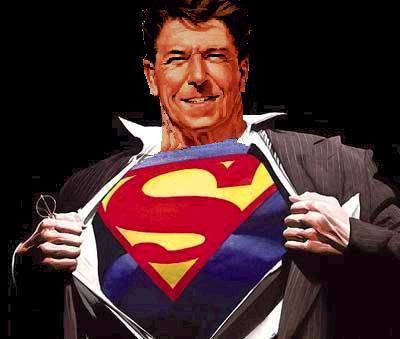

Bush Vows to Reach Out to Democrats
11/06/04
WASHINGTON - President Bush is striking twin themes for a second term, vowing to fight hard for his political agenda while reaching across the aisle to Democrats.
"Americans are expecting bipartisan effort and results," Bush said Saturday in his weekly radio address. "My administration will work with both parties in Congress to achieve those results, and to meet the responsibility we share."
Offering some words of conciliation, he said Republicans and Democrats can agree to aggressively pursue the war on terror, with every citizen having a stake in the outcome.
The challenge to working together, Bush suggested, will come on the domestic front.
"We must confront the junk and frivolous lawsuits that are driving up the cost of health care and hurting doctors and patients," he said. "We must continue to work on education reform to bring high standards and accountability, not just to elementary schools, but to the high schools as well."
Democrats challenge Republican claims that frivolous lawsuits are on the rise and have successfully blocked reforms in Congress. Doctors say ballooning malpractice insurance rates are a problem nationwide, and physicians have staged protests or walkouts in several states.
Lawsuit reform was a major issue in the presidential campaign, with Bush bringing it up daily in his speeches, focusing on the fact that Kerry running mate John Edwards was a trial lawyer who sued doctors.
Bush's proposed education reforms may meet the same criticism that he faced in his first term with the No Child Left Behind Act: a good idea that was insufficiently funded by the administration and Congress.
The president stressed another issue with skepticism at home and abroad, promoting freedom and democracy in the Middle East. Those goals are "the alternatives to tyranny and terror," he said.
Bush also promised to take on the special interest-clogged issue of reforming the tax code, a step he said the nation must take to get rid of needless paperwork and to make the economy more competitive.
He also committed his administration in its second term to altering the Social Security system, which he has said must be addressed by allowing taxpayers to invest part of their Social Security contributions in private accounts if they wish.
Copyright 2004 The Associated Press. All rights reserved. This material may not be published, broadcast, rewritten or redistributed.
Saturday, November 06, 2004
Bush Vows to Reach Out to Democrats
Posted by William N. Phillips, Jr. at 11/06/2004 08:38:00 PM 0 comments
Laura's Weekly E-Blast , 11/03/04
Laura's Weekly E-Blast
http://www.LauraIngraham.com
November 3, 2004
Reagan is Smiling
One of the most absurd theories being peddled to explain the victory of George W. Bush is that John Kerry "didn't have the charisma" needed to sell his vision to the people. Charisma was the least of Kerry's problems. Other Democratic strategists (the same ones who predicted a huge pro-Kerry youth vote) are scratching their heads over the Bush victory. They say they understand that voters think values are important. But, remember, the Kerry/Pelosi/Schumer Democratic Party still thinks their values are squarely in the mainstream!
Let this be clear: this election is a reaffirmation of Ronald Reagan--his hopefulness, his vision, and his adherence to the conservative values that rescued the Republican Party from its political exile. After the celebrating, President Bush must get down to the hard work of achieving conservative goals. Doing this will expand the Republican majority not shrink it. As we beat back the terror threat around the globe, President Bush needs to offer further support for the culture of life, advance meaningful tax reform, and enforce our national borders for cultural and security reasons.
Over the past year, we saw the political left throw everything it had against President Bush--ginned up talk of a military draft, lies about what happened at Tora Bora, phony National Guard documents, even blame for flu shot shortages. The elites in the "old media", academia, Hollywood, the Soros' billionaires club, and the EU were all pushing for John Kerry all the way. With all this, the Democrats still couldn't win. James Carville conceded that "the party needs to reassess where it is....They're going to asking themselves from tough questions."
In Shut Up & Sing, I wrote about the dynamic that we saw play in this election--the elites versus Americans. In the end, the latter will always win out. They find inspiration in Al Franken. We find inspiration in Tommy Franks. They admire Michael Moore. We admire Mel Gibson. We believe in partial privatization of Social Security. They believe in partial birth abortion. They think: "In Kofi we Trust." We think "In God We Trust." They pray for an opening at Spago. We pray for an opening in Heaven.
TIME magazine's "Person of the Year" should be "The Voters." They spoke. Are the elites listening?
Posted by William N. Phillips, Jr. at 11/06/2004 08:35:00 PM 0 comments
Monday, November 01, 2004
Manners & Online Etiquette
Source: Etiquette Ladies http://www.canoe.ca/LifewiseWorkEtiquetteladies/0621_etiquette-par.html
Going where no manners have gone before
By Lewena Bayer & Karen Mallett
Email is not an excuse for ignoring people or avoiding face-to-face conversation.
When it comes to customer service, nothing replaces face-to-face communication. A phone call is most often better than an email. A formal copy, received by mail is most often preferable to a copy sent by fax and a voice mail is still more personal than an email.
The term Netiquette - modern guidelines for communicating effectively on the internet. As always, the etiquette ladies suggest that preparation and knowledge is fundamental to presenting yourself properly. Accordingly, when it comes to cyberspace - you can't fake it! If you expect respect from your cyber peers, make sure you do your homework. If you don't know that a "portal" is a byway website that connects to affiliated and related link sites and you presume that it's an underwater window on a cruise ship, don't be surprised others don't ask your opinion when it comes to discussing broadband applications. Incidentally, broadband applications don't include either the Dixie Chicks or Spice Girl sites.
When it comes to salutations, adhere to the normal guidelines for business correspondence. When in doubt, use formal salutations, typically the sender will let you know if they prefer you address them as Ms. Instead of Miss or by their first name instead of by their formal name. Pay attention to how a sender refers to himself or herself, for example, if they list their title, you might be wise to list their title when you address a note to them.
The key with returning emails is to copy or quote enough of the original message in your reply to reiterate the subject and indicate an understanding of the content.
You should be sure to check your email at least twice a day. At the very least, it makes good sense to check when you arrive at work and when you leave.
If you rely on your website as a marketing tool and you expect to garner new business through visitations, keep it updated. Simply programming the Update calendar date to change automatically will fool a few people some of the time but regular clients will catch on in a hurry.
If you "borrow" information off someone else's page, give them credit for it.
If you're using your email for work purposes, don't open and or read other people's mail if you're networked. Try not to read over their shoulder and keep your web surfing to business related issues. Researching your summer vacation spot on company time may get you an extended holiday.
When choosing email addresses for work purposes, keep the address professional. It's pretty hard to take an investment broker seriously when their email address is loaded@$toburn.com
If you're sending "Spam" or unsolicited newsletters or any other unrequested information, always give the recipient the option to opt out or go to the site and be taken off your mailing list.
When sending attachments, call ahead and make sure that the recipient's computer is compatible and that the message can be received.
Source: Girlposse.com Talk Talk Talk August 2004 http://www.girlposse.com/talk_talk_talk/good_manners_0804.html
What ARE 'Good Manners'?
by Susan Dunn, MA, Emotional Intelligence Coach & Consultant
Interesting question, isn't it? In the Age of Rudeness, we may be losing touch with what etiquette and good manners are all about. In fact there may be those among us who haven't experienced it. According to a recent survey, more than 50% of Americans are concerned about the growing rudeness in the U. S.
We assault each other more all the time with upsetting noises, sights, sounds, smells, and attitude. It's getting to where we need to protect ourselves from one another! Maybe it's getting a little too wild out there.
Good manners are, first of all, civilized behavior. That's as opposed to wild behavior. "He acts like he was raised in a barnyard," my mother would say, about some hapless boy who pulled up in front of my house for a date and just sat in the car and honked.
Whether that was a particular rule in your household, or culture, all cultures have "rules" and they are learned, not innate. It Italy it's good manners for a man to greet another man with an embrace and a kiss on each cheek. Not so in South Texas, where men stand 3 feet apart and at 90 degree angles to converse with one another.
All cultures have rules and if you violate them, you'll be excluded. Excluded from what? Well, what we all want more of now - to be where the polite and pleasant people are. Yes?
Emily Post, the Diva of Etiquette, by virtue of her book of the same name, "Etiquette" ( http://www.bartleby.com/95/7.html ) defined this certain set of people as "Best Society."
"Best Society," she wrote, "is not confined to any one place or group, but might be better described as an unlimited brotherhood which spreads over the entire surface of the globe, the members of which are invariably people of cultivation and worldly knowledge, who have not only perfect manners but a perfect manner."
"Cultivated," you see, as opposed to "wild" or "weed-ridden" or "out of control".
"Manners" she says, "are made up of trivialities of deportment which can be easily learned if one does not happen to know them." "Manner," on the other hand, "is personality - the outward manifestation of one's innate character and attitude toward life."
Manners must be really ingrained; a matter of who you are, not how you are. The attitude must be without thinking, but the particulars require great thought. It's always easier to revert to the feral state. Ask the cat!
Miss Post suggests that once we've learned it, etiquette becomes - to those of the Best Society - "a matter of instinct rather than of conscious obedience."
There are those among us who still blurt out "thank you," "you're welcome," "excuse me," and "May I?" But there are a lot more among us who don't!
Good manners and etiquette are based on a concept that's somewhat in disfavor today - being selfless. "Unconsciousness of self," says Miss Post, "is the mental ability to extinguish all thought of one's self - exactly as one turns out the light. Hmmm. You mean put the other fellow first occasionally? Now there's a novel idea.
And so "one" - that would be you and I - one does not burp because it feels good, acting as if no one else was there; or elbow through the queue, because WE are in a hurry and WE matter most; or talk about our sex lives on cell phones in restaurants as if others would find it interesting; or shout profanity and throw tantrums because we're entitled to our anger, to indulge it and to "let it all hang out," as if it didn't stress the listener as much as it stresses us. (Second-hand hostility is as dangerous to our health as second-hand smoke!)
No, in fact manners is about letting it all hang IN. Keeping some things inside, quiet, and to oneself, turning down the volume, slowing down the pace, out of consideration for the other. Allowing the other person some comfort, some space, some peace.
"A bore," says Miss Post, "is said to be 'one who talks about himself when you want to talk about yourself!' which is superficially true enough," she adds, "but a bore might more accurately be described as one who is interested in what does not interest you, and insists that you share his enthusiasm, in spite of your disinclination."
Boring others, then, is an act of rudeness (and one of my least favorites), because there is no thought given to the interests or comfort of the other.
"Nearly all the faults or mistakes in conversation," says Miss Post, "are caused by not thinking." Ah hah! Or by thinking only of oneself.
"A first rule for behavior in society," she continues, "is: 'Try to do and say those things only which will be agreeable to others."
How far away from this we have gotten!
So, to have good manners we must learn the actions - the "trivialities of deportment" - and then stop and think when we're with others. Then we can avoid being tactless. ".[Y] ou must not talk about the unattractiveness of old age to the elderly, about the joys of dancing and skating to the lame, or about the advantages of ancestry to the self-made," says Miss Post.
Avoiding being rude, has a lot to do with Emotional Intelligence which, like good manners, can be learned. EQ requires self-awareness and empathy - the ability to understand how your behavior affects others (and their feelings). It requires a strong interface between emotions and thinking.
Blurting out the first thing on your mind ("What an ugly dress!) is rarely the tactful thing to do. To be considerate of others takes Intentionality - intending to treat others well, and exercising the self-discipline to do it. You might lower your voice, you know, steer the subject away from unpleasant things, cover your mouth when you cough ..
It's easier to be rude. If you don't believe this, watch two children at play. They will revert to the lowest level. It's easier to scream, stomp, grab, jabber, be messy and disorderly, and scratch where and when it itches, than to stop and think about what you're doing, take others into consideration, and act accordingly.
It's harder to be polite. Of course you'd rather boom your boom box and enjoy your music regardless of others; have a tantrum when you've been angered; turn the lights on when you come to bed though your spouse is sound asleep; ignore the customer because it's all such a chore, you know, working; or perhaps even hit someone who annoys you. These are the easiest things to do, and the most mindlessly satisfying, because you can indulge yourself with no thought for others.
But what happens when everyone behaves that way? Then we have a rudeness epidemic. And how will we change that? One person at a time! As Mother Teresa said, when the house is dirty don't complain or call a committee, pick up a broom and start sweeping.
~August 2004
Source: WebProNews July 23, 2003 http://www.webpronews.com/ebusiness/smallbusiness/wpn-2-20030723RampantRudenessontheInternetWhatWouldMissMannersSay.html
"Rampant Rudeness On The Internet: What Would "Miss Manners" Say?"
Merle | Contributing Writer
2003-07-23
Give some people a computer and an Internet connection and they think it's a license for rudeness. What is it about the Internet that causes some folks to take all they learned about basic etiquette and throw it right out the window?
Think about it: Just because your reader can't see you doesn't give you the right to be rude, but there are millions of Net users who feel that it does. I've been called names I'd rather not repeat in polite company and have been replied to in ALL CAPS. I'm not deaf.... THERE'S REALLY NO NEED TO YELL.
I attribute this newfound sense of rudeness to the feeling of invisibility one gets while sitting behind the keyboard. I mean, would you really come up to me face to face and call me a "Jackass" when you can't read simple directions on how to unsubscribe yourself from my ezine? I think not.
In this new digital age it appears we've taken everyday common courtesy and thrown it right out the window. Whatever happened to "please" and "thank you?" My mother, who taught me as a child to call all adults 'Mr.' or 'Mrs.' would have cardiac arrest over the emails I receive on a daily basis.
Remember the "Golden Rule?" "Do unto others as you would want them to do unto you." Translation: before you call someone names, swear at them, report them to Sp#m Cop or do any other annoying gesture, stop and think. Maybe you did subscribe to that ezine and just don't remember. Try giving someone the benefit of the doubt before firing off an ugly email message that a real live breathing human being with feelings is going to read. Computers may not have feelings, but people do and there's a person behind every email address and/ or website.
Here are the 'Top 10 Do's and Don'ts' for online communication:
1) Don't reply to someone in all caps; it's equivalent to screaming at them.
2) If you receive a newsletter and can't figure out how to unsubscribe, before threatening to sue or reporting the publisher for Sp@m, politely ask the publisher to be removed. Any ezine publisher worth his salt will be happy to oblige. We really don't want to hold you captive.
3) Try to reply to all of your email messages within 48 hours. If not, many people get annoyed and will think you're avoiding them.
4) If you publish an ezine make sure you place subscribe and unsubscribe instructions at the bottom of every issue.
5) Don't use foul language in an email; that will get you nowhere. If you're upset about something, please state the problem clearly along with how you'd like to see the problem resolved.
6) If you visit a website and it's not to your liking, don't fire off a nasty email stating what a loser the site owner must be. Remember what your Mom use to say "If you don't have something nice to say, don't say anything at all."
7) Make sure every page of your website contains an email address to contact you. Please don't make me fill out a long form just to ask you a simple question.
8) When replying to an email, keep the original message intact so the person you're replying to knows what you're talking about. Personally I receive over 300 messages a day, so I need to see your message in context -- otherwise, I may not understand it.
9) If you buy or sell products/services online, make sure you're using an online payment service like PayPal.com in order to move money around quickly. Don't make snail mail your only payment option.
10) Pay your bills in a timely fashion. If you owe someone money online don't make them send out 10 emails telling you your payment is overdue. Pay promptly.
So there you have it; my Top 10 rules for being more polite and less rude online. If you incorporate these tips into your daily Internet dealings you'll find the Net a little warmer and a friendlier place to be.
There's enough road rage in the world, so when traveling the information highway please remember that we're all human. Your computer is just a tool used to communicate with others. Please be KIND to them!
Posted by Joyce Kavitsky at 11/01/2004 08:47:00 PM 0 comments
Saturday, October 30, 2004
Eight Ways to Tell If Someone is Lying To You
Bill's Comment: I found this piece in a folder, as I was cleaning out my workspace. It is valid for both politics and life in general. Enjoy!
-----------------------------------------
Eight Ways to Tell If Someone Is Lying to You by Marty Nemco
Top Eight List of Suspicious Behaviors
1. A change in the voice's pitch.,
2. A change in the rate of speech.,
3. A sudden increase in the number of "ums" and "ahs".,
4. A change in eye contact. Normally, one makes eye contact one-quarter to one-half of the time. If suddenly, at the convenient moment to lie, he's staring at you or looking away, beware.,
5. Turning his body away from you, even if just slightly.,
6. Suddenly being able to see the white on the top and bottom of a person's eyes, not just the sides.,
7. A hand reaching, even if momentarily, to cover part of the face, especially the mouth.
8. Nervous movement of feet or legs.
Other points of noteworthiness:
* Look for suspicious behaviors
- Watch the person when talking about innocuous issues.
* A Mixed Signal
- "To Tell the Truth"- words, face, and body language are all congruent.
Posted by William N. Phillips, Jr. at 10/30/2004 10:32:00 AM 0 comments
Pennsylvania Governor Ed Rendell BUSTED, Part II
With Carl Limbacher and NewsMax.com Staff
For the story behind the story...
Friday, Oct. 29, 2004 10:45 a.m. EDT
Rendell Flip Came After Exposure of Jailhouse Vote Drive
Pennsylvania Gov. Ed Rendell's decision Friday morning to seek an extension for absentee ballots returned by soldiers serving overseas came less than 24 hours after Rep. Curt Weldon, R-Pa., accused him of mounting an absentee ballot vote drive for his state's prison population while disenfranchising the military.
"I've been in office twenty-three years and I've never had any governor send a nine-page document to our prison wardens across the state, telling them that they had to post a document in every cell block to allow our prisoners to vote by absentee ballot," Weldon told ABC radio host Sean Hannity on Thursday.
"I'm friends with Ed Rendell, too," an angry Weldon continued. "But I've go to call a pig a pig. I've got to call something the way it is. To me it's purely partisan. This is about Pennsylvania being a very close state."
Asked point blank if he though Rendell was trying to "disenfranchise" military voters in his state, Weldon told Hannity: "That's exactly what he's doing. I have soldiers e-mailing me from overseas ... Marines coming up to me saying, 'I have friends who haven't got their absentee ballot.'"
Asked how many prisoners would take advantage of Gov. Rendell's absentee ballot outreach, Weldon said, "I have no idea."
Surveys show that two-thirds of active-duty military back President Bush, while the same proportion of the prison population supports John Kerry.
In announcing his decision to seek an extension for military voters, Rendell said Friday, "I've decided that one military or civilian overseas [voter] not getting a ballot in time is too much."
Rendell served as chairman of the Democratic National Committee during the 2000 election.
Posted by William N. Phillips, Jr. at 10/30/2004 10:18:00 AM 0 comments
Pennsylvania Governor Ed Rendell BUSTED, Part I
Bill's Comment: All of this came full-circle early in the week on "The Sean Hannity Show", when Mr. Hannity made it known to the nationwide audience that Pennsylvania was disenfranchising the military vote, and allowing prisoners to vote. (I suppose for John Kerry.) Governor Rendell, along with his other Democratic Party cohorts will stop at nothing to try and pull this election in their favor. This is also the same folks who are trying to prevent the use of electronic voting machines, and allowing two week election drives before the actual Election Day. This adds up to more voting fraud and/or corruption.
--------------------------------------------
With Carl Limbacher and NewsMax.com Staff
For the story behind the story...
Friday, Oct. 29, 2004 10:15 a.m. EDT
Gov. Rendell Reversal: Will Seek Extension on Military Ballots
HARRISBURG – Under intense pressure from military voters and Republicans, Democratic Gov. Ed Rendell said Friday that he will ask a federal judge to extend the deadline for counting overseas military and civilian ballots by one week.
Rendell told CNN that Republicans could only produce one voter – out of 26,000 overseas military and civilian voters – who failed to get the absentee ballot he requested.
Nonetheless, "I've decided that one military or civilian overseas [voter] not getting a ballot in time is too much," Rendell said.
A Republican-financed federal lawsuit by two servicemen in Iraq and Kuwait filed Wednesday against Rendell and Secretary of State Pedro Cortes seeks a 15-day extension for their ballots' return. One of the plaintiffs lives in Venango County, where records show that 131 of the 134 overseas ballots mailed out have already come back to the elections office.
Rendell said one of the plaintiffs' ballots was sent and delivered to the address he put on his absentee ballot request form. He said there was no explanation why the other plaintiff never received an absentee ballot.
"There may have been a screw-up in the mail. But it's not widespread," Rendell said.
A hearing on the federal lawsuit was scheduled for Friday morning before U.S. District Judge Yvette Kane, and Rendell said his lawyers would ask for a one-week extension beyond the Nov. 2 election. Rendell had initially resisted asking for an extension.
Fanned by conservative radio hosts, the issue has erupted over the past week, with thousands of callers jamming phone lines at the governor's office and Rendell facing repeated questions about it from the public during his ongoing bus tour in support of Democratic candidate Sen. John F. Kerry.
State records obtained by The Associated Press on Thursday indicate that military voters stationed overseas are returning absentee ballots in Pennsylvania at about the same rate as all absentee ballots are coming in.
According to electronic reporting by 53 county elections offices, 15,373 ballots were mailed to servicemen and women and their families overseas, and so far 9,522 have been returned, a rate of 62 percent.
For all foreign absentee ballots and all domestic absentee ballots, the rate is an identical 63 percent each. Nonmilitary overseas ballots are coming in slightly faster, at 67 percent.
The figures were released as Republicans raise concerns that mailing delays could unfairly reduce the number of military overseas ballots counted in Tuesday's presidential election. Ballots for military families and overseas voters in remote parts of the world were mailed out starting Aug. 24, and all other overseas ballots were mailed out starting Sept. 20. Domestic absentee ballots were mailed starting Oct. 19.
"I think it shows that people are not only receiving their ballots, but they're returning them," Kate Philips, Rendell's press secretary, said Thursday.
Republican politicians have argued that delays caused by the legal dispute over independent candidate Ralph Nader's status on the presidential ballot could disenfranchise active-duty military people who are deployed overseas.
Republicans said the rate of return indicated many voters will not make the deadline and renewed their call for Rendell to join their effort to extend the time limit.
"His operating theory seems to have become, 'Well, it's not that many, it doesn't matter.' To which we say every one matters," said Senate GOP aide Erik Arneson said Thursday.
Rendell said Friday that there was no delay in mailing the ballots.
The absentee ballot numbers released by Rendell's office Thursday night do not include 11 counties that are not on the statewide elections computer system, nor do they include three counties that do not process absentee ballots over the network.
© 2004 Associated Press. All Rights Reserved. This material may not be published, broadcast, rewritten or redistributed.
Posted by William N. Phillips, Jr. at 10/30/2004 10:04:00 AM 0 comments
Labor Memo Suggests Bush to Win Election
Bill's Comment: Link courtesy of The Drudge Repory, 10/30/04.
Labor Memo Suggests Bush to Win Election
Oct 29, 3:53 PM (ET)
By LEIGH STROPE
WASHINGTON (AP) - Labor Department staff, analyzing statistics from private economists, report in an internal memo that President Bush is likely to do "much better" in Tuesday's election than the polls are predicting.
The Kerry campaign said the analysis was an improper use of taxpayer money, and the Labor Department acknowledged Friday, "Clearly, this kind of armchair political analysis doesn't belong in government memos, even if they are entirely internal."
The Labor Department report, obtained by The Associated Press, includes an analysis of economic models that suggest Bush will beat Democrat John Kerry. Titled "In Focus: Predicting the Election Outcome," the memo says, "Nearly every single model has him winning."
"Some show the margin of victory being smaller than the models' inherent margin of error, while others report the lead as substantial. And this is without the consideration of a third-party candidate."
Bush's win of the popular vote could be 57.5 percent, 55.7 percent or 51.2 percent, said the paper, dated Oct. 22 and prepared by the department's Employment and Training Administration staff for the assistant labor secretary.
The Bush administration blamed midlevel employees for preparing inappropriate government material.
"This appears to be an internal ETA document prepared by midlevel ETA staff," said Labor Department spokesman Ed Frank.
Kerry's campaign contended the Bush administration was wasting taxpayers' money.
"If the Bush administration focused more on the economy and less on politics, George Bush would not be the first president in 70 years to lose jobs," said Kerry campaign spokesman Phil Singer. "George Bush has turned the government into his own taxpayer-funded political machine."
The document also includes a Washington Post story, an article from Monster.com and charts and briefs on the latest economic indicators.
One factor in the election that has been "downplayed is the president's popularity," a variable the report says may be important. "Fortunately, there are models (that) incorporate this concept," it says.
The economic models are not infallible, but they do "systematically measure past data, which is a far cry better than relying on anecdotal evidence," the paper says. The models looked at an array of economic indicators, including gross domestic product, unemployment and inflation.
The analysis also discusses a futures market that lets players bid on a probable election outcome. It also checked Web sites of oddsmakers in America and abroad.
Posted by William N. Phillips, Jr. at 10/30/2004 09:52:00 AM 0 comments
Why W Will Win
Why W Will Win
John L. Perry
Tuesday, June 15, 2004
The reasons being given why George W. Bush will not be reelected are the very reasons he will be reelected – and by an impressive margin.
This is because his opponents have grossly failed to judge the nature of America and the character of the man, himself – the same way and for the same reasons Ronald Reagan’s opponents grossly misjudged him and the nature of America during his presidency.
It’s no accident that many of those now maligning Bush are of the same crowd in the news media who maligned Reagan. They are still making the same self-defeating mistake of actually believing what they see in the mirrors of distortion they are holding up to America. They didn’t understand America then; they don’t understand America now.
Here are the principal distortions that condescending leftists are instructing American voters will cause them to defeat Bush in November –and why just the opposite is the case.
* Distortion: The country is divided, and it’s all Bush’s fault.
Correction: America has never been entirely of one mind, but it is certainly less divided now than during or right after the Vietnam War.
The reality is that America is of three minds, not two. There are the far left and the far right (both distinct minorities) and there is a non-stationary middle, occupied by the huge majority of Americans. Increasingly, this great middle has been redefining toward the conservative side.
Bush did not cause that, but is facilitating the shift. The leftists, more and more irresponsibly out of touch with the middle, are the ones accelerating it. America is now a nation more conservative than not, growing ever more united in that direction, not more divided.
How Bush benefits: By identifying with, and leading, this political realignment, Bush gains every step along the way.
* Distortion: The economy is in the dumpster, and it’s all Bush’s fault.
Correction: No. The economy was shrinking dangerously in the early months of the Bush administration, but no longer. Every economic indicator since January 2004 is on a dramatic upswing.
And no. The “Bush recession” was in truth caused by events in the administration of Bill Clinton and was well along its downward way when Bush took office. Were it not for Bush’s tax cuts, that Clinton recession would have descended right into a Bush depression.
How Bush benefits: The welcome impact of the authentic Bush recovery is just now being realized in Americans’ daily lives. The more the leftists harp on the economy, the more that will help Bush in November.
* Distortion: Bush is bullheaded, and won’t take advice from his betters.
Correction: Those know-it-alls are the failed practitioners and surly apologists of the Clinton era. The news media call them in to testify at every turn of events, and the more they carp the more obvious become their motivations and their ineffectiveness.
Americans are beginning to realize that what critics call Bush’s bullheadedness is in truth a resolute steadfastness of principles.
How Bush benefits: In a world where unfamiliar uncertainty and unprecedented danger lurk, Americans welcome surety of principle and purpose in the presidency. The temptation to change horses in the middle of such a stream has less and less appeal.
* Distortion: Bush is politically incorrect, out of step with most Americans.
Correction: The opposite is true. The leftists are indulging in self-sycophancy if they think they represent mainstream America.
How Bush benefits: He has the proper posture for reelection in today’s America – one foot planted firmly in the unshakable, traditional conservative base and the other comfortably far enough into the mostly conservative middle. Neither footing alone is sufficient to win an election; taken together, they constitute an astonishing new majority.
* Distortion: Bush is a reckless cowboy, who has put America in greater peril.
Correction: If that is so, then for the same reasons so were Ronald Reagan and Franklin D. Roosevelt and Abraham Lincoln. Each was scolded in his time that he was leading America to ruin. Had they lacked the courage to take the risks they took, America would be in ruins today. Bush has demonstrated such courage.
How Bush benefits: Americans are now beginning to see Bush in the true light of historic reality, thanks to the conjunction of three colossal events – the birthing of a free Iraq rising out of the Bush-led war of liberation, the 60th commemoration of D-Day launching the liberation of Europe from Nazi tyranny and the “surprising” outpouring of national affection and respect in remembrance of Ronald Reagan as the kind of president America admires.
* Distortion: The Iraq war is a disaster, not worth the cost of undertaking or seeing through to the end.
Correction: Not even the press can keep hidden the truth that the liberation of Iraq is one of the noblest acts ever undertaken by any nation in the advancement of human freedom.
How Bush benefits: It is going to be political immolation for the Democratic presidential candidate if he tries to tell American families their sacrifices in Iraq are worthless. It’s one thing for John Kerry scornfully to throw away his own medals from the Vietnam War, something else to trash those earned by American troops in Iraq.
* Distortion: Bush insists on going it alone, alienating other nations.
Correction: He did not go it alone – except for feckless France, ungrateful Germany and devious Russia. Now that Bush has done the hard work in Iraq, he has a unanimous Security Council – France, Germany and Russia unwilling to “go it alone.” And he will likely have NATO with him in short order.
How Bush benefits: Beyond that, there’s a swelling good-for-Bush feeling in America even if he were to go it alone. Lincoln didn’t beg Europe’s permission. FDR got the approval of only Congress, as did Bush. Reagan went entirely alone to the Berlin Wall and never said, “Mr. Gorbachev, if it’s all right with you, please tear down this wall.” Kerry will have tough sledding advocating groveling.
* Distortion: Bush isn’t qualified intellectually, simply not up to the job.
Correction: That was easy to say four years ago, impossible to peddle now. America and the world have seen the stuff of which Bush is made.
How Bush benefits: Here again is the parallel with Reagan, who it is now clear knew exactly what he was doing while just about everyone else was dithering.
Kerry is the one who has the unassailable record of flipping and flopping, triple-tonguing an uncertain trumpet, groping around for a running mate agile enough to hop on first one foot and then the other keeping up with Kerry from moment to moment.
So waste no time listening to leftist politicians and news-media mind-minders who complain about this and grump about that when characterizing Bush. Of course they don’t like him, for all the reasons they give.
It’s precisely because of those reasons that, to their doom and gloom, George W. Bush is going to win reelection – and win big.
That’s the kind of America that America really is.
John L. Perry, a prize-winning newspaper editor and writer who served on White House staffs of two presidents, is a regular columnist for NewsMax.com.
http://www.newsmax.com/pundits/archives/John_L._Perry-archive.shtml
Posted by William N. Phillips, Jr. at 10/30/2004 07:11:00 AM 1 comments
'The Danger Only Increases With Denial'
'The Danger Only Increases With Denial'
President Bush
Wednesday, Nov. 19, 2003
Editor's note: This is the transcript of the president's speech at Whitehall Palace in London.
Thank you very much. Secretary Straw and Secretary Hoon, Admiral Cobbald and Dr. Chipman, distinguished guests: I want to thank you for your very kind welcome that you've given to me and to Laura. I also thank the groups hosting this event - The Royal United Services Institute and the International Institute for Strategic Studies. We're honored to be in the United Kingdom, and we bring the good wishes of the American people.
It was pointed out to me that the last noted American to visit London stayed in a glass box dangling over the Thames. [Laughter] A few might have been happy to provide similar arrangements for me. [Laughter] I thank Her Majesty the Queen for interceding. [Laughter] We're honored to be staying at her house.
Americans traveling to England always observe more similarities to our country than differences. I've been here only a short time, but I've noticed that the tradition of free speech - exercised with enthusiasm - [laughter] - is alive and well here in London. We have that at home, too. They now have that right in Baghdad, as well. [Applause]
The people of Great Britain also might see some familiar traits in Americans. We're sometimes faulted for a naive faith that liberty can change the world. If that's an error it began with reading too much John Locke and Adam Smith.
Americans have, on occasion, been called moralists who often speak in terms of right and wrong. That zeal has been inspired by examples on this island, by the tireless compassion of Lord Shaftesbury, the righteous courage of Wilberforce, and the firm determination of the Royal Navy over the decades to fight and end the trade in slaves.
It's rightly said that Americans are a religious people. That's, in part, because the "Good News" was translated by Tyndale, preached by Wesley, lived out in the example of William Booth. At times, Americans are even said to have a puritan streak - where might that have come from? [Laughter] Well, we can start with the Puritans.
To this fine heritage, Americans have added a few traits of our own: the good influence of our immigrants, the spirit of the frontier. Yet, there remains a bit of England in every American. So much of our national character comes from you, and we're glad for it.
The fellowship of generations is the cause of common beliefs. We believe in open societies ordered by moral conviction. We believe in private markets, humanized by compassionate government. We believe in economies that reward effort, communities that protect the weak, and the duty of nations to respect the dignity and the rights of all. And whether one learns these ideals in County Durham or in West Texas, they instill mutual respect and they inspire common purpose.
'Alliance of Values'
More than an alliance of security and commerce, the British and American peoples have an alliance of values. And, today, this old and tested alliance is very strong. [Applause]
The deepest beliefs of our nations set the direction of our foreign policy. We value our own civil rights, so we stand for the human rights of others. We affirm the God-given dignity of every person, so we are moved to action by poverty and oppression and famine and disease.
The United States and Great Britain share a mission in the world beyond the balance of power or the simple pursuit of interest. We seek the advance of freedom and the peace that freedom brings. Together our nations are standing and sacrificing for this high goal in a distant land at this very hour. And America honors the idealism and the bravery of the sons and daughters of Britain.
The last president to stay at Buckingham Palace was an idealist, without question. At a dinner hosted by King George V, in 1918, Woodrow Wilson made a pledge; with typical American understatement, he vowed that right and justice would become the predominant and controlling force in the world.
President Wilson had come to Europe with his 14 Points for Peace. Many complimented him on his vision; yet some were dubious. Take, for example, the prime minister of France. He complained that God, himself, had only 10 commandments. [Laughter] Sounds familiar. [Laughter]
At Wilson's high point of idealism, however, Europe was one short generation from Munich and Auschwitz and the Blitz. Looking back, we see the reasons why. The League of Nations, lacking both credibility and will, collapsed at the first challenge of the dictators. Free nations failed to recognize, much less confront, the aggressive evil in plain sight. And so dictators went about their business, feeding resentments and anti-Semitism, bringing death to innocent people in this city and across the world, and filling the last century with violence and genocide.
'Moral Courage'
Through world war and cold war, we learned that idealism, if it is to do any good in this world, requires common purpose and national strength, moral courage and patience in difficult tasks. And now our generation has need of these qualities.
On September the 11th, 2001, terrorists left their mark of murder on my country, and took the lives of 67 British citizens. With the passing of months and years, it is the natural human desire to resume a quiet life and to put that day behind us, as if waking from a dark dream. The hope that danger has passed is comforting, is understanding, and it is false.
The attacks that followed - on Bali, Jakarta, Casablanca, Bombay, Mombassa, Najaf, Jerusalem, Riyadh, Baghdad, and Istanbul - were not dreams. They're part of the global campaign by terrorist networks to intimidate and demoralize all who oppose them.
'The Evil Is in Plain Sight'
These terrorists target the innocent, and they kill by the thousands. And they would, if they gain the weapons they seek, kill by the millions and not be finished. The greatest threat of our age is nuclear, chemical or biological weapons in the hands of terrorists, and the dictators who aid them. The evil is in plain sight. The danger only increases with denial. Great responsibilities fall once again to the great democracies. We will face these threats with open eyes, and we will defeat them. [Applause]
The peace and security of free nations now rests on three pillars:
* First, international organizations must be equal to the challenges facing our world, from lifting up failing states to opposing proliferation.
Like 11 presidents before me, I believe in the international institutions and alliances that America helped to form and helps to lead. The United States and Great Britain have labored hard to help make the United Nations what it is supposed to be: an effective instrument of our collective security.
In recent months, we've sought and gained three additional resolutions on Iraq - Resolutions 1441, 1483 and 1511 - precisely because the global danger of terror demands a global response. The United Nations has no more compelling advocate than your prime minister, who at every turn has championed its ideals and appealed to its authority. He understands, as well, that the credibility of the U.N. depends on a willingness to keep its word and to act when action is required.
Saving the U.N. From 'Its Own Irrelevance'
America and Great Britain have done, and will do, all in their power to prevent the United Nations from solemnly choosing its own irrelevance and inviting the fate of the League of Nations. It's not enough to meet the dangers of the world with resolutions; we must meet those dangers with resolve.
In this century, as in the last, nations can accomplish more together than apart. For 54 years, America has stood with our partners in NATO, the most effective multilateral institution in history. We're committed to this great democratic alliance, and we believe it must have the will and the capacity to act beyond Europe where threats emerge.
My nation welcomes the growing unity of Europe, and the world needs America and the European Union to work in common purpose for the advance of security and justice. America is cooperating with four other nations to meet the dangers posed by North Korea. America believes the IAEA must be true to its purpose and hold Iran to its obligations.
Our first choice, and our constant practice, is to work with other responsible governments. We understand, as well, that the success of multilateralism is not measured by adherence to forms alone, the tidiness of the process, but by the results we achieve to keep our nations secure.
* The second pillar of peace and security in our world is the willingness of free nations, when the last resort arrives, to retain [sic] aggression and evil by force. There are principled objections to the use of force in every generation, and I credit the good motives behind these views.
'Violent Restraint of Violent Men'
Those in authority, however, are not judged only by good motivations. The people have given us the duty to defend them. And that duty sometimes requires the violent restraint of violent men. In some cases, the measured use of force is all that protects us from a chaotic world ruled by force.
Most in the peaceful West have no living memory of that kind of world. Yet in some countries, the memories are recent: The victims of ethnic cleansing in the Balkans, those who survived the rapists and the death squads, have few qualms when NATO applied force to help end those crimes. The women of Afghanistan, imprisoned in their homes and beaten in the streets and executed in public spectacles, did not reproach us for routing the Taliban. The inhabitants of Iraq's Baathist hell, with its lavish palaces and its torture chambers, with its massive statues and its mass graves, do not miss their fugitive dictator. They rejoiced at his fall.
In all these cases, military action was proceeded by diplomatic initiatives and negotiations and ultimatums, and final chances until the final moment. In Iraq, year after year, the dictator was given the chance to account for his weapons programs, and end the nightmare for his people. Now the resolutions he defied have been enforced.
And who will say that Iraq was better off when Saddam Hussein was strutting and killing, or that the world was safer when he held power? Who doubts that Afghanistan is a more just society and less dangerous without Mullah Omar playing host to terrorists from around the world. And Europe, too, is plainly better off with Milosevic answering for his crimes, instead of committing more.
It's been said that those who live near a police station find it hard to believe in the triumph of violence, in the same way free peoples might be tempted to take for granted the orderly societies we have come to know. Europe's peaceful unity is one of the great achievements of the last half-century. And because European countries now resolve differences through negotiation and consensus, there's sometimes an assumption that the entire world functions in the same way.
'Never Forget How Europe's Unity Was Achieved'
But let us never forget how Europe's unity was achieved: by allied armies of liberation and NATO armies of defense. And let us never forget, beyond Europe's borders, in a world where oppression and violence are very real, liberation is still a moral goal, and freedom and security still need defenders. [Applause]
* The third pillar of security is our commitment to the global expansion of democracy, and the hope and progress it brings, as the alternative to instability and to hatred and terror. We cannot rely exclusively on military power to assure our long-term security. Lasting peace is gained as justice and democracy advance.
In democratic and successful societies, men and women do not swear allegiance to malcontents and murderers; they turn their hearts and labor to building better lives. And democratic governments do not shelter terrorist camps or attack their peaceful neighbors; they honor the aspirations and dignity of their own people. In our conflict with terror and tyranny, we have an unmatched advantage, a power that cannot be resisted, and that is the appeal of freedom to all mankind.
As global powers, both our nations serve the cause of freedom in many ways, in many places. By promoting development, and fighting famine and AIDS and other diseases, we're fulfilling our moral duties, as well as encouraging stability and building a firmer basis for democratic institutions. By working for justice in Burma, in the Sudan and in Zimbabwe, we give hope to suffering people and improve the chances for stability and progress. By extending the reach of trade we foster prosperity and the habits of liberty. And by advancing freedom in the greater Middle East, we help end a cycle of dictatorship and radicalism that brings millions of people to misery and brings danger to our own people.
The stakes in that region could not be higher. If the Middle East remains a place where freedom does not flourish, it will remain a place of stagnation and anger and violence for export. And as we saw in the ruins of two towers, no distance on the map will protect our lives and way of life. If the greater Middle East joins the democratic revolution that has reached much of the world, the lives of millions in that region will be bettered, and a trend of conflict and fear will be ended at its source.
The movement of history will not come about quickly. Because of our own democratic development - the fact that it was gradual and, at times, turbulent - we must be patient with others. And the Middle East countries have some distance to travel.
'Freedom Deficit'
Arab scholars speak of a freedom deficit that has separated whole nations from the progress of our time. The essentials of social and material progress - limited government, equal justice under law, religious and economic liberty, political participation, free press, and respect for the rights of women - have been scarce across the region. Yet that has begun to change.
In an arc of reform from Morocco to Jordan to Qatar, we are seeing elections and new protections for women and the stirring of political pluralism. Many governments are realizing that theocracy and dictatorship do not lead to national greatness; they end in national ruin. They are finding, as others will find, that national progress and dignity are achieved when governments are just and people are free.
The democratic progress we've seen in the Middle East was not imposed from abroad, and neither will the greater progress we hope to see. Freedom, by definition, must be chosen, and defended by those who choose it. Our part, as free nations, is to ally ourselves with reform, wherever it occurs.
Perhaps the most helpful change we can make is to change in our own thinking. In the West, there's been a certain skepticism about the capacity or even the desire of Middle Eastern peoples for self-government. We're told that Islam is somehow inconsistent with a democratic culture. Yet more than half of the world's Muslims are today contributing citizens in democratic societies. It is suggested that the poor, in their daily struggles, care little for self-government. Yet the poor, especially, need the power of democracy to defend themselves against corrupt elites.
Peoples of the Middle East share a high civilization, a religion of personal responsibility, and a need for freedom as deep as our own. It is not realism to suppose that one-fifth of humanity is unsuited to liberty; it is pessimism and condescension, and we should have none of it. [Applause]
'Oppression for the Sake of Stability'
We must shake off decades of failed policy in the Middle East. Your nation and mine, in the past, have been willing to make a bargain, to tolerate oppression for the sake of stability. Longstanding ties often led us to overlook the faults of local elites. Yet this bargain did not bring stability or make us safe. It merely bought time, while problems festered and ideologies of violence took hold.
As recent history has shown, we cannot turn a blind eye to oppression just because the oppression is not in our own backyard. No longer should we think tyranny is benign because it is temporarily convenient. Tyranny is never benign to its victims, and our great democracies should oppose tyranny wherever it is found. [Applause]
Now we're pursuing a different course, a forward strategy of freedom in the Middle East. We will consistently challenge the enemies of reform and confront the allies of terror. We will expect a higher standard from our friends in the region, and we will meet our responsibilities in Afghanistan and in Iraq by finishing the work of democracy we have begun.
There were good-faith disagreements in your country and mine over the course and timing of military action in Iraq. Whatever has come before, we now have only two options: to keep our word, or to break our word.
The failure of democracy in Iraq would throw its people back into misery and turn that country over to terrorists who wish to destroy us. Yet democracy will succeed in Iraq, because our will is firm, our word is good, and the Iraqi people will not surrender their freedom. [Applause]
Since the liberation of Iraq, we have seen changes that could hardly have been imagined a year ago. A new Iraqi police force protects the people, instead of bullying them. More than 150 Iraqi newspapers are now in circulation, printing what they choose, not what they're ordered. Schools are open with textbooks free of propaganda. Hospitals are functioning and are well-supplied. Iraq has a new currency, the first battalion of a new army, representative local governments, and a Governing Council with an aggressive timetable for national sovereignty.
This is substantial progress. And much of it has proceeded faster than similar efforts in Germany and Japan after World War II.
Yet the violence we are seeing in Iraq today is serious. And it comes from Baathist holdouts and Jihadists from other countries, and terrorists drawn to the prospect of innocent bloodshed. It is the nature of terrorism and the cruelty of a few to try to bring grief in the loss to many.
The armed forces of both our countries have taken losses, felt deeply by our citizens. Some families now live with a burden of great sorrow. We cannot take the pain away. But these families can know they are not alone. We pray for their strength; we pray for their comfort; and we will never forget the courage of the ones they loved.
The terrorists have a purpose, a strategy to their cruelty. They view the rise of democracy in Iraq as a powerful threat to their ambitions. In this, they are correct. They believe their acts of terror against our coalition, against international aid workers and against innocent Iraqis, will make us recoil and retreat. In this, they are mistaken. [Applause]
We did not charge hundreds of miles into the heart of Iraq and pay a bitter cost of casualties, and liberate 25 million people, only to retreat before a band of thugs and assassins. [Applause] We will help the Iraqi people establish a peaceful and democratic country in the heart of the Middle East. And by doing so, we will defend our people from danger.
Israel
The forward strategy of freedom must also apply to the Arab-Israeli conflict. It's a difficult period in a part of the world that has known many. Yet, our commitment remains firm. We seek justice and dignity. We seek a viable, independent state for the Palestinian people, who have been betrayed by others for too long. [Applause] We seek security and recognition for the state of Israel, which has lived in the shadow of random death for too long. [Applause] These are worthy goals in themselves, and by reaching them we will also remove an occasion and excuse for hatred and violence in the broader Middle East.
Achieving peace in the Holy Land is not just a matter of the shape of a border. As we work on the details of peace, we must look to the heart of the matter, which is the need for a viable Palestinian democracy. Peace will not be achieved by Palestinian rulers who intimidate opposition, who tolerate and profit from corruption and maintain their ties to terrorist groups. These are the methods of the old elites, who time and again had put their own self-interest above the interest of the people they claim to serve. The long-suffering Palestinian people deserve better. They deserve true leaders, capable of creating and governing a Palestinian state.
Even after the setbacks and frustrations of recent months, goodwill and hard effort can bring about a Palestinian state and a secure Israel. Those who would lead a new Palestine should adopt peaceful means to achieve the rights of their people and create the reformed institutions of a stable democracy.
Israel should freeze settlement construction, dismantle unauthorized outposts, end the daily humiliation of the Palestinian people, and not prejudice final negotiations with the placements of walls and fences. Arab states should end incitement in their own media, cut off public and private funding for terrorism, and establish normal relations with Israel.
Leaders in Europe should withdraw all favor and support from any Palestinian ruler who fails his people and betrays their cause. And Europe's leaders, and all leaders, should strongly oppose anti-Semitism, which poisons public debates over the future of the Middle East. [Applause]
'Security of All Free Nations'
Ladies and gentlemen, we have great objectives before us that make our Atlantic alliance as vital as it has ever been. We will encourage the strength and effectiveness of international institutions. We will use force when necessary in the defense of freedom. And we will raise up an ideal of democracy in every part of the world. On these three pillars we will build the peace and security of all free nations in a time of danger.
So much good has come from our alliance of conviction and might. So much now depends on the strength of this alliance as we go forward. America has always found strong partners in London, leaders of good judgment and blunt counsel and backbone when times are tough. And I have found all those qualities in your current Prime Minister, who has my respect and my deepest thanks. [Applause]
The ties between our nations, however, are deeper than the relationship between leaders. These ties endure because they are formed by the experience and responsibilities and adversity we have shared. And in the memory of our peoples, there will always be one experience, one central event when the seal was fixed on the friendship between Britain and the United States: The arrival in Great Britain of more than 1.5 million American soldiers and airmen in the 1940s was a turning point in the second world war. For many Britons, it was a first close look at Americans, other than in the movies. Some of you here today may still remember the "friendly invasion." Our lads, they took some getting used to. There was even a saying about what many of them were up to, in addition to be "overpaid and over here." [Laughter]
At a reunion in North London some years ago, an American pilot who had settled in England after his military service, said, "Well, I'm still over here, and probably overpaid. So two out of three isn't bad." [Laughter]
In that time of war, the English people did get used to the Americans. They welcomed soldiers and fliers into their villages and homes, and took to calling them, "our boys." About 70,000 of those boys did their part to affirm our special relationship. They returned home with English brides.
Americans gained a certain image of Britain, as well. We saw an island threatened on every side, a leader who did not waver, and a country of the firmest character. And that has not changed.
The British people are the sort of partners you want when serious work needs doing. The men and women of this Kingdom are kind and steadfast and generous and brave. And America is fortunate to call this country our closest friend in the world.
May God bless you all. [Applause]
Posted by William N. Phillips, Jr. at 10/30/2004 06:38:00 AM 0 comments