
3 charged with stealing Coca-Cola info
By HARRY R. WEBER, AP Business Writer
8 minutes ago
ATLANTA - Three people have been arrested and charged with stealing confidential information about drink recipes from The Coca-Cola Co. and trying to sell it to rival PepsiCo Inc., federal prosecutors said Wednesday.
The suspects include an executive administrative assistant at Atlanta-based Coke, Joya Williams, who is accused of rifling through corporate files and stuffing documents and a new Coca-Cola product into a personal bag.
Williams, 41, of Norcross, Ga., and 30-year-old Ibrahim Dimson of New York and 43-year-old Edmund Duhaney of Decatur, Ga., are charged with wire fraud and unlawfully stealing and selling Coke trade secrets, federal prosecutors said.
They are expected to appear before a federal magistrate judge on Thursday in Atlanta.
Pepsi spokesman Dave DeCecco said his company did what any responsible company would do in cooperating with Coke and the investigation.
"Competition can sometimes be fierce, but also must be fair and legal," DeCecco said. "We're pleased the authorities and the FBI have identified the people responsible for this."
Coke's chief executive, Neville Isdell, said in a memo to employees Wednesday that the company is cooperating with federal authorities.
"Sadly, today's arrests include an individual within our company," Isdell wrote. "While this breach of trust is difficult for all of us to accept, it underscores the responsibility we each have to be vigilant in protecting our trade secrets. Information is the lifeblood of the company."
He said Coke will review its information protection policies, procedures and practices to make sure it safeguards intellectual property.
According to prosecutors, on May 19, Purchase, N.Y.-based PepsiCo provided Coke with a copy of a letter mailed to PepsiCo in an official Coca-Cola business envelope. The letter, postmarked from the Bronx in New York, was from an individual identifying himself as "Dirk," who claimed to be employed at a high level with Coca-Cola and offered "very detailed and confidential information." "Dirk" was later identified as Dimson, the FBI says.
Coca-Cola immediately contacted the FBI and an undercover FBI investigation began.
Prosecutors say Williams was the source of the information Dimson offered to provided Pepsi. They say that "Dirk" provided an FBI undercover agent 14 pages of Coca-Cola documents marked classified and confidential. The company confirmed that the documents were valid and highly confidential and were considered trade secrets. Williams works for a senior Coke manager, though the company would not say Wednesday which one. The company also would not say if she has been fired.
Prosecutors say "Dirk" requested $10,000 for the documents.
Later "Dirk" produced other documents that Coca-Cola confirmed were valid trade secrets of Coca-Cola and highly confidential. He also agreed to be paid $75,000 for the purchase of a highly confidential product sample from a new Coca Cola project, prosecutors said.
Then on June 27, an undercover FBI agent offered to buy other trade secret items for $1.5 million from "Dirk." The same day a bank account was opened under the names of Duhaney and Dimson, and the address used on the account was that of Duhaney's Decatur residence, prosecutors said.
Video surveillance showed Williams at her desk at Coke headquarters going through multiple files looking for documents and stuffing them into bags. She also was observed holding a liquid container with a white label, which resembled the description of new Coca-Cola product sample before placing it into her personal bag, prosecutors say, adding that Coca-Cola later verified the sample was genuine and is in fact a product being developed by the company.
Dimson, Williams and Duhaney were arrested in Atlanta on Wednesday, the day the $1.5 million deal was to take place, prosecutors say.
Wednesday, July 05, 2006
3 charged with stealing Coca-Cola info
Enron founder Kenneth Lay dies at 64
Enron founder Kenneth Lay dies at 64
By KRISTEN HAYS, AP Business Writer
47 minutes ago
HOUSTON - Enron Corp. founder Kenneth Lay, who faced decades in prison for one of the most sprawling business frauds in U.S. history, died Wednesday while vacationing in Aspen, Colo. He was 64.
His pastor in Houston said Lay died of a heart attack, which had not yet been confirmed by an autopsy.
Lay ascended from near-poverty as a minister's son in Missouri to the pinnacle of corporate America. He was considered a visionary who had President Bush's ear during Enron's halcyon days, but his reputation and monumental wealth shattered with that of his company. He spent his last years optimistically insisting he was no criminal, even after he became a felon.
"I guess when you're facing the rest of your life in jail and in your heart you know you're an innocent man, I guess it's too much to bear," said close friend Willie Alexander.
Lay had stayed out of the public eye since a federal jury on May 25 convicted him and former Enron CEO Jeffrey Skilling of fraud and conspiracy for lying to employees and investors about Enron's financial health.
Lay, who described himself as naturally optimistic, displayed no signs of ill health throughout the grueling four-month trial that started Jan. 30. His lead lawyer, Michael Ramsey, was sidelined for several weeks during the trial because of heart problems.
"It's a very sad ending for the whole Lay family saga. There are very few people of his age and abilities who flew as high or who fell so low," said John Olson, an analyst who angered Lay with his skeptical takes on Enron's often indecipherable financial reports.
Along with fraud and conspiracy charges, Lay also was convicted in a separate federal trial of bank fraud and making false statements to banks. Those charges related to his personal finances.
Lay was scheduled to be sentenced Oct. 23, along with Skilling, who also faces a long prison term.
Skilling, reached by telephone at his home in Houston, told The Associated Press that he was aware of Lay's death.
"No, I don't have any comment," he said quietly. But his lawyer, Daniel Petrocelli, described Skilling as "devastated."
"Jeff and Ken worked closely over the years, and Jeff will miss him dearly," Petrocelli said.
Lay led Enron's meteoric rise from a staid natural gas pipeline company formed by a 1985 merger to an energy and trading conglomerate that reached No. 7 on the Fortune 500 in 2000 and claimed $101 billion in annual revenues. Lay traveled in the highest business and political circles, lived an extravagant lifestyle and gave generously — as much as $6.1 million in 2001.
Lay's clout evaporated when Enron spiraled into bankruptcy protection in December 2001. The crash obliterated Enron's more than $60 billion in market value and thousands of jobs, and Lay was pushed out as chairman and CEO in January 2002.
The government launched a widespread fraud investigation that enveloped Enron's finance, trading, broadband and retail energy units. The probe amassed 16 guilty pleas from ex-executives, eight of whom testified against Skilling and Lay during their trial.
Lay and Skilling insisted no fraud occurred at Enron except from a few employees who skimmed money behind their backs. Jurors were unconvinced.
"I loved Enron very much. And I loved Enron's employees very much. I spent half my professional life running Enron. I think we built a great company. We changed energy markets around the world," Lay testified during the trial.
Prosecutors in Lay's trial declined comment Wednesday, both on his death and what may become of their effort to seek $43.5 million from Lay that they say he pocketed as part of the conspiracy. The government is seeking $139.3 million from Skilling.
Lay's death will not affect the government's case against Skilling, who will appeal his convictions, Petrocelli said.
The Pitkin, Colo., Sheriff's Department said officers were called to Lay's house in Old Snowmass, Colo., shortly after 1 a.m. MDT (3 a.m. EDT). He was taken to Aspen Valley Hospital, where he died at 3:11 a.m., said Pat Worcester, executive assistant to the Aspen hospital's chief executive.
Lay's bond allowed him to travel only to Colorado and in the Houston area.
Pastor Steve Wende of Houston's First United Methodist Church, said Lay died of a heart attack.
"Apparently, his heart simply gave out," Wende said.
Wende said Lay seemed healthy when he attended services in Houston on Sunday, and even believed God may have had a purpose for him in prison.
"He was very much at peace with his future, he had a perspective on what had happened, he even bore no ill will for the jury or all of the people who might want to say terrible things about him," Wende said.
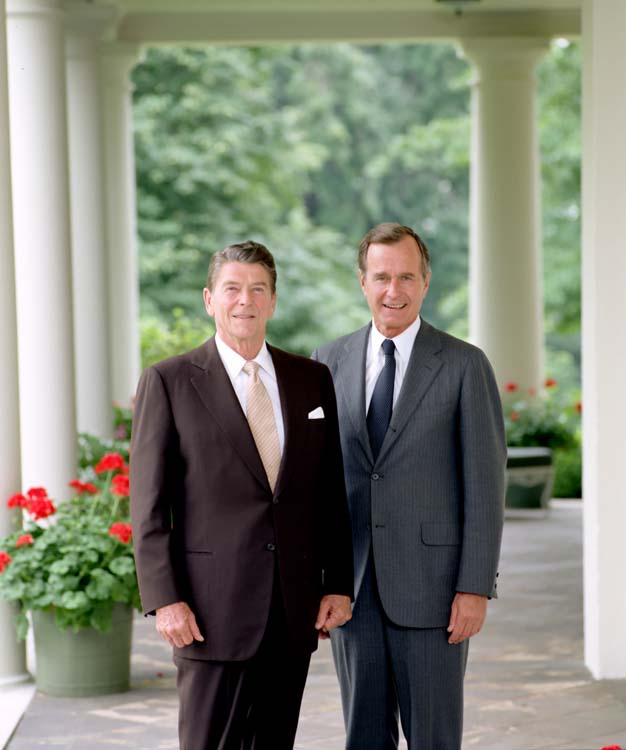
Before Enron became a scandal-tainted punchline, the company was the single largest contributor to President Bush, who nicknamed Lay "Kenny Boy." Lay said he was closer to the president's father, George H.W. Bush. He kept a framed photo of himself with a smiling elder Bush and former First Lady Barbara Bush.
But White House press secretary Tony Snow said Wednesday he hadn't discussed Lay's death with the president.
"The president has described Ken Lay as an acquaintance. And many of the president's acquaintances have passed on during his time in office," Snow said.
During the trial Lay had been expected to charm jurors, but instead came across as irritable and combative.
Lay defended his personal spending, including a $200,000 yacht for Linda Lay's birthday party in early 2001, despite $100 million in personal debt. He told jurors it was "difficult to turn off that lifestyle like a spigot."
Lay also defended how he borrowed more than $70 million from Enron in 2001 — even as the company was spiraling — and repaid most of those loans with company stock.
"I wanted very badly to believe what they were saying," juror Wendy Vaughan said after the verdicts were announced. "There were places in the testimony I felt their character was questionable."
Lay was born in Tyrone, Mo. and spent his childhood helping his family make ends meet. His father ran a general store and sold stoves until he became a minister, and Lay delivered newspapers and mowed lawns. He attended the University of Missouri, found his calling in economics, and went to work at Exxon Mobil Corp.'s predecessor, Humble Oil & Refining.
He joined the Navy, served his time at the Pentagon, and then served as undersecretary for the Department of the Interior before he returned to business. He became an executive at Florida Gas, then Transco Energy in Houston, and later became CEO of Houston Natural Gas. In 1985, HNG merged with InterNorth in Omaha, Neb. to form Enron, and Lay became chairman and CEO of the combined company the next year.
Lay is survived by his wife, five children and stepchildren and 12 grandchildren.
---------
Associated Press Writers Kim Nguyen in Denver, David Koenig in Dallas and Rich Matthews in Houston contributed to this report.
Friday, June 30, 2006
Lessons from a Larger-than-Life President By Karl Rove
Source: http://www.time.com/time/magazine/article/0,9171,1207825,00.html
Theodore Roosevelt is one of the most remarkable figures in America's story. Adventurous, brave, opinionated, a larger-than-life personality, he was a man of action, energy and motion. T.R. loved what he called "the literature of history"--and wanted to be a key actor in America's great drama.
Roosevelt was not perfect by any means--but he was an extraordinary man by any reasonable measure. He was among our most consequential Presidents, changing America in deep and lasting ways. A century after he served as President, he still has many things to teach us. Among them:
1. It is every American's responsibility to be active in our civic life. "The first duty of an American citizen, then," Roosevelt said, "is that he shall work in politics." T.R. took the title of citizen seriously. He believed freedom could not be preserved without Americans "striving and suffering for it" by defending the nation and participating in the practical work of democracy.
2. Politics should be animated by large, important ideas. For a man who said "I like big things," politics was about precisely that. T.R. was not interested so much in management or budgeting matters; he wanted to grapple with big issues like America's role in the world, social justice and fairness in competition. Whether it was waging war or waging peace--T.R. was the first American to win the Nobel Peace Prize--he shaped the future of the nation and the course of human events. In doing so, he helped invent the modern American presidency.
3. The United States, while not flawless, is a profound force for good in the world. Theodore Roosevelt led a reluctant nation, largely indifferent to world affairs, onto the global stage. On his watch, America became a great world power. "There comes a time in the life of a nation, as in the life of an individual, when it must face great responsibilities, whether it will or no," he said in 1898. "We have now reached that time. We cannot avoid facing the fact that we occupy a new place among the people of the world ... Our flag is a proud flag, and it stands for liberty and civilization. Where it has once floated, there must be no return to tyranny."
4. Leadership matters. Confident in his own powers of judgment and persuasion, Roosevelt believed in "immediate and rigorous executive action" in times of crisis. And whether they agreed with him or not, Americans knew where this human dynamo stood on the great issues of his time. Driven by a fervent belief in the Declaration of Independence, he drew strength from his faith that all Americans "stand on the same footing," as human beings worthy of respect. And like all great leaders, he inspired those he led, turning his convictions into theirs.
5. A spirited clash of ideas is not only inevitable in politics, but helpful. T.R. didn't just love ideas, he loved to debate them as long as it was fair and straight. The "healthy combativeness" of politics clarified differences and choices. The rough-and-tumble of the political arena didn't bother him. "If a man has a very decided character, has a strongly accentuated career," Roosevelt said, "it is normally the case of course that he makes ardent friends and bitter enemies." T.R. had both. So did F.D.R. So did Lincoln. So did Reagan. So do all consequential leaders.
6. There can be great joy in politics. At the age of 28 and on the verge of losing the New York City mayor's race, he still wrote a friend, "I have had first class fun ..." He relished the thrust and parry of politics, its give and take, the highs and lows. And he knew politics was a noble profession. "Aggressive fighting for the right is the noblest sport the world affords," he famously said. No man loved being President more than T.R.--or missed being President as much.
7. Character matters. Roosevelt was a man of extraordinary self-will. Encouraged by his father, he turned himself from a sickly child to a powerful, hardy young man. He overcame common human fears and became a man of great courage. He chose "the strenuous life" over comfort and ease. He was a loyal friend and faithful husband--and reveled in the company of his children. He encountered heartbreaking losses-- the sudden passing of his beloved first wife and his mother on the same day in the same house and, later, the death in combat of his son Quentin--yet his life was characterized by passion and zest and a drive to achieve great things.
Roosevelt's fellow citizens loved him, in large measure because they knew how deeply he loved his country. At the start of "a new century big with the fate of many nations," he said America was the "young giant of the West." He strived with all his considerable power to conserve, strengthen, direct and ennoble it. He did all that and more, which is why Theodore Roosevelt holds a special place in the American imagination. •
Karl Rove, a history buff, is assistant to the President, deputy chief of staff and senior adviser

Thursday, June 29, 2006


Monday, June 26, 2006
National Review Wants SWIFT Investigation of New York Times
Source: http://article.nationalreview.com/?q=NDVhYWQzMmQ3YWRlNzFkYjRmZmY4ZTQzZmUwZjJhZjI=
Stop the Leaks
By The Editors
Every passing week, it becomes more apparent that disgruntled leftists in the intelligence community and antiwar crusaders in the mainstream media, annealed in their disdain for the Bush administration, are undermining our ability to win the War on Terror. Their latest body blow to the war effort is the exposure, principally by the New York Times, of the Treasury Department’s top-secret program to monitor terror funding.
President Bush, who said on Monday morning that the exposure "does great harm to the United States of America," must demand that the New York Times pay a price for its costly, arrogant defiance. The administration should withdraw the newspaper’s White House press credentials because this privilege has been so egregiously abused, and an aggressive investigation should be undertaken to identify and prosecute, at a minimum, the government officials who have leaked national-defense information.
The Terrorist Finance Tracking Program (TFTP) was initiated soon after the 9/11 attacks. It ingeniously focuses on the hub of interlocking systems that facilitate global money transfers. The steward of that hub, centered in Brussels, is the Society of Worldwide Interbank Financial Telecommunication, or “SWIFT.” SWIFT is an organization of the world’s financial giants, including the national banks of Belgium, England, and Japan, the European Central Bank, and the U.S. Federal Reserve. SWIFT, however, is not a bank. It’s a clearinghouse that manages message traffic pursuant to international transfers of funds.
Intelligence about those communications implicates no legally recognized privacy interests. To begin with, they are predominantly foreign, and international. To the extent the U.S. Constitution might be thought to apply, the Supreme Court held nearly 30 years ago that records in the hands of third parties — including financial records maintained by banks — are not private, and thus not protected by the Fourth Amendment. Moreover, to the extent Congress later supplemented privacy protections by statute, those laws regulated disclosures by financial institutions. SWIFT is not a financial institution.
Despite this legal daylight, the Bush administration has gone out of its way to defer to privacy concerns. Assuming that American law applied, it obtained SWIFT information by administrative subpoena. It carefully narrowed its scrutiny to those transacting with suspected terrorists. It concurred with its international partners that the resulting intelligence should be used only for counterterrorism and security purposes—not for prosecutions of ordinary crimes (even though such prosecutions would be legal under American law). And it agreed to subject the TFTP to independent auditing to ensure that the effort was trained on terrorists.
By all accounts, the program has been a ringing success. The administration maintains that the TFTP has been central to mapping terror cells and their tentacles, and to shutting off their funding spigot. It has resulted in at least one major domestic prosecution for providing material support to al Qaeda. It has also led to the apprehension of one of the jihad’s most insulated and ruthless operatives, Jemaah Islamiya’s Riduan Isamuddin, who is tied to the 2002 Bali bombing.
But as has happened with other crucial counterterrorism tools — such as the NSA’s program to monitor the enemy’s international communications, which the New York Times exposed, and the CIA’s arrangements for our allies to detain high-level Qaeda operatives, which the Washington Post compromised — the TFTP’s existence was disclosed to the Times and other newspapers by anonymous government officials, in violation of their legal obligation to maintain secrecy. The Bush administration pleaded with the newspapers not to publish what they had learned. But these requests, rooted in the national-security interests of the United States, were rebuffed. The Times, along with the Los Angeles Times (which also rejected a government request not to publish) and the Wall Street Journal, ran stories exposing the program. Yes, the public was being protected. Yes, terrorists trying to kill Americans were being brought to heel. Yes, it appears the program is legal. And yes, it appears the Bush administration made various accommodations out of respect for international opinion and privacy concerns. Despite all that, New York Times executive editor Bill Keller concluded that "the administration’s extraordinary access to this vast repository of international financial data, however carefully targeted use of it may be, is a matter of public interest."
It is a matter of interest mainly to al Qaeda. The terrorists will now adapt. They will find new ways of transferring funds, and precious lines of intelligence will be lost. Murderers will get the resources they need to carry out their grisly business. As for the real public interest, it lies primarily in safety — and what the Times has ensured is that the public today is less safe.
Success in defeating the terrorists at war with us is dependent on good intelligence. Without obtaining it and keeping it secret, the government can’t even find the dots, much less connect them. If the compromising of our national-security secrets continues, terrorists will thrive and Americans will die. It has to be stopped.
The New York Times is a recidivist offender in what has become a relentless effort to undermine the intelligence-gathering without which a war against embedded terrorists cannot be won. And it is an unrepentant offender. In a letter published over the weekend, Keller once again defended the newspaper's editorial decision to run its TFTP story. Without any trace of perceiving the danger inherent in public officials’ compromising of national-security information (a matter that the Times frothed over when it came to the comparative trifle of Valerie Plame's status as a CIA employee), Keller indicated that the Times would continue revealing such matters whenever it unilaterally decided that doing so was in the public interest.
The president should match this morning’s tough talk with concrete action. Publications such as the Times, which act irresponsibly when given access to secrets on which national security depends, should have their access to government reduced. Their press credentials should be withdrawn. Reporting is surely a right, but press credentials are a privilege. This kind of conduct ought not be rewarded with privileged access.
Moreover, the Justice Department must be more aggressive than it has been in investigating national-security leaks. While prosecution of the press for publishing information helpful to the enemy in wartime would be controversial, pursuit of the government officials who leak it is not. At the very least, members of the media who report such information must be made to understand that the government will no longer regard them as immune from questioning when it investigates the leakers. They should be compelled to reveal their sources, on pain of contempt.
Source: http://article.nationalreview.com/?q=MWE2Zjk3NDU5ZDVjNzBiNGU1NGQ1YmY5Mzg3MTY1ODA=
They're Just More Important Than You Are
Are any secrets more important than the New York Times's sources?
By Andrew C. McCarthy
The echo trails off the last defiantly gleeful chorus of "We Are the World." Reality stubbornly dawns on you: There really are bad people out there. They are the world, too. And they want to kill you.
They refuse to be reasoned with. They can afford to. They’re not a country. They don't have to worry about defending a territory. They are seeped into places that can't be bombed into submission. They are the world, after all. They are the children — or at least hidden among them. No "Mutually Assured Destruction" here.
No, you have only one defense: Intelligence. Superpower power is useless. What are you gonna do? Hit them where they live? Bomb Hamburg? Bomb London? Bomb New York?
Not an option. Your nukes, stealth fighters, carpet bombers … they’re largely irrelevant. This is not about killing an advancing brigade. It's about killing cells. A handful of operatives here and there, nestled among millions of innocents.
The real challenge is not how to kill them — or at least capture them. It’s how to find them. How to identify them from among the hordes they dress like, sound like, and even act like … right up until the moment they board a plane. Or wave cheerily alongside a naval destroyer. Or park their nondescript van in the catacombs of a mighty skyscraper.
The only way to prevent terrorist attacks is to gather intelligence. It is to collect the information that reveals who the jihadists are, who is backing them with money and resources, and where they are likely to strike. There is nothing else.
How do you get such intelligence? Your options are few. The terrorists you capture, you squeeze until they break. Since your laws and protocols forbid physical coercion, you must employ psychological pressure — relentless detachment and loneliness that may render a battle-hard, hate-obsessed detainee hopeless enough and dependent enough on his interrogators to tell you the deepest, deadliest secrets. So you move your captives to places where they will be isolated, and forlorn, and … eventually — maybe after a very long time — moved to tell you what they know about their fellow savages.
Otherwise, you use your technological wizardry to penetrate their communications. You use your mastery of the global web that is modern finance to find the money and follow it — until you can pierce the veiled charities and masked philanthropists behind the terror dollars. Until you strangle the supply lines that convert hatred into action.
All the while, you never underestimate your enemies. You know they are clever, resourceful, and adaptive. You know they study you, just as you are studying them. More effectively, in fact. After all, when you find their vulnerabilities, there is still due process. When they find yours, there is murder. Mass murder.
Life or death. Which one it will be turns solely on intelligence and secrecy. Can you find out how they next intend to kill you, can you stop them, and can you prevent them from knowing how you know … so you can stop them again?
Simple as that. Modernity has changed many things, but it hasn't changed that. In command of the first American military forces, and facing a deadly enemy, George Washington himself observed that the "necessity of procuring good intelligence is apparent and need not be further urged…. [U]pon Secrecy, Success depends in Most Enterprises ... and for want of it, they are generally defeated."
What on earth would George Washington have made of Bill Keller, executive editor of the New York Times, and his comrades in today’s American media?
What would he have made of transparently politicized free-speech zealots who inform for the enemy and have the nerve to call it "patriotism."
Who say, "If you try to isolate barbarians to make them hand up the other barbarians, we will expose it."
"If you try to intercept enemy communications — as victorious militaries have done in every war ever fought — we will tell all the world, including the enemy, exactly what you’re up to."
"If you track the enemy's finances, we will blow you out of the water. We’ll disclose just what you're doing and just how you're doing it. Even if it’s saving innocent lives."
And why this last? Remember five years ago, back when they figured "you're not doing enough" was the best way to bash the Bush administration? Remember the Times and its ilk — disdainful of aggressive military responses — tut-tutting about how the disruption of money flows was the key to thwarting international terrorists. So why compromise that?
Is there some illegality going on in the government’s Terrorist Finance Tracking Program (exposed by the Times and other news outlets Friday)? No, no laws have been broken. Is there some abuse of power? No, there seem to have been extraordinary steps taken to inform relevant officials and win international cooperation. Why then? Why take action that can only aid and comfort the enemy in wartime?
Because, Keller haughtily pronounced, American methods of monitoring enemy money transfers are "a matter of public interest."
Really? The Times prattles on about what it claims is a dearth of checks and balances, but what are the checks and balances on Bill Keller? Can it be that our security hinges on whether the editor of an antiwar, for-profit journal thinks some defense measure might be interesting?
Well, here’s something truly interesting: There are people in the U.S. intelligence community who are revealing the nation's most precious secrets.
The media aspire to be the public's watchdog? Ever on the prowl to promote good government? Okay, here we have public officials endangering American lives. Public officials whose violation of a solemn oath to protect national defense information is both a profound offense against honor and a serious crime.
What about the public interest in that? What about the public interest in rooting out those who betray their country in wartime?
Not on your life.
National-security secrets? All fair game. If it’s about how we detain, or infiltrate, or defang the monsters pledged to kill us, the New York Times reserves the right to derail us any time it finds such matters … interesting.
But the media's own sources? That, and that alone, is sacrosanct. Worth protecting above all else.
National-security secrets, after all, are merely the public treasure that keeps us alive. Press informants are the private preserve of the media.
And they’re just more important than you are.
— Andrew C. McCarthy, a former federal prosecutor, is a senior fellow at the Foundation for the Defense of Democracies.
Sunday, June 18, 2006
Toyota's 2007 Camry ready for submission
Toyota's 2007 Camry ready for submission
Manufacturer to deliver latest design to NASCAR on Monday
By Dave Rodman, NASCAR.COM
June 17, 2006
01:02 PM EDT (17:02 GMT)
BROOKLYN, Mich. -- The 2007 Toyota Camry that will be used in 20 of the 36 Nextel Cup Series races next season will be submitted to NASCAR on Monday morning, Lee White, TRD (Toyota Racing Development) USA's senior vice president and general manager, said Saturday.
White was at Michigan International Speedway in conjunction with Toyota's Craftsman Truck Series program and said the 2007 Camry, complete with the latest generation nose, would be delivered to the NASCAR research and development center in Concord, N.C.
NASCAR will take the car to the Lockheed wind tunnel in Marietta, Ga., for testing on Monday evening, he said.
The car, which was constructed at TRD's engineering facility in High Point, N.C., by the group led by engineer Todd Holbert, is scheduled to test for NASCAR on Tuesday at Atlanta Motor Speedway, driven by Toyota Truck Series driver Johnny Benson.
"Johnny's got Cup experience, he knows the ropes and he's well-respected," White said of Benson, a Bill Davis Racing driver. "NASCAR expects us to turn top-20 times over an extended run.
"After the test, they're going to take the engine back and dyno test it to make sure it's within the horsepower parameters they're looking for."
White said the engine configuration is somewhere between the current Truck Series engine and the engine that Toyota plans to submit by the Sept. 1 deadline, for use in 2007.
"It's got the bigger carburetor and intake manifold on it to bring it up to the horsepower rating we think we'll need to have," White said. "It's one of two engine configurations we're working on as we move toward [our 2007 submission].
"The other is what we call the 'hybrid engine,' which has some additional metal in it to account for modifications NASCAR might want us to make as we go forward."
White confirmed that TRD has been working closely with NASCAR through every step of the approval process of its cars and engines, and anticipated the approval of Camry's "car of today" would come soon.
"Our teams have to build about 100 of these cars and we don't have an awful lot of time to do it in," White said, "so we certainly hope the approval will come quickly."
White said the manufacturer also is redoubling its efforts on the Car of Tomorrow, which will be used at all short tracks and road courses next season -- a total of 16 races -- and reiterated TRD president and CEO Jim Aust's prediction that Toyota's car would be at Michigan in August for the next scheduled COT test.
"It's important to NASCAR that all the manufacturers get behind this program and step up and participate," White said. "They are close enough on the rules package, we believe, that we are really ready to complete the chassis we have under construction already.
"We hope to have at least two of them at the test in August, if not more than that."
White also said he was pleasantly surprised to find, at least to this point, that the cooperation among the Toyota Cup teams has approximated that of the Craftsman Truck programs.
Burger King, Domino's to sponsor MWR in '07
Burger King, Domino's to sponsor MWR in '07
Food companies to split time on No. 00 Toyota next season
Team Release
June 18, 2006
05:53 PM EDT (21:53 GMT)
BROOKLYN, Mich. -- Michael Waltrip Racing (MWR) announced Sunday it has formed a unique partnership with two marquee brands -- Domino's Pizza (DPZ) and Burger King Corporation (BKC) to be co-primary sponsors of its second 2007 Nextel Cup Series team.
"When we first approached Burger King and Domino's Pizza, we knew we were thinking outside of the box and didn't know if two food brands would be willing to work together to sponsor the same team," said Michael Waltrip. "We took the risk and are very excited to have two of the world's most recognized brands sponsoring the No. 00 Nextel Cup team."
"It's not unusual for two or more sponsors to split a sponsorship season," said Ty Norris, General Manager for Michael Waltrip Racing. "However, this is the first time that two companies within the same industry agreed to be sponsors of the same car during the same season. This is another example of the unprecedented approach Michael Waltrip Racing is taking to becoming a multi-car Nextel Cup team organization."
Domino's will kick off the season at the Daytona 500 and continue as the primary sponsor through the May race in Darlington, S.C. A Domino's paint scheme will also adorn the No. 00 Toyota Camry at the August Nextel Cup Series race at Michigan International Speedway. Domino's will deliver its final five races during the Chase for the Nextel Cup.
"We've taken a strategic approach to our involvement with NASCAR and have been rewarded by the fans as we moved from the number three pizza choice to number one in a few short years," said Ken Calwell, Domino's Chief Marketing Officer. "By splitting the 2007 season with Burger King, we are able to implement our marketing and promotional efforts at different points throughout the season that make sense for our brand and build more meaningful connections with fans and customers."
The No. 00 Burger King Toyota Camry will hit the track Memorial Day weekend at Lowe's Motor Speedway in Charlotte, N.C., and cap off the regular season under the lights at Richmond International Raceway. Five Chase for the Nextel Cup races, including the final race at Homestead-Miami Speedway, will feature the Burger King paint scheme.
"We're excited about the opportunity to extend our 2006 primary sponsorship commitment with Michael Waltrip Racing for another year," said Russ Klein, Chief Marketing Officer, BKC. "Our Have it Your Way philosophy is about giving our customers experiences they want. We're looking to deliver a winning season in 2007."
The split-season sponsorship allows Domino's and Burger King to continue their respective relationships with Michael Waltrip Racing, while positioning both companies at the forefront of the changing motorsports industry.
The team along with input from both sponsors is in negotiations to secure a driver and will make a separate announcement once a driver has been determined.
"I hope we find a driver who likes to eat," said Waltrip. "I've had an opportunity to work with both Domino's Pizza and Burger King in the past and believe we're delivering a race team the fans will love."
Domino's, the Official Pizza of NASCAR, partnered with MWR three times in 2005 as the primary sponsor on Waltrip's No. 99 NASCAR Busch Series car and will be the primary sponsor of Waltrip's No. 55 NASCAR NEXTEL Cup Series car at the Michigan International Speedway race in August. Burger King recently announced plans to join MWR for a partial season in 2006, sponsoring the No. 00 Nextel Cup car for five races beginning in July at Chicagoland Speedway.
Saturday, June 17, 2006
Michael Waltrip Racing Announcement this weekend
As appeared on www.jayski.com, Michael Waltrip will be making an announcement regarding his 2007 Toyota Cup team. I have pasted the contents from the Jayski site.
-----
Waltrip to make 2007 sponsor announcement this weekend..Domino's? BK? UPDATE: On Speed Channel's Inside Nextel Cup, Michael Waltrip said he would be making a sponsor announcement for the 2007 season for his Toyota team this weekend [at MIS]. Ken Schrader asked why not now [on the show], Waltrip said the paperwork isn't signed yet in which Schrader asked if there was a chance it wouldn't get signed; Waltrip responded: "Domino's Delivers" and then "Have it Your Way" the motto for Burger King,(6-13-2006)
UPDATE: Michael Waltrip will make an announcement about the future of Michael Waltrip Racing on Sunday morning, June 18th at MIS.(6-17-2006)
-----
For more on this, your best bets to hear (or see) more about this are www.nascar.com ,www.jayski.com , or by watching either of these television shows on Sunday:
- NASCAR RaceDay on SPEED, from 1130 AM to 1 PM EDT, or
- FOX NASCAR Pre-Race (on Fox), beginning at 1 PM EDT.
Wednesday, May 31, 2006
"A Bad American" by George Carlin
YES, I'M A BAD AMERICAN !
by : George Carlin
I Am Your Worst Nightmare.
I am a BAD American.
I am George Carlin.
I believe the money I make belongs to me and my family, not some mid level
governmental functionary be it Democratic or Republican!
I'm in touch with my feelings and I like it that way!
I think owning a gun doesn't make you a killer, it makes you a smart
American.
I think being a minority does not make you noble or victimized, and does
not entitle you to anything.
I believe that if you are selling me a Big Mac, try to do it in English.
I believe everyone has a right to pray to his or her God when and where
they want to.
My heroes are John Wayne, Babe Ruth, Roy Rogers, and whoever canceled Jerry Springer.
I don't hate the rich. I don't pity the poor.
I know wrestling is fake and I don't waste my time arguing about it.
I've never owned a slave, or was a slave, I didn't wander forty years In
the desert after getting chased out of Egypt. I haven't burned any witches
or been persecuted by the Turks and neither have you!
So, shut up already.
I want to know which church is it exactly where the
Reverend Jesse Jackson practices, where he gets his money,
and why he is always part of the problem and not the solution
Can I get an AMEN on that one?
I think the cops have every right to shoot your sorry rear if you're
running from them..
I also think they have the right to pull you over if you're breaking the
law, regardless of what color you are.
And, no, I don't mind having my face shown on my drivers license. I think
it's good..... and I'm proud that "God" is written on my money.
I think if you are too stupid to know how a ballot works, I don't want you
deciding who should be running the most powerful nation in the world for
the next four years.
I dislike those people standing in the intersections trying to sell me
stuff or trying to guilt me into making "donations" to their cause.
I believe that it doesn't take a village to raise a child, it takes two
parents.
And what is going on with gas prices... again?
If this makes me a BAD American, then yes, I'm a BAD American.
If you are a BAD American too, please forward this to everyone you know.
We need our country back!
We NEED GOD BACK IN OUR COUNTRY!
I would rather live my life as if there is a
God, and die to find out there isn't, Than
live my life as if there isn't, and die to
find out there is.