
Bush lifts executive ban on offshore drilling
By BEN FELLER, Associated Press Writer
8 minutes ago
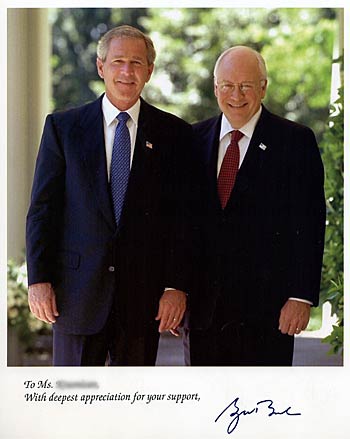
Putting pressure on congressional Democrats to back more exploration for oil, President Bush on Monday lifted an executive ban on offshore drilling that his stood since his father was president.
But the move, by itself, will do nothing unless Congress acts as well.
There are two prohibitions on offshore drilling, one imposed by Congress and another by executive order signed by the first President Bush in 1990. The current president, trying to ease market tensions and boost supply, called last month for Congress to lift its prohibition before he did so himself.
"The only thing standing between the American people and these vast oil resources is action from the U.S. Congress," Bush said in a statement in the Rose Garden. "Now the ball is squarely in Congress' court."
Bush criticized Congress for failing to lift its own ban on offshore drilling. "Failure to act is unacceptable," the president said.
"And now Americans are paying at the pump," he declared.
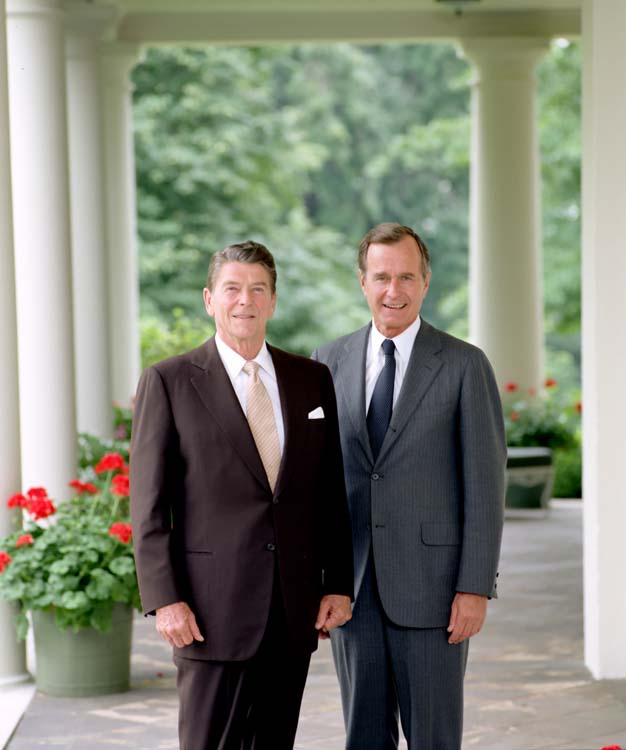
Congressional Democrats, joined by some GOP lawmakers from coastal states, have opposed lifting the prohibition that has barred energy companies from waters along both the East and West coasts and in the eastern Gulf of Mexico. A succession of presidents, from Bush's father — George H.W. Bush — to Bill Clinton, have sided against drilling in these waters, as has Congress each year for 27 years. Their goal has to been to protect beaches and coastal states' tourism economies.
"This proposal is something you'd expect from an oil company CEO, not the president of the United States," said Sen. Barbara Boxer, D-Calif., chairwoman of the Senate Environment Committee. "The president is taking special-interest government to a new level and threatening our thriving coastal economy."
Environmental groups, too, blasted Bush's move.
"President Bush has once again ignored the wise precedent set by his father and taken reckless action that has neither hope of reducing gas prices nor concern for long-term consequences," said Gene Karpinski, president of The League of Conservation Voters.
Asked if Bush's action alone will lead to more oil drilling, White House press secretary Dana Perino said, "In terms of allowing more exploration to go forward? No, it does not."
The president, in his final months of office, has turned to increased oil exploration among other options amid record gas-prices. None would have immediate impact on prices at the pump, according to White House officials, who say there is no quick fix. But starting action now would help, they say.
Bush's proposal echoes a call by Republican presidential candidate, Sen. John McCain, to open the Outer Continental Shelf for exploration. Democrat Barack Obama has opposed the idea and instead argued for helping consumers with a second economic stimulus package including energy rebates, as well as stepped up efforts to develop alternative fuels and more fuel-efficient automobiles.
"If offshore drilling would provide short-term relief at the pump or a long-term strategy for energy independence, it would be worthy of our consideration, regardless of the risks," spokesman Bill Burton said in a statement. "But most experts, even within the Bush administration, concede it would do neither. It would merely prolong the failed energy policies we have seen from Washington for thirty years."
Congressional Democrats have rejected the push to lift the drilling moratorium, accusing the president of hoping the U.S. can drill its way out a problem.
Bush says offshore drilling could yield up to 18 billion barrels of oil over time, although it would take years for production to start. Bush also says offshore drilling would take pressure off prices over time. In addition, the president has proposed opening the Arctic National Wildlife Refuge for drilling, lifting restrictions on oil shale leasing in the Green River Basin of Colorado, Utah and Wyoming and easing the regulatory process to expand oil refining capacity.
Senate Minority Leader Mitch McConnell, R-Ky., and other lawmakers have backed legislation to allow offshore exploration. Their measure would pursue other ways to expand energy sources, too.
"Now the only thing standing between consumers at the pump and the increased American energy they are demanding is the Democrat leadership in Congress," McConnell said. "We should act and act now."
Copyright © 2008 The Associated Press. All rights reserved.
Monday, July 14, 2008
Bush lifts executive ban on offshore drilling
Jack of Spades Card: Mark Sanford, South Carolina Governor as McCain's Running Mate
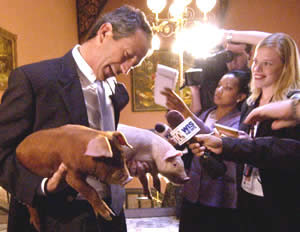
Source: http://www.clubforgrowth.org/2008/06/mark_sanford_a_different_kind.php
June 26, 2008
Mark Sanford: A Different Kind of Republican
By Nachama Soloveichik
If you want to see why Mark Sanford is different from a lot of the other Republican names being bandied about for VP, take a look at what just happened in South Carolina's local elections. While other governors are shy with the veto pen or refuse to fight for conservative policies, Sanford is not the type to sit silently and let the Legislature steamroll him.
It is important to note that although South Carolina's Legislature is controlled by Republicans, these are anti-reform Republicans who like to keep government big, spending high, and their pork flowing. Some of the most powerful of these Republicans were former Democrats who switched parties when the South turned Republican (see Fred Barnes excellent article in the Weekly Standard).
After several years of tangling with his Legislature, Sanford, along with the South Carolina Club for Growth, took active steps to move the Legislature in a new direction. In other words, they targeted incumbent Republicans with pro-growth, conservative challengers.
And they were remarkably successful. In the State Senate, Governor Sanford endorsed four incumbent-challengers and won three of those races. The loss to GOP incumbent Sen. Jake Knotts might have had something to do with the fact that he was endorsed by the highest elected Democratic official in the state and Democrats came out in droves to vote for the Republican-In-Name-Only. In total, Sanford endorsed six Senate candidates, five of which won their elections.
Life would certainly be easier for Sanford if he just sat on his hands and played nice with his Republican Legislature. While you occasionally see politicians fighting for conservative principles, rarely do you see the kind of conviction and determination that you get from Gov. Sanford. It is thoroughly refreshing.

Tony Snow's Commencement Address At Catholic University
Source: http://publicaffairs.cua.edu/Releases/2007//07CommencementAddress.cfm 118th Annual Commencement Address: "Reason, Faith, Vocation"
Tony Snow, White House Press Secretary
Basilica of the National Shrine of Immaculate Conception
May 12, 2007
Your excellency Archbishop Wuerl, President O’Connell, members of the board of trustees, members of the administration, distinguished faculty and staff, graduating students — and families who paid for [their education] — honored guests, Dr. Williams, thank you one and all.
This is a wonderful thing, a graduation: And I hope your lives will be filled with many more – not in terms of diplomas, but in the sense that you will have escalating accomplishments throughout your days. I’ve been asked to aid in that quest by giving you some advice, so here it goes.

First, live boldly. Live a whole life. I have five tips for pulling this off and – let me warn you — they’ve all been road tested. I learned the old-fashioned way, through trial and error.
Number one, think. You’ve got a diploma now, you’ve got a brain. Put them to work.
Catholic University has equipped you with an extraordinary and valuable tool. It’s taught you how to learn. This handy skill never wears out, so please use it all the time. After all, the human mind is a wondrous thing. It’s restless, always eager for action, always raring for places to go. While you’ve been here you have developed analytical skills, but they alone won’t get you through. You’re smart but we humans are also gullible. Really gullible. Just ask the serpent in Eden. Therefore you’re going to need to develop some discernment, some common sense.
My grandmother, who was reared in hardscrabble rural Kentucky, used to lecture me all the time about the perils of book-learning. I used to scoff at that, until I got out on my own. I still remember living in my first apartment, waking up in the morning to a weird muffled popping sound. I padded out to the kitchen and felt something cold on my scalp. I looked up and saw viscous orange goo dripping from the ceiling. See, Grandma would have known not to let frozen orange juice sit on the counter thawing without letting the cap loose. Common sense.
Heed the counsel of your elders, including your parents. I guarantee you, they have made some howling mistakes if, like me, they were in college in the ’70s and ’80s. They probably haven’t owned up to them, but they might now, because they want to protect you. You see, they know that you are leaving the nest. And now that you’re leaving the nest, predators soon will begin to circle. Some are going to try to take your money, but the really clever ones are going to tempt you to throw your life away. They’ll appeal to your pride and vanity – or worse, to your moral ambition. After all, there’s nothing more subversive than the offer to become a saint. So think things through. Be patient. If somebody tries to give you a hard sell, you know they’re peddling snake oil; don’t buy it. If something’s not worth pondering, it is certainly not worth doing. And if your gut tells you something’s fishy, trust your gut.
You know, hucksters perform an unintended service. Like everybody here, I’m sure you’ve all been conned. I am such a sucker that I get conned all the time. What happens is they make you look in the mirror and assess honestly the person on the other side. Now all of us love to delude ourselves, making excuses. But you know, the more we resist being honest and doing an honest evaluation, the sillier we behave. If you don’t believe it, think of any swinger you have ever seen in your life. Socrates was right: Know thyself.
But see, there’s more. Once you’ve gotten past the mirror phase, then things begin to get really interesting. You begin to confront the truly overwhelming question: Why am I here? And that begins to open up the whole universe, because it impels you to think like the child staring out at the starry night: “Who put the lights in the sky? Who put me here? Why?” And pretty soon you are thinking about God. Don’t shrink from pondering God’s role in the universe or Christ’s. You see, it’s trendy to reject religious reflection as a grave offense against decency. That’s not only cowardly. That’s false. Faith and reason are knitted together in the human soul. So don’t leave home without either one.
Second recommendation: Go off-road.
It’s tempting to search for comfort, but don’t play it too safe. Every once in a while you’ve got to get yourself into a mess, a scrape, a circumstance that makes you look around and gasp, “Toto, we’re not in Kansas anymore.” You’ll shudder and tremble, but you will have no choice but to rise to the occasion. Let’s be honest. Most of us spend a great deal of our lives over our heads in one way or another. Don’t reject it, don’t resist it, don’t deny it. Just make the most out of it.
You see, when you go off-road, when you start taking risks, your ambitions and limits get to know each other up close and personal. You’ll also learn never to try to do anything all by yourself. You’re going to need help. Lots of it. Don’t be bashful. Ask. Everybody you know harbors a secret desire – maybe an unsecret desire – to do something good for somebody else. For every important venture or adventure in your life, you’re going to dangle one foot over the abyss of uncertainty and ask, “Can I do this? Am I up to it?” You’re going to have to summon a little faith in God, your friends, strangers, and, most of all, in yourself.
When you’re going off-road, don’t be content with what you know now. The reason you came to college is you didn’t know very much. Now you know a little more. But the challenge is to keep building on it. So try something completely different — I don’t care, learn something trivial. Learn it well. Sing karaoke, if you dare. Learn to fix something in the house. Help out at a homeless shelter. Start a rock ‘n’ roll band.
My wife hopes I’ll just venture out and start cleaning up my study.
And be ready for the unplanned educational experiences. Sometimes they’re the very best of all. If fact, the most revealing moments are the ones that are unplanned. Practice a little daring. I’m not talking about driving with your eyes closed. But something that’s tantalizing because it raises the question of whether this particular activity and goal lies inside or outside the limit of your abilities.
Last summer we were in Crawford, Texas, with the president. And you know the president has this love of riding a bicycle off-road. It’s a treacherous and crazy thing, plunging down the hills, over seeming cliffs, ravines, up rocks. He loves it. Well, I said, “I might like to try that sometime.” I was just, you know, trying to make nice. I was trying to kiss up to the boss.
So the first time out at the ranch, he said, “Snow, you ready to ride?”
I looked around and said, “Well, I don’t have any shorts, sir.”
And so he said, “Hey, Jerry, do you got shorts?”
“Yes sir.” Hands out a pair of shorts.
“Well, all I have are these running shoes,” I protested.
“They’ll do.”
He hands off a t-shirt so off we go. Now, again, it’s an adventure because the president, being aerobic in everything he does, plunges into this with absolute incredible vigor, and I thought I was doing all right at the beginning. I’m chuffing along at the back of the pack, respectfully (and also because I was the worst rider). But there was always that lingering fear. At one point he says, “Okay, you’re going to need your brakes here. It’s straight down, it’s boulders. Oh, and the other side, it’s a cliff. Watch out.”
We finally get to this place where the road parts. You go off-road and there’s a drop of about 15 or 20 feet, it rises up again and then goes around the curve. The president goes down and goes “Woo hoo!” Person behind him goes down and goes “Woo hoo!” I’m in the back and I go “Waaaah.” But there I am.
Okay, where am I? The limits of the abilities. Which side of the line am I on? Well, I go down. It’s great! I’m going full-speed. And then all of a sudden coming up a tree appears right in the middle of the path. Ooof. Everybody hears it.
“Snow, you okay back there?”
“Yes sir. Just hit a tree.”
“Okay, well come on then.”
I made the rest of the trip with a wobbly front tire which had been bent up in the encounter.
The point’s simple. When a chance presents itself, take a prudent and interesting risk. If it doesn’t work out, that is okay. Don’t worry about that, either. You see, God presents blessings in unexpected packages. Don’t overlook them. Remember: no guts, no glory.
Third: Commit.
This is a way of talking about faith. American culture likes to celebrate the petulant outcast, the smart-aleck with the contempt for everything and faith in nothing. Snarky mavericks. The problem is these guys are losers. They have signed up for an impossible mission. Because they’ve decided they’re going to create all the meaning in their lives. They’ve either decided that no moral law exists or they will be the creator, the author of those laws. Now one road leads to complete and total anarchy. Life is solitary, nasty, brutish and short. The other is to insanity, since it requires playing God. We know in our hearts, intuitively, from our first years as children, that the universe unfolds with a discernable order and that moral laws, far from being convenient social conventions, are firm and unalterable. They predate us, they will survive us. Rather than admitting our weakness a lot of times, we just decide we’ll try to get by. And maybe rather than giving God credit, we’ll try to look for a cheap substitute.
Walk into a bookstore, you’ll know what I mean. The shelves are groaning underneath the trendy tomes promising salvation — medicine balls, herbs, purges, all sorts of weird stuff. In politics, there’s a variant that elevates government to the status of God. It says that it is the source of love. It ought to be the recipient of your tithes, but government, while it does pursue compassionate ends, cannot be loving and personal. It treats all of us as completely equal rather than uniquely divine. The point is you can’t escape the question of God and you can’t escape the question of commitments.
When it comes to faith, I’ve taken my own journey. You will have to take your own. But here’s what I know. Faith is as natural as the air we breathe. Religion is not an opiate, just the opposite. It is the introduction to the ultimate extreme sport. There is nothing that you can imagine that God cannot trump. As Paul said “Faith is the substance of things hoped for, the evidence of things not seen.” And once you realize that there is something greater than you out there, then you have to decide, “Do I acknowledge it and do I act upon it?” You have to at some point surrender yourself. And there is nothing worthwhile in your life that will not at some point require an act of submission. It’s true of faith and friendship. It is a practical passage [of the Bible], especially to marriage.
Tolstoy once said all happy marriages are happy in the same way and here’s what he meant. When both people commit, when they say, “You and I are bound together, forever, period, no questions, no codicils, no pre-nups, no escape clauses,” then all of a sudden, the temptations become irrelevant, and the glories become possible.
There is nothing like the pleasure of being a parent. Waking up the next morning to somebody whose breath has become the echo of your heartbeat. Trust me on this, it does not get any better. Commit.
Next, get out. (Your parents are probably saying that, too.)
You are about to encounter a world larger than you know with peaks, valleys, pits and precipices that you cannot possible imagine. You’re going to work long hours. You’ll eat pizza at four in the morning. You’ll try to find love in the weirdest places. You’ll audition personalities, outfits and styles until something seems to fit but eventually the way you’re going to craft your legacy is predictable. You will stamp your imprint on other people’s hearts. You’re not going to get to do that writing in front of a computer.
I’ve been informed by my teenage daughter that there’s a new trend in high school now: dating. Only it’s a peculiar kind of dating because the “datees” do not actually spend time in each other’s presence. Instead they conduct their courtship online. Now technology invites us to build communities out of electrons rather than blood and flesh and I’m just encouraging you, please understand the difference between a closed parenthesis followed by a colon, and a smile. Ladies and gentlemen, you cannot kiss a cursor.
Now, the world can be a frightening place, and sometimes a computer may seem to provide refuge, but don’t do it. We also try to hide in other ways. By looking away from the panhandler around the corner or ignoring the fact that somebody is berating someone for no reason at all. What you have to do is learn those adult wiles that I was telling you about but don’t give up the child in you. When kids see injustice, they mention it. “Daddy, why is that man screaming at his wife?” They ask about the things we pretend not to see and we have to step up to. So, when it comes to the world, engage it in every possible way. Don’t be chicken. Get dirt under your fingernails. Scrape your knees. Laugh … a lot … at yourself. Trust me, if you don’t, others will do if for you. But don’t shrink from the pain and the poignancy and aches because they’re essential. They bring us together. They are a part of our experiences. They enliven everything you do but they cannot work their magic until you leave the computer screen and get out that front door.
Finally, love. How trite is that? But it’s everything. It separates happiness from misery. It separates the full life from the empty life. To love is to acknowledge that life is not about you. I want you to remember that: It’s not about you. It’s a hard lesson. A lot of people go through life and never learn it. It’s to submit willingly, heart and soul, to things that matter. Love is not melodrama. You don’t purchase it, you don’t manufacture it. You build it.
Every time I buy something gaudy for my wife she says, “Oh that’s nice,” and then it goes away someplace. The love letters she keeps; I don’t know where the jewelry is.
Love springs from small deeds, the gestures that say casually and naturally “I care.” That acknowledge what’s special about somebody else. If somebody’s smarter, quicker, better, prettier, wiser than you, tell them. Learn from them. Don’t be jealous. Glory in it.
Now the reason that I talk about love is it pulls together the strands of the other tips I’ve already given you. I’ll give you some examples, another presidential story. I traveled with the president last Wednesday to Greensburg, Kansas. Now 10 days ago, that town was small, pretty and whole. But within minutes on a Friday, a giant tornado reduced Greensburg to splinters. Once-nice homes now lie in matchstick heaps. The trees stretch their barren, barkless limbs toward the sky. It looks like Hiroshima, but with grass all around. It’s one of the most amazing things I’ve ever seen. I ran into a guy who hadn’t had a shower in five days because the water is not back on, and he motioned for me to come up. He just wanted to tell me a story.
He’s a plumber. And just the week before, they put a brand new boiler in the local school. Well, the school had been leveled and the boiler was just a hunk of twisted metal. He came and he said, “I got a call from the people who sold it to me. They said they saw what happened and said ‘Don’t worry about the boiler. When the time comes, we’re going to replace it.’ ” Then he stopped and said, “You know what else they did? They said they’re sending me a truck. They said, ‘We saw what happened, we know you lost your truck. The one we’re sending you isn’t new but it works great.’ ” And then he stood there, surrounded by the splintered homes and Halloween trees, and just cried. He’s crying and he reached his arms out and he hugged me. He said, “Thanks.” See, here’s somebody who let somebody else help. He let somebody else into his life. He went off-road in a different kind of way, baring himself, and then he decided to pass on the favor.
Think not only of what it means to love but what it means to be loved. I have a lot of experience with that. Since the news that I have cancer again, I have heard from thousands and thousands of people and I have been the subject of untold prayers. I’m telling you right now: You’re young [and you feel] bullet-proof and invincible. [But] never underestimate the power of other people’s love and prayer. They have incredible power. It’s as if I've been carried on the shoulders of an entire army. And they had made me weightless. The soldiers in the army just wanted to do a nice thing for somebody. As I mentioned, a lot of people — everybody out here — wants to do that same thing.
To love is to place others before you and to make their needs your priority. Do it. When you put somebody else at the center of the frame, your entire world changes, and for the better. You begin to find your own place in the world. When you’re drawn into the lives of others, you enter their problems, their hopes, their dreams, their families. They whisk you down unimagined corridors, toward possibilities that had been hidden to you before. So resolve to do little things for others. You don’t know where they’re going to lead but then again, you don’t have any idea where your life is going to lead. When I was your age, I had long hair, a beard and thought of myself as a socialist. You are going to pinball all over the place, from experience to experience, job to job. And I want you to remember that you’ve got company. And that if you engage them with heart and mind, with faith and energy, you are going to find yourself on a cresting wave. It’ll carry you forward and it’ll push you under water from time to time. And some day in the dim and distant future, when you’re looking back at it, you’re not going to think about your car or your career or your gold watch. You’ll think about a chewed-up teddy bear you had as a baby or maybe your child’s smile on a special Christmas morning. The only things that are sure to endure are the artifacts of love. So go out and build as many as you can.
And finally this: Wherever you are and whatever you do, never forget at this moment, and every moment forward, you have a precious blessing. You’ve got the breath of life. No matter how lousy things may seem, you’ve got the breath of life. And while God doesn’t promise tomorrow, he does promise eternity.
Let me make a confession: I’ve never been happier than I am today, not because I got this wonderful, fancy degree. But because the tips that I’ve been sharing with you are leading me toward my next graduation. You see, 30 years after I got my Bachelor of Arts, I’m just like you. I aspired to new graduations and I’m just as excited about the future. It doesn’t matter who you are or what you do, none of us ever stops taking baby steps. Be humble, be alive, be awake. Take each new step as if it were the first. Then take another. And when you tumble, as you will, when a kind hand reaches out to pick you up, smile, say “Thanks” and give back to them. It may not give you a whole life, but it’ll sure get you started.
Thanks.
Stripper arrested for subway pole dances
Stripper arrested for subway pole dances
By Pav Jordan
Fri Jul 11, 12:25 PM ET
A stripper who danced on the poles of Santiago subway trains to challenge the prudishness of Chilean society was arrested on Thursday during one of her lightning performances.
Monserrat Morilles, 26, surprised subway riders all week stripping to skimpy underwear, but she refused tips.
She said she was protesting a lack of tolerance in Chile, one of Latin America's most conservative societies where the first generation since the Pinochet dictatorship is reaching adulthood.
"This is just a beginning. We are starting an idea here that will grow and be developed further," she told Reuters as police and subway guards surrounded her.
The professional pole dancer worked quickly all week to avoid arrest, getting on at one station, finding a subway car with no children on it and stripping in time to exit at the next station.
Chilean media dubbed her "La Diosa del Metro" or Subway Goddess. She called her performances "happy minutes."
"Chile is still a pretty timid country," said her manager Gustavo Pradenas. "People aren't very extroverted and we want to take aim at that and make Chile a happier country."
(Reporting by Pav Jordan; Editing by Anthony Boadle)
Copyright © 2008 Reuters Limited. All rights reserved.
'World's oldest blogger' dies in Australia at 108
'World's oldest blogger' dies in Australia at 108
Mon Jul 14, 1:34 AM ET
An Australian woman described as the world's oldest Internet blogger has died at the age of 108 after posting a final message about singing "a happy song" in her nursing home.
Olive Riley "passed away peacefully on July 12 and will be mourned by thousands of Internet friends and hundreds of descendants and other relatives," a note on her website said.
Riley had posted more than 70 entries on her blog from Woy Woy on the east coast since February last year, sharing her thoughts on modern life and her experiences living through the entire 20th century.
Born in the outback town of Broken Hill on October 20 1899, she lived through two world wars and raised three children while doing various jobs, including ranch cook and barmaid.
In her final post on June 26, she wrote: "I can't believe I've been here in this nursing home for more than a week.
"How the days have flown, even though I've been in bed most of the time. I still feel weak, and can't shake off that bad cough.
"Penny, who's in the next bed to mine, had a visit one day this week from her daughter, who's a professional singer. Guess what happened! She and I sang a happy song, as I do every day, and before long we were joined by several nurses, who sang along too. It was quite a concert!"
Riley's blog, initially on www.allaboutolive.com.au and more recently at http://worldsoldestblogger.blogspot.com, was "mind-blowing to her," her great grandson Darren Stone said.
"She had people communicating with her from as far away as Russia and America on a continual basis, not just once in a while," he told the national AAP news agency.
"She enjoyed the notoriety -- it kept her mind fresh."
Copyright © 2008 Agence France Presse. All rights reserved.
Belgian brewer InBev buys Anheuser-Busch
Belgian brewer InBev buys Anheuser-Busch
By CHRISTOPHER LEONARD, AP Business Writer
6 minutes ago
Anheuser-Busch, the maker of Budweiser and Bud Light, has agreed to a takeover by a giant Belgian brewer, a union that creates a global beer leader and brings to an end one of the most iconic names in American business.
The board of directors of Anheuser-Busch Cos. Inc. on Sunday accepted a sweetened $52 billion takeover offer from Belgian brewer InBev SA, according to a joint press release.
The deal, which is subject to shareholders' and regulators' approval, would create the world's largest brewer and create the fourth-largest consumer product company worldwide.
"This combination will create a stronger, more competitive global company with an unrivaled worldwide brand portfolio and distribution network, with great potential for growth all over the world," Carlos Brito, CEO of InBev, said in the statement.
For InBev, the maker of Stella Artois and Beck's, the deal gives an aggressive company an iconic beer brand — Budweiser — to sell into emerging markets where it has already established a firm footprint.
InBev is the world's second-largest beer-maker behind SABMiller. Anheuser-Busch is by far the largest brewer in the U.S. with more than 48 percent of the market share.
Brito will be chief executive officer of the combined company, which will be named Anheuser-Busch-InBev. Shareholders will receive $70 a share, a $5 increase over the offer Anheuser-Busch rejected in June.
It wasn't immediately clear how long approval might take. Several Missouri politicians have expressed concerns about the merger — especially how it would affect the approximate 6,000 people employed by Anheuser-Busch in St. Louis.
InBev said it plans to use St. Louis as its North American headquarters, and that it will keep open all 12 of Anheuser-Busch's North American breweries.
InBev announced its intent to try and purchase Anheuser-Busch on June 11. The Anheuser-Busch board initially voted against the merger, calling the initial $65 per share offer too low.
That prompted much squabbling between the companies over the past few weeks. InBev filed a motion seeking the removal of all 13 Anheuser-Busch board members; Anheuser-Busch filed suit calling the InBev effort an "illegal scheme" that threatened to defraud Anheuser-Busch shareholders. Among other things, the suit noted that InBev failed to disclose it operates a brewery in Cuba.
Few products are associated with America as much as Budweiser. Its Clydesdale horses are fixtures of Super Bowl ads, and even the label is red, white and blue, with an eagle swooping through the "A."
"This agreement provides additional and certain value for Anheuser-Busch shareholders, while enhancing global market access for Budweiser, one of America's true iconic brands," August Busch IV, Anheuser-Busch president and CEO, said in the statement.
The merger, if completed, also will bring to an end a name synonymous with St. Louis. From college buildings to theme parks to offices to the stadium where the Cardinals play baseball, the Busch name is virtually everywhere in the Gateway City.
Eberhard Anheuser acquired the Bavarian brewery in 1860 and renamed it E. Anheuser & Co. His son-in-law, Adolphus Busch, joined the company in 1864 and it was eventually renamed Anheuser-Busch.
The company survived Prohibition by selling products ranging from ice cream to root beer.
Fears that InBev would make layoffs prompted some U.S. politicians and civic leaders speak out against the deal. At least two Web sites also sprung up opposing the merger. SaveBudweiser.com claims to have more than 60,000 signatures from merger opponents. SaveAB.com hosted a recent anti-merger rally that drew hundreds to downtown St. Louis.
InBev is renowned for shaving costs since it was formed in a 2004 merger between Belgium's Interbrew and Brazil-based AmBev. The company has not said if it will shed Anheuser-Busch staff to make savings. But some cutbacks seem likely.
The company said it expects cost synergies of at least $1.5 billion a year by 2011 over three years. The deal won't benefit earnings per share until 2010, it said.
Even without the merger, Anheuser-Busch said last month it planned to cut pension and health benefits for salaried employees as part of an effort to slash $1 billion in costs by the end of 2010. The plan called for offering early retirement to 1,300 salaried workers 55 and older.
The cost-cutting effort was part of a strategy to fend off the merger. Anheuser-Busch also owns a 50 percent share in Grupo Modelo, Mexico's leading brewer, and a 27 percent share in China brewer Tsingtao.
The beer industry has been consolidating in recent years amid rising costs for transportation fuel, aluminum for beer cans and key ingredients such as hops.
___
Associated Press writers Jim Salter in St. Louis and Aoife White contributed to this report.
___
On the Net:
Anheuser-Busch Cos. Inc.: http://www.anheuser-busch.com
InBev SA: http://www.inbev.com
Savebudweiser.com: http://savebudweiser.com
Copyright © 2008 The Associated Press. All rights reserved.
Saturday, July 12, 2008
Former Yankee great Murcer dies at 62
Former Yankee great Murcer dies at 62
By Bryan Hoch / MLB.com
07/12/2008 5:06 PM ET
Bobby Murcer, a personable, popular five-time All-Star who went on to a successful broadcasting career with the New York Yankees, died Saturday after a battle with brain cancer. He was 62.
After experiencing a general lack of energy, Murcer was diagnosed with a tumor on Christmas Eve 2006, undergoing surgery at the University of Texas M.D. Anderson Cancer Center in Houston. Pathology reports later revealed the tumor to be malignant.
After being diagnosed, Murcer commented in an upbeat spirit, thanking fans for their prayers and warm wishes -- many of which were delivered in the form of letters and e-mails directly to his hospital bed.
"My heart remains true to Yankees fans," Murcer said on Jan. 24. "I've always believed you're the very best in baseball. It's your steadfast spirit that keeps me feeling so optimistic."
Murcer played in the Major Leagues for 17 seasons, including making four All-Star appearances with the Yankees.
A lifetime .277 batter, Murcer hit 252 home runs and drove in 1,043 runs in 1,908 Major League games with the Yankees, San Francisco Giants and Chicago Cubs.
He was the only Yankee to play with both Mickey Mantle and Don Mattingly, and was arguably the franchise's most popular player of the era immediately following Mantle's retirement after the 1968 season.
Murcer was hailed as another Mantle when he emerged from the Yankees' system in the mid-1960s. Both players were signed out of Oklahoma as shortstops by the same scout, Tom Greenwade, prompting comparisons.
As history shows, Murcer could not match comparisons to the Hall of Famer's lofty credentials, but he assembled an admirable Major League career.
One of his best seasons came in 1971, when Murcer led the American League with a .427 on-base percentage and ranked second in the circuit with a career-high .331 batting average.
After struggling with adjustments to Shea Stadium, where the Yankees played in 1974 and 1975 while Yankee Stadium was being renovated, Murcer was traded to the Giants in 1975 for outfielder Bobby Bonds.
He would be dealt to the Cubs in 1977, only to return and finish his career with the Yankees from 1979 through 1983.
Perhaps Murcer's most memorable moment came on Aug. 6, 1979, in the wake of Yankees captain Thurman Munson's untimely death in a plane crash.
Munson and Murcer had been close friends. As the Yankees returned to New York from Munson's funeral service in Ohio, manager Billy Martin suggested that Murcer -- who had delivered a moving eulogy for the catcher -- sit out that evening's game against the Baltimore Orioles.
Murcer disagreed, telling Martin that something was telling him to play, and that he did not feel tired. Dedicating his performance to Munson, Murcer drove in all of New York's runs in a 5-4 victory, slugging a three-run homer and a game-winning two-run single.
Murcer was also just the fourth Yankee to hit home runs in four consecutive at-bats, joining Lou Gehrig, Johnny Blanchard and Mantle.
For most of the last 24 years, Murcer had worked as a Yankees broadcaster, winning three Emmy awards for live sports coverage.
Murcer worked as a radio color analyst from 1983-85 before moving to television as a commentator in 1987, and also served as the Yankees' assistant general manager in 1986.
He helped the baseball family immensely through his efforts as chairman of the Baseball Assistance Team, which raises funds for former players who have fallen on hard times. Murcer was also the president of the Oklahoma City 89ers Minor League baseball club in the mid-1980s.
Murcer is survived by his wife, Kay, and two children, Tori and Todd.
Bryan Hoch is a reporter for MLB.com. This story was not subject to the approval of Major League Baseball or its clubs.
Report: Ex-Bush spokesman Tony Snow dies of cancer
Report: Ex-Bush spokesman Tony Snow dies of cancer
By DOUGLASS K. DANIEL, Associated Press Writer
4 minutes ago
Tony Snow, a conservative writer and commentator who cheerfully sparred with reporters in the White House briefing room during a stint as President Bush's press secretary, has died of colon cancer, Fox News reported Saturday. Snow was 53 years old.
Snow, who served as the first host of the television news program "Fox News Sunday" from 1996 to 2003, would later say that in the Bush administration he was enjoying "the most exciting, intellectually aerobic job I'm ever going to have."
Snow was working for Fox News Channel and Fox News Radio when he replaced Scott McClellan as press secretary in May 2006 during a White House shake-up. Unlike McClellan, who came to define caution and bland delivery from the White House podium, Snow was never shy about playing to the cameras.
With a quick-from-the-lip repartee, broadcaster's good looks and a relentlessly bright outlook — if not always a command of the facts — he became a popular figure around the country to the delight of his White House bosses.
He served just 17 months as press secretary, a tenure interrupted by his second bout with cancer. In 2005 doctors had removed his colon and he began six months of chemotherapy. In March 2007 a cancerous growth was removed from his abdominal area and he spent five weeks recuperating before returning to the White House.
He resigned as Bush's chief spokesman six months later, in September 2007, citing not his health but a need to earn more than the $168,000 a year he was paid in the government post. In April, he joined CNN as a commentator.
In that year and a half at the White House, Snow brought partisan zeal and the skills of a seasoned performer to the task of explaining and defending the president's policies. During daily briefings, he challenged reporters, scolded them and questioned their motives as if he were starring in a TV show broadcast live from the West Wing.
Critics suggested that Snow was turning the traditionally informational daily briefing into a personality-driven media event short on facts and long on confrontation. He was the first press secretary, by his own accounting, to travel the country raising money for Republican candidates.
Although a star in conservative politics, as a commentator he had not always been on the president's side. He once called Bush "something of an embarrassment" in conservative circles and criticized what he called Bush's "lackluster" domestic policy.
Most of Snow's career in journalism involved expressing his conservative views. After earning a bachelor's degree in philosophy from Davidson College in North Carolina in 1977 and studying economics and philosophy at the University of Chicago, he wrote editorials for The Greensboro (N.C.) Record, and The Virginian-Pilot in Norfolk.
He was the editorial page editor of The Newport News (Va.) Daily Press and deputy editorial page editor of The Detroit News before moving to Washington in 1987 to become editorial page editor of The Washington Times.
Snow left journalism in 1991 to join the administration of President George H.W. Bush as director of speechwriting and deputy assistant to the president for media affairs. He then rejoined the news media to write nationally syndicated columns for The Detroit News and USA Today during much of the Clinton administration.
Robert Anthony Snow was born June 1, 1955, in Berea, Ky., and spent his childhood in the Cincinnati area. Survivors include his wife, Jill Ellen Walker, whom he married in 1987, and three children.
___
Associated Press writer Jennifer Loven contributed to this report.
Copyright © 2008 The Associated Press. All rights reserved.
Thursday, July 10, 2008
How McCain Could Win By Richard Baehr
Source: http://www.realclearpolitics.com/articles/2008/07/how_mccain_could_win.html
July 10, 2008
Yesterday, I laid out the very favorable environment for any Democrat running for President this year. I noted that the current Obama lead of 4-5% is very modest, given the structural advantages any Democrat would have in this year's race.
But there is another way to look at the race: namely that absent some of the unique structural or environmental advantages that exist for Democrats this year, John McCain should be running away from Barack Obama.
While this may sound irrational to some, I believe the key to a McCain victory is to focus his campaign and the voting public on the two candidates themselves -- their life stories, their experiences and accomplishments, their visions for the country, and their characters. If the election is decided on these factors, McCain should win.
The Obama campaign has a simple message: you hate (or really, really don't like) the job George Bush is doing. John McCain will run things just like George Bush, and I (Obama) offer a very different and exciting change in approach. The corollaries to the Obama message are a not very subtle pitch that the voter can demonstrate his or her decency and lack of bias by voting for the first African American presidential candidate, and by the way, John McCain is too old.
McCain needs to make the case that he is a far "safer" choice to be the next occupant in the White House. This case should be not that difficult to make. In essence, who is the "untested" candidate, and who is the "riskier" choice? These are specific words, as Frank Luntz might say, that matter.
Secondarily, there are particular choices for the Vice Presidential pick who could add some energy and excitement to the McCain campaign. The Obama-McCain contest has not been a fair fight in the charisma derby. Barack Obama is very good at reading a prepared speech from a teleprompter (John McCain is really bad at this), and Obama has been wowing the media and live audiences reading prepared texts. He has frequently stumbled with off the cuff remarks, which is why his campaign pays such attention to details regarding the setting for events, and on prepared remarks.
While it is likely that McCain will be outspent, and out organized, he should have enough money to get a message across, if it is focused and he stays on script. By accepting federal campaign funding, McCain will also not have to fundraise during the fall campaign, while Obama will likely waste days if not weeks doing this. It is also the case that fund raising events tend to be very partisan, requiring a candidate to pander to activists. In a general election campaign, when a candidate is trying to move to the center to appear moderate and acceptable to more than the party's base voters (an approach Obama has clearly undertaken of late), a shriller pitch to the base can lead to problems, as it did for Obama in San Francisco a few months back.
The Case against Obama
So what is the case for McCain? To begin with in a two party system, a case against Obama. No candidate for President since Wendell Wilkie in 1940 has had as little relevant experience before running for President as Barack Obama. The Illinois Senator served for 8 years, in a generally undistinguished fashion, in the Illinois legislature. He was best known for voting present more often than any other State Senator. When the Democrats took over the Legislature the last two years he served, Obama worked out a deal with the Democratic leader, Emil Jones, to get his name on some bills so he could buff up his resume before running for the open US Senate seat.
After a string of revelations about two opponents' marital problems, Obama wound up effectively running unopposed for the US Senate seat (Alan Keyes was the GOP standard-bearer). In the US Senate, Obama missed many votes in his first term even before he launched his Presidential bid, as he traveled the country speaking to Democratic Party events (and positioning himself with activists for a future Presidential run). Since the campaign began, he has missed virtually all Senate votes and failed to hold meetings of his own subcommittee. So the Obama record is very thin.
His major campaign themes have been lofty messages of change and hope and bipartisan unity. This is a smart course to take, when you have little to show for your years in public office. McCain needs to focus on Obama's record of scant legislative accomplishment and inexperience. What has Barack Obama done, as opposed to claiming to have done?
Obama has argued in the Democratic nominating contest that he showed good judgment by opposing the Iraq War in 2002 while John Edwards and Hillary Clinton voted to authorize the President's use of force, if necessary. But when he was elected to the Senate, Obama admitted that had he been in the Senate in 2002, and exposed to the same intelligence briefings as his two rivals, he might have voted the same way as they did, and as most Democrats in the Senate did -- to support the war resolution. So did Obama show good judgment in 2002, or was he just on the outside looking in, finding a smart way to appeal to anti-war activists in his party for an upcoming Senate campaign?
The real judgment issue comes into play with regard to Obama's call for a quick withdrawal from Iraq, and his opposition to the surge in the spring and summer of 2007. John McCain risked his political future calling for more troops for an unpopular war and said he would rather win the war than the White House. Obama stuck to his left wing anti-war mantra, and has been proven to have been wrong. Obama thought the surge would fail, but it has succeeded beyond anyone's expectations.
When General Petraeus showed up to testify to Congress last September, the group MoveOn.org in one of its vilest displays (and there are many to choose from), called Petraeus a betrayer of America in a full page ad the New York Times willingly ran. Obama, competing for the group's endorsement and contributions, said nothing. He missed the vote in the Senate, when by a 3 to 1 margin, that body condemned the ad. And now Obama wants to be the Commander in Chief and have the respect of the men fighting under Petraeus. Potential McCain ads about this episode, and the debate about the wisdom of the surge, scream off the page.
As opposed to the appearance of limitless ambition of the Democratic nominee, the GOP has a candidate who performed one of the most remarkable acts of personal courage ever displayed in the military -- consigning himself to years of torture and abuse, so as to not to break the morale of his fellow prisoners of war by accepting an early release. A new McCain ad does a pretty good job presenting McCain's decision as part of a long pattern of acts of love and devotion to his country. Generation after generation, the McCains have served in the military. Duty, honor, country are not just words for John McCain. What does Barack Obama offer to measure up? A couple of years as a community organizer? The McCain camp will almost certainly not run an ad juxtaposing Reverend Wright, Bill Ayers, and Michael Pfleger and some of their juicier comments about Åmerica with the McCain record of service to his country, but maybe some group or the RNC will.
The history of the "Chicago friends of Barack Obama" is an uncomfortable one for the Illinois Senator, but it is a commentary on Obama's judgment as to the kind of people he chose as friends, mentors, and even spiritual advisors. Palestinian radicals opposed to the existence of Israel were good friends of Barack Obama. So was Tony Rezko, and the aforementioned Wright, Ayers and Pfleger.
Since entering the Senate, Barack Obama has compiled, in his limited number of votes, the most left wing record of all 100 US Senators. There is reason for Obama to be pivoting right while there is still time to change the script. John McCain on the other hand, has one of the most independent voting records in the Senate. Obama is far closer to Bernie Sanders, the socialist Senator from Vermont, than John McCain is to George Bush. But a hundred million dollars worth of negative ads will have George Bush morphing into John McCain so as to keep the focus on Bush and his unpopularity.
Obama believes in wealth and income redistribution, regardless of its effects on the size of the total economic pie. Most Americans do not. This is not pragmatic, but dogmatic, and certainly not moderate. If Obama wins and the Democrats have much larger majorities in the Senate and the House after 2008 (as they will), the country's politics will move sharply left. If America is still a slightly center-right nation (though clearly it is less so than in 2004) and basically moderate in its disposition, a vote for McCain would be a way to check such a sharp swing to the left. McCain would be smart to talk about this, and the need to serve as a check on what would be a heavy tax and spend Democratic controlled Congress.
The message for McCain needs to be as simple as the one Obama is selling. John McCain offers a a lifetime of love and service to country, an independent (maverick) streak that enables him to compromise and get results, and a strong leader in a time of continuing serious threats and challenges to our national security. This needs to be contrasted to the substantively empty record of Barack Obama -- a thin, but doctrinaire down the line left wing voting record when he shows up to vote . Obama is a candidate committed to taxing his way out of the current economic hard times. He is a candidate with no national security experience who might well convey weakness to our enemies, and thereby serve to invite them to act more provocatively. And Obama is a candidate with a history of long term relationships with people who seem to think very badly of their country.
Finally, there is the energy issue, which is now playing into the hands of the Republicans, if properly handled. Obama and the Democrats say no - to more drilling, and to increased use of nuclear power, and are offering no solutions to the increase in energy costs, which are proving to be a significant and damaging new burden for most American families. The Obama approach: to tax more of oil company profits and to end energy futures speculation, will not change the growing supply demand imbalance, which is a primary reason for rising energy costs. McCain is supporting more drilling, and more nuclear power, and greater conservation. So McCain is for more supply, and reduced demand. Obama and his Party appear to be looking for villains, not solutions.
Energy needed in the campaign
Even if McCain gets the messaging right, it may not be enough unless the candidate can inject some energy into the campaign. More than most Presidential candidates, McCain needs to get a boost from his Vice Presidential selection. There are concerns about McCain's age, and many expect he will only serve one term if elected. In the end McCain may make the decision to commit to only one term and to announce that he will use that term to achieve specific goals: to exit from Iraq with honor and success, to get the economy moving again, and to push the country on the road to energy independence. In any case, voters will look to McCain's VP choice as a more serious one than would be the case for a younger nominee.
The McCain camp can get some momentum in the two summer months before the convention by not only announcing a VP choice, but also some Cabinet choices. An early VP selection would mean that the media would be covering two GOP candidates and Obama for a period of time, a 2 to 1 advantage for the McCain team. That would be the reverse of what happened in the last few months of the Democratic nominating contest. But also announcing some Cabinet picks would magnify the roles and attention to these spokespeople during the campaign.
Several possible Cabinet picks could be very helpful to McCain. Carly Fiorina or Meg Whitman may not be ideal VP candidates, but would be solid choices to be part of a McCain administration. These are women who have had pivotal roles in the new digital economy, and would deliver a positive message to younger voters, the high tech community, and women upset by what happened to Hillary Clinton in the nominating fight. Joe Lieberman and Tom Ridge are very capable men who could serve in an Administration at senior levels in foreign policy or defense roles. Bobby Jindal could be the head of HHS, with a directive to undertake a serious examination of the options for reform of entitlement programs, to ensure that the county does not go broke from Medicare, Medicaid and Social Security in the coming decades. None of the three are likely VP picks at this point. But they would help the ticket if their future roles were known.
Veepstakes
So who would help the ticket most as a VP selection? One interesting choice would be Alaska's very popular Governor, Sarah Palin. She would be an immediate media sensation and rob the Obama campaign of its monopoly of saturation media infatuation. Given the way the media was perceived to have ganged up on Hillary Clinton, there might be much greater care about avoiding doing it again with Palin. Of course Palin would be challenged for her youth and inexperience in foreign policy matters. But the reality is that Palin, unlike almost all US Senators (including Barack Obama), has actually run something, and with 84% approval for her job as Governor, seems to be running it well. Jimmy Carter, Michael Dukakis and Bill Clinton all ran for President directly from service as Governor. Raising the experience issue with Palin would be a risky strategy for the Obama campaign. After all, Palin would only be running for the #2 spot, and Obama, with arguably less of a track record, is running for the top spot. Palin would also be very effective in helping focus the energy issue, and the need to explore and drill for what we have in this country. She could take McCain to ANWR and give him reason to shift on that issue.
Other selections who could help the ticket include Virginia Congressman Eric Cantor, South Dakota Senator John Thune, and Mitt Romney. Minnesota Governor Tim Pawlenty gets lots of mention, but Minnesota is likely not in play even with Pawlenty on the ticket, and he seems like a weaker choice than the other four. Romney proved he is Presidential calibre during the primaries, and would help the ticket in Michigan, which McCain may have to win, and New Hampshire, where McCain has a decent chance to win. Thune adds no state, but is a hero to the GOP base for knocking off Tom Daschle, is a respected leader in the Party, and might energize the volunteers needed for a large get out the vote operation, which was essential to Bush's victory in 2004, particularly in Ohio. Cantor would be a good pick as well. He is a very articulate conservative spokesperson, and would help McCain in Virginia, a state that will be closely contested this year. He is Jewish and would aid McCain's promising effort to significantly increase the GOP's share of the Jewish vote this year. He is also a good fundraiser. Finally, there is Rob Portman, the very capable Budget Director, and former Cincinnati area Congressman. Portman would help the ticket in Ohio, a tossup state and add real economic experience to the ticket. But his ties to the Bush administration may provide too much fodder for the Obama team to risk his selection .
It is worth mentioning that several of the most promising potential VP picks for Barack Obama have pulled themselves out of contention. This list includes Virginia Senator Jim Webb, former Virginia Governor Mark Warner and Ohio Governor Ted Strickland. These three men were arguably the three best VP picks for Obama. All of the top picks for McCain are still in the running. On this front, it is advantage McCain, if he takes advantage.
Richard Baehr is the chief political correspondent of American Thinker.