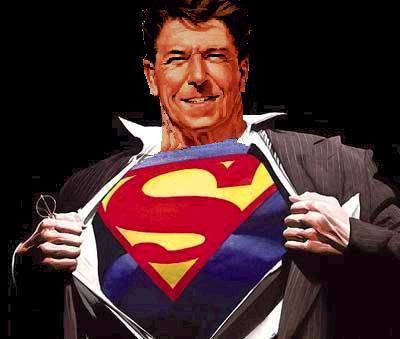
Wednesday, July 23, 2008

McCain's Essay at National War College Still Rings True

Source: http://www.nytimes.com/2008/06/15/us/politics/15pows.html?_r=2&hp&oref=slogin&oref=slogin

In ’74 Thesis, the Seeds of McCain’s War Views


By DAVID D. KIRKPATRICK
Published: June 15, 2008

About a year after his release from a North Vietnamese prison camp, Cmdr. John S. McCain III sat down to address one of the most vexing questions confronting his fellow prisoners: Why did some choose to collaborate with the North Vietnamese?

Associated Press

John McCain arrived at Clark Air Base in the Philippines on March 14, 1973. The time he spent as a prisoner in North Vietnam helped mold his views on war policy and conduct that he discussed later in a thesis.

Associated Press

John McCain, a prisoner of war, in a Hanoi hospital in the fall of 1967 after his Navy jet was shot down during a bombing run.

Related

John McCain's National War College Essay From 1974 (pdf)

Mr. McCain blamed American politics.

“The biggest factor in a man’s ability to perform credibly as a prisoner of war is a strong belief in the correctness of his nation’s foreign policy,” Mr. McCain wrote in a 1974 essay submitted to the National War College and never released to the public. Prisoners who questioned “the legality of the war” were “extremely easy marks for Communist propaganda,” he wrote.

Americans captured after 1968 had proven to be more susceptible to North Vietnamese pressure, he argued, because they “had been exposed to the divisive forces which had come into focus as a result of the antiwar movement in the United States.”

To insulate against such doubts, he recommended that the military should teach its recruits not only how to fight but also the reasons for American foreign policies like the containment of Southeast Asian communism — even though, Mr. McCain acknowledged, “a program of this nature could be construed as ‘brainwashing’ or ‘thought control’ and could come in for a great deal of criticism.”

Now a senator who is the all-but-certain Republican presidential nominee, Mr. McCain often points to his nine months at the War College as the time that crystallized his views toward foreign conflicts like the war in Iraq. He has talked about his studies as a tutorial in the hows-and-whys of America’s involvement in Southeast Asia. But the 40-page final paper he produced was limited to an evaluation of the military code of conduct through the prism of his “narrow, but personal, viewpoint.”

It was in many ways a first draft of his political autobiography, recounting the ennobling stories of resistance that he and his co-author, Mark Salter, would later retell in his 1999 memoir, “Faith of My Fathers.”

Mr. McCain’s 1974 thesis, though, also revealed a welter of other emotions about his years as a prisoner of war, including a deep anger at those he considered collaborators, a tough-minded disdain for public hand-wringing about captives like himself, and a sharp impatience with the American government for failing to “explain to its people, young and old, some basic facts of its foreign policy.” But at the same time, Mr. McCain also urged that any military survival training should include lessons in what he called “the necessity to forgive.”

Mr. McCain’s paper sheds new light on the experience that first brought him national attention and remains a staple of his campaign commercials. His conclusions hint at themes of his career, like his habit of making peace with former enemies. And his arguments that the government and the military should have done more to convince the voters and the troops about the case for the war in Vietnam echo in current debates about Iraq as well.

Asked if he still had those views, Mr. McCain said in an e-mail message that he still believed the antiwar movement had hurt the morale of some prisoners, although he added the vast majority “performed their duty with courage and resolve irrespective of how controversy about the war influenced their view of it.”

Historians, though, say his assertion that the antiwar movement weakened the resistance of Americans captured late in the war is misleading, in part because almost all the most cooperative prisoners were captured early and in part because many other cultural shifts contributed to differences in the later war captives. And some of his fellow prisoners also question the connection between the war protests and the camp collaborators.

“Don’t connect those guys with the antiwar movement,” said Orson Swindle, a prisoner who became a friend of Mr. McCain. “It was the guy in the next cell who was the reason we were trying so hard to uphold the code and our honor, and those guys just betrayed everything we stood for.”

But others say it is easy to see how Mr. McCain’s dismay at prisoners’ propaganda statements could feed his current impatience with calls for a withdrawal from Iraq. In the crucible of the camps, it was easy to see the collaborators — broadcasting antiwar statements over prison loudspeakers, smiling for Jane Fonda and visiting peace activists, enjoying the rewards of better food and less torture — as embodiments of the war protesters that the North Vietnamese counted on to wear down the American war effort.

“Just like the ‘pull-out movement’ today, as I call it, the peace movement would give them something to hang their hats on,” said Richard A. Stratton, another former prisoner incarcerated with Mr. McCain. “You are being tortured and all you have to do to get them to stop is say the same thing that Bobby Kennedy is saying. The same thing that George McGovern is saying. You don’t even have to make anything up.”

Determination Redoubled

Mr. McCain, then a Navy lieutenant commander, was by all accounts what the American prisoners called a “tough resister.” He was nicknamed Crip for the severity of the injuries he sustained — a shoulder, both arms and his knee broken, with a bayonet wound near the groin — when his fighter plane was shot down in October 1967. Military rules only allowed P.O.W.’s to go home in the order of their capture, but some senior officers said his medical condition justified accepting an offer of release from the North Vietnamese. Mr. McCain, the son of a prominent admiral, did not want to be part of North Vietnamese propaganda, so he chose to endure years of torture instead.

At times, Mr. McCain seemed to court punishment, noisily cussing out his captors while giving “thumbs up” signs to his fellow prisoners. “No matter what he did, he always played to the bleachers,” Robert Coram, a military historian, wrote in a book about the camps.

United Press International

Services for Sgt. Abel Kavanaugh, who fatally shot himself, in Denver in 1973. While John McCain was considered a “tough resister” as a prisoner of war, Mr. Kavanaugh and the six pallbearers were accused of collaborating with the enemy. Those charges were later dropped.

Dennis Cook/Associated Press

Senator John McCain greeted by a former North Vietnamese colonel, Bui Tin, at a Congressional hearing in 1991.

All of the prisoners acknowledged that everyone had a breaking point. Mr. McCain’s came 10 months after he arrived. With his father taking command of the Pacific Fleet, the North Vietnamese were determined to coerce the son into denouncing the war. For four days they tied him with ropes, beat him every few hours, re-broke his arm, and left him in a pool of his own blood and refuse. Finally, he signed and tape-recorded a war crimes confession.

His fellow prisoners say his capitulation only redoubled his determination to provoke his captors. “Acts of defiance felt so good that I felt they more than compensated for their repercussions,” he wrote, “and they helped me keep at bay the unsettled feelings of guilt and self doubt my confession had aroused.”

Others responded differently. Initially unable to feed or clean himself, Mr. McCain was nursed back to health by his cellmate, Maj. Norris Overly of the Air Force. Mr. McCain has often credited Mr. Overly with saving his life, calling him “a very fine man.”

Returning from an interrogation in February 1968, however, Mr. Overly told his cellmates he was going home. He said, as he later testified to Congress, that he had given his captors nothing and could not explain their decision.

Mr. McCain said in his e-mail message that he had never been angry with Mr. Overly. In his memoir, he recalls only a fear his friend was making a mistake. “I couldn’t stand in judgment of him,” he wrote.

But his fellow prisoners say he felt betrayed. After a goodbye ceremony staged for North Vietnamese cameras — Mr. McCain arrived on a stretcher — he and the others began referring to the departures as the “fink release program” and “the slimies.”

Mr. Overly declined to comment.

By the end of 1972, a dozen of the roughly 400 American prisoners of war in the North had accepted offers to be freed, only one with the permission of the senior American officers. All were required, at the very least, to sign letters requesting “amnesty” and thanking the North Vietnamese.

Some went further. As early as 1969, Mr. McCain began hearing three American officers denouncing the war over camp loudspeakers. The first two, Robert Schweitzer and Edison Miller, became known as “The Bob and Ed Show.” Walter Eugene Wilber soon joined.

They were followed by as many as a dozen others: enlisted infantrymen captured in South Vietnam early in the war and later brought to the northern prisons. They had not received the same training in survival strategies and the code of conduct as the pilots who made up the rest of the prisons in the North. The cooperators called themselves the “peace committee” and enjoyed treats from their captors, including beer, ice cream, Vietnamese dinners, and front-row seats at a local circus. They lived in fear of retribution from the tough resisters.

Mr. Miller and Mr. Wilber, the officers, said in interviews that they considered it pointless to resist after they had surrendered. “I think our duty as senior officers is to get these men home as healthy emotionally and physically as we can, and I don’t intend to play politics,” Mr. Miller, a Marine lieutenant colonel, said he told the others.

Some members of the peace committee said that watching the destruction of Vietnamese villages had turned them against the war, arguing that the pilots did not see the carnage. Others said they were beaten down. “We said what we had to say to get through it,” Michael Branch, one of the enlisted men, said in an interview.

Mr. McCain was as enraged as any of the tough resisters by what they considered the treason of the two officers and enlisted men, his friends said. “He thought this was ‘terrible, terrible, terrible,’ they should all be shot,” said John Dramesi, a fellow prisoner.

In his memoirs, Mr. McCain addressed only briefly what he called “the camp rats.” During a stint in solitary confinement, he had caught a glimpse of two other American officers acting friendly with their guards and enjoying delicacies like eggs and bananas, Mr. McCain and his co-author wrote. Assuming that contact with a fellow American would restore their nerve, Mr. McCain called out: “Hey, guys, my name’s McCain. Who are you?” They called the guards, who beat him again.

Those two were Mr. Miller and Mr. Wilber. They denied the exchange took place, but in his e-mail message Mr. McCain said, “I would have been astonished if they admitted it.”

Willingness to Forgive

But Mr. Schweitzer, who died in a car crash soon after the war, became an example of what Mr. McCain later called “the necessity to forgive.” Confronted by a senior officer, Mr. Schweitzer renounced his participation in the propaganda and resumed his place in the American ranks.

“It is neither American nor Christian to nag a repentant sinner to his grave,” the senior Americans taught.

“John McCain has lived by that his whole life,” Mr. Swindle said. Others have observed the pattern as Mr. McCain has embraced former adversaries from antiwar activists and North Vietnamese prison commanders to the critics who charged him with corruption in the Keating Five scandal.

Mr. McCain was one of about a half-dozen former prisoners of war who spent the year after their release at the National War College, an elite academy for future admirals or generals.

Some officers fresh from Vietnam questioned the premise of the war. “The vast majority of generals who had experience in Vietnam will tell you we should never have gone past the advisory level,” said John H. Johns, a retired Army general and a student at the college that year. But in Mr. McCain’s paper, he instead focused on the failure to sustain public support for the fight. The paper was obtained through the Freedom of Information Act and provided to The New York Times by Matt Welch, an author of a book about Mr. McCain.

He cast a cold eye on the public sympathy for prisoners like himself. “Two and a half million American fighting men served in the Vietnam conflict, and more importantly 46,000 sacrificed their lives,” Mr. McCain wrote. “Yet in the latter stages of that war millions of people were more actively concerned about the plight of 565 P.O.W.’s in Hanoi than in any bigger issue of the war.”

American elected officials, he argued, had fostered a myopic focus on the prisoners by forsaking the goal of unconditional surrender in favor of a negotiated peace, enabling the North Vietnamese to turn their hostages into a bargaining chip. “Many Congressional resolutions, favorable to the enemy, were based solely on the guaranteed return of Americans from North Vietnam,” he wrote.

With prisoners returned, he argued, ambivalence about the war was protecting the minority of American prisoners “who did not keep faith with their country or their fellow prisoners.”

Court-martial charges were filed against two officers and seven enlisted men, he noted. “Probably more would have been charged if the Vietnam War had been like other wars in which this country has engaged,” Mr. McCain wrote. (Top military leaders quickly quashed charges against those nine.)

Mr. McCain reserved his fiercest criticism for what he called “the evils of parole and amnesty,” returning repeatedly to the importance of teaching recruits to reject such offers as he did. The prospect of early release had tempted and demoralized the other captives while providing the North Vietnamese “a maximum of favorable publicity and propaganda value from these ‘humane acts,’ ” he wrote.

“Probably the greatest shock to great numbers of the P.O.W.’s was to find, on returning to the U.S., that P.O.W.’s who were released early had not been court-martialed but in fact had received choice assignments and early promotions,” he added, calling their warm welcome “inexcusable.”

Mr. McCain’s proposal that the military teach U.S. foreign policy to its recruits may be his most notable recommendation. “Too many men in the armed forces of the United States do not understand what this nation’s foreign policy is,” Mr. McCain wrote, adding he did not propose a Soviet-style “indoctrination,” but “a simple, straightforward explanation of the foreign policy of the United States.”

In his e-mail message, Mr. McCain stood by the idea. “It is important, not just for P.O.W.’s, but all Americans serving in combat to understand the purpose and reason for the sacrifices they are asked to make for our country,” he said.

Such instruction, though, sounds close to heretical to some military officers because it risks instructing the troops in the foreign policy of either one president or another, a prospect that particularly troubles Mr. McCain’s contemporaries who came to opposite conclusions about the Vietnam War.

“It gets to be partisan political positioning and regime support,” said Merrill McPeak, a retired Air Force general and another War College classmate of Mr. McCain. (Both Mr. Johns and Mr. McPeak are supporting the Democratic presidential campaign of Senator Barack Obama.)

But Prof. Richard H. Kohn, a historian of civil-military relations at the University of North Carolina who has taught at the War College, suggested that Mr. McCain’s recommendation was more of a “time warp” back to the 1950s, when he came of age at the Naval Academy. It was an era of staunchly anti-communist foreign policy consensus that was shattered by the debates over the Vietnam War while Mr. McCain was in prison, Professor Kohn said.

Mr. McCain’s public statements when he returned from the war suggested that he saw a similar consensus emerging again. “I see more of an appreciation of our way of life,” he wrote in a 1973 article for U.S. News & World Report. “There is more patriotism. The flag is all over the place.”

“Some of my fellow prisoners sang a different tune, but they were a very small minority,” he added. “I ask myself if they should be prosecuted, and I don’t find that easy to answer. It might destroy the very fine image the great majority of us have brought back from that hellhole.”

Tuesday, July 22, 2008

Barry Obama Columbia University Thesis Search

Item: Barry Obama Columbia University thesis from 1983 or 1984 on Soviet Nuclear Disarmament Resources: CLIO http://www.columbia.edu/cu/lweb/eresources/clio/ Source: http://www.columbia.edu/cu/lweb/indiv/avery/preservation/compilation.html

Columbia Masters Theses

  • The masters theses of previous GSAPP Historic Preservation students are cataloged in CLIO.
  • They are all housed in the rare book collection, Avery Classics.
  • To view the list of theses, search these keywords in CLIO : columbia thesis preservation. Please note, you must use the singular "thesis", not the plural theses.
  • What appears is a full list of theses, in alphabetical order by title.
  • Most students are interested in recent work.  In the box above the citations titled "Re-sort result by:" select  "Date (newest first)" from the drop-down box. You will have last year's theses in alphabetical order, followed year by descending year, in alphabetical order .
  • If you know of a specific author, you can do an author search.
  • The records for masters theses are not complete. They have no subject headings. This is generally not a problem since the titles of theses are self-explanatory.  If there is a particular topic you are interested in, add that topic to the keywords above. For example churches brooklyn OR marble conservation.
Source: http://www.columbia.edu/cu/lweb/archival/contact.html

Contact Information for Columbia Archival Collections

Avery Architectural & Fine Arts Library. Department of Drawings and Archives Columbia University, 1172 Amsterdam Ave, MC0301, New York, NY  10027
telephone: (212) 851-5612
email: avery-drawings@libraries.cul.columbia.edu

The Burke Library at Union Theological Seminary 3041 Broadway at 121st Street, New York, NY  10027
telephone: (212) 854-5606
email: archives@uts.columbia.edu

Columbia Unversity Archives Rare Book and Manuscript Library, 535 W. 114th Street, MC 1127, New York, NY  10027
telephone: (212) 854-3786
email: uarchives@columbia.edu

C.V. Starr East Asian Library 300 Kent Hall, Columbia University, 1140 Amsterdam Avenue, MC3901, New York, NY 10027
telephone: (212) 854-4318
email: starr@libraries.cul.columbia.edu

Health Sciences Library, Archives and Special Collections, Columbia University Medical Center 710 W. 168th St., New York, NY  10032; 
telephone: (212) 305-7931
email: hslarchives@columbia.edu

Oral History Research Office 801 Butler Library, Box 20, Columbia University, 535 West 114th Street, MC1129, New York, NY 10027
telephone: (212) 854-7083
email: oralhist@libraries.cul.columbia.edu

Rare Book & Manuscript Library Butler Library, 6th Floor, 535 West 114th St., New York, NY  10027
telephone: (212) 854-1365
email: rbml@libraries.cul.columbia.edu

Monday, July 21, 2008

Economic stimulus, Part 2?


By Ron Scherer
Mon Jul 21, 4:00 AM ET

No one can remember the last time Congress enacted two major economic stimulus packages in one year. But 2008 may see a sequel to the $100 billion worth of checks that started filling individuals' bank accounts in early spring.

Democrats say they will proceed this fall with a "Son of Stimulus." Whether it materializes is questionable; President Bush currently opposes such a move, preferring to wait to see the full effect of the first stimulus package.

As for economists, some say it's a good idea, if done differently from Round 1, but many are skeptical that money can start to circulate through the economy quickly enough. One reason for their concern: Surveys are finding that a major chunk of the money already doled out is going into savings instead of spending.

The impetus for Congress, besides the election year, is a US economy that is not expected to show much change from its current weak conditions by the time lawmakers return from their August recess. The unemployment rate may be trending higher. Energy prices, one driver of inflation, are likely to remain relatively high at least until the end of hurricane season in late November. While new housing starts may be showing signs of stabilizing, home values could still be falling.

"Whether we have negative growth or not, the economy is barely positive, it is going nowhere," says Joel Naroff of Naroff Economic Advisors in Holland, Pa.

Some budget watchers say Congress is unlikely to act unless the economy is in crisis.

"There would have to be an unambiguous perceived need, such as a big stock market drop, a major bank failure, or something that would scare the members," says Stanley Collender, a budget expert and managing director at Qorvis Communications in Washington. "And it would have to be called a tax cut instead of a spending increase."

Some in Congress began weighing an additional spending package in February after Bill Gross, head of PIMCO, a mega-investment manager, suggested the need for a permanent $300 billion to $500 billion spending program.

"To provide a stable recovery path, government spending needs to fill the gap – not consumption," he wrote back then.

If Congress could agree on a second stimulus package, it's not clear how soon the benefits would actually start pulsing through the economy.

"Say they do pass a package in October," says Mr. Naroff. "The Treasury won't start sending out a set of checks until the beginning of next year, and they won't get spent until February, March, and April."

Some economists expect the economy will still be weak next year and in need of a boost.

"The downside risks are significant. Another well-timed and targeted stimulus package would be helpful," says Mark Zandi, chief economist at Moody's Economy. com.

Last week, House Speaker Nancy Pelosi, after meeting with economists, seemed to indicate any stimulus package would be aimed at lower- to middle-income Americans.

"Even though we believe the initial public rebates had a positive impact, it is certainly not enough to offset the rising prices in gasoline, in food, in fuel, in healthcare, in education … while the purchasing power of Americans' income has gone down," she said at a press conference.

Not all economists, however, are convinced that the tax rebate, as this year's handout was called, has been that effective.

University of Michigan economists Joel Slemrod and Matthew Shapiro are researching what taxpayers are doing with their checks – $600 per individual and $1,200 for couples filing jointly.

"So far, we're finding that 20 percent of the people say the rebate led them to spend more," says Dr. Slemrod, who teaches at the Stephen M. Ross School of Business. "That's about what we found for the tax rebates of 2001."

Data indicate a significant portion of the rebate checks is going into savings, Slemrod says. In May, the personal savings rate soared to 5 percent, up from 0.4 percent the month before.

"If you convert that to dollars, you see the jump in savings is about the same magnitude as the stimulus checks in May," he says.

The economist says he has a "wait-and-see" attitude about a second round of stimulus. "I'm not sure we would want to do a second dose the same [way] as the first dose," he says.

Mr. Zandi agrees on the need to try something different. He would consider a payroll-tax holiday for a period of time. This is an immediate cash benefit, particularly for small business and workers who don't earn enough to pay taxes, and is easily implemented, writes Zandi in an e-mail.

"The biggest perceived downside is that payroll-tax revenue goes into the Social Security Trust Fund," he writes, adding that this problem can be resolved by moving money from the general fund to the trust fund.

In addition, Zandi would consider a federal gasoline-tax holiday, an expansion of the food-stamp program, aid to state governments for their Medicaid bills, and maybe some infrastructure spending if a good list could be drawn up quickly.

"It would be all temporary, not permanent, and would run $50 billion to $100 billion," he says.

Economist Robert Gay of Fenwick Advisers in Rye, N.Y., says the economy may well need some form of fiscal stimulus. But the consumer should not be the targeted beneficiary, he argues. "Why not prime a pump that would continue to run?" he asks. One area of spending, he suggests, is alternative energy or improving the electric grid. "Go at the heart of the issue," he argues.


Copyright © 2008 The Christian Science Monitor

Copyright © 2008 Yahoo! Inc. All rights reserved.

McCain Slams Obama In Iraq Success Editorial Rejected By Anti-American Rag New York Times

Source: http://www.drudgereport.com/flashnym.htm

In January 2007, when General David Petraeus took command in Iraq, he called the situation “hard” but not “hopeless.” Today, 18 months later, violence has fallen by up to 80% to the lowest levels in four years, and Sunni and Shiite terrorists are reeling from a string of defeats. The situation now is full of hope, but considerable hard work remains to consolidate our fragile gains.

Progress has been due primarily to an increase in the number of troops and a change in their strategy. I was an early advocate of the surge at a time when it had few supporters in Washington. Senator Barack Obama was an equally vocal opponent. "I am not persuaded that 20,000 additional troops in Iraq is going to solve the sectarian violence there,” he said on January 10, 2007. “In fact, I think it will do the reverse."

Now Senator Obama has been forced to acknowledge that “our troops have performed brilliantly in lowering the level of violence.” But he still denies that any political progress has resulted.

Perhaps he is unaware that the U.S. Embassy in Baghdad has recently certified that, as one news article put it, “Iraq has met all but three of 18 original benchmarks set by Congress last year to measure security, political and economic progress.” Even more heartening has been progress that’s not measured by the benchmarks. More than 90,000 Iraqis, many of them Sunnis who once fought against the government, have signed up as Sons of Iraq to fight against the terrorists. Nor do they measure Prime Minister Nouri al Maliki’s new-found willingness to crack down on Shiite extremists in Basra and Sadr City—actions that have done much to dispel suspicions of sectarianism.

The success of the surge has not changed Senator Obama’s determination to pull out all of our combat troops. All that has changed is his rationale. In a New York Times op-ed and a speech this week, he offered his “plan for Iraq” in advance of his first “fact finding” trip to that country in more than three years. It consisted of the same old proposal to pull all of our troops out within 16 months. In 2007 he wanted to withdraw because he thought the war was lost. If we had taken his advice, it would have been. Now he wants to withdraw because he thinks Iraqis no longer need our assistance.

To make this point, he mangles the evidence. He makes it sound as if Prime Minister Maliki has endorsed the Obama timetable, when all he has said is that he would like a plan for the eventual withdrawal of U.S. troops at some unspecified point in the future.

Senator Obama is also misleading on the Iraqi military's readiness. The Iraqi Army will be equipped and trained by the middle of next year, but this does not, as Senator Obama suggests, mean that they will then be ready to secure their country without a good deal of help. The Iraqi Air Force, for one, still lags behind, and no modern army can operate without air cover. The Iraqis are also still learning how to conduct planning, logistics, command and control, communications, and other complicated functions needed to support frontline troops.

No one favors a permanent U.S. presence, as Senator Obama charges. A partial withdrawal has already occurred with the departure of five “surge” brigades, and more withdrawals can take place as the security situation improves. As we draw down in Iraq, we can beef up our presence on other battlefields, such as Afghanistan, without fear of leaving a failed state behind. I have said that I expect to welcome home most of our troops from Iraq by the end of my first term in office, in 2013.

But I have also said that any draw-downs must be based on a realistic assessment of conditions on the ground, not on an artificial timetable crafted for domestic political reasons. This is the crux of my disagreement with Senator Obama.

Senator Obama has said that he would consult our commanders on the ground and Iraqi leaders, but he did no such thing before releasing his “plan for Iraq.” Perhaps that’s because he doesn’t want to hear what they have to say. During the course of eight visits to Iraq, I have heard many times from our troops what Major General Jeffrey Hammond, commander of coalition forces in Baghdad, recently said: that leaving based on a timetable would be “very dangerous.”

The danger is that extremists supported by Al Qaeda and Iran could stage a comeback, as they have in the past when we’ve had too few troops in Iraq. Senator Obama seems to have learned nothing from recent history. I find it ironic that he is emulating the worst mistake of the Bush administration by waving the “Mission Accomplished” banner prematurely.

I am also dismayed that he never talks about winning the war—only of ending it. But if we don’t win the war, our enemies will. A triumph for the terrorists would be a disaster for us. That is something I will not allow to happen as president. Instead I will continue implementing a proven counterinsurgency strategy not only in Iraq but also in Afghanistan with the goal of creating stable, secure, self-sustaining democratic allies.

Sunday, July 20, 2008

Birth: GOLDMAN

Source: http://www.jewishexponent.com/article/16507/

July 03, 2008


Wendy (nee Roseman) and Jason Goldman of Maple Glen announce the birth of their daughter, Ayla Brielle, on April 11.

Sharing in their happiness are grandparents Sherry and Warren Lassin, Maxine and Steven Goldman, Glenn Roseman, and Sue and Philip Shapiro, as well as great-grandmothers Toby Shafritz and Ida Goldman.

Joining in welcoming the baby are aunts and uncles Gayle and Ross Roseman, and Mindi and Michael Hoffman, along with cousin Samantha.

Ayla Brielle is named in loving memory of her paternal great-grandmother Florence Fishman.

Saturday, July 19, 2008

'Rig' The Election

Source: http://www.ibdeditorials.com/IBDArticles.aspx?id=301271783391789

By INVESTOR'S BUSINESS DAILY | Posted Friday, July 18, 2008 4:20 PM PT


Energy: A day after House Democrats pretend to be in favor of drilling, Sen. Diane Feinstein calls offshore drilling a "distraction." Mark Sept. 30 on your calendar. It's the day Democrats have to put up or shut up.


IBD Series: Breaking The Back Of High Oil


When President Bush lifted the executive order banning exploration and drilling in the Outer Continental Shelf, two things happened almost immediately: The world price for oil started to drop and the Democrats panicked. They could no longer hide under the umbrella the order provided.


On Sept. 30, when the Interior Department's 2008 appropriations expire, the Democrats will have to reauthorize the congressional ban and explain to the voters why.


Thursday's charade on HR 6515 allegedly was about opening up the National Petroleum Reserve Area in northwest Alaska. The reality was that the Democrats added environmental restraints that virtually invited environmental groups to sue to block any further development.


The NPRA straw man was invoked to justify the "use it or lose it" part of the bill. But "use it or lose it" already is the law of the land. Nick Rahall, D-W.Va., chairman of the House Resources Committee and HR 6515 floor manager, voted for it in 1992.


Under current law, energy companies already are required to utilize acquired leases within a five- to 10-year period or the interior secretary has the right to revoke the lease.


Another Democratic hoax was the claim that the bill would stop the export of Alaskan oil. The fact is, we haven't exported any oil from Prudhoe Bay since President Bush took office. GOP proposals to open ANWR guarantee all its oil will reach the lower 48 states.


Back in 1992, Rahall, who complains that the oil companies are sitting on their leases, held hearings in order "to examine the rapid oil and gas development that has taken place on our nation's public lands in recent years."


Three years later, President Clinton vetoed a bill that passed the House and Senate and which would have opened up a mere 2,000 acres of frozen tundra in ANWR that today would be delivering more than a million barrels daily.


On Rahall's Web site is his committee's agenda for 2008, a major focus of which is slowing the "rampant, nearly unfettered energy development on federal lands (which) continues despite ever-increasing evidence of the serious resource impacts caused by this activity."


In Rahall's eyes, the oil companies are damned if they do and damned if they don't.


In an op-ed in the Los Angeles Times on Friday, Feinstein repeated the canard that the oil companies are sitting on 68 million acres of leases that go unexplored. If the California senator knows where they are, can she please tell House Minority Leader John Boehner and the rest of us?


On his Web site, Boehner says: "Democrats have been utterly unable to say where they came up with the claim that oil companies are sitting on 68 million acres of federal lands without drilling for oil or gas on any of it — and particularly how they arrived at the amount of oil they claim could be found on those 68 million acres."


Feinstein falsely claims that the "vast majority of the Outer Continental Shelf is already open to oil exploration." As we noted here Friday, 85% of the 1.76 billion acres of the OCS is prohibited from being developed by the congressional ban.


The senator says that "areas containing an estimated 82% of all the natural gas and 79% of the oil are today available to oil companies through existing federal leases." How does she know that, considering that 85% of the OCS is off-limits? How does she know this if the land is unexplored and the leases unused?


Feinstein calls offshore drilling a "distraction." Countries like Brazil call it energy independence. If Brazil had copied the Democrats' energy policy, it wouldn't have found its Carioca offshore field earlier this year. It may hold up to 33 billion barrels.


That followed the discovery in December of the Tupi field, estimated to contain 5 billion to 8 billon barrels of crude. Somehow the Brazilians aren't too worried about oil spoiling the pristine beaches of nearby Sao Paulo or Rio de Janeiro during the tourist season.


Here at home, Chevron announced in 2006 what's likely to be the biggest American oil find since Prudhoe Bay in Alaska. Discovered under 7,000 feet of water and more than 20,000 feet under the sea floor, the Wilcox formation may hold as much as 15 billion barrels of oil that will begin being delivered in 2014.


The geology is complicated, but the formation extends into the Gulf of Mexico and inland underneath Louisiana and Mississippi. The well that was drilled was 175 miles off the coast of Louisiana.


Shell is spending a good chunk of its "windfall" profit to build and deploy an oil-drilling platform in the Gulf of Mexico as tall as the Eiffel Tower known as Perdido. It will be anchored to the seabed by moorings spanning an area the size of downtown Houston.


Set to begin production next year, Perdido will produce 100,000 barrels of badly needed crude a day.


The oil companies are sitting on nothing. It's the Democrats who are sitting on our energy future.


Let's vote on it in Congress this September and then cast a vote on Congress this November.

Thursday, July 17, 2008

Mark Sanford's Executive Masterpiece On Real ID to Homeland Security

Source: http://blog.wired.com/27bstroke6/2008/03/south-carolina.html

South Carolina Rails Against Real ID, Asks Not To Be Punished

By Ryan Singel
March 31, 2008

On the last possible day to ask for an extension to pending federal identification rules, South Carolina governor Mark Sanford eschewed southern gentility and instead sent the federal government a scathing critique of Real ID, that almost parenthetically requested that the federal government not punish South Carolina citizens come May 11.


mark_sanford_250x
South Carolina's Republican governor asked the feds not to reject South Carolina licenses come May 11, but added three pages of anti-Real ID arguments in the letter.
AP/Mary Ann Chastain


Now the Department of Homeland Security has to decide by Tuesday whether to lose face by accepting the Republican governor's letter as proof that South Carolina has strong I.D. cards or to force a showdown by refusing to let South Carolinians without passports from entering Social Security buildings and federal courthouses starting May 11. They'd also not be allowed to use their driver's licenses to board planes and would instead have to submit to pat-downs and puffer machines to get on a plane if they didn't use a passport to fly domestically.


South Carolina, along with Montana, New Hampshire and Maine, entered March as rogue states that had not asked for extensions to the Real ID rules. Those states argued that the federal government should pay for the billions in costs and that the system will put people's personal information at risk of being used by government data-miners, snooped on by prying bureaucrats or stolen by hackers.


The rules, which originated as an amendment to a must-pass military spending bill in 2005, create a de-facto national identity card. States are free not to follow the federal government standards or not interconnect their databases with other states, but citizens of such states would not be able to use their driver's licenses to enter federal buildings or for identification at the airport.


DHS maintained that the states that were granted an extension until 2010 for compliance with the recently finalized rules had to commit to complying with Real ID.


That stance softened two weeks ago after California's DMV head wrote in to clarify that its earlier request for an extension was not a guarantee the nation's most populous state would comply with Real ID.


Then Montana governor Brian Schweitzer (D) negotiated a way to get an extension, while never actually asking for one. New Hampshire cut-and-paste Montana's letter days later, winning itself an extension as well. Maine followed suit last Wednesday, but still hasn't gotten an answer on Monday, according to a spokesman for the governor.


Today, Sanford followed suit, listing in a letter all the safety features of South Carolina's driver's licenses and asking that his citizens be treated like Montana's:


Given the way DHS has agreed to accept Montana's driver licenses after May 11th, one would reasonably expect -- and I would respectfully ask -- that DHS will be consistent and not needlessly penalize the citizens of South Carolina and allow them to travel and enter federal buildings like the citizens of other states.

That likely would have been enough to spare South Carolinians, but Sanford went on for another three and a half pages in the letter (.pdf), listing his arguments against Real ID.


Sanford railed against the lack of debate on the bill ("his sensitive subject received far less debate that steroid use in baseball"), the cost ("There is something wrong when the federal government imposes the burden of creating a national ID system on the states - but only pays for two percent of the cost") and limited government issues ("We have no assurances that at some point we won't need a Real ID to open a bank account or purchase a gun.")


Source: http://blog.wired.com/27bstroke6/2008/03/defiant-south-c.html

Defiant South Carolina Wins Real ID Extension

By Ryan Singel
March 31, 2008

Despite blasting a defiant last day letter to the Homeland Security Department over pending federal rules Monday, South Carolina Republican governor Mark Sandford secured South Carolinians the right to use their driver's licenses to board planes without being  patted down, at least until 2010.


mark_sanford_250x
Despite telling the feds he would not comply with their rules, South Carolina's Republican governor successfully prevented the feds from punishing his states' residents as Homeland Security had promised to do.
AP/Mary Ann Chastain

Just hours after getting Sanford's jeremiad, Homeland Security chief Michael Chertoff signed the state's extension (.pdf) personally, writing that "like Montana, your letter sets forth in detail how South Carolina will in fact meet the principal security requirements of Real ID – as a matter of South Carolina's independent judgment, and not as an act  of compliance."


Like other rebellious states, South Carolina rejected Real ID mandates, saying the $4-$20 billion dollar program was an unfunded mandate that invaded citizens' privacy and put them at risk of identity theft due to massive, connected databases of sensitive information.


DHS counters that having current license holders have to get certified documents and reprove their eligibility for identification will prevent terrorism and be useful for other purposes such as curtailing illegal immigration and identity theft.


Maine remains the lone state not to have been given an extension, despite having written a letter not unlike ones from Montana and New Hampshire. All of them explained how the respective state had strong license security procedures but wouldn't comply with the Real ID mandate.


Sanford's letter was extraordinary, however, since he used most of his words explaining why he thought Real ID was invasive, unfunded and dangerous.


Chertoff replied personally and substantively, writing that "thoughtful responsible and honest concerns sthat deserve equally thoughtful responses."


By contrast, Montana and New Hampshire got terse letters from Stewart Baker, a sharp-tongued assistant policy secretary who's been accusing critics of Real ID of throwing spaghetti on the walls.


It's clear the rebel states won, according to Bill Scannell, a spokesman for the Identity Project which has been fighting against Real ID.


"Montana's letter smirked," Scannell said. "New Hampshire's was down right disrespectful and you could see the scotch tape from where they cut-and-pasted pages from their DMV handbook."


"But Sanford's five-page letter was Fort Sumter-quality," Scannell said, referring to the South Carolina military installation where the Civil War started.


That leaves Maine as the only rogue left rogue, though the state is likely to get its own extension late Monday.


Once Maine gets its letter from DHS, the department can declare victory in improving the security of the nation's driver's licenses and leave the ongoing funding and privacy problems for a new administration to deal with come January 2009.

Wednesday, July 16, 2008

Barry You're NO Superman - Obama says time to rid world of nuclear weapons


Source: http://www.cnn.com/2008/POLITICS/07/16/obama.speech/

WEST LAFAYETTE, Indiana (CNN) -- Sen. Barack Obama on Wednesday said he wants to rid the world of nuclear weapons and pledged to fight emerging threats posed by biological and cyber-terrorism.


Sen. Barack Obama joins in a roundtable discussion on national security Wednesday at Purdue University.

Sen. Barack Obama joins in a roundtable discussion on national security Wednesday at Purdue University.


"It's time to send a clear message to the world: America seeks a world with no nuclear weapons," the White House hopeful said.

"As long as nuclear weapons exist, we'll retain a strong deterrent. But we'll make the goal of eliminating all nuclear weapons a central element in our nuclear policy."

The remarks, delivered at Purdue University in Indiana...

Obama And Nuclear Weapons


02 Aug 2007 05:01 pm


The first conventional Washington rule about nuclear strike policy is that you don't talk about nuclear strike policy.


The second conventional Washington rule about nuclear strike policy is that when you are forced to talk about nuclear strike policy, you respond with a variant of "All options are on the table."


Some comments of Barack Obama today reached critical mass by late afternoon. When the AP first reported that Obama had said he would never use nuclear weapons, the context was unclear. And so was his answer, which included a pause and then the addition: "involving civilians." And then he tried to scratch his entire answer. So -- was Obama announcing to the world that the United States would never use its stockpile of nuclear weapons? Unilateral disarmament? Turns out that the AP story failed to add a very important bit of context. Obama was asked about using nuclear weapons against terrorist targets Afghanistan and Pakistan; the Bush Administration has never ruled out using tactical nukes to root out underground terrorist safe havens. In this much more limited context, Obama was setting some policy: no, he would not ever consider using nuclear weapons on terrorist targets in those two countries.


Still, he violated Rule 1 and Rule 2, which drew a response from Sen. Hillary Clinton.


"Presidents should be very careful at all times in discussing the use or non-use of nuclear weapons," Clinton said. "Presidents since the Cold War have used nuclear deterrence to keep the peace. And I don't believe that any president should make any blanket statements with respect to the use or non-use of nuclear weapons."


There's no question that Obama ought to have been more careful with his words. That, when he's asked about using nuclear weapons, his mind immediately sends words to his mouth is evidence that his internal monitor developed outside Washington.


The Clinton campaign will use this story to further a narrative about Obama -- that he is too inexperienced to handle radioactive national security questions.


The Obama campaign might use this story to reinforce its own efforts to draw distinctions between the Old Ways Of Washington and the New Way Of Obama.

Guest Editorial, Rep. Duncan Hunter: The Loss of the U.S. 'Arsenal of Democracy' to China's Unfair Trade Regime Needs to Be Addressed

Targeted News Service, Jan 23, 2007

The presidential campaign of Rep. Duncan Hunter, R-Calif., issued the following statement:

When we got into World War II, our allies and our adversaries realized very quickly that America had an arsenal of democracy. We had a great industrial base. We had an industrial base in which our major automakers were able to turn immediately to making tanks and personnel carriers and all the other equipment of war.

In my own home town in San Diego, we had a facility you can still see if you drive down by the harbor that used to turn out a bomber aircraft every 60 minutes. They could have built the entire B-2 force in one day and had three hours left over.

Everywhere across this land we had a strong industrial base, which was transformed into a wartime footing. It was with the support of that industrial base that the armies of the United States moved across Europe, that the Marine Corps and the armies moved across the Pacific, and that we brought this war to a conclusion that favored the United States of America. An arsenal of democracy is pretty important to democracies.

Today, if you want to look at a big part of the arsenal of democracy, you may have to go to some other countries. One country you may have to go to is China, because China is cheating on trade and China is acquiring hundreds of billions of American dollars more than we are acquiring from them. They are using those billions of American trade dollars to buy military equipment.

That is why they are able to have some 17 submarines under production today while we have a fraction of that. That is why they are able to buy and build medium-range ballistic missiles. I predict that at some point those ballistic missiles will have an anti-ship capability that will present a major threat to the American fleet. That is why they are able to start developing a new industrial base for the development of a modern tactical aircraft program.

We see this one-way street on trade beginning to move the arsenal of democracy offshore. In the past year on the Armed Services Committee I have looked at certain critical components of the arsenal of democracy and I note that we only have one carbon fiber manufacturer left in the United States. We only have one rocket fuel manufacturer left in the United States.

As we look at more and more of the industries that are critical to national security, we realize that in many of them we only have one or two or three businesses or companies left that are capable of making particular components that are critical to America's military strength.

It is time to change and reverse this one-way-street trade policy that we have acquiesced to and restore the arsenal of democracy.

Since we are all talking football at this time of the year, when China enters a trade deal with the United States or competes against an American company they start with 74 points on the scoreboard before the opening kickoff.

They give a 17 percent refund of their VAT tax, basically a 17 percent subsidy to exporters sending products to the United States. When our products arrive at China's shores, they give us a 17 percent penalty. That is a 34-point spread. Then just to make sure that we don't throw a Hail Mary and come from behind and win that particular competition on that particular product, they devalue their currency by 40 percent, and increase the spread to 74 points.

That means that before the opening kickoff in this competition that we call world trade between the Chinese corporation and the American business and American workers, China has 74 points on the scoreboard. Then if we lose the competition, they say, what's the matter? Can't you play football?

China is cheating on trade. The Chairman of the Federal Reserve Board made that clear in his preliminary speech which called this manipulation of currency an illegal subsidy. That word "subsidy" was subsequently removed from the speech before it was given to the Chinese leadership, but that illegal subsidy -- that 74 points on the scoreboard -- hurts American businesses, it hurts American workers and it erodes the arsenal of democracy.

We are going to need the arsenal of democracy at some point in the future. We need to have a trade policy and new trade laws that say this: We are not going to live with the 74-point disparity any more. You can do it the easy way or the hard way. We can all start with zero points on the scoreboard, or we will put the same taxes on your goods that you put on ours, and we will both start with 74 points on the scoreboard. But we are not going to start anymore with the score being America zero, China 74.

I hope this is a year in which we pass a bill that calls the currency manipulation and devaluation by the central government of China what it is: an illegal subsidy.