Leadership: If President Bush had not invaded Iraq, President Obama likely would not have found Osama bin Laden. The al-Qaida operative who fingered bin Laden's courier was caught in Iraq helping terrorists in 2004.
It was a line Obama never got tired of. Most infamously, he used it during an anti-war rally at Chicago's Federal Plaza in October 2002: "I don't oppose all wars," the state senator said as President Bush was preparing to attack Saddam Hussein. "What I am opposed to is a dumb war."
Obama accused "political hacks like Karl Rove" of launching the Iraq War for the purpose of distracting Americans from their economic hardships.
A decade later we know Obama was dead wrong. The successful manhunt that delivered justice from the barrel of a gun to the elusive head of al-Qaida wouldn't have happened without an indispensable piece of the puzzle that the U.S. got because of its presence in Iraq.
In January 2004, Kurdish forces near the Iranian border apprehended Hassan Ghul, a top al-Qaida lieutenant once under the direct command of 9/11 mastermind Khalid Sheikh Muhammad. After quickly being handed over to U.S. forces, Ghul was sent to one of the CIA's foreign "black site" prisons. It wasn't long before this particular terrorist canary started singing.
Ghul told the CIA that "Abu Ahmed al-Kuwaiti" — determined years later to be Sheikh Abu Ahmed — was a high-value courier for al-Qaida and key associate of KSM successor Faraj al-Libi. When al-Libi was captured and interrogated the next year, U.S. intelligence began putting together the pieces, finally concluding that al-Kuwaiti was a courier to bin Laden himself.
This early key puzzle piece, without which other pieces might not have been found, came from an al-Qaida operative whose sole purpose for being in Iraq was to organize armed opposition to the U.S. presence there.
Iraq had indeed, as Bush frequently said, become "the central front in the global war on terror," and the Iraq War success of capturing Ghul led to the success of killing the central personage of global terror, at least symbolically, Osama bin Laden.
Had America not invaded, al-Kuwaiti and the valuable information inside his head would have been someplace else, probably where it was a lot easier to remain on the loose. He might never have been caught.
So we have another reason it was wise to go into Iraq. Not only did the Iraq invasion topple Saddam, who used chemical weapons to commit genocide against his own people, and sought nuclear weapons to slaughter others; not only did it give the Iraqi people their first opportunity for freedom and prosperity, providing a model of liberty for other Mideast Islamic nations. On top of all that, it led to the death of bin Laden.
As a bonus, Ghul's role in the elimination of bin Laden is another validation of the wisdom of Bush's authorization for the CIA's black sites, where harsh interrogation methods against terrorists could be practiced.
Iraq a dumb war? That falsity is another thing for which President Obama owes President Bush an apology — and a thank you on behalf of the American people.
Reagan Made Killing Bin Laden Possible By Thomas McArdle
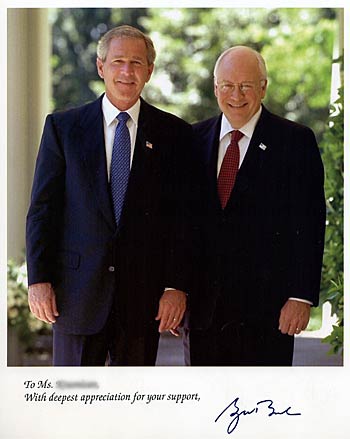
Much was written last week about how much thanks George W. Bush deserves in tracking down Osama bin Laden. The answer is: a great deal.
Information extracted from al-Qaida operatives under Bush's interrogation policies ultimately led us to the compound in Abbottabad. But he did more. As an IBD editorial ("'Dumb' War In Iraq Led Obama To Bin Laden") noted last week, a crucial piece of the puzzle in identifying bin Laden's courier came from an al-Qaida lieutenant who was caught only because of Bush's decision to liberate Iraq.
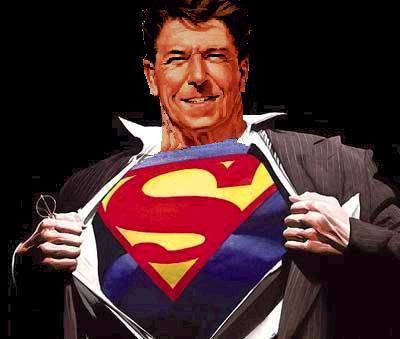
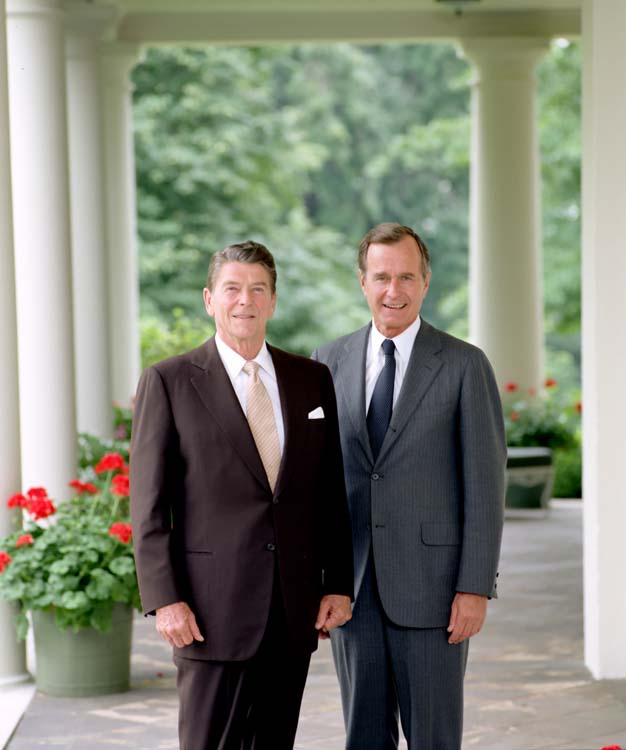
Someone else also belongs on the list of people to thank, along with the heroic Navy SEALs and the current commander in chief. He is the president we have to applaud for so many other things, like saving the U.S. economy from a government-induced malaise, and winning the Cold War: Ronald Reagan.
With the same visionary perseverance employed in his commitment to replace mutual assured nuclear destruction with missile defense, President Reagan executed a long-term strategy to build an array of elite, high-tech special forces units that could carry out operations like the one that snuffed out bin Laden.
As documented by Marc Celmer in the 1987 study "Terrorism, U.S. Strategy, and Reagan Policies," a 1990 target was set by the Reagan administration to increase special operations forces by 50% from 1981 levels. By 1987, a U.S. Special Operations Command was established to oversee the special-ops forces of the various branches of the military.
The birth of modernized special ops wasn't smooth. During America's victorious invasion of Grenada in 1983, the Army's Delta Force was humiliated trying to commandeer the island's Richmond Hill prison. Even the now-legendary Navy SEAL Team Six — which aced the bin Laden operation last week and which became operational only during Reagan's first year in office — experienced disaster during the Grenada operation. Off-course transport planes and bad weather off the coast led to four of eight SEALs drowning.
Also in 1983 came the terrorist bombing of the U.S. Marine Corps barracks in Beirut, killing 241 U.S. servicemen. Adm. Robert Long's investigative commission found that "the United States, and specifically the Department of Defense, is inadequately prepared to deal with" terrorist warfare.
Reagan was faced with two challenges demanding that the U.S. perfect a new kind of warfare. One was Mideast Islamist terrorism, eventually culminating in 9/11. The other was Soviet subversion in Central America.
The Reagan administration "associated the terror tactics of the Middle East with the Salvadoran guerrillas and Nicaragua's beleaguered government," left-leaning human rights activist Michael McClintock complained in his 1992 book "Instruments of Statecraft." "Shiite terrorism in Beirut was used to promote the renewal of police assistance to Central America and to pump up political support for the United States' global programs to combat insurgencies and undesirable regimes."
A new term was coined: "low-intensity conflict." According to McClintock, it "was adopted by the Reagan administration in 1981 as an umbrella term for the interrelated doctrines of counterinsurgency, special operations, and unconventional warfare." In taking this prescient route, Reagan fought off the liberal Democrats accusing him of wasting taxpayers' money on training and arming more special-ops commandos, and he had to fight the military itself.
"The foundation of many of the obstacles to the formulation of effective U.S. (special operations forces)," according to Celmer, "is the traditional military dislike for anything that is unconventional, irregular and elite." In the 1970s and 1980s, "Special forces units were viewed as the backwaters of the armed forces, ones to be avoided by those officers and enlisted personnel seeking successful careers." Today the public recognizes special forces as the best of the best.
Had Reagan not opposed dovish Democrats and Pentagon status-quoists, special forces would never have become the miracle workers they are today. As he warned in March 1986: "We must not let all that we have accomplished in the last five years be undermined by careless slashing at the defense budget. America must never again slide back into helpless insecurity. America must never become, as it looked like it was becoming in the late '70s, a paper tiger."
America today can shoot a nuclear missile out of the sky — and shoot Osama bin Laden between the eyes — thanks to Ronald Reagan.
For the elite troops who have hunted Osama bin Laden since 9/11, the daring attack by a team of Navy SEALs that ended his life was the Holy Grail of special operations missions.
“Within hours of the announcement, I had dozens of phone calls and text messages from fellow SEALs celebrating this victory,” says Eric Greitens, a SEAL and lieutenant commander in the Navy Reserve.
“Every SEAL that I know would have wanted to have taken part in that operation,” says Greitens, author of the book The Heart and the Fist.
Kyle Lamb, a retired sergeant major with the Army’s elite Delta Force, which carries out similar missions, said it was the one mission any special operations member dreams about.
“I mean they’ve trained for it. They’ve thought about it. They’ve lived it since 9/11,” says Lamb, a retired sergeant major with the Army’s elite Delta Force, which carries out similar missions.
“You go through the ranks for all these years chasing bad guys and then you’re there when the ultimate part of history is made. That would be awesome,” says Lamb, who today owns Viking Tactics, a Fayetteville, N.C., company that offers training in leadership, tactics and firearms.
“Obviously, I wish it was Army guys,” Lamb adds with a chuckle. “But good for them (the SEALs).”
In the hours after a team of Navy SEALs overran the compound north of Islamabad where bin Laden was hiding, word of the raid spread like wildfire through the 68,000-member special operations community including Navy SEAL teams and Army Delta Force commandos, Green Berets and Rangers.
“It was very personal to go into his house and kill him where he slept,” Lamb says. “That means more to me than dropping bombs on him.We want these guys to be scared that at any moment, they’re wondering if a bomb is going to drop on them or the doors are going to blow off the hingesand guys come in and do what they do.”
“Obviously, the SEAL community takes a lot of pride in what happened,” Greitens says.
“For a lot of the men in this community who are undertaking operations day after day, month after month that the public never hears about, this was an operation that could be celebrated by all Americans. So I think that makes it special,” he says.
And the SEAL who fired the bullet that killed bin Laden? “He will be revered for the rest of his life as the guy who, at the most important moment, took one of the most important shots in the history of the global war on terrorism,” Greitens says.
John Nagl, a retired Army officer and expert on counterinsurgency, said “those SEALs will never have to buy another beer for the rest of their lives.”
From the very first moment the world learned that American forces had killed Al Qaeda leader Usama bin Laden, even the tiniest details from the momentous event have captivated the nation. Every single nugget of data has been the stuff of breaking news, handheld "alerts" and watercooler discussion, in a way the country has never previously witnessed.
No landmark event of the 20th century, from World Wars I and II to the Cuban missile crisis, from the moon landing to the fall of the Soviet Union – not even the attacks of September 11, 2001 -- have been as widely transmitted, reported on, written about, and talked about by as many people, across so many different platforms of communication, as the killing of bin Laden. Within days, it has become a singular event of the Information Age.
President Obama's decision to withhold the classified photographs and video associated with the mission has ironically served to deny this most modern of events one of the key ingredients present in virtually all other watershed news events in recent memory: pictures. We've had them from the Kennedy assassination and its Zapruder film to 9/11 and its camcorders. The Arab Spring comes via YouTube cell phone video, linked to from Twitter.
Indeed, in their sheer number of rate of disclosure, the details of the bin Laden mission have formed their own digital assault: They've poured forth virtually non-stop since the president finished speaking in the East Room of the White House, at 11:44 p.m. Eastern Time on Sunday night, May 1, nine minutes after he had begun.
The riotous cacophony of claims and counter-claims has emanated from official podiums and anonymous sources, reputable reporters and unknown websites, everything, it seems, equipped with a screen, a speaker, or a mouth. Yet so grandly cinematic is our collective vision of the heroism displayed by the U.S. Navy SEALs and intelligence operatives who pulled off this astonishing mission that we have hung on every word of their exploits. As TIME magazine's Michael Crowley tweeted on Tuesday: "Impossible to focus today: every 10 minutes some new fact comes along that would be the most interesting thing I've heard in a typical week."
The true irony is: From the first moments, a good number of the details about bin Laden's killing, on points large and small, have been wrong.
* * *
President Obama was the first senior U.S. official to disclose the operation, formally, in his East Room address. It was from his lips that we first heard that a "firefight" had taken place during the raid on bin Laden's fortified compound in Abbottabad.
The president's lone sentence describing what happened -- "After a firefight, they killed Usama bin Laden and took custody of his body" – did not specify whether the 9/11 mastermind had actually participated in the firefight; but it seemed to imply that he had.
In a conference call with reporters convened by the White House less than twenty minutes after Obama finished speaking, a trio of “senior administration officials” took things a few steps further. Asked if bin Laden was "involved in firing [a weapon] himself or defending himself," one of the briefers replied: "He did resist the assault force. And he was killed in a firefight."
That answer marked a significant elaboration on the president’s baseline narrative: Now bin Laden had perished not after a firefight, but in one. In addition to altering the timeline of events, this assertion also strongly implied that bin Laden had been an armed participant in the firefight.
Elsewhere in the transcript of the late-night call, presided over by National Security Council spokesman Tommy Vietor, one of the senior officials brazenly mischaracterized what President Obama had told the nation. The briefer stated: “As the President said this evening, bin Laden was killed in a firefight as our operators came onto the compound.”
In fact, the president had told us only that bin Laden had been killed “after a firefight.” How long after the firefight? Was the lethal bullet the last shot fired in the exchange of gunfire? Or had the killing of bin Laden truly come after the firefight – by ten or fifteen minutes, or an hour or two? With reports still trickling in from Pakistan, the president’s studiedly vague formulation had wisely left all that unclear. Now his aides were committing him to a more distinct narrative.
Before wrapping up their conference call at 12:24 a.m. on Monday morning, May 2, one of the briefers added another detail that was to prove problematic. After noting the presence of “several” women and children at the scene, the senior official related: “One woman was killed when she was used as a shield by a male combatant.”
* * *
Amazingly, for those select Obama administration officials entrusted with the solemn duty of relating the official storyline of the great event to the news media, the next twelve hours – the critical first overnight period during which the Navy SEALs and their superiors were reporting back to Washington – produced not greater clarity about what had happened, but less.
At 11:30 a.m. on Monday morning, Pentagon Press Secretary Geoff Morrell convened another press briefing, this one featuring “senior Defense officials” and, participating via conference call, “senior intelligence officials.” Here for the first time, the Obama administration advanced the notion that the “resistance” bin Laden had exhibited, against what the White House briefer had called “the assault force,” had come during this fabled firefight.
One reporter asked: “Last night, you said that he had resisted, but you didn't specify what the resistance was. What was the resistance that the American team met in that compound?” “The American team engaged in a firefight, and as indicated last night, Usama bin Laden did resist,” one of the senior Pentagon officers said. The implication was clear: that bin Laden had resisted during the firefight. To mention a firefight and then, in the next breath, the resistance of the central figure at the scene is effectively to link the one to the other.
This same official then elaborated on the statement made during the White House briefing about a woman having been killed “when she was used as a shield by a male combatant.” After scoffing at bin Laden’s luxury lifestyle compared to his surroundings, the Defense briefer picked up on this thread: “He and some other male combatants on the target appeared to use – certainly did use women as shields.”
Note here that the number of offenders has at least tripled, from solely bin Laden to “[bin Laden] and some other male combatants” – a formulation that suggests that at least three men demonstrated this particular brand of cowardice. Presumably, as well, bin Laden and his cohorts did not all hide behind the same woman; thus the briefer’s pluralized reference to “women.”
Note also the Pentagon officer’s mid-sentence recalibration, which saw him jettison the cautious construction “appeared to use…women as shields” for the ostentatiously more confident “certainly did use women as shields.” This certainty was to prove misplaced.
A few other discordant notes were struck before Morrell wrapped the group. One of the intelligence briefers, responding to a question about whether bin Laden died “peacefully” or “violently,” repeated his Pentagon colleague’s earlier line and answered somewhat impatiently: “He died during a firefight, Barbara.” A Pentagon official volunteered that “two women were wounded” in addition to the one killed. Finally, a DOD briefer provided the first estimate of how long the gunfire lasted. “[T]hrough most of the 40 minutes during which U.S. special operators were on the compound,” he said, “they were engaged in a firefight.”
Two hours later, the president’s Assistant for Homeland Security and Counter-Terrorism, John Brennan, joined White House Press Secretary Jay Carney in the James S. Brady Press Briefing Room, determined to add still greater detail to the administration’s narrative of the momentous event. Here the problems with that narrative were compounded.
Establishing his intimate level of familiarity with the details, Brennan described to the White House press corps how he, Obama, and the rest of the national security team had kept tabs on the action. “We were able to monitor the situation in real time and were able to have regular updates and to ensure that we had real-time visibility into the progress of the operation,” Brennan said. “I'm not going to go into details about what type of visuals we had or what type of feeds that were there, but it was -- it gave us the ability to actually track it on an ongoing basis.”
This tantalizing account of Brennan’s “real time” tracking of the SEALs, as they fought their way up to the third floor of the compound – bin Laden’s floor – imbued his other assertions with greater authority. The Al Qaeda chief, he said, “was engaged in a firefight with those that entered the area of the house,” and “was killed in that firefight.” The image of bin Laden going down in a hail of bullets, while firing off his own as-yet-unspecified weaponry, was now indelible.
Brennan also scorned the late terrorist for “hiding behind women who were put in front of him as shields” – evidence, to the White House’s eyes, of “how false [bin Laden’s] narrative has been over the years.”
Yet it was Brennan’s own narrative, of the last twenty-four hours, that was soon shown to be false.
* * *
The storyline came under attack the next day. “So Brennan in his briefing yesterday made a couple of, I guess, misstatements – or statements that later appeared to be somewhat incorrect,” began the first question at Carney’s televised press briefing. The reporter listed as false both the idea that bin Laden’s wife had been used as a shield – that anyone at all had been used as a shield – and also that bin Laden had been armed, and a participant in the firefight. “Are you guys in a fog of war in this,” Carney was asked, “or what gives?”
Still new to the job, Carney, a respected former TIME magazine Washington bureau chief, defended the administration’s record of disclosure on the story, even as he tacitly – though not explicitly – admitted that key parts of it had been wrong.
“[W]hat is true,” he began with a touch of defensiveness, “is that we provided a great deal of information with great haste in order to inform you and, through you, the American public about the operation and how it transpired…And obviously some of the information was -- came in piece by piece and is being reviewed and updated and elaborated on.”
Then Carney retreated to a prepared statement, drafted by officials at the Department of Defense, beyond which he would spend the rest of the briefing refusing to stray. “I have a narrative that I can provide to you on the raid itself,” he said. (Precisely because it emerged in such tangled form, the record of the bin Laden killing is replete with uses, by both officials and reporters alike, of the word “narrative.”)
What followed was an account of the mission, 349 words long (including Carney’s momentary stumbles), that comprised the most extensive chronicle of the events in Abbottabad yet offered. And it contained this crucial new detail: that bin Laden was “not armed.”
This opened up a world of new questions Carney did not want to have to face. “[I]f he didn’t have his hand on a gun, how was he resisting?” asked one member of the press corps. “I think resistance does not require a firearm,” Carney shot back. “But the information I gave you is what I can tell you about it. I’m sure more details will be provided as they come available.”
Still, Carney clung to the notion that the “volatile” firefight, which he said had comprised “a great deal of resistance,” had persisted “throughout the operation.” This left the impression that although bin Laden himself was unarmed, the shooting battle had taken place throughout the forty-minute duration of the raid.
Pursuing the question of how many women had been used as human shields, and which ones, the reporters bore in on the “discrepancy” in “the narrative.” Carney grew flustered and effectively called a time out. “I apologize,” he told reporters. “Even I’m getting confused.”
And it was at this point that the press secretary allowed himself to be bulled into doing something he had repeatedly vowed he wouldn’t: yielding information about the operation that had not been contained in the DOD “narrative.” “Bin Laden’s wife was unarmed as well?” a reporter asked. “That is my understanding,” Carney replied. The DOD account had not mentioned whether Mrs. Bin Laden was armed or not. Was anyone else in the room with bin Laden and his wife? “I don’t know that,” Carney admitted.
“In the narrative,” a reporter continued, “which of those women was being used a human shield, as Mr. Brennan suggested yesterday?” Here, at last, Carney acknowledged the haziness of “the narrative.” “[W]hat I would say about that is…to use your phrase, fog of war, fog of combat,” Carney said. “[T]here was a lot of information coming in. It is still unclear. The woman I believe you’re talking about might have been the one on the first floor who was caught in the crossfire [and killed]. Whether or not she was being used as a shield or trying to use herself as a shield or simply caught in crossfire is unclear. And we’re working on getting the details that we can.”
* * *
President Obama, meanwhile, had not proven entirely immune to the fog. His misstep came while he was addressing a bipartisan dinner with congressional leaders in the East Room on Monday night. The president introduced the subject of the week’s great accomplishment in the war on terror by mentioning the “sense of unity” that had prevailed in the country after Americans learned about the “operation that resulted in the capture and death of Usama bin Laden.”
Applause at that moment obscured the detail the president had let slip: that bin Laden had been subjected not only to death but also to “capture.” One of bin Laden’s daughters, only twelve years old, breathed further life into this notion when she told Al-Arabiya that U.S. forces had indeed captured her father, and shot him dead within the first few minutes of the raid. CIA officials soon waved reporters off the claim, dismissing Obama’s remark to the lawmakers as a simple misstatement.
By the following night, one of the heaviest hitters on the president’s national security team – CIA Director Leon Panetta – would join the fray, and add some final touches to the degree of confusion surrounding the raid and its aftermath.
The contributions to the confusion by Panetta, a savvy operator whose public service stretches back to the first term of the Nixon administration, were notable for their setting as much as their content. The CIA director, freshly nominated to succeed Robert Gates as defense secretary, spoke out as the first member of the national security team to consent to an extended sit-down interview. That format, unlike the helter-skelter of a conference call or a crowded briefing room, offers the questioner the opportunity for subtle and skilled follow-up, and therefore makes the interviewee more susceptible to errors of speech.
Panetta, in fact, conducted two extended sit-down interviews. The first was with PBS’ Jim Lehrer, who pressed for more information about how Obama and his aides were able to track the progress of the mission. “Did you have access to video of what was actually happening in the compound, et cetera?” asked Lehrer. “We had live-time intelligence information that we were dealing with,” Panetta replied cagily.
“Did you actually see Usama bin Laden get shot?” Lehrer followed up. “No,” Panetta answered. “No, not at all. We - you know, we had some observation of the approach there, but we did not have direct flow of information as to the actual conduct of the operation itself as they were going through the compound.”
Here was the first time any senior Obama aide admitted to being in the dark for some parts of the raid – to enjoying access to something less than what Brennan had described, with deliberate broadness, as “real-time visibility into the progress of the operation.”
Since Panetta had tracked events from a special command post at CIA headquarters in Langley, Lehrer pressed the issue still further. “So…did the president see the shots fired at Usama bin Laden?” the veteran newsman asked. “No,” Panetta answered again. “No, not at all….[W]e knew that the helicopters had - were on the ground, that the teams were going into the compound. And that was the kind of information that we were following. Once those teams went into the compound, I can tell you that there was a time period of almost twenty or twenty-five minutes where we - you know, we really didn't know just exactly what was going on.”
Again, this represented a stark contrast with Brennan’s description of the vantage point enjoyed by Obama and his aides. It was the counter-terrorism adviser who had assured the White House press corps, the day before, that while he couldn’t go into detail about “what type of visuals we had or what type of feeds that were there,” they did have “the ability to actually track it on an ongoing basis.” Now here on PBS was Panetta, the head of CIA, acknowledging that the president and his advisers had spent approximately 63 percent of the operation – the majority of it – in a state of ignorance where they “really didn't know just exactly what was going on.”
Panetta was the first official to disclose the number of Navy SEALs deployed in the mission – twenty-five – and also the first to refer to the exchange of gunfire in the plural. He told Lehrer “there were some firefights that were going on as these guys were making their way up the staircase in that compound.”
On NBC Nightly News with Brian Williams, Panetta went a step further, venturing into territory no Obama aide had yet trodden: the question of whether any of the photographs of bin Laden’s corpse would be released. “I don't think there was any question that ultimately a photograph would be presented to the public,” Panetta told Williams, adding: “[W]e got Bin Laden and I think we have to reveal [that] to the rest of the world.”
* * *
Of course, President Obama would reach a contrary decision where the photographs were concerned, explaining to Steve Kroft of CBS’ “60 Minutes” on Wednesday – now it was the president himself who was braving the perils of the extended interview – that release of such grisly documents might endanger U.S. troops abroad. “[W]e don't need,” the commander-in-chief said, “to spike the football.”
That forced Carney, at the daily press briefing on May 4, to dodge some pointed questions about the CIA director:
QUESTION: So was [Panetta] misinformed, or was he overruled? And what --
MR. CARNEY: The decision -- a final decision had not been made.
QUESTION: So he spoke out of line, out of turn?
MR. CARNEY: The President made a decision. It was -- there are obviously arguments to be made on each side of this, but the final decision was not made until today.
QUESTION: So he was wrong?
MR. CARNEY: The final decision was not made until today.
As reporters worked government sources outside of those entrusted with briefing them, a fuller, more accurate picture of the raid began to emerge – albeit in piecemeal fashion, with reporters within and amongst different news organizations often contradicting one another.
Still, as the raid is now commonly understood to have transpired, the “firefight” that was said to have lasted for “most” of the forty-minute operation (as the senior DOD briefer alleged), or “throughout” it (as the statement that DOD prepared for Jay Carney stated), which was said to have persisted even as the SEALs “were making their way up the staircase in that compound” (as Leon Panetta told PBS), and which was believed to have “killed” bin Laden (as John Brennan claimed), was later revealed to have been, in fact, a volley of gunfire that erupted at the very outset of the raid; ended quickly; and involved only one resident of the compound: Abu Ahmed Al-Kuwaiti, the courier to bin Laden who was the first to confront the Navy SEALs. The Americans shot and killed Al-Kuwaiti, and a woman with him, in a guesthouse they had to traverse before reaching the main house, on whose third floor bin Laden himself awaited. After the shoot-out with Al-Kuwaiti, the U.S. forces were never fired upon again.
It was in the main house that the SEALs encountered Al-Kuwaiti’s brother, whom they shot and killed before he could reach a weapon; bin Laden’s adult son, Khaled, who lunged at them, and was also shot to death; and finally bin Laden himself, in the presence of his wife. She is said to rushed the assault team, at which point she was shot in the leg. Here, bin Laden was said to have exhibited the “resistance” officials had cited, later reported to have been a reach for one of two nearby weapons – an AK-47 assault rifle and a Russian-made 9 millimeter Makarov semi-automatic pistol – that led the Americans to shoot and kill him.
Citing two sources involved in the mission, Fox News has reported that bin Laden behaved in a “confused…scared…cowardly” manner, and that in a desperate bid to fend off the SEALs, he “shoved” his wife at them. This is what may have given rise to the notion that one or more women had been used as “shields” during the raid.
From a somewhat more official source – the vice chairman of the Senate Intelligence committee – came still another version of events. Late Thursday, Sen. Saxby Chambliss (R-Ga.) told reporters, in separate interviews with the Atlanta Journal Constitution and National Journal, that the SEALs had first fired on bin Laden when they saw him poke his head out of his room and observe them down the third-floor hallway. This first round of fire missed bin Laden, Chambliss said, adding that the SEALs fired again – and killed the Al Qaeda leader – once they reached his room and looked inside to see him near the two weapons.
Chambliss expressed irritation at the shifting “narrative” of the raid offered by the White House, the Pentagon, and CIA. “Every day it seems like somebody is having to straighten out some fact,” he told the AJC. “You’d think that twenty-four hours after the fact, they’d be able to ferret things out a little more.” He told NJ, more sharply: “Twenty-four hours after it happened there should have been more clarification than what I heard coming out of Brennan.”
* * *
On Thursday morning, May 5, as he and President Obama flew aboard Air Force One to Manhattan to commemorate the killing of bin Laden at Ground Zero, Carney again faced the news media. “Can you talk about the latest revision to the Sunday narrative,” asked one reporter, “that in fact it was not a 40-minute firefight, as White House officials had initially said?”
“I don't have any updates on the narrative,” Carney said wearily. He mounted another defense of his efforts to dispense information as quickly as he could, under trying circumstances – a process, he admitted, that had “resulted in the need to clarify some facts.” But Carney allowed as how it “is to our credit that when we discovered that clarification was needed we did put them [sic] out.“ But the White House has not clarified this point on the record, the reporter pressed. Carney, unwilling to be pushed into divulging information again, punted. “As I said yesterday, the Defense Department can take questions you have about further details on the mission or clarifications. We're still in a process of gathering all the facts of that operation.”
One individual who had stood where Carney was, had faced the intense pressure he was receiving from the relentless press corps, and who empathized with him now – without excusing the Obama administration for its flawed handling of the public disclosure of the mission – was Dana Perino, the last White House press secretary under President George W. Bush.
“In a crisis or an unfolding news situation, first reports are almost always wrong,” she explained in an interview with Fox News, where she is a contributor. “And you can understand when you get the tide of the media calls coming in and you want to provide information as quickly as possible. You want to be responsive and you want to frame the argument first. Sometimes though, if then you end up having to redefine that narrative, or correct things that you originally said, you end up sullying your original message. And I think that's what's happened to them.
“I am perplexed how they got so much wrong,” she added. “I don't think it takes away from their achievement. I think that criticism will be relatively short-lived. However, for those people who might be critics of the administration, or have a little bit of distrust for the stories that are coming out of the White House, this will feed that. And it doesn't help build credibility.”
Fox News' Anne Marie Riha and Steve Carlson contributed to this report.
The images were taken by Hugo Burnand in the Throne Room of Buckingham Palace on Friday afternoon – shortly after Prince William made Kate Middleton his wife.
Of course, there is a main image of the newlyweds. But even more fun, is an adorable one with the children of the bridal party including: The Hon. Margarita Armstrong-Jones, Miss Eliza Lopes, Miss Grace van Cutsem, Lady Louise Windsor, Master Tom Pettifer, Master William Lowther-Pinkerton.
The now-merged family is featured in entirety in the final shot, with everyone from Queen Elizabeth II to Carole Middleton.
The Duke and Duchess of Cambridge with their family
Hugo Burnand/Clarence House/PA/Landov
Flanking William and Kate are as follows. Front row (left to right): Miss Grace van Cutsem, Miss Eliza Lopes, HRH The Duke of Edinburgh, HM The Queen, The Hon. Margarita Armstrong-Jones, Lady Louise Windsor, Master William Lowther-Pinkerton.
Back Row (left to right): Master Tom Pettifer, HRH The Duchess of Cornwall, HRH The Prince of Wales, HRH Prince Henry of Wales, Mr Michael Middleton, Mrs Michael Middleton, Mr James Middleton, Miss Philippa Middleton.
DOCUMENT ALLEGEDLY OBTAINED IN KENYA SENT TO EVERY MEMBER OF CONGRESS
by Sharon Rondeau
(Sept. 5, 2010) — Lucas Daniel Smith has just completed a mailing to each member of Congress a copy of a document which he stated is a certified copy of the original birth certificate of Barack Hussein Obama II showing that Obama was born in Kenya, Africa. Each birth certificate copy was sent with a seven-page, individually-notarized letter by certified mail. The project was completed on August 31, 2010.
Smith said that he obtained the document from the Coast Province General Hospital in Mombasa, Kenya in February 2009. The document became part of a lawsuit filed by Dr. Orly Taitz, Esq., in California which was denied a hearing in October 2009 by Judge David O. Carter.
Mr. Smith’s declaration to the court, taken under oath, is here.
A video produced by “On Second Thought” TV following one of the preliminary court hearings last summer depicts Mr. Smith discussing some of the details of the document is here. A video which Mr. Smith produced himself showing close-ups of the document details is here.
In an interview with the Christian News Review on July 13, 2010, Mr. Smith described his background as a sociologist studying in Africa, how he obtained the document from Coast Province General Hospital, the cost, and the military and police presence there. A second interview with Steve Cooper of The Conservative Monster from August 18, 2010 can be found here.
The Post & Email had previously reported that the spelling of “Mombasa” had been “Mombassa” in 1961, but Mr. Smith has refuted that statement. Indeed, this writer has performed a five-page search using the words “history of Mombasa, Kenya,” and found no evidence of its being spelled “Mombassa.”
Page 635 of the Encyclopedia Britannica (pictured below) utilized by Smith for his research on the history of Kenya also refers to the port city as “Mombasa.” However, one website which has been following the Obama eligibility controversy incorrectly reports the spelling on the document as “Mombassa.”
Kenya obtained its independence from Great Britain in 1963.
The document which Mr. Smith has reported is a certified copy of the original birth certificate appears below:
Document allegedly obtained from the Coast Province General Hospital on February 19, 2009 by Lucas Smith
The Post & Email asked Mr. Smith a number of questions regarding his travels to Africa, how he obtained the document, and his decision to send it to every member of Congress, a project which was completed on August 31, 2010. Our questions are in bold.
1. Would you be willing to send The Post & Email anything that proves your travel to Kenya (or whatever country was your first destination in Africa) before you accessed the personnel at the Mombasa hospital (the stub of an airline ticket, hotel receipt, etc.)? Do you have anything that shows when you re-entered the U.S. from Kenya after you obtained the document?
I have a plethora of documentation which puts me in the following countries in February of 2009: Democratic Republic of the Congo, The People’s Republic of the Congo, Uganda and Kenya. I will provide this documentation in person to both Congress and attorneys. I will not distribute electronic copies of this documentation until the documentation has been reviewed by members of Congress or disclosed during Congressional investigations/hearings or entered in as evidence in eligibility litigation here in the United States or the United Kingdom.
2. How long were you in Kenya before you approached hospital personnel about obtaining Obama’s record?
Less than 10 days.
3. What convinces you that the document you have in your possession is a copy of his original hospital record? Is there any chance someone gave you a fake document and passed it off as real?
I have been analyzing Barack Obama’s Kenyan CPGH hospital birth certificate for more than one year. This document has withstood the test of time. It has never been discredited. On February 19, 2009 I personally entered Coast Province General Hospital under the guise that I was looking for my sister that had fallen ill while she was working Kenya. It wasn’t until I was inside of the hospital and face to face with administrative staff that I mentioned anything regarding my desire to procure (or purloin) a certified copy of Barack Obama’s original birth record. The significance of the guise was to eliminate any possibility that the hospital’s staff (seeing dollar signs) would be “waiting” for me with a forged or fake document.
4. How long did it take for hospital personnel to procure the document once you approached them about it (e.g., did it occur over a matter of weeks, or did you simply approach them one day, offer them money, and they got the document out of the files)?
On February 19th I personally entered Coast Province General Hospital in Mombasa, Kenya. While inside of the hospital I presented a member of the hospital’s administrative staff with $5000 US dollars, cash. I set the money down in front of them and told them that the money was theirs if they could bring me a certified copy of US President Barack Obama’s original hospital birth record. I stipulated that I was only allotting a small window of time for the staff member to fetch me the document. This member of the administrative staff returned, within the allotted time, with the certified copy of Obama’s original hospital birth record. I am not, at this time, disclosing to the public the specific time allotment. However, I can tell you that the time allotment was less than 45 minutes. The significance of the time allotment was to eliminate any possibility that the hospital’s staff (again seeing dollar signs) would have sufficient time to create a forged or fake document.
5. Since you have had the document since last summer, is there a reason why you chose to hold off on contacting Congress until now?
Going as far back as March of 2009 I have been contacting members of the United States Congress and other federal and state officials as well as attorneys. I actively contacted members of Congress and attorneys during March, April, May and June of 2009. I will use the euphemism of “unfavorable and unsuccessful” to effectively, and respectfully, articulate the responses that I received.
It was at that point, June 2009, that I ascertained that eBay was my only opportunity to garner publicity and bring Barack Obama’s Kenyan birth certificate to the attention of the whole world. I never had any intentions of selling the document. The world would have never known about Barack Obama’s original 1961 hospital birth record from the Protectorate of Kenya if it weren’t for the June – July 2009 eBay auctions.
The Lucas Daniel Smith 4th of July (2010) Letter to Congress is intended to serve as an official record of having informed all of Congress, each member, of Barack Obama’s Kenyan birth and the existence of the 2009 certified copy of Barack Obama’s 1961 Coast Province General Hospital Mombasa, British Protectorate of Kenya, birth record. The letter also directs their attention to a document that they themselves, i.e., US Congress, published in the 1990s which questioned the eligibility of individuals born abroad, of TWO US CITIZEN PARENTS, to hold the Office of President of the United States of America.
————————–
On September 1, 2010, Mr. Smith reported to The Post & Email that letters containing the document he obtained from Kenya have been sent by certified mail to all members of Congress, funded by a private donor. The complete mailing, which is 3,945 pages long, is divided into eight links due to its size.
The letter to Senator Charles Grassley of Iowa begins:
Lucas Daniel Smith 1626 5th Avenue SE Cedar Rapids, Iowa 52403 Lucas_d_Smith@live.com 319-804-0440
07.04.2010
United States Senator Charles Grassley 135 Hart Senate Office Building Washington, DC 20510 202-224-3744
RE: Barack Obama was born in Kenya. I personally obtained from his birth hospital and now have in my possession a certified copy of his original birth record from the British Protectorate of Kenya.
Dear Senator Charles Grassley,
I am writing to you today regarding a matter of national security.
We may have spoken before. This letter will, in part, serve as my official record of my having contacted you regarding the above referenced subject matter.
The President of the United States of America is not eligible to serve as our President.
President Barack Hussein Obama II is not a natural born citizen of the United States of America. President Obama was born in Mombasa, British Protectorate of Kenya at the Coast Province General Hospital in 1961.
I, Lucas Smith, have proof of this.
Mr. Smith points out the following in regard to page 7 of the letter to members of the House of Representatives and Senate:
Senate Publication 103-21 (US Constitution) was sent to me almost 10 years ago from US Senator Charles Grassley. Last year, while in Africa, when I learned of Barack Obama’s Kenyan birth it was page 18 of this Senate published edition of the US Constitution that popped into the forefront my mind. Page 18 was instrumental in my decision to pursue this story of President Obama’s birth place and attempt to procure some sort of official Kenyan birth record of Mr. Barack Obama.
It was page 18 which contains the words of the late Johnny H. Killian:
This clause requires that in order to take oath of office a president must be 35, a resident within the United States for 14 years, and a natural-born citizen. This last requirement(natural-born citizen) raises the question of whether someone born to American parents outside of the United States would be eligible to hold the office (emphasis added by The Post & Email).
Mr. Johnny H. Killian advised Congress for more than 44 years on constitutional matters. As senior specialist in American public law at the Congressional Research Service, Mr. Killian was the person most often called upon when the constitutionality of a proposal was in question. Mr. Killian was also the editor of and major contributor to the 1972, 1982, 1992 and 2002 editions of “Constitution of the United States of America: Analysis and Interpretation,” nicknamed the Annotated, a seminal work on the judicial history of all constitutional amendments that is a standard text in U.S. law schools.”
More information on Johnny H. Killian can be found here.
Some have questioned the date format and other aspects of the document which Mr. Smith obtained, stating that it would have been written in the European format of day/month/year. However, Smith has provided an envelope which he claims is from Mombasa from 1897 showing a month/day/year format:
Envelope which Mr. Smith claims is from Mombasa (British East Africa/East Africa Protectorate from 1897 and shows the date in month/day/year format
and made the following statement:
The stamps on the envelope are specifically from 1897. Furthermore, and more importantly, the British ran out of their own stamps sometime in 1897 and overprinted these Zanzibar stamps with the wording of “British East Africa”. A close look at the stamps on the envelope shows the “British East Africa” overprint. The overprint on the far right stamp has the easiest overprint to make out.
Change of Status.—During this period of strain the change from a protectorate to a crown colony was effected (July 1920). The new colony was named after Mount Kenya, the most commanding natural feature of the country. The coast lands which formed part of the Sultanate of Zanzibar were not annexed but became the Kenya Protectorate.
What will the members of Congress do once all of the letters are received? Can they continue to stonewall, insist that Obama has shown a valid birth certificate from Hawaii, and refuse to investigate? What other document issued in the United States comes close to resembling the document which Smith procured?
No hospital in the United States has claimed that Obama was born there. Only Governor Linda Lingle of Hawaii has stated that Obama was born at Kapiolani Medical Center, but a person formerly employed in the Hawaii Elections Office says that Obama “was not born in Hawaii” and that “the government there knows this.”
What if Dr. Fukino has been obfuscating and lying to keep the truth from the American people?
Can the judges continue to defend Obama’s right to keep his records hidden? If Obama is a fraud and ineligible to serve as president, what should be done?
"Take it off, Vicky," said Marsha Cooperson. "Only boys wear those." But 4-year-old Vicky Raskovich thought this lavender yarmulke was great.
Besides, all the boys were putting them on. And even though she was at the Lubavitcher Center in the Northeast - a visit to the Hasidic center has become something of a pre-Passover tradition for Philadelphia-area youngsters - she wouldn't take it off her head.
The Lubavitchers, however, are a decidedly unliberated group whose every action is governed by scrupulous adherence to ancient Jewish law. Men and women don't sit together at synagogue. Husbands and wives don't dance together, even on their wedding day. And besides, girls just don't wear yarmulkes. "Take it off," Cooperson said again.
"Why?" asked Vicky, who giggled and ducked as Cooperson reached for it. But Cooperson, a counselor at Paley Day Care Center, wasn't up for Talmudic debate. She reached over and lifted the yarmulke from the little girl's head and handed it to one of the small boys.
No rabbis scowled at Vicky, though. No one here expected these 4-year-olds - many of whose families are only casually observant Jews - to understand intricacies of Jewish law. With Passover approaching, however, the 39 preschoolers from the Paley center were sitting in the sanctuary one morning last week to learn how the most observant Jews prepare and bake matzo for Passover. And in a few minutes they were going to make their own.
In the last 12 years, thousands of youngsters have made the trek to 7622 Castor Ave., for a visit with the ultra-observant group and demonstrations of traditional matzo baking.
The children from the Northeast day-care center were just a few of the 3,200 youngsters, ranging in age from preschool to high school, expected to tour the Lubavitcher Center's makeshift bakery this year.
"Who knows the story of Pesach?" asked Dov Ber, 19, one of two rabbinical students demonstrating matzo baking at the Lubavitcher Center this year. Pesach is Hebrew for Passover, which begins sundown April 13. It is one of the most important holidays in the Jewish calendar and celebrates the time when, according to the Book of Exodus, an angel of death slew the firstborn sons of the Egyptians. The angel "passed over" the homes of Israelites who had daubed the blood of a lamb on their door posts, and their children were spared.
"Me! Meeeeeee!" shouted a dozen young voices.
"OK," said Ber. "Who was the Egyptian king who had the Jews enslaved?" The kids were instantly stumped. Their hands dropped, they frowned and scratched their heads and wondered until Andrew Maslyanko, 4, came up with an answer.
"He-Man?" he asked.
Ber blinked. He-Man is a blond, muscular television cartoon hero that (between commercials) slays evil monsters on Saturday mornings. And even if Andrew was thinking, perhaps, of Haman (the Persian villain of the recent holiday of Purim, another celebration of the Jews' deliverance from oppression), it was not the answer that Ber had in mind.
"It's very important you know this," he said. In Egypt, he said, there was a "mean, nasty guy named Paro (Hebrew for pharoah)," who had enslaved the Israelites and refused to let them leave Egypt despite the entreaties of their leader, Moses, and a succession of plagues brought down on Egypt.
After the deaths of the firstborn sons, however, the pharaoh relented, and the Israelites departed Egypt so quickly that the bread in their ovens did not have time to rise. Jews have traditionally eaten unleavened bread, or matzo, as part of the Passover observances.
Strictly observant Jews such as the Lubavitchers don't buy machine-made Passover matzo off supermarket shelves, however, and when the youngsters filed out of the sanctuary and into the bakery area, they were greeted by baker Shlomo Meltzer, 22, who explained why.
"The Jews left Egypt so quick their bread didn't have time to rise," he told them. "How quick? In 18 minutes," he said. "That's how long it takes for bread to rise." After 18 minutes, the flour-and-water mixture will begin to rise, Meltzer explained, and become chometz, or leavened bread. Because Jews are forbidden to have even a crumb of chometz in their homes during Passover, a kosher baker allows no more than 18 minutes to pass between the time the flour and water are mixed and the time it is baked.
"So we have to make it faster than 18 minutes," he told the children, who stood around him. In a corner was an old pizza oven, and behind them were 10 large wooden tables with rolling pins at every place. But first Meltzer directed their attention to three small "rooms," each partitioned by sheet plastic.
To be absolutely certain that even minute quantities of flour and water are not mixed beforehand, he explained, a baker here will store the flour in one room, water in another room, and will mix in a third room only as much dough as he needs for each batch.
"So when it's time for the flour he'll yell 'mael,' and his helpers will open the door and bring in the flour." And as he did this, Meltzer picked up a scoopful of flour and reached it through a hole in the plastic sheet on the right, and dumped it into a stainless-steel bowl in the middle "room." In a real kosher bakery, he said, workers handling the flour are careful not to let even perspiration touch the flour for fear that minute quantities will leaven and taint the mixture.
"And then the baker will yell 'wasser,' and other helpers will open the other door and bring in the water," he said, and he picked up a pitcher and passed it through a hole in the left plastic sheet, and poured it over the flour. (Ultra-observant bakers use water drawn from a well after sundown, because tradition says it is coldest then.)
"And as soon that happens he yells 'taig,' which means dough, and they start the timer for 18 minutes. And now everybody has to act fast," he said, as he squeezed and mixed the flour and water into dough.
"It's dropping on the floor!" shouted one little girl. Meltzer shrugged and assured them this was just a symbolic demonstration. "In a real bakery they clean it up right away," he said.
As the kids stood around the tables, Meltzer and Ber quickly broke off golf-ball-size pieces of dough and handed a piece to each child. The kids picked up their rolling pins and began flattening their dough blobs with some highly unorthodox rolling techniques.
Some allowed the dough to wrap around the pin, which they then rolled into cylinders of dough that didn't want to come off. Some used the rolling pin to hammer the dough. And one boy discovered that he could roll his pin from his palms all the way to his elbows and back again. Ari Silver, 4, had a dime-size dot of flour on the tip of his nose when he was done.
Their efforts had none of the rectangular perfection of machine-made matzo. Some were long, with edges as rugged as the coast of Maine; others were as thin and round as a crepe. But there was no time to admire their handiwork. The clock was ticking, and after about eight minutes, Meltzer and Ber began rounding up the kids' efforts.
First, Ber rolled a multitoothed perforator over each piece of dough; the perforations, he explained, allow air to escape during baking, and further inhibit leavening. Then Meltzer draped six pieces of rolled dough over a long stick and unrolled them flat on the oven floor. Within three minutes all 39 future matzot were baking, and it was time for another lesson about Passover.
Meltzer gathered the kids around him and held up a piece of bone. The bone - actually it was a chicken neck - was intended to represent the piece of bone that is a traditional part of a family's Seder, or Passover dinner.
"What kind of bone do we find on the Seder table?" he asked. Again the kids were stumped.
"Dog?" asked one voice.
"Lion?" asked another.
"Tiger?"
"Cow?"
"Dinosaur?"
No, said Meltzer, who explained that it represents a lamb bone, symbolic of the lambs whose blood "God commanded the Israelites to put where?" he asked. ''In the matzo!" exclaimed a young voice.
No, no, said Meltzer. "On the door post. So the angel of death would not kill the firstborn." He explained the other items that appear on a Seder table: the egg, the bitter herbs, the salt water symbolic of tears, the parsley, the charoses (a sweet compote) and the matzo.
And then, 15 minutes after the dough was formed, Ber declared the kids' matzot were done. The youngsters stood around the oven as he lifted the crisp wafers from the oven and laid them on a table. They were cool in a minute, and Meltzer instructed the children to take a matzo in their right hand.
He then led them in a blessing, and suddenly the room was filled with the sound of 19 kids eating - krk, crick, krk, crick - 19 matzot.
"Well, what did you learn here today?" a visitor asked, as the kids headed out to their bus.
What most people know is that the Associated Press (AP) is one of the largest, internationally recognized, syndicated news services. What most people don’t know that is in 2004, the AP was a “birther” news organization.
How so? Because in a syndicated report, published Sunday, June 27, 2004, by the Kenyan Standard Times, and which was, as of this report, available at
Kenyan-born US Senate hopeful, Barrack Obama, appeared set to take over the Illinois Senate seat after his main rival, Jack Ryan, dropped out of the race on Friday night amid a furor over lurid sex club allegations.
This report explains the context of the oft cited debate, between Obama and Keyes in the following Fall, in which Keyes faulted Obama for not being a “natural born citizen”, and in which Obama, by his quick retort, “So what? I am running for Illinois Senator, not the presidency”, self-admitted that he was not eligible for the office. Seeing that an AP reporter is too professional to submit a story which was not based on confirmed sources (ostensibly the Obama campaign in this case), the inference seems inescapable: Obama himself was putting out in 2004, that he was born in Kenya.
The difficulty in finding this gem of a story is hampered by Google, which is running flak for Obama: because if you search for “Kenyan-born US Senate” you wont find it, but if you search for the phrase without quotes you will find links which talk about it.
For those who believe what they see, here is the screen capture of the page from the Kenyan Sunday Standard, electronic edition, of June 27, 2004 — Just in case that page is scrubbed from the Web Archive:
Readers should take note that this AP story, was syndicated world-wide, so you should be able to find it in major newspapers, archived in libraries world-wide. If any reader does this, please let The Post & Email know, so that we can publish a follow up-story. You can scrub the net, but scrubbing libraries world-wide is not so easy.
[efoods]Hanen of Sentinel Blog Radiobroke the public news of the existence of this AP story at on October 14, 2009 at 12:31 pm. However, The Post & Email can confirm that a professional investigator had uncovered this story months ago, and that certified and authenticated copies of this report, meeting Federal Rules of evidence, have already been prepared and archived at many locations nationwide.
It should be noted that on January 8, 2006, the Honolulu Advertiser also reported that Barack Hussein Obama was born outside the United States.
One can now ask an important question which has not yet been emphasized enough: “Just when did Obama begin to publically claim he was born in Hawaii?” This question is distinct from the question, “Just where in fact was Obama born?”, and from the other question, “What do official documents say about where he was born?”
Regarding his claims, we can summarize what is known:
1. As of Monday, Aug. 28, 2006, Obama’s Campaign was putting out that he was born in Hawaii. This is known from the introductory speech given by Prof. George A. O. Magoha, Vice-Chancellor of the University of Nairobi, on the occasion of a speech given there by Senator Obama that day. (One presumes that the Vice-Chancellor was given notes from the Obama campaign, as is customary on such occasions)
2. From the newspaper reports above, it is clear that the Obama campaign was putting out that he was born in Kenya, or overseas, during the period of June 27, 2004, until January 8, 2006.
3. In October of 2004, during the ABC Chicago Affiliate’s broadcast of the Obama-Keyes debates, Obama openly admitted — he conceded — that he was not a natural born citizen. (C-Span aired the uncut version of the debates, which contained this exchange, in the second half of April, 2005)
4. It is known from a classmate of Obama at Harvard University, that while at Harvard, Obama at least on one occasion admitted that he was born in Kenya. (This friend went on record on a call in radio program in Idaho in early July, 2009)
If any reader can find a link which documents a claim to a birth location before Aug. 28th, 2006, which differs from this timeline or which supports it; please let The Post & Email know of it, by posting it in the comment section below.
In a follow up report, The Post & Email has published a brief analysis of the Google Newspaper archive, which shows that Obama’s story changed after June 27, 2004.
Finally, that the AP did cover this story, reprinted by the East African Standard, can be seen from the citation made to AP stories about it (Jack Ryan dropping out of the race), in the following contemporary news articles, which however are incomplete:
(Second Source on June 26, 2009, which cites Associated Press Special Correspondent David Espo and reporter Dennis Conrad as contributors to this report)
(Third Source, The Ledger, print edition of June 26, 2009: partial republication)
Jamie Geller was one of the judges at the 5th Annual Man-O-Manischewitz Cook-off at which Stuart Davis, 45, from Cherry Hill, NJ with his Chicken and Egg Donburi (recipe can be found on the Manischewitz website) was crowned King of Kosher on Thursday March 31 2011. Davis received a grand prize worth $25,000 which includes: state of the art kitchen appliances, cash, over night stay in NYC, crystal trophy, and Manischewitz product.
Stuart was selected as a finalist through the “Online Voting” component that allowed consumers to have a say in the finalist selection process. The other four contestants were selected from thousands of entries.
Stuart is a father of three girls and one boy. Although cooking is his passion, this is the first contest he has ever entered! Stuart was a mortgage banker for 10 years and now teaches a class called “Digesting Hebrew” at Temple Beth Shalom in his hometown. Previously, he taught English in Japan (the inspiration for this dish) and speaks the language fluently. Entries were judged on appearance, taste, ease of preparation and originality & creativity.
The five contestants competed live in NYC at The JCC In Manhattan, in front of hundreds of guests and a prestigious panel of judges including Epicurious.com, FoodNetwork.com, Weight Watchers, Kosher Cookbook author Jamie Geller, the Culinary Arts Director at The JCC In Manhattan, spearheaded by legendary Chef Jacques Pepin.
The five finalists, selected from over thousands of entries, were challenged to prepare family-friendly recipes incorporating one of the Manischewitz All-Natural broth flavors including the new Vegetable Broth which joins the existing line of Beef, Chicken and Reduced-Sodium Chicken flavors. In addition, Mayor Bloomberg has proclaimed the date as “Man-O-Manischewitz” Cook-Off day!
“What a thrill and honor to be named the Manischewitz Cook-Off Champion.” said Stuart Davis, Grand Prize Winner. “I have loved Manischewitz products all my life and to think they have made me a “cooking champion” is a dream come true.”
The dishes prepared by the other contestants were: Moroccan Chicken Bowl by Naylet LaRochelle of Miami FL; Shallot Smothered Chicken by Dina Burcat, Baltimore MD; Simple Fisherman’s Stew by Suzanne Banfield, Basking Ridge NJ; and Golden Sweet Potato Tagine by Jeanette Nelson, Sophia WV.
To see more photos from the event, please go to our Facebook album.
Freedom in the kitchen: Manichewitz Cookoff winner likes to take traditional recipes and turn them upside down
Steam rises as Stuart Davis of Cherry Hill, winner of the Manischewitz Cook-Off, prepares a pot of Chicken-and -Egg Donburi. Davis has adapted the Asian comfort food for a kosher kitchen. Davis developed a taste for Chicken-and-Egg Donburi while working in Japan as an English teacher. He says the dish is a big hit with kids. / JOHN ZIOMEK Courier-Post
Stuart Davis didn't even test the recipe he threw together just in time to beat the Man-O-Manischewitz Cookoff deadline on Dec. 31.
Things were crazy-busy for the married father of four, what with his daughter's bat mitzvah and all.
"I was confident enough that it would work," said Davis, 45.
Lucky for him, it did.
Just in time for Passover, the Cherry Hill resident recently took the grand prize in the cooking contest, beating out thousands of hopefuls with his version of Japanese comfort food he called Chicken-and-Egg Donburi. He used Manischewitz chicken stock and wasabi sauce to reinterpret the dish for the kosher kitchen.
"It was an easy dish to prepare," said Davis.
And yummy, too. A few weeks ago, he whipped up the dish alongside four other finalists in New York City, where he served it to discerning judges such as Jacques Pepin.
An amateur foodie, Davis entered the cooking contest at the insistence of a family friend.
Davis was forever riffing off world cuisines in his kosher kitchen, switching out this or that ingredient, playing with ideas and flavors he experienced while working in Japan as an English teacher.
The former mortgage broker does the same at Temple Beth Sholom, where he teaches a class for kids called "Digesting Hebrew," using food to teach the language.
Stuart Davis developed a taste for Chicken-and-Egg Donburi while working in Japan as an English teacher. He says the dish is a big hit with kids. / JOHN ZIOMEK/Courier-Post
With his glass trophy perched on the kitchen counter, Davis demonstrated the dish on a recent morning, cutting chicken breast into chunks before dumping it into a pan of simmering chicken stock, soy sauce, mirin, wasabi and sugar. As the chicken poached, he scrambled four eggs, cracking each and checking for blood spots before adding them to the bowl.
Stirred into the chicken, the eggs became a silky thickener for the poaching liquid. When the eggs were cooked, he poured the mixture over white rice and topped it all with chopped scallions, red bell pepper, and some pickled daikon radish.
The basic recipe gives him room to play; there are other ways he can prepare the chicken, other ingredients he can throw in.
Scallions and chicken simmer in broth made by Stuart Davis in his Cherry Hill kitchen. / JOHN ZIOMEK/Courier-Post
"Kids in Japan love this," said Davis. His kids -- ages 3, 6, 10 and 13 -- approve, too.
"If all your kids like it, then it's a winner," said Davis, with a laugh.
Davis' win is translating into professional cooking opportunities, and he's already been hired to cook privately during the 10-day Passover holiday.
Recently, he demonstrated his fresh take on Passover cooking at the Voorhees Town Center, where he prepared his own "East meets West" recipes: a chicken soup filled with Turkish-style meatballs and leeks; charoset with dates, almonds, wine, ginger, apples and raisins; a chicken tangine of apricots, prunes, cinnamon and ginger; quinoa pilaf; and a crustless quiche of broccoli, leeks, mushrooms and eggs.
"I like to take tradition and turn it upside down," said Davis. "Passover is the festival of freedom. You should feel liberated and try different things."
"One of the commandments is actually all who are hungry should come and eat, and invite those who are hungry," he said. "So why shouldn't you try other foods and embrace flavors from all over?"