Lynn Taylor Gordon is staring at the photo of a gobbler named Martha and deciding that this fowl, rescued from a live market before Thanksgiving 2012, is the one she wants to sponsor this year through an online “Adopt a Turkey” program providing sanctuary to animals who might otherwise become holiday dinner.
“Something about her is calling to me,” the Mount Laurel animal activist said. It’s just one manifestation of Gordon’s passion for saving the world a step at a time. It’s a message she is spreading this season with the publication of her first book, “Gracie’s Night: A Hanukkah Story,” centered around the Jewish holiday of miracles that begins on Thanksgiving eve this year.
“Gracie’s Night” began as a tale for Gordon’s own three children more than a decade ago and is now a whimsically illustrated children’s book with messages for adults, too.
“The star of the story is not Hanukkah — it’s compassion. The book is about love, caring and being a miracle for somebody,” Gordon said.
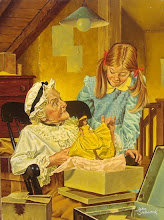
Set in the 1950s, “Gracie’s Night” has as its heroine a New York City teen who works at Macy’s so she can buy her widowed father gifts for each night of Hanukkah, the holiday that celebrates an ancient victory over oppressors and the miraculous burning of oil for eight nights when there was really only enough to last for one. But Gracie gives all the fine gifts away to a homeless man living in a cardboard box, without leaving a clue to who she is.
It’s a parable for the Jewish tenets of tzedakah and tikkunolam — giving to charity and repairing the world through social action. “There is no dialogue with the man in the box. Giving anonymously is the highest form of giving,” Gordon said.
The pescatarian, who is also a certified yoga instructor and stages homes for sale, started the story of Gracie for her youngsters, now in their 20s, when they were attending Mount Laurel public schools.
“We’d have a Gracie’s night during Hanukkah when we didn’t get presents ourselves, but we’d find someone in need — maybe by going to a school counselor who knew of somebody — and bring in gifts for them,” Gordon said. She would purchase the gifts and the counselors would distribute them anonymously, just as Gracie did.
Said middle child Brooke Gordon, 22, a graduate student studying speech pathology at LaSalle University, “ ‘Gracie’s Night’ showed me at a young age that there are people to think about other than yourself. Now that I know how easy it is, I find myself giving back more often than just one night a year.”
Gordon, 53, began practicing yoga for its physical and spiritual aspects. “It aligns with how I want to live my life, helping get in touch with the inner self and knowing generally what is more important and less important.”
That same philosophy also drew her to prepare homes for market by filling empty spaces with vibrant furnishings. “Yoga is solitary, and I wanted another aspect of creativity that gets me in touch with people,” she said.
Gordon, whose family attends Adath Emanu-El in Mount Laurel, recalled growing up in Northeast Philadelphia as culturally Jewish but not as observant as her husband, David, her best friend in high school before the couple began dating at Temple University.
She based Gracie’s story in part on her own childhood, which included sharing a home with her Yiddish-speaking maternal grandmother and jumping up and down when her father, a Philadelphia bus driver, returned from work in his Eisenhower-style jacket, cap and shield. Gracie’s papa drives a New York bus and wears the same kind of uniform.
Nothing is coincidental in the tale. Gordon even priced the book at $18 because the number 18 stands for chai, or life, in the Hebrew lexicon.
An advertising major at Temple, Gordon worked as a copywriter and freelanced while raising her children. She also began writing at her kitchen table, with “Gracie’s Night” one of several children’s stories she has penned. Unable to find a publisher and especially determined to spread Gracie’s message, she created her own publishing company, Cookie & Nudge Books, and sought out professional editors to mentor her.
She found an illustrator in Texas and a Macy’s historian to supply details about the famed department store where Gracie works. Illustrator Laura Brown isn’t Jewish but was receptive to Gordon’s descriptions. For example, the Hanukkah potato pancakes known as latkes needed to look fluffier, Gordon explained, and Brown obliged. From Rachelle Stern, Macy’s in-house historian, Gordon and Brown gleaned details such as how Macy’s shopping bags looked during the 1950s.
Macy’s has agreed to mount a display featuring her book at its flagship store at Manhattan’s Herald Square, Gordon said. She hopes Gracie becomes a mass-market ragdoll, based on one she had made to order by an Etsy crafter. Her publishing website is full of Gracie-centered children’s activities. And, she said, it’s possible there will be more Gracie books.
But on this Hanukkah, as Gordon helps save a turkey, she’ll be thankful to share Gracie with others and inspire them, in turn, to show compassion and make miracles happen during this most giving season.
More precisely, of the 189 million Americans with private health insurance coverage, I estimate that if Obamacare is fully implemented, at least 129 million (68%)will not be able to keep their previous health care plan either because they already have or will lose that coverage by the end of 2014. This includes:
9.2 to 15.4 million in the non-group market (my chart uses the lower of these figures)
16.6 million in the small group market
102.7 million in the large group market
Most of these are individuals involuntarily forced to purchase expensive add-ons to their existing plans. But included among these are the many millions now having their non-group policies cancelled along with 9 to 35 million who will lose their existing employer-provided plans entirely. Most admittedly will find other coverage, yet out of this group, 1.5 million will become uninsured, along with 2.3 million from the non-group market who likewise become uninsured because they simply cannot afford the expensive Obamacare upgrades. In short, the “vast majority” are not keeping their health plans. Statements to the contrary are flatly untrue.
“I keep playing that over and over in my head: that you can keep your health plan, period,” said Terri Flay, a Manassas, Virginia, woman whose policy is being canceled, referring to Obama’s pledge. “But it isn’t ‘period.’ They put a gun to my head saying that I have to pay more because I need the health-care insurance.”
I’m hoping all readers can agree that for people in Terri’s situation, even though a private insurance company executed the action, the president’s promise was flagrantly broken. It doesn’t mean that Terri will end up uninsured–we can all hope she won’t–but even though she (to all appearances) liked her old plan, Obamacare essentially has taken this away from her. Obamacare’s rules forced the insurer to literally cancel her plan pure, no ifs ands or buts. Even White House spokesman Jay Carney appears to finally have conceded this simple point this week.
Let me be clear that I am not predicting that 135.8 million Americans have or will have their policies cancelled due to Obamacare. But remember the president’s elaboration on his original promise made in a June 23 press conference in response to a question from Jake Tapper:
When I say if you have your plan and you like it, or you have a doctor and you like your doctor, that you don’t have to change plans, what I’m saying is the government is not going to make you change plans under health reform.”
Lest you think I am simply playing “gotcha” with an offhand remark, this was not an idle claim. The president repeated it with even more specificity in his speech to a joint session of Congress later that September (which was merely one of 24 instances in which he made this promise):
If you are among the hundreds of millions of Americans who already have health insurance through your job, Medicare, Medicaid, or the VA, nothing in this plan will require you or your employer to change the coverage or the doctor you have. Let me repeat this: nothing in our plan requires you to change what you have.
No one can honestly look at the long list of mandates included under Obamacare and conclude that these do not require any changes in coverage–sometimes substantial–even for those with existing health plans. And yet Jay Carney said just this week: “Eighty-plus percent of the American people already get insurance through their employer, through Medicare or through Medicaid. They don’t have to worry about or change anything.” This is a flagrant falsehood.
To add insult to injury, Mr. Carney added “it is correct that substandard plans that don’t provide minimum services that have a lot of fine print that leaves consumers in the lurch often because of annual caps, or lifetime caps, or carve outs for some preexisting conditions, those are no longer allowed because the Affordable Care Act is built on the premise that health care is not a privilege, it is a right and there should be a minimum standard of plans available to Americans around the country.”
Here in a nutshell is the problem. The minimum actuarial value established by Obamacare was 60%: that is, plans must cover 60% of covered expenses for a typical plan member, leaving the rest to be paid out of pocket. Yet in 2009, the average actuarial value for a typical employer-based HMO was 93%, while that for a typical employer-based PPO was 80-84%. In contrast, Medicare’s average actuarial value was 76%. The point being that without a shred of the micromanagement now being imposed under Obamacare, the typical employer plan voluntarily was well above the floor set by Obamacare and well above the benefits deemed adequate by the government itself for that single-payer plan known as Medicare. Consequently, it is unlikely that most employers (or their employees) ever viewed their coverage as “substandard.” And candidate Obama certainly did not get elected on a platform of promising to upgrade the lousy health coverage provided by employers.
To take a more concrete example, Medicare prior to Obamacare covered a long list of preventive services, but these were subject to varying levels of cost sharing. A large number of employers did the very same. Who knew Uncle Sam–under the guise of solving the problems of high health costs and 50 million uninsured–would determine this was “substandard” coverage completely unworthy of protection by the president’s pledge? Does anyone recall candidate Obama running on a platform of free preventive health services (including contraception, sterilization and abortifacients) for all? You can rest assured he never would have been elected had he ever been so honest about what he planned to deliver to the American people under the banner of health reform.
In the context of employer-based plans that already were voluntarily providing an AV of 83%, I find it particularly pernicious that the ACA designers nevertheless felt compelled to impose further requirements—free preventive services, for example—essentially saying, “Look, we know your BMW is a very safe and reliable car but we think you need to add this auto-locking system that prevents you from driving your car if you haven’t changed the oil in 3,000 miles. It only adds 1.5% to the cost of your car (you can afford it!) and it will prevent you from getting stuck out in the middle of nowhere and possibly dying because your engine blew up.” In a free country, we shouldn’t have to be worrying about this type of micro-managing of our private lives and decisions. This manifestly is not the role for the federal government envisioned by our liberty-loving Framers (the men who risked their lives, their fortunes and sacred honor to defend their freedom). I feel certain that Patrick Henry did not risk death for the privilege of creating a federal government so powerful that it could force us all to chip in and pay for Sandra Fluke’s contraceptives.
A president who ran on a platform of pledging to fix what was broken and leave alone everyone else who was happy with their coverage surely had no political mandate for the kind of intrusive and expensive changes to health benefits that are now angering tens of millions of Americans. The health law passed with the tiniest of political margins. President Obama’s pledges and assurances were an integral part of securing enough political will to cross the goal line. For that reason, it is important to hold him and his spokesmen to account for the accuracy of their pledges and predictions. Those willing to wallow in the weeds of wonkery that follow can judge for themselves whether I am being too harsh in my criticism of Mr. Axelrod or his former boss.
How Many People Have Private Health Insurance?
Medicaid. The president’s original promise only makes sense in the context of private health insurance. Nobody was worried that this progressive president would take away Medicaid benefits from the 43 million who had such coverage in 2010 or the nearly identical number who had Medicare benefits [1]. Indeed, under the plan finally signed into law by President Obama, fully half the newly covered were expected to obtain that coverage through a massive expansion of Medicaid.
Private Insurance. There are 189 million Americans with private health coverage, including 18.1 million non-elderly with individual (non-group) coverage plus 170.9 million with employer-sponsored insurance (ESI).[3] This is the appropriate denominator to use when assessing the accuracy of either the president’s original promise or Obamacare defenders such as David Axelrod. For simplicity, it’s best to think about 3 broad market segments: non-group, small group (firms with under 50 employees) and large group (firms with 50 or more employees, including health plans for federal, state and local government workers).
Individual Market (18.1 million)
In the individual market, anywhere from 9.2 to 15.4 million will lose coverage out of the 18.1 million non-elderly covered.
A 2012 Health Affairs study showed that 51% of plans in the non-group market did not meet the 60% floor on actuarial value imposed under Obamacare. This implies that eventually, a minimum of 9.2 (=51% x 19.4) million non-group policymakers will be forced to upgrade their coverage to remain compliant.
According to a study at HealthPocket.com, “less than 2 percent of the existing health plans in the individual market today provide all the Essential Health Benefits required under the Affordable Care Act.” This is the basis for my concluding that virtually all small group plans eventually will be forced to upgrade in some fashion once they have lost grandfather status.
Thus, anywhere from 51 to 98% of non-group plans will have to be modified to meet the more expensive Obamacare standards, unless they are grandfathered. But insurance expert Bob Lazewski has reported that when all the high hurdles to retain grandfather status are taken into account, 85% of the 18.1 million are in plans that do not qualify for grandfathering and therefore must become ACA-compliant by Jan. 1, 2014. This implies that for 2014, we should expect 15.4 million to have to change plans.[4]
Small Group Market (31.3 million)
The 170.9 million with ESI includes workers and dependents. According to this year’s authoritative Kaiser Family Foundation/HRET Employer Health Benefits Survey, only 18.3% of covered workers work in firms not subject to the employer mandate (under 50 workers).[5] Virtually all of the 31.3 million covered by these small firm plans will be forced to change their benefits since the essential health benefits (EHB) standards include some very atypical benefits (pediatric dental/vision, habilitative care). For example, one government study showed that for some essential health benefits, such as preventive dental services for children, only 5% of small group plans met the EHB standards. According to the American Action Forum, “premium increases associated with coverage of the essential health benefits have ranged from 0.13 percent in Rhode Island to 33 percent in Maine, with most states expecting single-digit increases.”
As well, only a few employers offered preventive health services without any cost sharing (a mandate separate and apart from EHBs), especially when the list of such services has been unaccountably broadened to include contraception, sterilization and abortifacients. An Aon Hewitt survey of major health insurance carriers estimates this will add up to 2% to premiums in the small group market (Fig. 11).
As in the non-group market, the only exception is if these plans remain grandfathered. But as of 2013, only 52% of covered workers were in grandfathered plans meaning that 48% already had to upgrade their coverage to meet ACA standards. In 2011, 63% were in grandfathered plans[6]. Eventually all grandfathered plans will lose that status, though it may be years before that fully plays out.[7] So in addition to the 15 million who already have lost the coverage they once had, it’s reasonable to expect based on the KFF/HRET survey trends that each year another 1.6 million will fall into this group, leading to a net total by the end of 2014 of 16.6 million.
Large Group Market (139.6 million)
Obamacare Standards Applicable to All Large Group Plans. In the employer-sponsored insurance (ESI) market, there are mandates that apply to all ESI regardless of grandfather status:
Mandatory coverage of adult children up to age 26. 77% of large firms (200 or more employees) in 2010 stopped dependent coverage at age 23 [Exhibit 3.11] although for such dependents who were full-time students this percentage dropped to only 25% [Exhibit 3.12]. An Aon Hewitt survey of major health insurers reports the average premium impact from this provision would be 0%; in the large group market the average premium increase ranged from -0.5% to +1%; in the small group market it went from -0.5% to +2%; the projected change was about -0.8% to +3.5% in the non-group market (Fig. 11).
No waiting periods over 90 days. 7% of covered workers in large firms (200 or more employees) in 2010 were in plans with waiting periods exceeding this threshold [Exhibit 3.8].
No caps on lifetime benefits. An Aon Hewitt survey of major health insurers reports the average premium increase associated with removing annual and lifetime caps on benefits would range from 0% to just under 1% in the large group market, about 0-0.8% in the small group market and about 0-2.2% in the non-group market (Fig. 11). However, some carriers reported premium increases as high as 5%. It was not reported how much of this could be attributed to removing the caps on lifetime benefits alone.
Medical loss ratio restrictions. Self-insured plans are excluded from this requirement. 83% of covered workers in large firms (200 or more) were in self-funded plans in 2010 [Exhibit 10.3]
It’s not obvious how these various restrictions intersect. Presumably, many of the firms that fail the first standard might fail to meet the second standard as well. Thus, all we can say with certainty is that 77% of plans had to change their eligibility criteria to accommodate dependent adults. Strictly speaking, this does not change any employee’s coverage per se, although it would have a slight impact on premiums. Similarly, the medical loss ratio provisions would affect 17% of large firm workers, but this again would only potentially increase premiums rather than affect their terms of coverage. But of course by this standard, none of the listed mandates are applicable since they all relate either to eligiblity or other matters. The lone exception is the prohibition on lifetime benefits.
Obamacare Standards Applicable to All Non-grandfathered ESI Plans. There’s a different set of mandates on all ESI except grandfathered plans:
No caps on annual benefits. (12% of covered workers were in plans with annual caps on benefits in 2010 [Exhibit 13.11]. See the previous discussion of removing caps on lifetime benefits for potential premium impacts related to this provision.
Preventive services without any cost-sharing. Although specifics were not written into the law, we now know that the regulations were written so broadly to include contraception, sterilization and abortifacients. On average DHHS estimates this will increase premiums by 1.5%, which the agency expects plans to pass along to its members. The Aon Hewitt survey cited earlier reports the average premium increase would range from 0-1% in the large group market, 0-2% in the small group market and 0-3.5% in the non-group market (Fig. 11); some carriers reported expected premium increases as high as 15% just for this provision alone.
Out-of-pocket maximums.
Minimum actuarial value of 60%.
Patient protections (plans prohibited from requiring referral to see OB-GYN or requiring pre-authorization or higher cost-sharing for out-of-network emergency services).
However, only 30% of large firm workers are in grandfathered plans in 2013 (compared to 53% in 2011 [9]), so this reinforces my point that eventually all plans will lose grandfather status. But it means that 70% of large group plans already have had to upgrade their benefits in some fashion, with attendant premium increases.
When all is said and done, over 100 million in the large group market will, due to Obamacare, no longer have the health plans they used to have.[10]
How Many Will Literally Lose Their Entire Previous Plan? Most of the individuals counted in the foregoing estimates will be forced to purchase expensive add-ons to their existing plans. But included among these are the many millions now having their non-group policies cancelled along with 9 to 35 million who will lose their existing plans entirely due to employers electing to drop their employer-based coverage or make it unaffordable.
The RAND Corporation estimates that 28% of these will end up on Medicaid [see Exhibits 2.4 and 2.7]. Medicaid, as has been explainedrepeatedly by my fellow blogger Avik Roy, is a far inferior substitute for private coverage. Those who don’t believe this can do the following mental experiment: would Congress ever pass a law giving themselves (free!) Medicaid coverage in lieu of their Federal Employee Health Benefits Plan coverage?
Another 46% will end up on the Exchanges [see the same RAND exhibits]. You might say “no big deal” since they got alternative coverage. But the National Journal’s independent assessment concluded that even after taking into account subsidies available on the exchanges, 66 percent of workers with single coverage and 57 percent of workers with family coverage will face higher premiums on the exchange compared to what they would pay for employer-sponsored coverage.
Moreover, the RAND study showed that 26% (1.5 million) who lose their employer-based coverage will become uninsured [Exhibit 2.7], along with other 2.3 million from the non-group market [see same exhibit] who likewise become uninsured because they simply cannot afford the expensive Obamacare upgrades. For such individuals, the president’s promise was badly broken indeed.
The Bottom Line: It’s Not Complicated As AT+T spokesman says “It’s not complicated.” Virtually all health plans that existed prior to the law will be subject to some changes in eligibility or benefits that will increase premiums for the vast majority of subscribers. The only people who will be allowed to keep their pre-March 23, 2010 plans mostly intact are those in grandfathered plans.
But the restrictions on such plans are so tight that only 49% of those covered in the small group market and 30% in the large group market currently remain in grandfathered plans. And this is no unexpected outcome. When Obamacare regulators wrote the rules for grandfathered plans back in June 2010, they explicitly projected that by 2013, only 20-51% of small group plans would retain grandfather status, along with 36-66% of large group plans [Table 3]. So experts have known for years that the president’s promise was destined to be eviscerated by this time.
I hope readers now can see why I believe Mr. Axelrod’s statement is egregiously inaccurate. I recognize he is not a health policy expert, so perhaps we can chalk it up to ignorance. It is not my place to decide whether he is lying (which is despicable) or merely uninformed (in which case spouting off untruths on national TV is lamentable and irresponsible). But until the administration and Obamacare’s defenders are willing to come clean[11] about the pyramid of unintended consequences now piling up before our very eyes, it is hard to see how we can have a candid and productive discussion about how to replace this terribly misguided piece of legislation.
Update #1: October 30 At 11:00 am, I fixed the graphic to replace an older version that erroneously showed 28% rather than 32% who will retain their private health plans. The number of persons listed in this slice of the pie was correct in both versions and text has always correctly reported the right percentage in this group. My apologies for not spotting this earlier.
Update #2: October 30
Stanley Kurtz at NRO states “In 2009, conservative critics took the White House admission in the AP story as the beginning of a walk-back, and therefore as the end of Obama’s false promise. In fact, although the White House clearly knew from the start that this was a promise that could never be fulfilled, the president repeated it for years.
Update #3: October 31, 2013
Numerous commentators have now concluded that the president flat-out lied in 2009 when he made his pledge (as opposed to making an inadvertently erroneous prognostication). These include Charles Krauthammer (a “flat-out lie”), Jonah Goldberg (“the biggest lie about domestic policy ever uttered by a U.S. president”), Joe Scarborough (“a flagrant lie”) and Rush Limbaugh (“there are people who voted for this man and his ideas and his plans based on fraud, fraudulent promises, that they knew were fraudulent promises when they made them”). Even the Washington Post’s Fact-Checker, Glenn Kessler, awarded the president Four Pinocchios for his ridiculous pledge.
Of course, there are some such as Bill O’Reilly who have argued that the president didn’t “intentionally lie;” he was “simply uninformed.” Even liberal columnist Clarence Page thinks the president “probably lied” but dismisses it as a “political lie.” Politifact.com”rates as Half True the president’s 2012 claim that “If you’re one of the more than 250 million Americans who already have health insurance, you will keep your health insurance.” Surprisingly, they rated David Axelrod’s claim as Mostly True while conceding that Valerie Jarrett’s recently howler (“”FACT: Nothing in #Obamacare forces people out of their health plans.”) had to be rated False.
Some might accuse these pundits of Monday morning quarterbacking, but in light of all the furor that the president’s past statements have ignited, what are we to make of yesterday’s statement that “for the vast majority of people who have health insurance that works, you can keep it”? Those who accept my estimates as being approximately accurate will recognize this as yet another grossly inaccurate claim. And it underscores my central point: until and unless the administration is prepared to acknowledge the truth of what is actually going on for tens of millions of Americans, it is hard to see how we can have a candid and productive discussion about how to move forward.
Footnotes
[1] When the president made his promise, the most recently conducted Current Population Survey estimates of coverage (from March 2009) showed 42.8 million with Medicaid coverage and 43.0 million with Medicare (Table C-3).
[2] As a Health Affairs Health Policy Brief put it: “Medicare Advantage supporters also emphasize the importance of the plans to low-income beneficiaries. These enrollees often can’t afford private “Medigap” plans that supplement Medicare by covering additional benefits and offering cost-sharing protection. They note that disruptions to the Medicare Advantage program disproportionately affect minority beneficiaries, since Hispanic and African American beneficiaries make up a larger share of Medicare Advantage enrollees.
[3] I am using Census figures from the Current Population Survey, but recognize there are other estimates of the size of the non-group market. The American Community Survey shows 23.975 million non-elderly with non-group coverage in 2011, whereas the CPS shows only 18.968. However, once the overlap with employer-provided coverage is taken into account, the 2 surveys show nearly identical figures for 2011: 17,260 (CPS) vs. 17.479 (ACS). For simplicity, I have used the most recent CPS figures from March 2013 and ignored 1.3 million non-elderly who have overlapping employer-based and non-group coverage. Table C-3 shows 30.6 million with non-group coverage, but of these, 11.2 million are age 65 and older, consisting predominantly of elderly Medicare recipients who have purchased Medi-gap policies. Medi-gap policies need to be excluded both because we have already taken Medicare off the table and since the ACA standards do not affect such plans. Of the remaining 19.4 million non-elderly with non-group coverage, 1.3 million also have employer-based coverage, leaving 18.1 million.
[4] As reported by Anna Gorman and Julie Appleby at Kaiser Health News, Thousands get health insurance cancellation notices: “Florida Blue, for example, is terminating about 300,000 policies, about 80 percent of its individual policies in the state. Kaiser Permanente in California has sent notices to 160,000 people – about half of its individual business in the state. Insurer Highmark in Pittsburgh is dropping about 20 percent of its individual market customers, while Independence Blue Cross, the major insurer in Philadelphia, is dropping about 45 percent.” These figures are consistent with Lasewski’s claim that a large fraction of non-group plans are ineligible for grandfathering.
[7] In Landmark: The Inside Story of America’s New Health Care Law and What It Means for Us All David Hilzenrath of the Washington Post writes: “Because employers are likely to change their plans sooner or later–benefits seldom stay frozen for long–it is probably just a matter of time before many employer-based plans must conform to something approaching the full set of new rules.”
[8] As I explained in a previous post, these are known as “rescissions.” Wharton School insurance professor Scott Harrington has exposed the rather flagrant truth-twisting President Obama engaged in when describing this practice in his speech before a joint session of Congress. Rescissions are far less common than the public has been led to believe–less than 1/2% of the millions of private health insurance policies sold every year.
[9] The KFF/HRET summary tabulations [Exhibit 3.13] report grandfather status for large firms (200 or more employees) and small firms (under 200). But they also report grandfather status for 6 firm size categories ranging from 3-49 to 1,000 or more. I have combined these with their reported estimates of the distribution of employer-provided coverage in those same size categories to recover the grandfather status of small firms (under 50) and large firms (50 and over). In 2011, 62.8% of covered workers in small firms were in grandfathered plans versus 48.9% in 2013. In large firms, the share of covered employees in grandfathered plans dropped from 52.9% to 29.8% over the same time period. For all covered workers, those in grandfathered plans fell from 56% in 2011 to 36% in 2013. Thus, Mr. Axelrod arguably would have been technically correct had he made his statement in 2011 when he was still a White House senior advisor. But given that only those in grandfathered plans are permitted to keep them, the identical statement in 2013 is manifestly false.
[10] This includes 16.8 million in plans having to remove their cap on annual benefits (with attendant premium increase) plus the 70% in plans that are no longer grandfathered and hence subject to a variety of benefit “enhancements” (again, with attendant premium increases). I have eliminated the overlap between these 2 groups by subtracting 70% of the 16.8 million, i.e., 16.8m. + (139.6m. x 70%) – (70% x 12% x 139.6m.) = 102.7 million.
A. Barry Weintraub, an accountant for the City of Phila., died November 1, 2013. He resided in Northeast Phila. Husband of the late Constance G. Weintraub, father of Dr. Ari Y. Weintraub (Diane), Dr. Aliza S. Braverman (Jason) and Etan E. Weintraub, brother of Deanne Horowitz (David) and Shirley Brenner (the late Marvin), also survived by 5 grandchildren. Contributions in his memory may be made to a charity of the donor's choice.
WEINTRAUB A. BARRY, Nov. 1, 2013. Devoted husband of the late Constance G. Weintraub. Dear father of Dr. Ari Y. Weintraub (Diane), Dr. Aliza S. Braverman (Jason), and Etan E. Weintraub, beloved brother of Dena Horowitz (David) and Shirley Brenner (the late Marvin), and also survived by 5 grandchildren. Relatives and friends are invited to funeral services Sunday 11 A.M. at GOLDSTEINS' ROSENBERG'S RAPHAEL SACKS, SUBURBAN NORTH, 310 2nd Street Pike, Southampton, PA. Int. King David Mem. Park. Shiva will be observed at the late residence. Contributions in his memory may be made to the charity of the donor's choice.
Published in Philadelphia Inquirer & Philadelphia Daily News on Nov. 3, 2013
CONSTANCE G. WEINTRAUB, age 65, died on May 3, 2013. She was a behavioral health supervisor who resided in Philadelphia, Pennsylvania. Devoted wife of A. BARRY WEINTRAUB; dear mother of DR. ARI Y. (DIANE) WEINTRAUB, DR. ALIZA S. (JASON) BRAVERMAN, and ETAN E. WEINTRAUB; sister of ANTHONY S. (ILANA) GLICKMAN; and also survived by 5 grandchildren.
Contributions in her memory may be made to a charity of the donor's choice.
WEINTRAUB CONSTANCE G. (nee Glickman) on May 3, 2013. Devoted wife of A. Barry Weintraub, dear mother of Dr. Ari Y. Weintraub (Diane), Dr. Aliza S. Braverman (Jason), and Etan E. Weintraub; sister of Anthony S. Glickman (Ilana); also survived by 5 grandchildren. Relatives and friends are invited to Funeral Services Sun. 1 P.M. precisely GOLDSTEINS' ROSENBERG'S RAPHAEL SACKS SUBURBAN NORTH, 310 Second St. Pike, Southampton. Int. King David Memorial Park. Shiva will be observed at her late residence. Contributions in her memory may be mae to a charity of the donor's choice.
Published in Philadelphia Inquirer & Philadelphia Daily News on May 5, 2013
Every disaster has its moment of clarity. Physicist Richard Feynman dunks an O-ring into ice water and everyone understands instantly why the shuttle Challenger exploded. This week, the Obamacare O-ring froze for all the world to see: Hundreds of thousands of cancellation letters went out to people who had been assured a dozen times by the president that “If you like your health-care plan, you’ll be able to keep your health-care plan. Period.”
The cancellations lay bare three pillars of Obamacare: (a) mendacity, (b) paternalism and (c) subterfuge.
(a) Those letters are irrefutable evidence that President Obama’s repeated you-keep-your-coverage claim was false. Why were they sent out? Because Obamacare renders illegal (with exceedingly narrow “grandfathered” exceptions) the continuation of any insurance plan deemed by Washington regulators not to meet their arbitrary standards for adequacy. Example: No maternity care? You are terminated.
So a law designed to cover the uninsured is now throwing far more people off their insurance than it can possibly be signing up on the nonfunctioning insurance exchanges. Indeed, most of the 19 million people with individual insurance will have to find new and likely more expensive coverage. And that doesn’t even include the additional millions who are sure to lose their employer-provided coverage. That’s a lot of people. That’s a pretty big lie.
But perhaps Obama didn’t know. Maybe the bystander president was as surprised by this as he claims to have been by the IRS scandal, the Associated Press and James Rosen phone logs, the failure of the Obamacare Web site, the premeditation of the Benghazi attacks, the
tapping of Angela Merkel’s phone — i.e., the workings of the federal government of which he is the nominal head.
I’m skeptical. It’s not as if the Obamacare plan-dropping is an obscure regulation. It’s at the heart of Obama’s idea of federally regulated and standardized national health insurance.
Still, how could he imagine getting away with a claim sure to be exposed as factually false?
And he did. Simple formula: Delay, stonewall and wait for a supine and protective press to turn spectacularly incurious.
Look at how the New York Times covered his “keep your plan” whopper — buried on page 17 with a headline calling the cancellations a “prime target.” As if this is a partisan issue and not a brazen falsehood clear to any outside observer — say,
The Post’s fact-checker Glenn Kessler, who gave the president’s claim four Pinocchios. Noses don’t come any longer.
(b) Beyond mendacity, there is liberal paternalism, of which these forced cancellations are a classic case. We canceled your plan,
explained presidential spokesman Jay Carney, because it was substandard. We have a better idea.
Translation: Sure, you freely chose the policy, paid for the policy, renewed the policy, liked the policy. But you’re too primitive to know what you need. We do. Your policy is hereby canceled.
Because what you really need is what our experts have determined must be in every plan. So a couple in their 60s must buy maternity care. A teetotaler must buy substance abuse treatment. And a healthy 28-year-old with perfectly appropriate catastrophic insurance must pay for bells and whistles for which he has no use.
It’s Halloween. There is a knock at your door. You hear: “We’re the government and we’re here to help.”
You hide.
(c) As for subterfuge, these required bells and whistles aren’t just there to festoon the health-care Christmas tree with voter-pleasing freebies. The planners knew all along that if you force insurance buyers to overpay for stuff they don’t need, that money can subsidize other people.
Obamacare is the largest transfer of wealth in recent American history. But you can’t say that openly lest you lose elections. So you do it by subterfuge: hidden taxes, penalties, mandates and coverage requirements that yield a surplus of overpayments.
So that your president can promise to cover 30 million uninsured without costing the government a dime. Which from the beginning was the biggest falsehood of them all. And yet the free lunch is the essence of modern liberalism. Free mammograms, free preventative care, free contraceptives for Sandra Fluke. Come and get it.
And then when you find your policy canceled, your premium raised and your deductible outrageously increased, you’ve learned the real meaning of “free” in the liberal lexicon: something paid for by your neighbor — best, by subterfuge.
Her favorite Barbies live in a pink world, and Noa David clearly loves the color. It’s even the color of a temporary cast on her arm after a recent fall.
As she gives her attention to the dolls, their accessories, and to a new toy camera that has stolen her heart, the 6-year-old with huge brown eyes and long brown hair also readily shows a visitor another touch of pink in her life: her hearing aids. Of course, they’re pink, too.
For Noa, these hearing aids are hardly just an accessory. Diagnosed wirh moderate hearing loss in both ears at birth, she wears them in order to better communicate with the world. Her parents, Rabbi Ben David, spiritual leader of Adath Emanu-El in Mount Laurel, and Lisa David, recently shared how they first learned of their firstborn’s condition.
“We were, of course, very excited when we became parents, and our heads were kind of spinning when we learned that Noa’s newborn hearing test showed some problem,” said the rabbi. “There were more tests, and by the time our daughter was 6 weeks old, we had the diagnosis of moderate hearing loss.”
From the start, these new parents made a deep and abiding commitment to do everything they needed to for their daughter, and that most of all, they would be sure that she grew up with a strong sense of confidence and pride in herself.
Lisa David, whose pregnancy was perfectly normal, recalls Noa’s early introduction to hearing aids. “She would pull them out, and just getting her to sit still so we could get them on her was a struggle. But very soon, Noa herself realized that with her hearing aids, she could connect with the world. As she got older, she’d remind us to put them back on after her bath.”
These days, Noa holds her own in the household, with two younger brothers, who have no hearing issues, as her playmates. She attends kindergarten at Springville Elementary School, where two of her classmates also are hearing impaired.
Her speech is perfect, but she gets supplemental speech therapy, which is geared to social issues such as eye contact and initiating dialogue, which tend to be more challenging for children with hearing issues.
“We’re determined to teach Noa that she can thrive and succeed, and we really believe that we’re blessed to have a little girl who is so intelligent, so alive and so spirited,” said Ben David, who admittedly finds himself even more aware of those in his congregation, and in the wider world, with challenges. “We want our gift to Noa to learn to advocate for herself, and have a strong sense of her potential.”
The other gift that the Davids have given their daughter is their own activism. Lisa, who has a demanding career as a director of camping for a national Jewish organization, and the rabbi, are deeply involved in the Hearing Loss Association of America’s Garden State-NJ Walk4Hearing event on Oct. 20 in West Windsor.
“Noa has benefited tremendously from the support of numerous therapists, teachers, audiologists and advocates,” said Ben David.
The event, the largest walk of its kind, is taking place in various cities across the country.
“The goal is to raise funds for programs and services, and also to raise public awareness about hearing loss,” he said, noting that another overall mission is to eradicate the stigma that sometimes is associated with hearing loss.
Congregants of Adath Emanu-El will be among the walkers, and the Davids are hoping that other local residents may join “Noa’s Team.”
Noa is well-versed in the event, and is proud to explain that it’s all about her hearing aids, and others who share her condition.
“I’m going!” she said, eyes dancing. “And I’m walking fast!”
Listening to the mainstream media and the dominant party in D.C. this week would lead one to believe that the earth would quit revolving on its axis, the sun would no longer rise, and all life forms would cease to exist if the government was shutdown. But low and behold, life continues, and one can’t help but feel just a little more free, although even that is undoubtedly illusory.
While opinions may vary regarding who gets the credit for curtailing spending by shutting down non-essential federal government functions for a few days or weeks, most of the credit must be ascribed to the president and the Senate Majority Leader, Harry Reid. After all, they were the ones who decided that the spending bills passed by the House were not to be even considered in the Senate; all twelve of them, to date.
Harry Reid actually had the audacity to say of the House, “Who are they that they can pick and choose what programs to fund or not to fund?” As is the case with most who belong to his political party, the good senator should acquaint himself with the U.S. Constitution, which specifically states that all spending bills originate in the House. As such, the House has every right to decide what to fund and what not to, and is fulfilling its constitutional duty in the process. If Reid had any integrity or backbone whatsoever, he’d take up a version of one of the House’s resolutions and at least bring it to the floor for a vote. Since he refuses to do so, the credit for extending the quasi-shutdown is all his and the president’s, as they refuse to even consider anything that varies from their desires.
What’s most perplexing about the positions of the House and the Senate is in how the priorities of one party are somehow less important, hence negotiable, while the other’s is not. The president and the Senate are obdurate in their resolve to not accept anything but a complete funding of government. The House has some divisions even within the Speaker’s party over funding Obamacare. Yet the media and the liberal punditry seem to think that the only ones who should capitulate are those in the House. Granting the benefit of the doubt to both parties that their positions are based in principle, why is one principle deemed negotiable while the other’s is not?
If the funding and operation of Obamacare is so critical to governmental operations, according to the governing party, why has the president by fiat simply changed certain implementation dates and requirements? The fact that he’s granted over 1,000 waivers, mostly to unions and political allies, and by the stroke of his pen delayed the employer mandate by a year, clearly evidences that the health care law is not inviolable. Yet he and Reid will not even consider a spending bill that includes a one-year delay in the individual mandate. It appears that a delay in implementation is only a good idea to Obama if it’s his idea or it benefits his benefactors.
Reviewing the list of what constitutes “essential” versus “non-essential” federal workers makes one realize this is not really a government “shutdown,” it’s more of a slow-down or a slim-down. There are a total of about 2.7 million federal government employees, including 589,000 postal workers. According to reports, there are 800,000 “non-essential” employees who’re on furlough until full funding is restored. That means 63% of the federal work force is still working, including almost all of the Social Security Administration, Homeland Security, and our military and most of the defense department. Even Health and Human Services is nearly fully staffed.
With the modus operandi motto of “Never let a good crisis go to waste,” the administration is acting the same way they did when their sequester went into effect. They want to make sure everyone feels the pain and discomfort of the slim-down. Not being content to close the national parks, the administration ordered barricades, (or should we call them Barry-cades?) and closed signs posted for parks that aren’t even staffed. They even attempted to close national landmarks that are not funded by the government, including Mt. Vernon, the Claude Moore Memorial Farm, and over 100 campgrounds near the Grand Canyon, which are all funded privately.
The Washington Times quotes an angry Park Service ranger in Washington as saying, “It’s a cheap way to deal with the situation. We’ve been told to make life as difficult for people as we can. It’s disgusting.”
You’ve got to admire the hutzpah of our “greatest generation.” A group of World War II veterans from Mississippi took matters into their own hands at the open-air WWII Memorial. They tore down the Barry-cades and tweeted, “Normandy was also closed when we got there.”
It would appear that the president’s desire is to make the slim-down more painful to the average citizen than needs be, if for no other reason than to make sure everyone notices, is inconvenienced, or is perturbed. After all, what kind of a “good crisis” would this be if the government “closed down” and no one noticed?
AP award winning columnist Richard Larsen is President of Larsen Financial, a brokerage and financial planning firm in Pocatello, Idaho and is a graduate of Idaho State University with degrees in Political Science and History and coursework completed toward a Master’s in Public Administration. He can be reached at rlarsenen @ cableone.net.
83% of Washington D.C. Still Operating During Government Slimdown By Kyle Becker
What government “shutdown”? Despite the off-the-wall rhetoric about “blowing up the economy,” taking “hostages,” and politicians with bombs strapped to their chests — 83% of the government is still operational.
Not only that, but the Republicans have passed bills on everything from veterans’ benefits to re-opening National Parks. The House also passed back pay for furloughed federal workers. In addition, about 80% of the federal government’s 4.1 million total employees are still at work, anyway.
Doesn’t jibe with the cataclysmic rhetoric from the ‘we refuse to negotiate’ party? Check this out from a Senate Republican source via the Washington Examiner:
“Based on estimates drawn from CBO and OMB data, 83 percent of government operations will continue. This figure assumes that the government pays amounts due on appropriations obligated before the shutdown ($512 billion), spends $225 billion on exempted military and civilian personnel, pays entitlement benefits for those found eligible before the shutdown (about $2 trillion), and pays interest costs when due ($237 billion). This is about 83 percent of projected 2014 spending of $3.6 trillion.”
That’s right, entitlements aren’t affected by the shutdown, the president has already authorized military spending, and what remains are such things as veteran’s benefits, local Washington D.C. operations, and the National Park Service.
But Forbes actually broke this down further, based on the proposed 2014 budget. Paul Roderick Gregory argues that the actual amount of government being “shutdown” is around 13%:
After payment of defense, entitlements, and net interest, we have a grand total of $.6 trillion ($624 billion to be more exact) of discretionary spending that could be subject to a government shutdown. At most, we can shut down 20 percent of the federal government. This hardly deserves the moniker of “government shutdown.”
I would not count reducing federal government spending by 13 percent a “shutdown.” A more appropriate term would be a “reduction in non-essential discretionary spending,” or “government slim down” for short. I invite the Republican members of Congress to use this term instead of “shutdown.” In politics, he who controls the rhetoric of political discourse wins. “Shut down” is a loser. “Slim down” is a winner, and it captures the reality of what is going on right now in Washington.
The proposed federal government spending graphic for 2014 approximates the breakup (the U.S. government doesn’t bother passing actual budgets nowadays). Then it boils down to if 800,000 “public servants” can dictate the future of the country to those they are supposed to be “serving.”
Hate the government slimdown, the endless bickering? Here five Republican governors getting it right By Cal Thomas
With frustration building over Washington’s refusal to behave in the public interest, perhaps it’s worth noting a drastic solution tried by the Irish.
Last Friday, Irish voters cast ballots on a referendum to abolish the country’s Upper House, known as the Seanad. Prime Minister Enda Kenny said Ireland didn’t need all of its politicians and they should be made to suffer along with everyone else as the country continues to struggle economically.
The measure to abolish the Seanad lost by just 42,500 votes out of more than 1,226,000 cast (51.8 percent to 48.2 percent).
While many Americans might wish they could abolish Congress, it is unlikely, unless voters take a page from the Declaration of Independence and “institute new government,” so another approach by Republican governors to break the cycle of systemic ineffectiveness in Washington might work.
It isn’t that we don’t know how to solve problems; it is that too many Washington politicians refuse to solve them
The Republican Governors Association (RGA) has produced a video in which five Republican governors highlight successes in their respective states.
Given the dysfunction in Washington, the video provides some powerful reasons for people to turn their backs on the nation’s capital and begin to look to states that have succeeded in solving many problems Washington is unwilling to solve. The featured Republican governors are:
Bobby Jindal (Louisiana) who wants you to know that his state’s GDP has grown by $36 billion since 2008, nearly twice the national rate. That puts Louisiana eighth best in the country and third best in the South.
According to Jindal, other categories in which Louisiana has succeeded while Washington piles up debt include: unemployment (below the national average with new jobs being added); per capita personal income (increased more than $3,600 since 2008); charter schools — Jindal says his state has become a “national leader” in charter schools with 80 percent of New Orleans students enrolled in them.
John Kasich (Ohio) closed an $8 billion shortfall without raising taxes and cut taxes by $3 billion. He eliminated the “death tax,” modernized Medicaid, eliminated the bureaucratic Department of Development and created a private, nonprofit corporation — JobsOhio — to “respond to job creators’ needs at their pace instead of at ‘the speed of statute.’”
Susana Martinez (New Mexico) boosted funding for education and Medicaid without raising taxes; cooperated with a Democratic legislature, passing the New Mexico Jobs Package, which reduced the tax rate on businesses from 7.6 percent to 5.9 percent; moved the state from 38th in the nation in export growth three years ago to first today; turned a structural deficit into a surplus and enacted comprehensive tax reform.
Nikki Haley (South Carolina) pushed through tax reform on small businesses, which she claims, resulted in South Carolina having the fastest growing manufacturing sector on the East Coast and creating 38,000 new jobs, which have contributed $9 billion in new investment.
Scott Walker (Wisconsin) reversed a $3.6 billion deficit he inherited and turned it into a surplus. He provided nearly $1 billion in tax relief for families and businesses that sparked a two-year job growth, which he says is the best in the state under any governor in 10 years.
Oh, and those “controversial” union reforms that caused demonstrations at the state capital two years ago? Gov. Walker says those reforms saved the state more than $2 billion.
The “American Comeback” campaign should resonate with those who long for an economically, politically and culturally sound America, something we do not have under the Obama administration.
It isn’t that we don’t know how to solve problems; it is that too many Washington politicians refuse to solve them, preferring instead to lobby for positions of power and curry favor with special interest groups that hand them cash, stroke their egos and promise them votes on Election Day.
Real problem-solving is taking place in states headed by Republicans. If you’re tired of the bickering, turn away from dysfunctional Washington, follow their lead and emulate their successes.
Maybe then Washington will be forced to pay attention. Republican governors might even be able to teach Ireland a thing or two.
Cal Thomas is America's most widely syndicated newspaper columnist and a Fox News contributor. Follow him on Twitter@CalThomas. Readers may e-mail Cal Thomas attmseditors@tribune.com.
Aside from a traitorous US media that continually ignores the damage being done by the Obama administration and all those who still idolize the President, here are the gruesome facts about the economic state of America. The longer Americans go on ignoring these troubling signs the worse it’s going to get. Pay attention to the facts people or you won’t see that train wreck that is fast approaching.
Beginning with the 787 billion dollar bailout in 2009 that actually did not save the American people from the steepest recession in US history, it saved the banks and some of the biggest corporations, and that was not a trickle down patching of the hole in the dike as millions were forced to collect unemployment and food stamps. As the federal government nationalized 2/3 of the American auto industry, kept bankers who were guilty of causing the massive bubble which caused massive failure in investment markets, and billions that went to select broadcasting corporations to keep the media in the pocket of the US government, Americans themselves were not spared the suffering of an actual modern day Depression. With billions being funneled back into Democratic slush funds and causes a bleak future for this nation was ensured.
The following indicators give us an idea of the degree of hope and change already brought about un President Obama. Pay attention.
Cost of gasoline when President Obama entered office $1.85 per gallon now it hovers around $3.53.
During the Obama presidency 7 out of every 8 jobs created is part time employment.
Number of full time workers today is 6 million down from the record set in 2007 during Bush.
Number of American workers making less than $30, 000 a year is at 53%!
16.1 % of Americans are under real poverty
Since Obama took office food stamp recipients have numbered 11,000 people per day!
Under the Obama White House a fulltime minimum wage earner makes 40% than a his 1968 counterpart.
In 4 years under the Obama administration unemployed US workers grew by 8,332,000!
When President Obama took office avg. term of unemployment was 19.8 weeks it’s now 36.6 weeks!
Under President Obama the middle class has lost household expendable income.
Home ownership at 67.5% in the US before Obama has shrunken to 65% a 18 year low in home ownership!
Under the Obama White House the typical median household income has dropped by $4,000.00 for 4 years in a row!
When Obama entered office food stamp recipients was at 32 million there are now 50 million Americans!
Presently 1 million public school students are homeless under Obama up by 57% since 2007.
Under the Obama administration health care insurance has risen 29% with the coming of Obamacare that figure will rise significantly as Affordable Health Care controls 1/6 of the US economy!
Under Obama the number of Americans receiving money from the federal government has risen by 32%
Under the Obama White House 100 million Americans are presently getting some form of Federal subsidy!
When Obama entered office US debt to GDP was 70% today the current debt to GDP is 110%!
In 2008 Federal Reserve holdings of US Treasury Bonds were 479.5 billion under Obama that figure is now 2 trillion dollars.
Under the Obama Presidency the first 4 years the federal government accumulated more debt than the previous 42 elected administrations combined!
With the expanded federal debt under President Obama it would take $50,521.00 of every US household for everyone to pitch in and pay their share! Feel like pitching in?
These appalling figures do not indicate the inevitable outcome based upon insurmountable socio-economic conditions where there were no options or alternatives! Federal government policy was responsible for every one of these unbelievable implications that should not only concern you. You should be scared for the future of this nation under this kind of irresponsible and disconnected leadership.
The Democrats are chanting that Republicans must fully fund Obamacare because it is the law of the land, passed by Congress, signed by the president and upheld by the Supreme Court. Therefore, they say, it must be obeyed and can't be altered by Republicans who want to defund it.
That argument is both wrong and hypocritical. Any federal law can be changed, repealed, amended or defunded by our legislative branch of government, Congress.
The Republican House wants to deal with the controversial huge "continuing resolution" bill in separate pieces, giving the OK to worthwhile federal spending purposes while leaving others (like Obamacare) without funds. Obama refuses to negotiate and demands a "clean" (blank-check) bill; his position is all or nothing-at-all.
Actually, the Supreme Court decision did not give a "clean" upholding of Obamacare. The Court effectively rewrote the law by allowing states to opt out of Medicaid expansion, and other pieces of Obamacare are still being litigated in federal courts, such as the mandate that employer-required insurance must include objectionable abortifacient drugs.
Obama's hypocrisy about the issue of considering Obamacare in pieces is obvious from the many times he has unilaterally messed with other matters that are clearly the law of the land. He has frequently refused to enforce other laws of the land he doesn't like, and he pretends to legislate laws that Congress declined to pass.
Welfare reform is truly the law of the land; it was passed by Congress in 1996 and signed by President Clinton to "end welfare as we know it". But in violation of the law's explicit language, Obama unilaterally carved out (in effect, repealed) the "work" (or training for work) requirement for persons receiving Temporary Assistance for Needy Families (TANF).
Obama's use of waivers from various laws of the land is notorious. He has given waivers from the No Child Left Behind law of the land to more than half of the states.
Obama has even picked pieces out of Obamacare. He gave a one-year deferral of its insurance employer mandate to large employers, and he exempted Congress and government staff from the requirement on individuals to buy compulsory insurance or pay a significant penalty.
Obama's Secretary of Education, Arne Duncan, admits that a federal law of the land prohibits the federal government from interfering with or dictating public school curriculum. But Obama used carrot-and-stick tactics to bribe or threaten a majority of states to adopt Common Core, and Duncan pretends it is OK for the feds to require states to be aligned with federally approved Common Core standards and Common Core tests, which will effectively dictate school curriculum.
Obama has repeatedly taken away from other branches of government powers that are specifically granted in the U.S. Constitution.
The Constitution makes an undiluted grant of power to Congress "to regulate commerce with foreign nations." Obama is trying to coopt that power for himself by demanding that Congress pass "Fast Track," an enormous unconstitutional shift that would give Obama the authority to write our trade treaties in secret and then let Congress vote on them under rules that limit Congress's power to debate or amend them, all within in a short preset time period.
All these foreign trade treaties are encrusted with promises about how they will create U.S. jobs. Those are all lies; every single month since Congress accepted the Korea trade agreement in March 2012, our exports to Korea have declined, and the agreement has already cost us 40,000 U.S. jobs.
The Constitution gives the House of Representatives the power of the purse in the Origination Clause in Article I. But Obamacare's taxing and spending sections actually originated in the Senate, a maneuver not yet ruled on by the Supreme Court.
The Constitution starts with the powerful words, "All legislative powers" are vested in Congress, consisting of a Senate and House. Paying no attention to the Constitution, Obama has done his own legislating.
Congress declined to pass the Dream Act, but Obama is legislating it anyway through regulations. In defiance of the law of the land, Obama has allowed millions of aliens to stay and work illegally in the United States.
Congress declined to pass Cap and Trade, but Obama is legislating it anyway through regulations. His regulations are designed to bankrupt coal plants, skyrocket our electricity costs so we can't "keep our homes on 72 degrees," and spend our tax dollars to subsidize inefficient, costly solar and wind energy.
In April 2012, nine state Attorneys General issued a Memo listing 21 violations of law by the Obama administration, and now we have so many more examples. Obama is the one who doesn't obey the law of the land.