Fully Repeals Obamacare: AHCRA goes into effect on January 1, 2018 and fully repeals the president’s health care law.
Increases Access to Affordable, Portable Health Insurance: AHCRA levels the playing field between people who receive their insurance through their employer and those who purchase it on the individual market by creating
a standard deduction for health insurance. Under the RSC’s plan, individuals with qualifying insurance receive a $7,500 tax deduction and families receive a $20,500 deduction.
Expands Insurance Access for Vulnerable Americans: AHCRA ensures those with pre-existing conditions have access to health insurance by expanding federal support for state high-risk pools and expanding portability so
Americans can easily move between insurance markets without fear of discrimination based on health status.
Spurs Competition Between Insurers: AHCRA allows people to shop for and purchase insurance plans across state lines, like other forms of insurance already allow. The plan also allows small businesses to pool together to
negotiate for better rates.
The America Without Faith project is a tool developed by the RSC to understand the value the faith-based institutions contribute to America’s communities. How many people receive hot meals or have a place to sleep
each night? How many shelters are constructed or counseling sessions provided? How do faith-based organizations provide for our fellow citizens and advance U.S. interests in ways our government alone cannot or does not? Does the solution
to breaking the cycle of poverty lie within private, faith-based organizations, instead of a government leviathan bogged down by politics?
Why Is It Needed?
The Faith project aims to help Members of Congress and religious liberty advocates communicate about how important the work of faith-based groups are for our nation today, and how federal polices can affect these efforts. Over 45
million Americans live below the poverty line. Over 500,000 people in a single night experience homelessness in America. Over 15 million children live in households without enough to eat. American families, and families across the globe,
are suffering. Despite more than 80 federal programs in place to provide federal welfare benefits at a cost of $1 trillion per year, the government is overspending and underperforming, and people are suffering.
At the same time, America’s religious institutions exist on shaky ground. Over the past decade they have faced repeated challenges to their very existence, including threats to revoke their tax-exempt status—the very thing that makes it possible for many of these organizations to do the good work that they do. In order for our government and Americans to truly understand the value of our religious community, we need to give a better understanding of how this community serves those in need and how much they provide to the social safety net in ways the government does not.
Too many Americans are trapped on the bottom rungs of the economic ladder. Conservatives believe that every individual deserves the opportunity to improve their economic circumstances, escape from
poverty, and achieve their full potential. This notion that everyone has the God-given right to the pursuit of happiness is embodied in our Declaration of Independence. Instead of trapping individuals in a cycle of poverty, government
should clear obstacles and encourage all to rise and achieve the American dream.
The Republican Study Committee continues to lead the way toward turning this positive vision into action. The RSC Empowerment Initiative, led by Representatives Andy Barr and Todd Young, is a task force of RSC members focused on
combating poverty and reforming the welfare system to empower individuals, families, and communities. The reforms recommended by this proposal would restore the opportunity to pursue prosperity for millions of Americans.
Highlights
Eliminate Marriage Penalties: If a low-income person receiving government assistance marries an employed person, their welfare benefits would be reduced or eliminated, sometimes by an
amount larger than income of the employed spouse. These policies encourage broken families. The RSC recommends that Congress take steps to eliminate these penalties against the single best antipoverty measure: marriage and a stable
family structure.
Restore and Implement Work Requirements: Building on the success of the 1996 welfare reforms, all federal benefit programs should be reformed to include work promotion requirements that
would help people move away from dependence and toward self- sufficiency. Programs would be strengthened with such incentives. To be eligible for benefits, able-bodied adults without dependents would be required to work or be preparing
for work, including participating in educational or job training programs, community service, or a supervised job search.
Reform the Earned Income Tax Credit: The tax credit should be simplified. Allowing the credit to be paid concurrently with a paycheck (rather than once per year under current law), in
addition to reducing the difficulty of filing a claim, could help simplify the program and reduce low-income individuals’ reliance on paid tax preparers, who often file fraudulent overclaims. Paying the credit over a monthly schedule
will also improve monthly budgeting for Americans, rather than embracing the habit of spending an entire tax refund at once on a luxury.
Food Stamp Reform: This proposal recommends that the House Agriculture Committee put forward legislation that would authorize the food stamp program as a block grant to the states, with
funding subject to the annual appropriations process. Nutrition assistance funds would be distributed to states based on a formula that accounts for poverty and unemployment in each state. States would have flexibility to administer
their own programs, subject to the common sense requirements outlined below, and supplement federal funds with state funds.
Federal Housing Reform: The federal government spends over $50 billion per year on housing assistance and development programs.The two largest programs, Section 8 Housing Choice Vouchers
and Project-Based Rental Assistance, provide subsidies for tenants to pay rent and for housing units to be subsidized. These programs are in much need of reform, as evidence suggests that beneficiaries “do not experience substantial
improvement in education or earnings” while receiving assistance.
Balances the Federal Budget. Blueprint 2.0 balances the federal budget in just eight years, by 2024. In contrast, last year’s House budget balanced within a 10 year window. President
Obama’s proposed FY 2017 budget never balances – ever. With national debt topping $19 trillion and interest rates soon set to surpass defense spending, the Blueprint takes a serious approach to reigning in overspending.
Reduces Rampant Overspending. Blueprint 2.0 includes more than 200 specific spending reductions and reforms that will save taxpayers $8.6 trillion over the next decade. By setting base
discretionary spending at $974 billion and prioritize spending to provide for our national defense, we can ensure a brighter fiscal future for our nation.
Strengthens Our National Security.Blueprint 2.0 fully provides for our national security needs, so America can properly address the growing threats we face. This budget provides $574
billion for base discretionary funding in FY2017, along with $59 billion to carry out the Global War on Terror.
Promotes Pro-Growth Reforms. Blueprint 2.0 provides the principles for tax reform that simplify our sprawling, unintelligible tax code and make our system fairer for American families. The
budget would set top tax rates at 25 percent, eliminate special interest tax breaks and loopholes and shifts collection duties from the scandal-plagued Internal Revenue Service to the Treasury Department.
Restore America’s Social Safety-Net Programs. Blueprint 2.0 takes robust measures to rebuild America’s social safety net programs so they empower individuals, serve those who rely on them
and endure for future generations.
Repeal and Replace Obamacare. Blueprint 2.0 fully repeals the president’s disastrous health care law and implements the RSC’s American Health Care Reform Act (ACHRA) instead. ACHRA would
increase competition, lower costs, improve access to care, and level the playing field between families and employers when purchasing the health insurance plan that best fits their needs.
During Senator Jeff Sessions’, R-Ala. (C,78%) Attorney General confirmation hearing today in front of the Senate Judiciary Committee, Senator Ted Cruz, R-Tex. (A, 97%) pointed out numerous Democratic hypocrisies that have been manifested in the past few years and during the hearing.
Democrats on the committee, especially Senator Dianne Feinstein, D-Calif. (F, 0%) had been grilling Sessions on whether he would uphold abortion laws in the United States if he becomes Attorney General. Senator Patrick Leahy, D, Vt. (F, 6%) interrogated Sessions on LGBT rights, questioning whether Sessions would uphold civil rights laws as Attorney General.
But did the Democrats care when Obama routinely flouted the law?
Ted Cruz wasn’t having it:
“When the Obama Justice Department sent millions of dollars of taxpayer money to sanctuary cities defying federal immigration law, the Democrats on this committee were silent. When the Obama administration refused to enforce federal immigration law…the Democrats on this committee were silent. When the Obama administration released tens of thousands of illegal aliens including rapists and murderers into the general population, Democrats on this committee were silent.”
Ted Cruz was kicking ass. And he wasn’t done. He pointed out Democratic hypocritical silence on Obama flouting the law and paying a ransom to Iran and for releasing Guantanamo terrorists without congressional approval.
Senator Cruz’s comments were met with acclaim from conservatives on Twitter:
And there goes @tedcruz back on the top of his game...calling out Democrats hypocrisy/lawlessness. Woo-hoo
"The charges Warren made against Sen. Sessions are demonstrably false, they are slanderous, they are ugly, and it is one of the crutches -- when the left doesn't have any arguments, they go and accuse everyone of being a racist. It is an ugly, ugly part of the modern Democratic party," Cruz said.
"The Democrats are the party of the Ku Klux Klan," Cruz added. "The Dixiecrats, they were Democrats who imposed segregation... and yet now the Democrats just accuse anyone they disagree with of being racist."
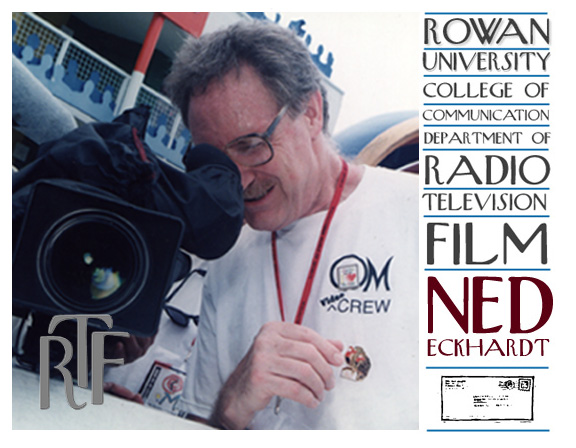
Radio television film Professor Ned Eckhardt poses in the television studios at Bozarth Hall. Eckhardt established the television program when he became a professor at Rowan in 1979, over three decades ago. -Photo courtesy of Ned Eckhardt
The year is 1979. Glassboro State College is a small school off of Route 55 in a small farm town. The campus has a few academic buildings and dorms — the Chamberlain Student Center has just turned five years old.
A young professor, having tried to sell his hard-labored scripts with no buyer interest, sits in the basement of Savitz Hall. He ambitiously plans a program that, for the following 36 years, would win numerous awards and inspire generations of students to pursue a career in television.
Jokingly referring to himself as “Father of the TV,” Professor Ned Eckhardt reminisced over his past 36 years teaching at Rowan, as he nears closer to retirement. Years after creating the TV undergrad program when he was hired in 1979, he will be retiring from his position in the Radio/Television/Film department this May.
Coming from a background in TV program writing, Eckhardt first looked for producers to pick up his ideas. He stumbled across a New York Times advertisement for a teaching position at Brookdale Community College, in Monmouth County, where he would start the school’s first television program. To make ends meet, he worked as a freelance writer, television producer and film maker.
Several years later, after receiving tenure at Herkimer County Community College, Eckhardt left the school and responded to an offer for a faculty position at Glassboro State College.
Within three years students were producing music videos, talk shows, sports clips, and even TV shows under his guidance.
Eckhardt gained his knowledge and experience in the field from working full time at Rowan, while working part time with CBS-channel 10 in Philadelphia, and later working as part of “Odyssey of the Mind” educational program.
In a constantly evolving business, Eckhardt has taught and mentored thousands of students, he has not only advanced the department, but the university as well.
“One of my passions is I like to bring the real world to the classroom so the students can relate,” Eckhardt said in regards to his work ethos.
“Odyssey of the Mind”, a competitive educational program for students of all ages, that was first started at Glassboro State in 1978, changed Eckhardt’s whole approach to teaching. Every year he created a documentary about the program’s World Finals, where groups gathered from all over the world to compete in a variety of problem-solving activities. Before leaving the position in 1998, Eckhardt made a total of 14 documentaries.
In 1990, he took his growing passion and started Rowan’s first documentary filmmaking course. The inaugural class produced three films, which Eckhardt submitted, along with one of his own, to several film competitions. For every competition, the students’ films beat his.
“Wait a minute, that’s pretty cool!” Eckhardt said about the student’s win. “Students got a voice. Nowadays students have a voice because of social media. But in those days, students didn’t have a voice unless they were working for The Whit.”
In fact, one of the films had such a strong voice it won a Student Emmy award. The film documented the tragedy of Jeanne Clery, a 19-year-old Lehigh University freshman who was raped and murdered in 1986. This film helped Clery’s parents in their campaign to raise awareness on university crime across the nation with the Clery Center for Security on Campus foundation.
The awareness garnered by the student documentary helped in part to establish the Clery Act in 1990. This act obligates universities to log crime and publish crime in efforts to raise security on campuses. These actions solidified a friendship and mutual support between Rowan and the Clery Center that is still ongoing today.
The RTF department hit its stride as the Clery Center continued to grow and use many student-made documentaries on social issues to help spread awareness to other universities and schools across the country. This led to many award-winning student documentaries under Eckhardt’s tutelage.
More recently, his direction led to the establishment of PACT 5, a national movement to prevent sexual assaults and rapes in colleges, that began with Rowan and four other universities contributing student produced documentaries to raise awareness and prevention.
“That’s kinda been my career. To nurture and prepare young people to go out into the world and make a living in this business. But be aware, documentaries are part of that,” Eckhardt said.
Students in his classrooms are attracted to his unique teaching style.
“He’s very energetic and he’s like a big hippy which makes him very fun to work with,” said junior RTF student Lauren Rauffer.
Admiration for the professoris not limited to just those in the RTF department.
“I really like his teaching style,” said journalism major Samantha Berenberg. “He always keeps me interested with what we’re learning. I feel like he really cares about what he’s teaching us and that we all know how to do it in the future. I think that’s really awesome.”
In honor of his contributions to the students and the university, the Ned Eckhardt Television Production Scholarship is to be established later this year. The scholarship will help support one outstanding film student each year and be a small piece of Eckhardt’s legacy.
“It’s all ‘pay it forward,'” Eckhardt said. “I help you, maybe you learn a little bit from me and then I push you more than you were pushed before.”
“I raise the bar for you and you go ‘man the bar is up there, but I can do it.’ Then you graduate and go off into your life and maybe I was a part of a little bit of your development, but now you pay it forward. You have kids and do whatever [job] and reach out to them. You give back to them.”
Kurt Beadling, a junior RTF major, has bittersweet feelings about one of his favorite professors leaving.
“I am sad to see him go,” Beadling said. “He’s been here for so long and he’s helped make so many great things happen such as. It’s going to be really sad to see someone with that much commitment to the students leave campus.”
Eckhardt said that his plans are wide open when his retirement is official.
“I think in relationships with people you’re always teaching each other, but I don’t think I’m going to teach anymore,” he said. I think I’m going to move on, do something. Make a documentary, write a book, The Usual Suspects.”
Don’t be surprised to find him at a local diner either.
“Maybe find a diner to hang out in. I don’t know, I’ll find something, I always do.”
A jumbotron seemed necessary to proclaim how much Ned Eckhardt means to the Rowan RTF community. Ned stands with him family before his retirement/scholarship dinner this past Friday.
Rowan University - Ned Eckhardt Scholarship & Retirement Celebration
Join alumni, faculty and staff from the College of Communication & Creative Arts and the Radio/TV/Film department as longtime professor and mentor, Ned Eckhardt, is honored. Alumni and friends from the past three decades will be on hand to celebrate Ned and his impact on students and the industry.
Contact Information
Primary Contact
Keith Brand
201 Mullica Hill Road
Glassboro, New Jersey 08028
856-256-4006
brandk@rowan.edu
Secondary Contact
Chris D'Angelo
40 N. Academy Street
Glassboro, New Jersey 08028
856-256-5407
dangeloc@rowan.edu
Date & Location
Date: 4/17/2015 Time: 6:00 PM to 9:00 PM
Location: Eynon Ballroom, Chamberlain Student Center
Rowan Professor Ned Eckhardt with Joyce Kavitsky'98 at the Ned Eckhardt Retirement & Scholarship Event on April 17, 2015
Joyce Kavitsky'98 with Gena Lawless Krug'99, Pauline McAuley'99 and Heather Patterson'99 at the Ned Eckhardt Retirement & Scholarship Event on April 17, 2015
This scholarship, in honor of Professor Ned Eckhardt, recognizes the academic achievements of a student who exhibits exceptional skills in video production, including documentaries, episodic television, music based work, journalistic works, narrative stories, and new media video.
One scholarship will be given per academic year.
Requirements for Application
Students must be RTF majors with a production specialization
Overall GPA of 2.75 or above
Full-time matriculated status in the academic year for which application is being submitted
Junior or senior status in the academic year for which application is being submitted
Process of Application
Applications should be submitted via email to Diana Nicolae (nicolae@rowan.edu). Please use the subject line “Ned Eckhardt Scholarship Application.” The annual application period is December 1st through February 1st. Please submit the following materials.
Current resume, highlighting academic and creative accomplishments
A short portfolio of applicants video/film work. Work may have been produced in a class, for a club, or independently. Links to projects are preferred
A 1-2 page statement of why video production and storytelling are important to the candidate
Ned Eckhardt has been teaching in the Rowan Communications Department since 1979. He holds degrees from Colgate University and Case-Western Reserve University. His specialties are television production and writing for television.
The television production courses are a dynamic mixture of technical and creative learning. Students have an opportunity to experience all of the jobs involved in quality productions. Rowan students have won many local and national television production awards, including student Emmys.
Eckhardt has been a producer for WCAU-TV, Philadelphia, where his productions have won an AP Broadcaster's Award and have been
Emmy and Iris award nominees. Currently, he is the video director for Odyssey of the Mind, an international educational
association.
Odyssey of the Mind (OM) is a non-profit organization that sponsors creative problem-solving activities and competitions for young people between the ages of 8 and 22. Currently there are 14,000 schools in the United States that participate in the Odyssey of the Mind experience.
Worldwide, over 30 countries have schools participating in the OM program. Approximately 500,000 kids, from kindergarten through college, participate in the Odyssey of the Mind creative problem-solving program every year.
As their video consultant and producer, Ned Eckhardt has created many videos to promote Odyssey of the Mind and train OM teams,
coaches and teachers in how to help kids tap into their creative potential. His video productions have won over 25 national and
International awards, including a Silver Award from the Chicago International Film and Video festival, 3 Tellys, 2 Cindys, and
Awards of Distinction from The American Communicator Association, the International Television Association, The Educational Press
Association, and the American Corporate Video Awards.
For a 7 day period in late May, 1998, Ned Eckhardt got a chance to get up close and personal with the imagineers at Walt Disney World in Orlando, Florida. He was there to shoot a video documentary of a unique, 4-day event: The Odyssey of the Mind 1998 World Finals competition.
The Event involved over 750 teams from 25 countries. The 16,000 people who attended the OM World Finals represented the largest
single Event in the history of Walt Disney World. The competition sites were located at MGM Studios, Epcot, Magic Kingdom and the
Wide World of Sports Complex.
The 35 minute documentary has been distributed worldwide by the OM Association and has won two prestigious awards.
A Distinguished Silver Award from the American Communicator's Association. This is the largest association of non-broadcast film and video producers in the world. In 1998 award competition there were over 3,200 entries.
A Silver Award from the International Television Association in the category of Special Events. ITVA is a
professional film and video association that has members in 50 US States and over 30 countries.
The Rowan television studios and field production systems feature state-of-the-art production and post-production equipment. Field shooting is done with our new DVCPro digital cameras. Editing is done on DVCPro and Sony linear systems and AVID non-linear systems. Computer graphics are created on two Inscriber computers that produce broadcast level graphics. Digital
FX are created on a DVE (Digital Video Effects) machine using a computer assisted production switcher or in the digital editing
programs.
These are some of the courses that professor Eckhardt teaches......
This course introduces students to the principles and techniques of TV production. Students work in production teams within a professional television studio setting. Students gain experience in all phases of production, including conception of ideas, scripting, directing, editing, graphics and operation of equipment to produce television programming that airs on Channel 5, the university cable channel. This course is required of all R/TV/F Majors Course Objectives
and Weekly Activities
This hands-on course provides experience in advanced television production.
Students work in production teams that create, research, script, shoot and edit 28 minute programs for weekly airing on Rowan's
cable Channel 5 and other New Jersey cable stations. Students work in the studio and the field, using top-level production and
post-production equipment in preparation for professional career work in television. Programming segments are edited on analog
and digital edit systems. Many of these programs have won local, regional and national awards. Course Objectives
This advanced production course combines extensive research and scriptwriting skills with sophisticated
field production techniques. Students select subjects of local interest to feature in high-quality, 20 minute documentaries.
This research and writing course focuses on the specialized field of
TV program creation. Students study the structure and content of a wide variety of TV programs, analyzing target audiences,
and examining the marketing structure of program selling and distribution. Students prepare a complete, original television program proposal as a required activity. In 1998 a student-created, prime-time program won the University Film and Video Association's Writing
competition. Objectives
I just wanted to share with you that Phillips Philes recognizes it just hit big time through a link on Jersey Report, the new news aggregator that covers New Jersey. Yes! - New Jersey finally has one!
Jersey Report, like the famous Drudge Report in both layout and content, specializes in covering the state's news and linking local media outlets, columnists, blogs and weather. Not every state, as of this writing, has news aggregators, in fact under a dozen do. Notable existing news aggregators on the East Coast include Keystone Report for Pennsylvania, Empire Report for New York and Carolina Plott Hound for North Carolina.
Thank you for linking us Jersey Report and we have you linked as well! :-)
Joyce Kavitsky
New Jersey gets its own version of the Drudge Report
JersReport.com — or Jersey Report — appeared without fanfare in the fall, and is now seeking to establish itself as a top New Jersey news aggregator, with much of it focusing on state politics.
But now, Jane Randall, a 26-year-old Princeton University graduate who in 2010 finished near the top of the field on the television show "America’s Next Top Model," is working aggressively to promote the site, traveling to government events and holding meetings with political insiders.
“We think New Jersey is the perfect place to apply the Drudge model. New Jersey is an influential state,” said Randall, who grew up near Baltimore and lives in Manhattan.
The site is the second Drudge-like venture founded by 36-year-old former hedge fund executive J.P. Miller, who served as the tri-state area's finance director for Mitt Romney's 2012 presidential campaign.
Randall is running the New Jersey site, the sister site of EmpireReport.com across the Hudson that was founded months earlier. There are also Drudge-like sites not owned by Miller in Pennsylvania, Connecticut, Colorado and Louisiana.
Despite the fact it’s modeled after the Drudge Report, Miller said Jersey Report has no ties to its high-traffic right-wing national counterpart, which often posts racially inflammatory headlines and links to the conspiracy theory site InfoWars.
“We certainly have been inspired by Matt Drudge,” Miler said. “We are huge fans of the Drudge Report. The Drudge Report is the number one most trafficked news site on the planet , but we do not have any business affiliation with Drudge.”
Like Miller, Randall has a background in Republican and conservative politics. She interned for Romney’s campaign under Miller in 2012, worked for the National Review Institute, which promotes conservatism on college campuses, and has professed her love of Russian-American novelist Ayn Rand on Twitter.
But Randall and Miller said the Jersey Report is not going to follow in Drudge’s footsteps when it comes to a political slant. The site aims to be strictly non-partisan.
“There’s no goal to go one way or the other. The goal is simply to make headlines more interesting and more unfortunate than they might be otherwise,” Randall said.
Randall and Miller have no plans to conduct original reporting, but think there’s a demand for it, even as New Jersey’s media shrinks as newspapers lay of employees. The state is just one of two in the nation to have a governor’s race this year (Virginia is the other), Gov. Chris Christie remains a national figure and U.S. Sen. Cory Booker is being watched as a potential Democratic candidate for president in 2020.
So far, the New Jersey website has had just one advertiser. Miller didn’t share traffic numbers, but said the New York site gets hundreds of thousands of hits every week and that “the growth trajectory of the traffic of the New Jersey site for where it is kind of in the life cycle is growing at a higher rate than the New York site was.”
The Drudge bare-bones format, Randall said, helps to “keep it simple, keep it fresh, update it constantly and have interesting content..”
“It’s very basic. But it’s very successful,” she said.
Like most of you, my social media feeds have been bursting with political commentary from people who used to be content with sharing pictures of cute animals or vacation albums. It's hardly surprising, though, given the political climate and the news media's hyperbolic coverage of every story. I have been surprised by one thing, however: the constant drumbeat of opposition to Betsy DeVos, President Trump's nominee to lead the Education Department, who is expected to receive her final confirmation vote in the Senate on Monday.
This drumbeat continued at Tuesday's Senate education committee hearing to advance DeVos' nomination to the Senate floor. All the of Democratic senators, and even Alaska Republican Sen. Lisa Murkowski, questioned DeVos' qualifications for the job, citing her supposed lack of experience and knowledge of the public education system.
Despite this strong opposition, DeVos passed through the committee on a 12-11 party-line vote, but her confirmation in front of the whole Senate is on thin ice.
I concede that DeVos struggled at times during her questioning at a Jan. 17 Senate hearing, which I mostly attribute to a case of Midwestern niceness. But the attack that she is uninformed, and therefore unqualified, misses the mark on multiple levels.
Nobody highlights this mistake better than the late economist Friedrich Hayek.
Other than being the father of Austrian economics, a Nobel Prize winner, and the author of The Road to Serfdom, one of Hayek's major contributions was his work on the use of knowledge in society. Hayek argued that no one individual can possibly have enough information to centrally plan an entire economy.
This theory can be applied to many other areas as well. The takeaway is that leaders in many areas should defer to local knowledge when addressing issues rather than assuming they have the information to make the "correct" decision.
Unfortunately, many of our current senators seemed to have skipped Hayek day in their economics class.
Since the creation of the Department of Education, the power to make educational decisions has been gradually sucked out of the states and replaced with program after program forced onto them from Washington.
Policies imposed by Washington bureaucrats aimed at improving public schools via one-size-fits-all national standards and federal programs have failed to increase student achievement, despite the billions of dollars pumped into each new program.
Even targeted spending designed to address failing schools has been ineffective. A recent evaluation of $7 billion spent by the Obama administration to improve student achievement at these low-performing schools found there was no positive effect.
Viewed from a Hayekian lens, this failure should not be surprising. Top-down policies didn't fail because previous department heads were unqualified, but because no person or agency has the capacity to know what is best for more than 50 million K-12 students and more than 3 million teachers across our vast country.
This fact has long been known by DeVos. When pressed at the hearing about what her policy or position would be on certain issues, such as firearms in schools, DeVos deferred to the states to make their own decisions on what is best for their students. Even though that position has attracted the typical sneers from the Left, DeVos fundamentally has the correct position. The fact that she is willing to consult others and is able to admit when she isn't the best person to be making a decision on someone else's behalf are part of her strength as a nominee, not a sign that she's unqualified.
All of this is to say that what DeVos knows best is that she can't possibly know what's best for every state, every school, and every student in every circumstance. That knowledge is only known locally, by students, parents, and teachers far removed the bureaucratic nightmare that is Washington D.C.
It is often said that doing the same thing over and over and expecting a different result is the definition of insanity. DeVos knows something that those poised to vote against her confirmation early next week do not: Doubling down on the failed policies of the past will not help improve education outcomes and turnaround our nation's decreasing educational competitiveness. It's time to stop the insanity.
Eric Peterson (@IllinoisEric89) is a policy analyst at Americans for Prosperity.
Approximately 49 million students are enrolled in the nation's public schools in kindergarten through grade 12. Another 6 million attend private schools.
But if you follow the news, you know that several new types of schools have appeared in recent years, meaning that choosing a school is no longer a simple matter. For example, what's the difference between a magnet school and a charter school? Parochial and proprietary? And which one is best for your child?
Here's a brief description of the different types of schools on today's educational landscape.
Public schools
Public schools get their financing from local, state, and federal government funds. In most cases, they must admit all students who live within the borders of their district. Charter schools and magnet schools are two relatively new kinds of public schools.
Charter schools began appearing in the early 1990s. They are independently operated public schools started by parents, teachers, community organizations, and for-profit companies. These schools receive tax dollars, but the sponsoring group may also come up with private funding. Charter schools do not charge tuition.
These schools must adhere to the basic curricular requirements of the state but are free from many of the regulations that apply to conventional schools. They are not subject to the scrutiny of school boards or government authorities.
Considered cutting edge, charter schools usually challenge standard education practices and sometimes specialize in a particular area, such as technology or the arts, or adopt a basic core-subjects approach. Some charter schools specifically target gifted or high-risk kids. They usually have smaller classes and offer more individual attention than conventional public schools.
There are about 3,000 charter schools in the United States. To learn more about charter schools and find them in your area, visit the National Charter School Resource Center.
Magnet schools are free public schools that can be highly competitive and highly selective. They're renowned for their special programs and high academic standards. They may specialize in a particular area, such as science or the arts.
Students who apply to these schools may go through a rigorous testing and application process. Some magnet schools have boarding facilities to allow students from other communities to attend.
Magnet schools were first launched in the 1970s to help desegregate public school systems by encouraging children to attend schools outside their neighborhoods. Student diversity is still an explicit goal of most magnet schools.
Public school choice programs free families from having to attend their assigned neighborhood school. Some districts voluntarily offer school choice. Others are required to provide parents with options when a school is failing to meet the standards set by the No Child Left Behind Act of 2001.
Private schools
Private schools rely on tuition payments and funds from nonpublic sources such as religious organizations, endowments, grants, and charitable donations.
These schools select from a pool of students who apply for admission. They may be coed or single sex. About a third of the elementary and secondary schools in the United States are private.
Independent schools are private, nonprofit schools governed by boards of trustees. This category includes such famous private schools as Andover and Exeter.
Independent schools draw their funds from tuition payments, charitable contributions, and endowments rather than from taxes or church funds. They may be affiliated with a religious institution but cannot receive funds or governance from them.
Of the 34,000 private schools in the United States, only about 2,000 are independent. Nearly three-fourths of those are members of the National Association of Independent Schools, which means they have been accredited by a recognized state or regional body and have agreed to practice nondiscriminatory policies.
Many accept boarding students as well as day students. The median tuition for day schools is $17,880, meaning half are less expensive and half cost more. For boarding schools, the median tuition is $34,900.
Parochial schools are church-related schools, most commonly owned and operated by Catholic parishes or dioceses but also by Protestant denominations. Hebrew schools may also be termed parochial.
The majority of private schools in the United States are parochial schools. The academic curriculum at these schools is supplemented with required daily religious instruction and prayer. Teachers may be clergy or laypersons who may or may not be trained educators.
Your child doesn't have to be Catholic or Protestant to attend a parochial school, but she will still be required to attend religious education classes and prayer services.
Parochial schools cost, on average, $6,733 per year for an elementary school student and $10,549 for a high school student.
Proprietary schools are private schools run for profit. This is a relatively new category of school. They do not answer to any board of trustees or elected officials, so they claim to be able to respond quickly to the demands of the market.
A growing number of children – about 1.5 million in 2007 – are educated at home by parents or private tutors, or through online programs. A few of these homeschooled students attend school part time, but most do not. Some homeschooling families join cooperatives to share resources and learn in a group setting.
Most parents who choose homeschooling want to give their children religious or moral instruction, according to recent National Household Education Surveys. Many other families are worried about the public school environment or are unhappy with the quality of instruction in public schools.
Families can create their own curriculum or buy educational materials developed for homeschoolers. States regulate home schools and set requirements.
State oversight varies widely. Some states don't even require notification that a child is being educated at home, while others require homeschooled students to take tests or have their progress evaluated in some way. In a few states, homeschooling parents must use curricula approved by the state, obtain teaching credentials, or undergo home visits by state officials.
Sean Duffy
,
U.S. Representative for Wisconsin’s 7th District
•
Sabine Durden
,
mother of Dominic Durden, who was killed after being hit by a truck driven by unlicensed, uninsured, and unregistered illegal immigrant
•
Joni Ernst
,
the first female U.S. Senator from Iowa and the first female combat vet in the Senate
•
Lt. Gen. Michael Flynn
,
U.S. Army (Retired), former Director of the Defense Intelligence Agency
•
Mark Geist
,
Member of Benghazi Annex Security Team and Co-Author of 13 Hours
Harold Hamm
,
CEO and founder of Continental Resources, one of the largest oil producers in the country, shale oil pioneer and 39th richest person in United States
•
Laura Ingraham
,
former attorney and host of the Laura Ingraham Show
•
Lynne Patton
,
Vice President of the Eric Trump Foundation
•
Mike Pence
,
Governor for Indiana and nominee for Vice President
I have been a subscriber to your newspaper for many, many years and, honestly, only read it for only local information. Today's (Jan. 11) headlines regarding President-elect Donald Trump are pure fake news.
Does the paper ever investigate its negative stories about our soon-to-be new president before printing them? Even on the editorial page, in a commentary column regarding our Constitution ("Can the Constitution save us from Trump?” written by Richard Cohen of the Washington Post); I have never once seen a headline that said, “Why is President Obama constantly attacking our Constitution?” Looks like the your newspaper totally agrees with him. I treat your newspaper as another arm of the horrible Democratic Party, like it was during the past election. I am a proud Trump “deplorable.”
Marcia Kavitsky
Delran
Phillips Philes PHLASHBACK: Joyce Kavitsky's Age 17 B.C.T. Letter To The Editor





 For a 7 day period in late May, 1998, Ned Eckhardt got a chance to get up close and personal with the imagineers at Walt Disney World in Orlando, Florida. He was there to shoot a video documentary of a unique, 4-day event: The Odyssey of the Mind 1998 World Finals competition.
 The 35 minute documentary has been distributed worldwide by the OM Association and has won two prestigious awards.


 Updated February 1999


 This course introduces students to the principles and techniques of TV production. Students work in production teams within a professional television studio setting. Students gain experience in all phases of production, including conception of ideas, scripting, directing, editing, graphics and operation of equipment to produce television programming that airs on Channel 5, the university cable channel. This course is required of all R/TV/F Majors
 This hands-on course provides experience in advanced television production.
Students work in production teams that create, research, script, shoot and edit 28 minute programs for weekly airing on Rowan's
cable Channel 5 and other New Jersey cable stations. Students work in the studio and the field, using top-level production and
post-production equipment in preparation for professional career work in television. Programming segments are edited on analog
and digital edit systems. Many of these programs have won local, regional and national awards.
This hands-on course provides experience in advanced television production.
Students work in production teams that create, research, script, shoot and edit 28 minute programs for weekly airing on Rowan's
cable Channel 5 and other New Jersey cable stations. Students work in the studio and the field, using top-level production and
post-production equipment in preparation for professional career work in television. Programming segments are edited on analog
and digital edit systems. Many of these programs have won local, regional and national awards. 

 This advanced production course combines extensive research and scriptwriting skills with sophisticated
field production techniques. Students select subjects of local interest to feature in high-quality, 20 minute documentaries.
This advanced production course combines extensive research and scriptwriting skills with sophisticated
field production techniques. Students select subjects of local interest to feature in high-quality, 20 minute documentaries.
 This research and writing course focuses on the specialized field of
TV program creation. Students study the structure and content of a wide variety of TV programs, analyzing target audiences,
and examining the marketing structure of program selling and distribution. Students prepare a complete, original television program proposal as a required activity. In 1998 a student-created, prime-time program won the University Film and Video Association's Writing
competition.
This research and writing course focuses on the specialized field of
TV program creation. Students study the structure and content of a wide variety of TV programs, analyzing target audiences,
and examining the marketing structure of program selling and distribution. Students prepare a complete, original television program proposal as a required activity. In 1998 a student-created, prime-time program won the University Film and Video Association's Writing
competition.