Tuesday, February 28, 2017

News media are trying to destroy Trump’s presidency By Joseph Wasik

Source: http://www.burlingtoncountytimes.com/opinion/letters/news-media-are-trying-to-destroy-trump-s-presidency/article_873eda1e-b0e4-5753-bc96-e344e0a1b008.html

February 28, 2017

About two weeks ago, I bought two Burlington County Times’ newspapers, two days apart, and I paid $1.50 for each one. One newspaper had eight pages and the second had 12 pages.

The explanation for this is that the mainstream media is the enemy of the American people. I predicted these events two decades ago for the BCT and the news media in general.

The right person came along at this critical time in our history, when the country was being destroyed by the left. President Barack Obama gave us President Donald Trump. The Democrats have lost seats nationwide since 2010. The truth is, we the people, love Trump; he’s our gift from God, chosen by God.

The fact is that the media is trying to destroy Trump’s presidency; this is causing Trump supporters to embrace him that much more.

It’s too late for the BCT. Almost all print media in our country are losing readers. That’s why it had eight pages one day and a few days later, it had 12 pages — too many left-leaning talking points, half-truths and untruths. Fake news.

If the Russians hacked the election, and because of this, Hillary Clinton lost, how did Clinton win the popular vote?

Joseph Wasik

Evesham

Wednesday, February 22, 2017

Are US Colleges Embracing a Fascist Worldview? By Bill Korach

Source: http://education-curriculum-reform-government-schools.org/w/2017/02/are-us-colleges-embracing-a-fascist-worldview/
February 3, 2017

In fascist Italy and Nazi Germany, there was one acceptable way of thought, and one kind of acceptable speech: that of the Fuehrer and the Duce. Both Mussolini and Hitler had strong socialist views and of course the middle name of Nazi is “socialist.” Fascist thought was enforced at the university, in the press and on the pulpit. Violators would be beaten up, shouted down, and their books burned. Many American universities are starting to resemble fascist totalitarian institutions instead of the citadels of free thought and ideas they once represented.

During the past year, speakers were either disinvited or shouted down, including Milo Yiannopoulos at University of California Berkeley earlier this week. Yiannopoulos appearance caused a violent riot at the San Francisco campus damaging property and causing physical harm. It speaks volumes that none of the protestors were arrested. Here are just a few of the dozens cancelled:

Brown University — Janet Mock

The TV host and transgender-rights activist withdrew from a speaking event after students protested, not because of the content of Mock’s speech, but because pro-Israel group Hillel cosponsored the lecture.

California State University at Los Angeles — Ben Shapiro

Critics slammed the conservative writer and claimed his proposed lecture — about microaggressions, Black Lives Matter, and safe spaces — was not a debate but an attack. The university revoked his invitation, later allowing Shapiro to come to the campus after he threatened legal action.

“These aren’t diversity warriors,” Shapiro told Breitbart News. “They’re jackbooted thugs.”

University of California at Berkeley — Nicholas Dirks

The chancellor of Berkeley was scheduled to have a public discussion about the value of higher education, but the event was shut down after by students chanted and shouted over him. The protesters stated that he wasn’t doing enough to help black students suffering hardships on campus and that his salary was too high.

University of Chicago — Anita Alvarez

The Cook County, Illinois, state attorney’s speech was interrupted and did not continue because of both student and nonstudent protesters.

Protesters claimed that Alvarez was responsible for “state violence against Black and brown people in the City of Chicago” and failed to charge police officers, according to a press release from Black Lives Matter (BLM) Chicago, The Chicago Maroon reported.

Chicago has a history of extreme mistrust between its African-American community and police enforcement. Most recently, fury over the killing of 17-year-old Laquan McDonald, whom prosecutors claim police shot 16 times, reached Alvarez.

Anita Alvarez

University of Chicago — Bassem Eid

Students advocating for the Palestinian cause interrupted and shut down the political analyst and human-rights advocate’s speech at the college. Eid, who is himself Palestinian, made comments that were seen as pro-Israel.

“Do not speak on behalf of the Palestinians again!” a student yelled during the event, The Chicago Maroon reported.

George Washington University — Action Bronson

The college revoked the rapper’s invitation to perform due to claims his lyrics are misogynistic and that he has history of public transphobia.

Pressure on social media mounted and a petition to have Bronson removed from the lineup had hundreds of signatures by the time the administration agreed to revoke his invitation to perform.

Trinity College — Action Bronson

Another college did the same due to claims Bronson’s lyrics are violent and sexually explicit.

More than 1,300 students signed a petition that stated: “Allowing Action Bronson to perform at Spring Weekend would create a psychologically harmful and drastically unsafe space for women, LGBTQIA+ students, and survivors of sexual assault.”

Hampshire College — Emily Wong

The school revoked its request for the physician at Massachusetts General Hospital’s to give a commencement speech due to students’ claims that she could not “directly address student concerns” regarding racial issues and transphobia.

Instead, Wong was replaced with activist Reina Gossett who was chosen “because her life and work engage the issues that have been raised by students around anti-blackness, transphobia, and sexual violence,” the school’s press release read, according to The Chronicle of Higher Education.

Brandeis University cancelled plans to give an honorary degree to Hirsi Ali, an Muslim who has been speaking out against Islamic violence.

University of Pennsylvania — John Brennan

The director of the CIA had an event substantially disrupted by protesters for his involvement in drone strikes in the Middle East.

After three instances where protesters interrupted and spoke over Brennan, the event ended early.

San Francisco State University — Nir Barkat

A group of pro-Palestine protestors forced the mayor of the City of Jerusalem to end an event early. Instead, he convened with a small group of audience members.

Virginia Tech — Jason Riley

The professor who invited The Wall Street Journal (WSJ) columnist revoked his invitation over concerns of a controversy because he had “written about race issues.”

Riley, who is black, also wrote a book in 2014, called “Please Stop Helping Us: How Liberals Make It Harder for Blacks to Succeed,” which received some criticism.

Williams College — John Derbyshire

The writer and journalist was due to speak at Williams, but college president Adam Falk canceled the event, citing writings that some considered to be racist. Derbyshire published a bullet-point list in web publication Taki’s Magazine about his thoughts on the black community that included:

(10a) Avoid concentrations of blacks not all known to you personally.

(10b) Stay out of heavily black neighborhoods.

(10d) Do not attend events likely to draw a lot of blacks.

Williams College — Suzanne Venker

The college revoked the author and social critic’s lecture due to her criticism of feminism.

Venker, a self-described “anti-feminist,” wrote an op-ed for Fox News explaining why women are supposedly having such a hard time finding husbands, called “Why men won’t marry you.”

“There was a time when wives respected their husbands,” one portion read.

One cannot blame the students alone, but faculty and complicit administrations are also culpable. The administration of the University of California Berkeley waited until the last minute to charge the campus Republican Club $6500 for security, something they do not require of leftist groups. The hope was the the Republicans would not be able to raise the money, but a donor stepped in at the last minute.

Campus administrators have implemented highly restrictive speak codes, but called them “inclusive” a sort of Orwellian double speak.

Feminists have driven universities to charge men for rape on flimsy or no evidence. And the accused my not call their accuser. Recall the Duke University charges against the entire Lacrosse team, and that the charges were later tossed out by the courts.

Universities that do not stand for free speech do not deserve to be paid exorbitant fees nor do they deserve taxpayer funding from the states or the federal government.


Why All The Hippies Morphed Into Campus Fascists

How the flower people transformed our universities and colleges into the most rigid, closed-minded, repressive, unthinking sort of society.

Source: http://thefederalist.com/2016/06/03/why-all-the-hippies-morphed-into-campus-fascists/

By J.C. Bourque

June 3, 2016

I recall a photograph, taken in the late 1960s or early ’70s, during some sort of protest (it could have been anywhere, about pretty much anything, given the high level of unrest). A rank of soldiers stood in full combat gear, rifle barrels pointed straight up in front of their faces. They were at attention, with firm expressions, eyes forward. A slim, beautiful hippie chick faced one of the soldiers and was sliding the stem of a daisy down the barrel of his gun. She had been working her way down the rank, performing the same gesture with each soldier’s rifle, as they stood fast without reaction.

I was a member of her tribe back then: a peace-loving, pot-smoking, long-haired hippie revolutionary. I was age 17 or so, and still in high school in a small Midwestern town. It was “Revolutionary Lite,” as advertising might put it today. The photo summed up much of what we counterculture visionaries believed: Give Peace a Chance; Make Love, Not War; the Age of Aquarius. . . .

The girl’s tender, innocent gesture seemed so powerful when deployed against the intimidating might of the soldiers. She was the face of our fight against the rigidity and repression of society’s Judeo-Christian morality, looming military-industrial complex, tight-sphinctered, hawkish, unimaginative conservative leaders, and the greedy fat cats who secretly ran the whole mess while enriching themselves.

Underpinning the whole protest movement was a wholesale rejection of stifling, repressive (we thought), unthinking (we decided), pro forma middle-class morality. We intended to shake the rigid framework of establishment conformity, pull it down to rubble and lay claim to our right to unbridled self-expression and guilt-free sex. While we were at it, we would free people of color, end racism and poverty, and liberate women from the forced sexual slavery of the obsolete, patriarchal institution of marriage.

We had opened our minds to ideas our parents were incapable of grasping, too square to accept. We were going to unleash a wave of drug-fueled creativity unseen in human history, generously slathered with Harmony and Understanding, according to a song from a popular Broadway play featuring gratuitous nudity.

From Free Love to Control Freaks

Forty-five years later: By this time, we had instituted a wildly successful pogrom in higher education, eliminating most of the conservative faculty and driving the rest underground. We ran amok, instituting freethinking, progressive reforms at every level of the system. “Real change” takes time, but we were in it for the long haul, and dedicated ourselves to endure the grind of teaching two classes a week, cocaine-fueled orgies, and the ceaseless parsing of curriculum into unrecognizable snippets such as Post-Woodstock Transgender Inuit Long-Form Cinema Studies.

Gradually, new codes of conduct were instituted to ensure everyone was comfortable at all times. Brad must ask Heather if it’s cool to reach under her blouse. Heather is deeply offended and carries a giant foam hand on campus for the next month. (Curiously, the foam hand ended up in a starring role at the Video Music Awards later that year.) Before you can say “Don’t Bogart That Joint,” the flower people had transformed our universities and colleges into the most rigid, closed-minded, repressive, unthinking, tight-sphinctered…whoa. What the hell happened?

It gets worse. The enlightened former freaks who now inhabit these campuses have become increasingly hypersensitive and nasty, spitting tacks at people for all manner of imaginary crimes such as “cultural appropriation.” Recently, a white guy got hammered for wearing dreadlocks. This is deeply ironic because, as I recall, we hippies were masters of cultural appropriation. Hookahs, Nehru jackets, bead curtains, reggae, Eastern religions, sitar music, Tibetan prayer flags, chakras, ethnic food, dashikis, Rasta shoulder bags, ironically worn military apparel, mandalas, henna tattoos, muumuus, hand-woven Guatemalan tunics, pyramid power, Maori tattoos, macramé — excuse me for a moment, I think I’m having an acid flashback. Trails, beautiful trails. . . .

Ahem. Apparently, this appropriation business has become big business. Visit one of the hippie apparel shops online and pick up a Native American Dream Catcher necklace or a Kathmandu boho sling bag. Maybe a nice African thumb piano, or a pair of Cambodian water buffalo sandals — just “add to cart” and check out with your Amex Platinum card. The people who are griping about these outrages support entire industries based on cultural appropriation.

We Hate Marriage, So More People Need to Have It

Over on the legal battleground, the Supreme Court recently decided that marriage, which, we will recall, is a form of institutionalized misogynist sexual exploitation, is also a fundamental human right, and should be available to any two humans who want to get matrimonial. That’s okay with me: I believe our society will benefit from more stable relationships, whomever the participants.

But that’s not good enough for sore winners. Now clergy will be forced by law to perform marriages for same-sex couples. While it’s still perfectly legal for a Presbyterian minister to decline to marry a couple of heterosexual Methodists simply because they aren’t members of the congregation, he will be committing a crime if he refuses to perform nuptials for two dudes who are shopping for a ceremonial backdrop. Here’s another loose end: If two women get married, which one is getting sexually exploited?

Then there’s the “cake issue.” Evidently, if a same-sex couple wants to have a wedding reception, the blessed ceremony loses a bit of its panache if they didn’t get to force a Christian to make their cake against his beliefs. Do you really want someone who opposes what you are doing to make your wedding cake? God knows what could be in there. “Anyone for a slice of White Almond Chiffon with loogies?” Of course, a gay baker would never be forced to make desserts for the Westboro Baptist Church. Nor would they ask.

In an even more cynical episode in recent news, a professor of journalism was fired for inciting violence against a . . . wait for it . . . journalist, who was covering a campus protest. For practicing journalism, in other words. Apparently, she was unable to see the irony of the situation and was given the boot. One has to despair for the careers of her students. In the wide universe of news organizations, their job prospects will be limited to MSNBC and HuffPo. Despair not, cubs, sooner or later Rachel Maddow will accidentally perceive a causal relationship correctly, and there will be an opening.

When Aggrieved People Get Power

Wheeling back to our hippie chick flowering rifles. This took place during a campus protest that was obviously also attended by soldiers. With guns. And bullets. As we witnessed at Kent State, these situations can get out of hand. On today’s campuses, however, they’re getting worked up over “microaggressions” and “triggers.” A bullet in the spine is aggression. And there was a real trigger involved at Kent.

Meanwhile, at Emory University, some fascist from outside the perimeter jumped the razor wire and wrote “Trump 2016” on the sidewalk in chalk — a situation that could easily be remediated with a bucket of water. Instead, the student government allocated emergency funding for counseling sessions, and the college administration issued the usual limp apologies and assurances. Students were afraid to attend classes because they might sit near someone with a different worldview. One student at another college demanded that a pro-life student be moved as far from her as possible in the classroom, otherwise she would be incapable of learning. It sounds as if she already is.

Today’s outraged, privileged, fragile snowflakes conjure up utterly trivial nonsense to consider as an affront: microaggression. This can include using the wrong one of more than 50 gender pronouns, sideways glances, snort-chuckling, eye rolling, resigned sighing, and even merely existing in proximity to a person with raw sensitivity. Sorry to get too linguistically nitpicky (that’s Noam Chomsky’s territory), but shouldn’t behavior be required to attain a certain level of intensity to earn the term “aggression”? What’s next— nanoaggression? Will kindness be re-categorized as “negative aggression” and become another form of effrontery?

What we’ve learned from this process, is when aggrieved people— even peace-loving flower children— acquire power, they invariably turn into oppressors as horrible as, or worse than, the tyrants they replaced. This is how we have come to witness the spectacle of a white guy with dreadlocks being assaulted by a black woman wearing Bob Marley flip-flops, neither of whom is a Rastafarian or Jamaican.

Where have all the hippies gone?
Gone for tyrants, every one.
When will we ever learn, when will we ever learn?

And what of the hippie chick? The photo I so clearly recall was actually taken in October 1967 during a antiwar demonstration near the Pentagon. The “flowerista” was a young man, the rifles were pointed at him — not up — and the flowers were carnations. Further, the soldiers were not in a rank but forming a semicircle around a group of protesters, and some of the soldiers were removing the flowers.

This means I was actually 14 years old, in the eighth grade and hadn’t yet become a hippie, which sheds some light on how all this could have gone so wrong. People like me are running our institutions of higher learning. These are people whose policies are based on beliefs and memories formed by drug-addled teenagers 50 years ago. These beliefs are vivid, strongly held, and almost all the details are wrong.

J.C. Bourque is a recovering liberal whose rantings can be found in his book “Squeezed: Rear-Ended by American Politics.” If you didn’t care for this essay, you won’t like the book, either.

Guest column: The rise of the snowflake fascists By Pamela Paresky

Source: http://www.aspentimes.com/opinion/columns/guest-column-the-rise-of-the-snowflake-fascists/

December 16, 2015

Melanie Sturm's recent article described the mounting pressure for colleges to restrict free speech on their campuses. It referenced students calling for the resignation of two Yale professors, Erika and Nicholas Christakis, for the offense of suggesting that students take responsibility for their own Halloween costumes rather than the administration controlling what they wore. The result of this "cry-bullying" is that the Christakises, both known for advocating for students, disenfranchised populations and social justice, have chosen not to teach at Yale next term.

Vindictive students behaving with utter incivility at one of our nation's most prestigious universities because professors promoted free speech, the capacity to tolerate offense and students being treated like adults is a sign of an unhealthy society.

Free-speech advocates are alarmed at how swiftly and effectively "snowflake fascists" exact retribution on anyone disloyal to their kindergarchy. Psychologist Jon Haidt contends, "The Yale problem begins in high school." Instead of learning to grapple with viewpoints that diverge from their own, students in high school learn "twin habits of defensive self-censorship and vindictive protectiveness." In other words, high school kids pretty quickly grasp which views are permitted and which are not. When they disagree with accepted viewpoints, they know to keep quiet and the teens who hold the accepted views thoroughly lambast anyone who dares speak up.

But perhaps the "Yale problem" begins even earlier.

Haidt's "twin habits" look an awful lot like the social ethos of middle school. "Good" children learn they can get away with mean-spirited behavior like name-calling and social exclusion as long as there is unspoken peer agreement regarding which children are acceptable targets — typically the unconventional or "different" kids.

Alarmingly, evidence suggests that some anti-bullying programs may make matters worse; when kids learn which behaviors educators want to stop, they change their methods to avoid detection. And kids become experts at avoiding detection. One of the primary reasons targeted children don't report harassment is they know teachers won't do anything. Although teachers want to eradicate bullying, often if they don't see it, as far they're concerned, it isn't happening. In fact, in some schools, regardless of conduct codes and even stated goals to engender kindness, parents are more likely to receive concerned phone calls when children exhibit eccentric behavior than when children spread rumors, taunt targeted children or call them names.

It should come as no surprise, then, that by middle school, about 80 percent of kids believe that their parents and teachers are more concerned with their personal success than being caring toward others, according to a Harvard study. This is due to the rhetoric/reality gap, the gap between the values parents and teachers espouse and what they actually do regarding their children being kind versus successful. Unsurprisingly, the vast majority of children learn to value their own success over being kind. This is especially problematic because when children don't prioritize kindness and caring, they are likely to become disrespectful and even cruel to peers.

In this self-centered environment, children who are unkind to acceptable targets are often still well-liked and are not seen as bullies by their peers or teachers. (They certainly don't see themselves as bullies.) Yet they haven't learned how to interact with people they dislike (or just don't understand) with civility or respect.

If by high school these children have accepted certain "correct" sociopolitical views, those views can become a part of their identity. Then when they advocate for disenfranchised and marginalized groups, they may unknowingly actually be driven by a need to protect their identity and social standing.

In college, these young adults may continue to use their well-honed self-elevating social skills against a new set of acceptable targets — those who don't share their views. Having joined the ranks of the snowflake fascists, they advocate eradicating whatever threatens their identity, and they don't mind being disrespectful and even cruel in the process.

As the Harvard study concludes, civil society "depends on adults who are committed to their communities and who, at pivotal times, will put the common good before their own. We don't seem to be preparing large numbers of youth to create this society."

Imagine what college might look like if middle school were primarily about developing the capacity to create respectful and civil communities in which people listen to others, consider opinions they don't share and value viewpoint diversity? Perhaps rather than becoming "safe spaces" where only certain ideas and viewpoints are allowed, colleges would be safe spaces for intellectual collision and the free expression of diverse points of view.

In contrast to Yale, one college that describes itself as "a community of teachers and learners who value civility in all their interactions" promotes the value of civil discourse. Its website advertises its commitment to freedom of expression: "When you encounter people who think differently than you do, you will be expected to honor their free expression, even when what they have to say seems wrong or offensive to you."

Thankfully there is one college left that still values civility and honors freedom of expression.

Wait. That's from Yale's website.

Executive coach and consultant Pamela Paresky writes about happiness, leadership and human development for Psychology Today at http://www.psychologytodayblog.com. A mother of two and a psychologist, she is the author of the guided journal "A Year of Kindness" and serves as director of the Aspen Center for Human Development. She can be reached at pamela@aspenleadership.org.

Thursday, February 16, 2017

Republican Study Committee - Policy Solutions

Source: http://rsc.walker.house.gov/

The American Health Care Reform Act of 2017

Documents:

Bill Text Two-Pager Section-By-Section Summary Supplement: SHDI Explanation

Highlights:

Fully Repeals Obamacare: AHCRA goes into effect on January 1, 2018 and fully repeals the president’s health care law.

Increases Access to Affordable, Portable Health Insurance: AHCRA levels the playing field between people who receive their insurance through their employer and those who purchase it on the individual market by creating a standard deduction for health insurance. Under the RSC’s plan, individuals with qualifying insurance receive a $7,500 tax deduction and families receive a $20,500 deduction.

Expands Insurance Access for Vulnerable Americans: AHCRA ensures those with pre-existing conditions have access to health insurance by expanding federal support for state high-risk pools and expanding portability so Americans can easily move between insurance markets without fear of discrimination based on health status.

Spurs Competition Between Insurers: AHCRA allows people to shop for and purchase insurance plans across state lines, like other forms of insurance already allow. The plan also allows small businesses to pool together to negotiate for better rates.

The America Without Faith Project

Church

America Without Faith in the News:

The Daily Signal Alliance Defending Freedom

What Is It?

The America Without Faith project is a tool developed by the RSC to understand the value the faith-based institutions contribute to America’s communities. How many people receive hot meals or have a place to sleep each night? How many shelters are constructed or counseling sessions provided? How do faith-based organizations provide for our fellow citizens and advance U.S. interests in ways our government alone cannot or does not? Does the solution to breaking the cycle of poverty lie within private, faith-based organizations, instead of a government leviathan bogged down by politics?

Why Is It Needed?

The Faith project aims to help Members of Congress and religious liberty advocates communicate about how important the work of faith-based groups are for our nation today, and how federal polices can affect these efforts. Over 45 million Americans live below the poverty line. Over 500,000 people in a single night experience homelessness in America. Over 15 million children live in households without enough to eat. American families, and families across the globe, are suffering. Despite more than 80 federal programs in place to provide federal welfare benefits at a cost of $1 trillion per year, the government is overspending and underperforming, and people are suffering.

At the same time, America’s religious institutions exist on shaky ground. Over the past decade they have faced repeated challenges to their very existence, including threats to revoke their tax-exempt status—the very thing that makes it possible for many of these organizations to do the good work that they do. In order for our government and Americans to truly understand the value of our religious community, we need to give a better understanding of how this community serves those in need and how much they provide to the social safety net in ways the government does not.

Contact: Jennifer Weinhart

Visit the America Without Faith Website

The Empowerment Initiative

Empowerment

Documents:

Policy Ideas AEI Event

About the Empowerment Initiative

Too many Americans are trapped on the bottom rungs of the economic ladder. Conservatives believe that every individual deserves the opportunity to improve their economic circumstances, escape from poverty, and achieve their full potential. This notion that everyone has the God-given right to the pursuit of happiness is embodied in our Declaration of Independence. Instead of trapping individuals in a cycle of poverty, government should clear obstacles and encourage all to rise and achieve the American dream.

The Republican Study Committee continues to lead the way toward turning this positive vision into action. The RSC Empowerment Initiative, led by Representatives Andy Barr and Todd Young, is a task force of RSC members focused on combating poverty and reforming the welfare system to empower individuals, families, and communities. The reforms recommended by this proposal would restore the opportunity to pursue prosperity for millions of Americans.

Highlights

Eliminate Marriage Penalties: If a low-income person receiving government assistance marries an employed person, their welfare benefits would be reduced or eliminated, sometimes by an amount larger than income of the employed spouse. These policies encourage broken families. The RSC recommends that Congress take steps to eliminate these penalties against the single best antipoverty measure: marriage and a stable family structure.

Restore and Implement Work Requirements: Building on the success of the 1996 welfare reforms, all federal benefit programs should be reformed to include work promotion requirements that would help people move away from dependence and toward self- sufficiency. Programs would be strengthened with such incentives. To be eligible for benefits, able-bodied adults without dependents would be required to work or be preparing for work, including participating in educational or job training programs, community service, or a supervised job search.

Reform the Earned Income Tax Credit: The tax credit should be simplified. Allowing the credit to be paid concurrently with a paycheck (rather than once per year under current law), in addition to reducing the difficulty of filing a claim, could help simplify the program and reduce low-income individuals’ reliance on paid tax preparers, who often file fraudulent overclaims. Paying the credit over a monthly schedule will also improve monthly budgeting for Americans, rather than embracing the habit of spending an entire tax refund at once on a luxury.

Food Stamp Reform: This proposal recommends that the House Agriculture Committee put forward legislation that would authorize the food stamp program as a block grant to the states, with funding subject to the annual appropriations process. Nutrition assistance funds would be distributed to states based on a formula that accounts for poverty and unemployment in each state. States would have flexibility to administer their own programs, subject to the common sense requirements outlined below, and supplement federal funds with state funds.

Federal Housing Reform: The federal government spends over $50 billion per year on housing assistance and development programs.The two largest programs, Section 8 Housing Choice Vouchers and Project-Based Rental Assistance, provide subsidies for tenants to pay rent and for housing units to be subsidized. These programs are in much need of reform, as evidence suggests that beneficiaries “do not experience substantial improvement in education or earnings” while receiving assistance.

The Blueprint for a Balanced Budget 2.0

Blueprint

Documents:

The Budget Executive Summary

Highlights:

Balances the Federal Budget. Blueprint 2.0 balances the federal budget in just eight years, by 2024. In contrast, last year’s House budget balanced within a 10 year window. President Obama’s proposed FY 2017 budget never balances – ever. With national debt topping $19 trillion and interest rates soon set to surpass defense spending, the Blueprint takes a serious approach to reigning in overspending.

Reduces Rampant Overspending. Blueprint 2.0 includes more than 200 specific spending reductions and reforms that will save taxpayers $8.6 trillion over the next decade. By setting base discretionary spending at $974 billion and prioritize spending to provide for our national defense, we can ensure a brighter fiscal future for our nation.

Strengthens Our National Security.Blueprint 2.0 fully provides for our national security needs, so America can properly address the growing threats we face. This budget provides $574 billion for base discretionary funding in FY2017, along with $59 billion to carry out the Global War on Terror.

Promotes Pro-Growth Reforms. Blueprint 2.0 provides the principles for tax reform that simplify our sprawling, unintelligible tax code and make our system fairer for American families. The budget would set top tax rates at 25 percent, eliminate special interest tax breaks and loopholes and shifts collection duties from the scandal-plagued Internal Revenue Service to the Treasury Department.

Restore America’s Social Safety-Net Programs. Blueprint 2.0 takes robust measures to rebuild America’s social safety net programs so they empower individuals, serve those who rely on them and endure for future generations.

Repeal and Replace Obamacare. Blueprint 2.0 fully repeals the president’s disastrous health care law and implements the RSC’s American Health Care Reform Act (ACHRA) instead. ACHRA would increase competition, lower costs, improve access to care, and level the playing field between families and employers when purchasing the health insurance plan that best fits their needs.

Tuesday, February 14, 2017

Senator Ted Cruz - Redeemed & Steadfast

Ted Cruz just took Dems' Sessions hearing hypocrisy and killed it with FIRE

Source: https://www.conservativereview.com/commentary/2017/01/ted-cruz-just-took-dems-sessions-hearing-hypocrisy-and-killed-it-with-fire

By: Maria Jeffrey | January 10, 2017

Cruz hits Obama DOJ at sessions hearing

Senator Ted Cruz | Youtube

During Senator Jeff Sessions’, R-Ala. (C,78%) Attorney General confirmation hearing today in front of the Senate Judiciary Committee, Senator Ted Cruz, R-Tex. (A, 97%) pointed out numerous Democratic hypocrisies that have been manifested in the past few years and during the hearing. 

Democrats on the committee, especially Senator Dianne Feinstein, D-Calif. (F, 0%) had been grilling Sessions on whether he would uphold abortion laws in the United States if he becomes Attorney General. Senator Patrick Leahy, D, Vt. (F, 6%) interrogated Sessions on LGBT rights, questioning whether Sessions would uphold civil rights laws as Attorney General. 

But did the Democrats care when Obama routinely flouted the law?

Ted Cruz wasn’t having it:

“When the Obama Justice Department sent millions of dollars of taxpayer money to sanctuary cities defying federal immigration law, the Democrats on this committee were silent. When the Obama administration refused to enforce federal immigration law…the Democrats on this committee were silent. When the Obama administration released tens of thousands of illegal aliens including rapists and murderers into the general population, Democrats on this committee were silent.”

Ted Cruz was kicking ass. And he wasn’t done. He pointed out Democratic hypocritical silence on Obama flouting the law and paying a ransom to Iran and for releasing Guantanamo terrorists without congressional approval.

Senator Cruz’s comments were met with acclaim from conservatives on Twitter:


Ted Cruz on Liz Warren: "Democrats Are The Party Of The KKK"

Source: http://www.realclearpolitics.com/video/2017/02/08/ted_cruz_on_liz_warren_when_the_left_doesnt_have_any_arguments_they_accuse_everyone_of_being_racist.html

Posted By Tim Hains
February 8, 2017


Sen. Ted Cruz comments on Sen. Elizabeth Warren being silenced in the Senate for the duration of the confirmation process for Sen. Jeff Sessions to become Attorney General. She was accused of slanderous speech about Sessions.

"The charges Warren made against Sen. Sessions are demonstrably false, they are slanderous, they are ugly, and it is one of the crutches -- when the left doesn't have any arguments, they go and accuse everyone of being a racist. It is an ugly, ugly part of the modern Democratic party," Cruz said.

"The Democrats are the party of the Ku Klux Klan," Cruz added. "The Dixiecrats, they were Democrats who imposed segregation... and yet now the Democrats just accuse anyone they disagree with of being racist."

Monday, February 13, 2017

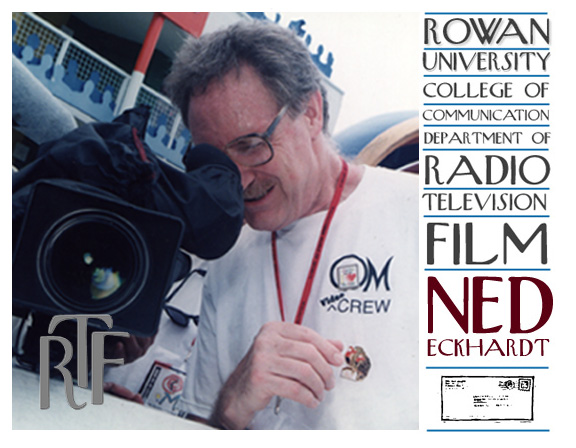
PROFile of the Week: Ned Eckhardt — Rowan professor retires paying it forward By Anthony Medina

Source: https://web.archive.org/web/20150520013158/https://www.thewhitonline.com/profile-eckhardt/

March 4, 2015

Radio television film Professor Ned Eckhardt poses in the television studios at Bozarth Hall. Eckhardt established the television program when he became a professor at Rowan in 1979, over three decades ago. -Photo courtesy of Ned Eckhardt


The year is 1979. Glassboro State College is a small school off of Route 55 in a small farm town. The campus has a few academic buildings and dorms — the Chamberlain Student Center has just turned five years old.

A young professor, having tried to sell his hard-labored scripts with no buyer interest, sits in the basement of Savitz Hall. He ambitiously plans a program that, for the following 36 years, would win numerous awards and inspire generations of students to pursue a career in television.

Jokingly referring to himself as “Father of the TV,” Professor Ned Eckhardt reminisced over his past 36 years teaching at Rowan, as he nears closer to retirement. Years after creating the TV undergrad program when he was hired in 1979, he will be retiring from his position in the Radio/Television/Film department this May.

Coming from a background in TV program writing, Eckhardt first looked for producers to pick up his ideas. He stumbled across a New York Times advertisement for a teaching position at Brookdale Community College, in Monmouth County, where he would start the school’s first television program. To make ends meet, he worked as a freelance writer, television producer and film maker.

Several years later, after receiving tenure at Herkimer County Community College, Eckhardt left the school and responded to an offer for a faculty position at Glassboro State College.

Image Source: Rowan University RTF Alumni Facebook


Within three years students were producing music videos, talk shows, sports clips, and even TV shows under his guidance.

Eckhardt gained his knowledge and experience in the field from working full time at Rowan, while working part time with CBS-channel 10 in Philadelphia, and later working as part of “Odyssey of the Mind” educational program.

In a constantly evolving business, Eckhardt has taught and mentored thousands of students, he has not only advanced the department, but the university as well.

“One of my passions is I like to bring the real world to the classroom so the students can relate,” Eckhardt said in regards to his work ethos.

“Odyssey of the Mind”, a competitive educational program for students of all ages, that was first started at Glassboro State in 1978, changed Eckhardt’s whole approach to teaching. Every year he created a documentary about the program’s World Finals, where groups gathered from all over the world to compete in a variety of problem-solving activities. Before leaving the position in 1998, Eckhardt made a total of 14 documentaries.

In 1990, he took his growing passion and started Rowan’s first documentary filmmaking course. The inaugural class produced three films, which Eckhardt submitted, along with one of his own, to several film competitions. For every competition, the students’ films beat his.

“Wait a minute, that’s pretty cool!” Eckhardt said about the student’s win. “Students got a voice. Nowadays students have a voice because of social media. But in those days, students didn’t have a voice unless they were working for The Whit.”

In fact, one of the films had such a strong voice it won a Student Emmy award. The film documented the tragedy of Jeanne Clery, a 19-year-old Lehigh University freshman who was raped and murdered in 1986. This film helped Clery’s parents in their campaign to raise awareness on university crime across the nation with the Clery Center for Security on Campus foundation.

The awareness garnered by the student documentary helped in part to establish the Clery Act in 1990. This act obligates universities to log crime and publish crime in efforts to raise security on campuses. These actions solidified a friendship and mutual support between Rowan and the Clery Center that is still ongoing today.

The RTF department hit its stride as the Clery Center continued to grow and use many student-made documentaries on social issues to help spread awareness to other universities and schools across the country. This led to many award-winning student documentaries under Eckhardt’s tutelage.

More recently, his direction led to the establishment of PACT 5, a national movement to prevent sexual assaults and rapes in colleges, that began with Rowan and four other universities contributing student produced documentaries to raise awareness and prevention.

“That’s kinda been my career. To nurture and prepare young people to go out into the world and make a living in this business. But be aware, documentaries are part of that,” Eckhardt said.

Students in his classrooms are attracted to his unique teaching style.

“He’s very energetic and he’s like a big hippy which makes him very fun to work with,” said junior RTF student Lauren Rauffer.

Admiration for the professor is not limited to just those in the RTF department.

“I really like his teaching style,” said journalism major Samantha Berenberg. “He always keeps me interested with what we’re learning. I feel like he really cares about what he’s teaching us and that we all know how to do it in the future. I think that’s really awesome.”

Image Source: Rowan University RTF Alumni Facebook


In honor of his contributions to the students and the university, the Ned Eckhardt Television Production Scholarship is to be established later this year. The scholarship will help support one outstanding film student each year and be a small piece of Eckhardt’s legacy.

“It’s all ‘pay it forward,'” Eckhardt said. “I help you, maybe you learn a little bit from me and then I push you more than you were pushed before.”

“I raise the bar for you and you go ‘man the bar is up there, but I can do it.’ Then you graduate and go off into your life and maybe I was a part of a little bit of your development, but now you pay it forward. You have kids and do whatever [job] and reach out to them. You give back to them.”

Kurt Beadling, a junior RTF major, has bittersweet feelings about one of his favorite professors leaving.

“I am sad to see him go,” Beadling said. “He’s been here for so long and he’s helped make so many great things happen such as. It’s going to be really sad to see someone with that much commitment to the students leave campus.”

Eckhardt said that his plans are wide open when his retirement is official.

“I think in relationships with people you’re always teaching each other, but I don’t think I’m going to teach anymore,” he said. I think I’m going to move on, do something. Make a documentary, write a book, The Usual Suspects.”

Don’t be surprised to find him at a local diner either.

“Maybe find a diner to hang out in. I don’t know, I’ll find something, I always do.”


Source: https://www.facebook.com/RowanUniversityRtfAlumni/photos/a.483228081696876/963726786980334

April 20, 2015

A jumbotron seemed necessary to proclaim how much Ned Eckhardt means to the Rowan RTF community. Ned stands with him family before his retirement/scholarship dinner this past Friday.


Rowan University - Ned Eckhardt Scholarship & Retirement Celebration

Source: https://www.alumni.rowan.edu/s/1653/02-alumni/index.aspx?sid=1653&pgid=688&gid=2&cid=1574&ecid=1574&post_id=0


Join alumni, faculty and staff from the College of Communication & Creative Arts and the Radio/TV/Film department as longtime professor and mentor, Ned Eckhardt, is honored. Alumni and friends from the past three decades will be on hand to celebrate Ned and his impact on students and the industry.

Contact Information

Primary Contact

Keith Brand
201 Mullica Hill Road
Glassboro, New Jersey 08028
856-256-4006
brandk@rowan.edu

Secondary Contact

Chris D'Angelo
40 N. Academy Street
Glassboro, New Jersey 08028
856-256-5407
dangeloc@rowan.edu

Date & Location

Date: 4/17/2015
Time: 6:00 PM to 9:00 PM
Location: Eynon Ballroom, Chamberlain Student Center
For directions to campus, please click here.


Rowan Professor Ned Eckhardt with Joyce Kavitsky'98 at the Ned Eckhardt Retirement & Scholarship Event on April 17, 2015

Joyce Kavitsky'98 with Gena Lawless Krug'99, Pauline McAuley'99 and Heather Patterson'99 at the Ned Eckhardt Retirement & Scholarship Event on April 17, 2015

Source: https://cineluci.wordpress.com/scholarship/

eckhardt-headshot

This scholarship, in honor of Professor Ned Eckhardt, recognizes the academic achievements of a student who exhibits exceptional skills in video production, including documentaries, episodic television, music based work, journalistic works, narrative stories, and new media video.

One scholarship will be given per academic year.

Requirements for Application

  • Students must be RTF majors with a production specialization
  • Overall GPA of 2.75 or above
  • Full-time matriculated status in the academic year for which application is being submitted
  • Junior or senior status in the academic year for which application is being submitted

Process of Application

Applications should be submitted via email to Diana Nicolae (nicolae@rowan.edu). Please use the subject line “Ned Eckhardt Scholarship Application.” The annual application period is December 1st through February 1st. Please submit the following materials.

  • Current resume, highlighting academic and creative accomplishments
  • A short portfolio of applicants video/film work. Work may have been produced in a class, for a club, or independently. Links to projects are preferred
  • A 1-2 page statement of why video production and storytelling are important to the candidate
  • Interviews with finalists will also be scheduled

Source: https://web.archive.org/web/19991112145848/http://www.rowan.edu/elan/communic/neckh.htm

Ned Eckhardt has been teaching in the Rowan Communications Department since 1979. He holds degrees from Colgate University and Case-Western Reserve University. His specialties are television production and writing for television.

The television production courses are a dynamic mixture of technical and creative learning. Students have an opportunity to experience all of the jobs involved in quality productions. Rowan students have won many local and national television production awards, including student Emmys.

Eckhardt has been a producer for WCAU-TV, Philadelphia, where his productions have won an AP Broadcaster's Award and have been Emmy and Iris award nominees. Currently, he is the video director for Odyssey of the Mind, an international educational association.


Odyssey of the Mind (OM) is a non-profit organization that sponsors creative problem-solving activities and competitions for young people between the ages of 8 and 22. Currently there are 14,000 schools in the United States that participate in the Odyssey of the Mind experience.

Worldwide, over 30 countries have schools participating in the OM program. Approximately 500,000 kids, from kindergarten through college, participate in the Odyssey of the Mind creative problem-solving program every year.

As their video consultant and producer, Ned Eckhardt has created many videos to promote Odyssey of the Mind and train OM teams, coaches and teachers in how to help kids tap into their creative potential. His video productions have won over 25 national and International awards, including a Silver Award from the Chicago International Film and Video festival, 3 Tellys, 2 Cindys, and Awards of Distinction from The American Communicator Association, the International Television Association, The Educational Press Association, and the American Corporate Video Awards.


For a 7 day period in late May, 1998, Ned Eckhardt got a chance to get up close and personal with the imagineers at Walt Disney World in Orlando, Florida. He was there to shoot a video documentary of a unique, 4-day event: The Odyssey of the Mind 1998 World Finals competition.

The Event involved over 750 teams from 25 countries. The 16,000 people who attended the OM World Finals represented the largest single Event in the history of Walt Disney World. The competition sites were located at MGM Studios, Epcot, Magic Kingdom and the Wide World of Sports Complex.

The 35 minute documentary has been distributed worldwide by the OM Association and has won two prestigious awards.

A Distinguished Silver Award from the American Communicator's Association. This is the largest association of non-broadcast film and video producers in the world. In 1998 award competition there were over 3,200 entries.


A Silver Award from the International Television Association in the category of Special Events. ITVA is a professional film and video association that has members in 50 US States and over 30 countries.


Updated February 1999

Ned Eckhardt Course Descriptions, Etc.

Source: https://web.archive.org/web/20000307153310/http://www.rowan.edu/elan/communic/ned2.htm

The Rowan television studios and field production systems feature state-of-the-art production and post-production equipment. Field shooting is done with our new DVCPro digital cameras. Editing is done on DVCPro and Sony linear systems and AVID non-linear systems. Computer graphics are created on two Inscriber computers that produce broadcast level graphics. Digital FX are created on a DVE (Digital Video Effects) machine using a computer assisted production switcher or in the digital editing programs.

These are some of the courses that professor Eckhardt teaches......


This course introduces students to the principles and techniques of TV production. Students work in production teams within a professional television studio setting. Students gain experience in all phases of production, including conception of ideas, scripting, directing, editing, graphics and operation of equipment to produce television programming that airs on Channel 5, the university cable channel. This course is required of all R/TV/F Majors Course Objectives and Weekly Activities


This hands-on course provides experience in advanced television production. Students work in production teams that create, research, script, shoot and edit 28 minute programs for weekly airing on Rowan's cable Channel 5 and other New Jersey cable stations. Students work in the studio and the field, using top-level production and post-production equipment in preparation for professional career work in television. Programming segments are edited on analog and digital edit systems. Many of these programs have won local, regional and national awards. Course Objectives


This advanced production course combines extensive research and scriptwriting skills with sophisticated field production techniques. Students select subjects of local interest to feature in high-quality, 20 minute documentaries.

The documentaries are edited on analog and digital edit systems.Many of the documentaries have won prestigious awards, including a student EMMY. Course Objectives and Weekly Activities


This research and writing course focuses on the specialized field of TV program creation. Students study the structure and content of a wide variety of TV programs, analyzing target audiences, and examining the marketing structure of program selling and distribution. Students prepare a complete, original television program proposal as a required activity. In 1998 a student-created, prime-time program won the University Film and Video Association's Writing competition. Objectives

Monday, February 06, 2017

Phillips Philes Has Access To More Readers Through Jersey Report Link!

Dear Readers,

I just wanted to share with you that Phillips Philes recognizes it just hit big time through a link on Jersey Report, the new news aggregator that covers New Jersey. Yes! - New Jersey finally has one!

Jersey Report, like the famous Drudge Report in both layout and content, specializes in covering the state's news and linking local media outlets, columnists, blogs and weather. Not every state, as of this writing, has news aggregators, in fact under a dozen do. Notable existing news aggregators on the East Coast include Keystone Report for Pennsylvania, Empire Report for New York and Carolina Plott Hound for North Carolina.

Thank you for linking us Jersey Report and we have you linked as well! :-)

Joyce Kavitsky


New Jersey gets its own version of the Drudge Report

A screenshot of the Jersey Report website. | JersReport.com

Source: http://www.politico.com/states/new-jersey/story/2017/01/new-jersey-gets-its-own-version-of-the-drudge-report-109043

JersReport.com — or Jersey Report — appeared without fanfare in the fall, and is now seeking to establish itself as a top New Jersey news aggregator, with much of it focusing on state politics.

But now, Jane Randall, a 26-year-old Princeton University graduate who in 2010 finished near the top of the field on the television show "America’s Next Top Model," is working aggressively to promote the site, traveling to government events and holding meetings with political insiders.

“We think New Jersey is the perfect place to apply the Drudge model. New Jersey is an influential state,” said Randall, who grew up near Baltimore and lives in Manhattan.

The site is the second Drudge-like venture founded by 36-year-old former hedge fund executive J.P. Miller, who served as the tri-state area's finance director for Mitt Romney's 2012 presidential campaign.

Randall is running the New Jersey site, the sister site of EmpireReport.com across the Hudson that was founded months earlier. There are also Drudge-like sites not owned by Miller in Pennsylvania, Connecticut, Colorado and Louisiana.

Despite the fact it’s modeled after the Drudge Report, Miller said Jersey Report has no ties to its high-traffic right-wing national counterpart, which often posts racially inflammatory headlines and links to the conspiracy theory site InfoWars.

“We certainly have been inspired by Matt Drudge,” Miler said. “We are huge fans of the Drudge Report. The Drudge Report is the number one most trafficked news site on the planet , but we do not have any business affiliation with Drudge.”

Like Miller, Randall has a background in Republican and conservative politics. She interned for Romney’s campaign under Miller in 2012, worked for the National Review Institute, which promotes conservatism on college campuses, and has professed her love of Russian-American novelist Ayn Rand on Twitter.

But Randall and Miller said the Jersey Report is not going to follow in Drudge’s footsteps when it comes to a political slant. The site aims to be strictly non-partisan.

“There’s no goal to go one way or the other. The goal is simply to make headlines more interesting and more unfortunate than they might be otherwise,” Randall said.

Randall and Miller have no plans to conduct original reporting, but think there’s a demand for it, even as New Jersey’s media shrinks as newspapers lay of employees. The state is just one of two in the nation to have a governor’s race this year (Virginia is the other), Gov. Chris Christie remains a national figure and U.S. Sen. Cory Booker is being watched as a potential Democratic candidate for president in 2020.

So far, the New Jersey website has had just one advertiser. Miller didn’t share traffic numbers, but said the New York site gets hundreds of thousands of hits every week and that “the growth trajectory of the traffic of the New Jersey site for where it is kind of in the life cycle is growing at a higher rate than the New York site was.”

The Drudge bare-bones format, Randall said, helps to “keep it simple, keep it fresh, update it constantly and have interesting content..”

“It’s very basic. But it’s very successful,” she said.

Stop saying Betsy DeVos is uninformed and unqualified By Eric Peterson

When pressed at the hearing about what her policy or position would be on certain issues, such as firearms in schools, DeVos deferred to the states to make their own decisions on what is best for their students. (Graeme Jennings/Examiner)

Source: http://www.washingtonexaminer.com/stop-saying-betsy-devos-is-uninformed-and-unqualified/article/2613976?custom_click=rss

February 5, 2017

Like most of you, my social media feeds have been bursting with political commentary from people who used to be content with sharing pictures of cute animals or vacation albums. It's hardly surprising, though, given the political climate and the news media's hyperbolic coverage of every story. I have been surprised by one thing, however: the constant drumbeat of opposition to Betsy DeVos, President Trump's nominee to lead the Education Department, who is expected to receive her final confirmation vote in the Senate on Monday.

This drumbeat continued at Tuesday's Senate education committee hearing to advance DeVos' nomination to the Senate floor. All the of Democratic senators, and even Alaska Republican Sen. Lisa Murkowski, questioned DeVos' qualifications for the job, citing her supposed lack of experience and knowledge of the public education system.

Despite this strong opposition, DeVos passed through the committee on a 12-11 party-line vote, but her confirmation in front of the whole Senate is on thin ice.

I concede that DeVos struggled at times during her questioning at a Jan. 17 Senate hearing, which I mostly attribute to a case of Midwestern niceness. But the attack that she is uninformed, and therefore unqualified, misses the mark on multiple levels.

Nobody highlights this mistake better than the late economist Friedrich Hayek.

Other than being the father of Austrian economics, a Nobel Prize winner, and the author of The Road to Serfdom, one of Hayek's major contributions was his work on the use of knowledge in society. Hayek argued that no one individual can possibly have enough information to centrally plan an entire economy.

This theory can be applied to many other areas as well. The takeaway is that leaders in many areas should defer to local knowledge when addressing issues rather than assuming they have the information to make the "correct" decision.

Unfortunately, many of our current senators seemed to have skipped Hayek day in their economics class.

Since the creation of the Department of Education, the power to make educational decisions has been gradually sucked out of the states and replaced with program after program forced onto them from Washington.

Policies imposed by Washington bureaucrats aimed at improving public schools via one-size-fits-all national standards and federal programs have failed to increase student achievement, despite the billions of dollars pumped into each new program.

Even targeted spending designed to address failing schools has been ineffective. A recent evaluation of $7 billion spent by the Obama administration to improve student achievement at these low-performing schools found there was no positive effect.

Viewed from a Hayekian lens, this failure should not be surprising. Top-down policies didn't fail because previous department heads were unqualified, but because no person or agency has the capacity to know what is best for more than 50 million K-12 students and more than 3 million teachers across our vast country.

This fact has long been known by DeVos. When pressed at the hearing about what her policy or position would be on certain issues, such as firearms in schools, DeVos deferred to the states to make their own decisions on what is best for their students. Even though that position has attracted the typical sneers from the Left, DeVos fundamentally has the correct position. The fact that she is willing to consult others and is able to admit when she isn't the best person to be making a decision on someone else's behalf are part of her strength as a nominee, not a sign that she's unqualified.

All of this is to say that what DeVos knows best is that she can't possibly know what's best for every state, every school, and every student in every circumstance. That knowledge is only known locally, by students, parents, and teachers far removed the bureaucratic nightmare that is Washington D.C.

It is often said that doing the same thing over and over and expecting a different result is the definition of insanity. DeVos knows something that those poised to vote against her confirmation early next week do not: Doubling down on the failed policies of the past will not help improve education outcomes and turnaround our nation's decreasing educational competitiveness. It's time to stop the insanity.

Eric Peterson (@IllinoisEric89) is a policy analyst at Americans for Prosperity.

Saturday, January 28, 2017

School types: The difference between public, private, magnet, charter, and more By Maureen Boland

Source: http://www.babycenter.com/0_school-types-the-difference-between-public-private-magnet-ch_67288.bc?showAll=true

September 2016

Approximately 49 million students are enrolled in the nation's public schools in kindergarten through grade 12. Another 6 million attend private schools.

But if you follow the news, you know that several new types of schools have appeared in recent years, meaning that choosing a school is no longer a simple matter. For example, what's the difference between a magnet school and a charter school? Parochial and proprietary? And which one is best for your child?

Here's a brief description of the different types of schools on today's educational landscape.

Public schools

Public schools get their financing from local, state, and federal government funds. In most cases, they must admit all students who live within the borders of their district. Charter schools and magnet schools are two relatively new kinds of public schools.

Charter schools began appearing in the early 1990s. They are independently operated public schools started by parents, teachers, community organizations, and for-profit companies. These schools receive tax dollars, but the sponsoring group may also come up with private funding. Charter schools do not charge tuition.
These schools must adhere to the basic curricular requirements of the state but are free from many of the regulations that apply to conventional schools. They are not subject to the scrutiny of school boards or government authorities.

Considered cutting edge, charter schools usually challenge standard education practices and sometimes specialize in a particular area, such as technology or the arts, or adopt a basic core-subjects approach. Some charter schools specifically target gifted or high-risk kids. They usually have smaller classes and offer more individual attention than conventional public schools.

There are about 3,000 charter schools in the United States. To learn more about charter schools and find them in your area, visit the National Charter School Resource Center.

Magnet schools are free public schools that can be highly competitive and highly selective. They're renowned for their special programs and high academic standards. They may specialize in a particular area, such as science or the arts.

Students who apply to these schools may go through a rigorous testing and application process. Some magnet schools have boarding facilities to allow students from other communities to attend.

Magnet schools were first launched in the 1970s to help desegregate public school systems by encouraging children to attend schools outside their neighborhoods. Student diversity is still an explicit goal of most magnet schools.

Public school choice programs free families from having to attend their assigned neighborhood school. Some districts voluntarily offer school choice. Others are required to provide parents with options when a school is failing to meet the standards set by the No Child Left Behind Act of 2001.

Private schools

Private schools rely on tuition payments and funds from nonpublic sources such as religious organizations, endowments, grants, and charitable donations.

These schools select from a pool of students who apply for admission. They may be coed or single sex. About a third of the elementary and secondary schools in the United States are private.

Independent schools are private, nonprofit schools governed by boards of trustees. This category includes such famous private schools as Andover and Exeter.

Independent schools draw their funds from tuition payments, charitable contributions, and endowments rather than from taxes or church funds. They may be affiliated with a religious institution but cannot receive funds or governance from them.

Of the 34,000 private schools in the United States, only about 2,000 are independent. Nearly three-fourths of those are members of the National Association of Independent Schools, which means they have been accredited by a recognized state or regional body and have agreed to practice nondiscriminatory policies.

Many accept boarding students as well as day students. The median tuition for day schools is $17,880, meaning half are less expensive and half cost more. For boarding schools, the median tuition is $34,900.

Parochial schools are church-related schools, most commonly owned and operated by Catholic parishes or dioceses but also by Protestant denominations. Hebrew schools may also be termed parochial.

The majority of private schools in the United States are parochial schools. The academic curriculum at these schools is supplemented with required daily religious instruction and prayer. Teachers may be clergy or laypersons who may or may not be trained educators.

Your child doesn't have to be Catholic or Protestant to attend a parochial school, but she will still be required to attend religious education classes and prayer services.

Parochial schools cost, on average, $6,733 per year for an elementary school student and $10,549 for a high school student.

Proprietary schools are private schools run for profit. This is a relatively new category of school. They do not answer to any board of trustees or elected officials, so they claim to be able to respond quickly to the demands of the market.

Many belong to an organization called the National Independent Private Schools Association. Tuition is comparable to that of private, nonprofit schools.

Home schools

A growing number of children – about 1.5 million in 2007 – are educated at home by parents or private tutors, or through online programs. A few of these homeschooled students attend school part time, but most do not. Some homeschooling families join cooperatives to share resources and learn in a group setting.

Most parents who choose homeschooling want to give their children religious or moral instruction, according to recent National Household Education Surveys. Many other families are worried about the public school environment or are unhappy with the quality of instruction in public schools.

Families can create their own curriculum or buy educational materials developed for homeschoolers. States regulate home schools and set requirements.

State oversight varies widely. Some states don't even require notification that a child is being educated at home, while others require homeschooled students to take tests or have their progress evaluated in some way. In a few states, homeschooling parents must use curricula approved by the state, obtain teaching credentials, or undergo home visits by state officials.

For more information on homeschooling, visit the Home School Legal Defense Association.