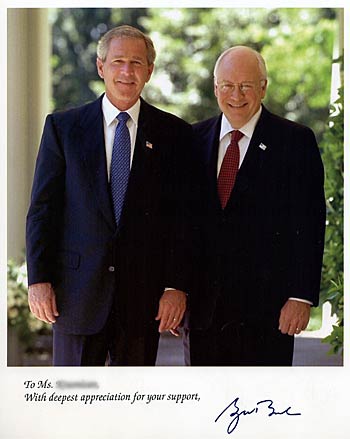
I am normally a happy, optimistic person, but right now I am sick, tired and depressed. I'm tired of hearing the president referred to as illegitimate, even though he won more than enough electoral votes. I'm tired of hearing him called an idiot, a man-child, a criminal. What crimes?
I'm sick of having every word he says parsed and misconstrued because he tells it like it is and doesn't speak "politicianese." I'm sick of a biased press that gives him no credit for his numerous accomplishments in seven months and constantly badgers him on every issue. There's added distress that the Republicans are criticized roundly for doing the same things the Democrats did with impunity.
I'm depressed that other Bible-believing Christians like myself dislike him despite his conservative stance on moral and cultural issues.
I'm sick and frightened to see the anti-American, anti-God turn our country is taking, thanks to liberal universities and those who use free speech to try to bring the United States down. If socialism is our future, I refer you to Venezuela and Cuba to see how that works out.
I'm depressed and disgusted that some of our large cities choose to protect criminal illegal immigrants at the peril of their own citizens.
I'm depressed that even many Republicans have deserted the president for political expediency.
The redeeming fact is that he has gained support with miners, small businesses, some unions, Israel, veterans and law enforcement. I pray — yes, I pray — for President Donald Trump as he tries against all odds to restore pride in America as a world power and as a nation that, despite its faults, is a beacon of light in a dark world.
Looking directly at the sun is unsafe except during the brief total phase of a solar eclipse (“totality”), when the moon entirely blocks the sun’s bright face, which will happen only within the narrow path of totality (https://go.nasa.gov/2pC0lhe (link is external)).
The only safe way to look directly at the uneclipsed or partially eclipsed sun is through special-purpose solar filters, such as “eclipse glasses” (example shown at left) or hand-held solar viewers. Homemade filters or ordinary sunglasses, even very dark ones, are not safe for looking at the sun; they transmit thousands of times too much sunlight. Refer to the American Astronomical Society (AAS) Reputable Vendors of Solar Filters & Viewers (link is external) page for a list of manufacturers and authorized dealers of eclipse glasses and handheld solar viewers verified to be compliant with the ISO 12312-2 international safety standard for such products.
Always inspect your solar filter before use; if scratched or damaged, discard it. Read and follow any instructions printed on or packaged with the filter.
Always supervise children using solar filters.
Stand still and cover your eyes with your eclipse glasses or solar viewer before looking up at the bright sun. After looking at the sun, turn away and remove your filter — do not remove it while looking at the sun.
Do not look at the uneclipsed or partially eclipsed sun through an unfiltered camera, telescope, binoculars, or other optical device.
Similarly, do not look at the sun through a camera, a telescope, binoculars, or any other optical device while using your eclipse glasses or hand-held solar viewer — the concentrated solar rays will damage the filter and enter your eye(s), causing serious injury.
Seek expert advice from an astronomer before using a solar filter with a camera, a telescope, binoculars, or any other optical device. Note that solar filters must be attached to the front of any telescope, binoculars, camera lens, or other optics.
If you are within the path of totality (https://go.nasa.gov/2pC0lhe (link is external)), remove your solar filter only when the moon completely covers the sun’s bright face and it suddenly gets quite dark. Experience totality, then, as soon as the bright sun begins to reappear, replace your solar viewer to look at the remaining partial phases.
Outside the path of totality, you must always use a safe solar filter to view the sun directly.
If you normally wear eyeglasses, keep them on. Put your eclipse glasses on over them, or hold your handheld viewer in front of them.
Note: If your eclipse glasses or viewers are compliant with the ISO 12312-2 safety standard, you may look at the uneclipsed or partially eclipsed Sun through them for as long as you wish. Furthermore, if the filters aren't scratched, punctured, or torn, you may reuse them indefinitely. Some glasses/viewers are printed with warnings stating that you shouldn't look through them for more than 3 minutes at a time and that you should discard them if they are more than 3 years old. Such warnings are outdated and do not apply to eclipse viewers compliant with the ISO 12312-2 standard adopted in 2015. To make sure you get (or got) your eclipse glasses/viewers from a supplier of ISO-compliant products, see the American Astronomical Society (AAS) Reputable Vendors of Solar Filters & Viewers (link is external) page.
An alternative method for safe viewing of the partially eclipsed sun is pinhole projection (link is external). For example, cross the outstretched, slightly open fingers of one hand over the outstretched, slightly open fingers of the other, creating a waffle pattern. With your back to the sun, look at your hands’ shadow on the ground. The little spaces between your fingers will project a grid of small images on the ground, showing the sun as a crescent during the partial phases of the eclipse. Or just look at the shadow of a leafy tree during the partial eclipse; you'll see the ground dappled with crescent Suns projected by the tiny spaces between the leaves.
A solar eclipse is one of nature’s grandest spectacles. By following these simple rules, you can safely enjoy the view and be rewarded with memories to last a lifetime. More information:
Welcome to the Best Place to View the Eclipse: YEAH, THAT GREENVILLE!
The Great American Eclipse is coming to "Yeah, THAT Greenville" on August, 21 2017 at 2:38 pm. This will be the first eclipse to touch the U.S. mainland since 1979 and the only total solar eclipse we'll see in Upstate SC this century! Greenville is one of only a few U.S. cities to be in the "path of totality," meaning we'll experience total darkness in the middle of the day! Cool, huh? All of that makes Greenville, SC, the city the Wall Street Journal calls "Dream Town, USA", the perfect place to view this once-in-a-lifetime event.
BUT WAIT, THERE'S MORE! Because the eclipse itself will occur on a Monday, you can spend the entire weekend beforehand exploring everything Greenville has to offer. With our award-winning downtown, more than 600 restaurants, fabulous retail shops, world-class collection of museums, galleries and theaters, and stunning natural scenery, the eclipse is a great way to cap off a memorable trip to one of the Southeast's fastest-growing destinations.
There are several eclipse events happening throughout Greenville. Keep checking back in on this page for updated event information.
The Roper Mountain Science Center will be hosting several events and activities in the weeks leading up to and the week of the eclipse, culminating in an Eclipse Extravanga (Monday's events are SOLD OUT).
*FUN FACT*
The Daniel Observatory at the Roper Mountain Science Center holds the 8th largest refractor telescope in North America. The lens is the same one used by Albert Einstein, and is sometimes referred to as the "War of the Worlds Telescope." Their newly-renovated planetarium (opening in February 2017) will have the largest capacity in South Carolina with 4K technology that will be playing special content leading up to the eclipse. Additionally, during the eclipse, RMSC is partnering with the California Academy of Sciences to study the reactions that animals and plants have to a total eclipse, so be sure to download the iNaturalist app and take part! Click here to learn more.
Visit the Roper Mountain Science Center website for more information on eclipse events and activities, resources, safe viewing information, and more.
The Greenville Drivewill play West Virginia at 1pm on eclipse day. Game play will stop for the totality portion of the game and eclipse glasses will be provided upon entrance to the stadium.
Furman University will host a free viewing of the total solar eclipse at Paladin Stadium from 12:30-3:30 p.m. Events include streaming live coverage from NASA, narration by Furman scientists, educational activities, "Eclipse@Furman" viewing glasses, concessions and live music. "Eclipse@Furman" provides the perfect place for family and friends to view this historic event in our city. Visit the Furman University website for more information.
Bob Jones University is also hosting eclipse viewing events from 1-3pm that include hands-on science activities, telescopes with solar filters and informational talks by BJU science professors. They are also giving free eclipse glasses to all registrants. Visit the Bob Jones University Website to register or for more information on the BJU Eclipse Experience.
The Children's Museum of the Upstate will be having a "Total Solar Eclipse Party." This event is rain or shine and all activities are free with museum admission. Activities include story time for all ages, pinhole projectors, moon phase activities, live streams from NASA and the Smithsonian, Women in Astronomy activities in the Spark!Lab and more. Visit the TCMU website to learn more.
UP on the Roof will be hosting a Total Solar Eclipse Party from 11 am-3 pm. Tickets include entry to the rooftop, light savory bites and mini sweet treats, tunes by Kelly Jo & Buffaloe and viewing glasses. There will be a cash bar with drink specials and fun swag too! See theirFacebook page for more details on this rooftop soiree. (This event is now SOLD OUT)
Ink N Ivy will be hosting their rooftop party from 12-3pm. They will be having live music, food and drink specials and live music by Spencer Rush. Visit their Facebook page for more details.
Mac's Speed Shop will be offering a kids eat free all day promotion in addition to giving out eclipse glasses and specials on Blue Moon and Southbound Scattered Sun Wit beers.
Stella's Southern Brasserie, not usually open on Mondays will be opening for breakfast, lunch and dinner. They are also hosting a patio viewing party which includes eclipse glasses. See their flyer for more information.
City Scape Winerywill have eclipse events from noon-5pm including live music, wine tastings, vineyard tours and even Pinot the Pig will be there! Visit their website for information.
Quest Brewing Company is hosting a "Standing on the Moon" party from 12-6pm with live music from Grateful Dead cover band Phuncle Sam. See the Facebook event page for more information
Trailblazer Park in Travelers Rest will host a free adventure into the path of totality from 1-3:30pm. Activities include water fun courtesy of the TR Fire Department and live music. See their website for more details.
Table Rock State Park will be hosting activities all day from 8am-4pm on eclipse day. Details can be found on their website.
Lake Conestee Nature Park is celebrating the eclipse from 12-3:3:30. The Chuck Truck food truck will be there along with music, nature walks, bird viewing, eclipse talks and critters from Wildlife Rehab of Greenville. See their website for details. (This event is SOLD OUT)
Woodsite Park in Fountain Inn is having an "Area 44 Eclipse Party" from 1-4pm. Food vendors, games and much more are planned and free viewing glasses will be available. Check out their Facebook event page for more information.
Greer City Park is also hosting a viewing event. Entertainment includes the Gravity Check Jugglers and space-themed inflatables. There will be food trucks available and they will be giving eclipse glasses to the firs 1000 guests. See their Facebook event page for details.
Lights Out Mauldin at Sunset Park is a free event, but registration and a parking pass are required. Free eclipse glasses will be given out while they last, and Chuck FM will be onsite for entertainment. More details can be found on their Facebook event page.
HIS Radio is hosting a block party from 12:30-3:30 in the Jeff Lynch Parking lot. This is a free entry event and they will have eclipse glasses for the first 500 guests along with food vendors, games, giveaways, music and more. See their website for more details.
A.J. Whittenberg Elementary School of Engineering is a NASA-designated viewing site and will have family-friendly activities from 1:30-3pm. See their Facebook event page for more information.
Eclipse brings festive darkness as Upstate celebrates once-in-a-lifetime event
Watch as downtown Greenville goes dark as people watch the solar eclipse from Falls Park. STEVE BRUSS/News Director
A look at some of the sights and festivities in the Upstate during the total solar eclipse. Greenville News/Independent Mail photo staff
People traveled the world here – flocking to downtown Greenville, Furman, Bob Jones and Clemson universities, the Roper Mountain Science Center, the Upstate’s lakes and mountains and every other locale that found its way in the coast-to-coast path of totality for the Great American Solar Eclipse Monday afternoon.
In Falls Park, the clouds teased a bit but ultimately deferred to the dance of the moon and sun during the most-dynamic moments. It won't happen again in the Upstate until 2078.
The sting of the summer rays that led the collective of thousands to find shade or swim in the Reedy River faded as the eclipse dropped temperatures to a more dusk-like environment.
A little boy shouted out the minutes remaining until totality.
Everything turned a deeper shade of sepia-gray as each second passed and the street lights flickered on.
Faces tilted toward the sky, at first bespectacled with any variety of eclipse glasses.
Then, the shadow cast a few short minutes of darkness, revealing the planets in the sky and the otherworldly glow of the moon’s outer edges.
Cheers erupted.
And almost as soon as it came, the sun began its afternoon reign again.
The spectacle then was toward the ground, as the eclipsed sun shined on leaves that themselves cast an elliptical shadow.
Like that, rush hour began.
The buildup
Earlier in the day, as the sun rose for its part in the big show, people claimed their spots along the edge of the Reedy River, just above the falls.
Kyle and Anna Ariza began their five-hour trek to downtown Greenville at midnight – preparing for the worst on Interstate 85 but determined to get a prime viewing spot within view of the Liberty Bridge.
The two along with another pair ventured from Goldsboro, North Carolina, just outside Raleigh, and coasted easily on I-85.
The trip was planned on the fly, with the idea to travel hatched just last week.
They researched Charleston but found that forecasts called for too much cloud cover.
After watching a YouTube video on what downtown Greenville had to offer, Falls Park became their clear destination.
The park was also the preferred spot for a collection out-of-state media, including a Fox News weather personality broadcasting live dispatches to Fox & Friends.
The Upstate capitalized on the lead-up to the eclipse and on the day of, vendors hawked t-shirts and eclipse glasses on the streets and in the parks. At numerous events, lines formed to secure limited supplies of the eclipse frames and enterprising entrepreneurs sold bottled water.
"I've got my eclipse T-shirt, my Eclipse gum and my Eclipse cookies. I'm wearing silver shoes. Everything is eclipse. Yes, I'm excited," said Pat Howard, a Taylors resident and eclipse fan at Furman, where 15,000 gathered in the football stadium to watch.
By 1 p.m. the parking lot started to fill at Haywood Mall in Greenville. People put up tents and pulled out picnic baskets. By 2 p.m., the parking lot near the main entrance was packed. While some sought shade, others sat on their car trunks.
One car, where two men were sitting on the hood, played a soundtrack that ranged from Journey's "Don't Stop Believin'" to the Star Wars theme.
Families from two different states traded cameras to take their photos, with their eclipse glasses on, of course.
The moment
From Greenville to Clemson to Columbia and finally to Charleston, the eclipse sped across South Carolina, creating a path of totality that awed crowds who gaped skyward.
"I've never been more aware of the fact that we're traveling through the cosmos on Spaceship Earth," said John Kirkland, who drove from Charlotte to Furman University to witness the eclipse.
The Sweeney family of Pendleton watched the eclipse from Fluor Field in total joy and awe. Ten-year-old Jeffrey Sweeney said, "It was awesome. It was like so dark and so cool."
Melissa and Andrew Sweeney brought their children, Jeffrey and Mary Anne, and Melissa's parents, Theresa and Woody Smith of Greenville.
"God is so great," said Theresa Smith. "My thought [about the eclipse] was 'how great thou art'.”
Greenville Drive fans sit in the outfield at Fluor Field at The West End when the game was paused for the solar eclipse on Monday, August 21, 2017. (Photo: BART BOATWRIGHT/Staff)
The crowd at Roper Mountain Science Center, an official NASA viewing station for the eclipse, included visitors from France, England, California, New York, Connecticut and Ohio.
Men, women and children who were gathered at viewing areas on the campus began cheering as totality approached, the daylight fading as temperatures dropped more than 10 degrees. Many gasped in amazement as totality took over. The loudest exclamations were drawn by the diamond-like beam of light that shot through the moon's surface as totality ended.
More than 6,500 watched the eclipse at Bob Jones University with a full day of events, including STEM activities, and a viewing party at the university’s soccer stadium. Cheers went up as the last slivers of sunlight disappeared behind the moon and a video screen showed the sun and moon in eclipse.
At the State Museum in Columbia, a museum official counted down the totality as thousands standing or sitting in front donned their glasses and watched the "diamond ring" form on the outside.
Minutes before, the air turned cooler and a breeze filled the air.
As the last sunlight blinked out, the crowd roared, whooped, screamed and applauded as if celebrating New Year's.
Someone pointed out planets that had become visible, especially Jupiter.
One woman said she heard birds singing.
Two minutes later, a beam of sunlight escaped the moon and the announcer reminded everyone to put on their glasses again.
"That was amazing!" said Abby Avis of Westfield, N.J.
Overwhelmed
At the Greenville Zoo, Michael Barata Sr. came from Wells River, Vermont, with his wife, Heather, and daughter, Sophia.
The Baratas made a weekend of it -- "we made plans, bought T-shirts, geeked out," Michael Barata said -- and they'll head back Tuesday after a stop in Virginia Beach.
The eclipse lived up to the hype for thousands who travelled to see it. Amazing, unforgettable, breathtaking – all words used to describe it.
"I got goosebumps and everything," Barata said.
For 10-year-old Sahana Jakes of Atlanta, "it was what I expected, and much more."
Her dad, Ronnie Jakes, said the eclipse was a bit "like childbirth. People can tell you about it, but ‘til you experience it,’ you can't understand it.”
James Li, 12, convinced his parents to drive from New Jersey and helped plan the trip to Columbia.
"It was really great," Li said. "Probably in my entire life I will spend about four minutes looking at a total solar eclipse."
"We read a lot about it and kind of know what to expect but when it came it was indescribable," said Mia Li, James' mother. "There are no words that can fully describe what you experience."
Suhas and Poonam Prabhu traveled from India to stay with college friend Aruna Bapat, of Greer. The Prabhus have traveled the world to see solar eclipses. This was their sixth. The first was in India in 1980.
“I got hooked, the very first time I saw one. You have to see them,” said Suhas. “The diamond ring is very pretty, but the whole phenomenon is so awesome. It’s one of nature’s greatest spectacles.”
Suhas didn’t plan to take photos during totality. “We are not photographers. We want to experience, not take photographs. Some people get great photos, but I would rather see life by experiencing it than retrospectively looking at photographs.”
Carla Brundage of Madison, NJ looks up at the solar eclipse in Falls Park in downtown Greenville on Monday, August 21, 2017. (Photo: LAUREN PETRACCA/Staff)
John and Jeanette Preniczky drove from Arlington, Virginia, Sunday night and arrived in Clemson around 3 a.m. They slept in their car for a few hours before coming over to the field next to the Watt Center Monday morning to watch the eclipse at Clemson University.
“I just saw the little piece and I’m just getting so emotional,” Jeanette Preniczky said, moments after the moon had begun to move in front of the sun. “It’s just so humbling. It’s a very humbling experience.”
When the moon completely eclipsed the sun around 2:37 p.m., thousands gasped as the sky went dark. Hundreds of cell phone screens lit up like lighters as viewers raised their phones in hopes of capturing the moment, some people cheering as the darkness set in completely. The temperature dropped, sending a chill through the previously muggy air. Heads tilted toward the sky, taking in the phenomena South Carolina hasn’t seen in nearly a hundred years.
Eclipse eclipsed
For some, as the moment of the eclipse bore down, clouds blocked the view, creating momentary panic for some before the celestial lights reappeared and years-long regret for others once they didn’t.
Less than five minutes before the moment of totality, a gasp went from more than 4,000 people at Southern Wesleyan University in Central.
A cloud had trespassed in front of the sun and it became dark. It soon made way for the big show, the moment. A cheer erupted.
At Green Pond Landing, viewed beforehand as one of, if not the, prime site in the Upstate to view the eclipse, clouds obscured its view at the last moment.
Takayuki Takahashi of Tokyo, an MBA student at University of Massachusetts at Lowell said he encountered similar cloud cover when he traveled to Shanghai in 2009 for an eclipse.
"It's like revenge," he said, laughing. He said he will keep chasing eclipses. "There's one in 2024 in the United States. I will be back.”
Dennis and Debra Walker came from Hartford City, Indiana, to visit family and catch the eclipse.
"Obviously I'm disappointed that clouds came in at just the wrong time, but it was cool otherwise," Dennis Walker said.
Crickets started chirping, and the planets of Venus and Jupiter emerged from the gloom.
The Katta family of Atlanta provided comic relief, chanting "All hail the sun god," as cloud cover persisted.
Dotty McPherson of Tallahassee said she loved it.
"I didn't expect the stars to come out," she said.
McPherson was visiting family in Athens, Ga., over the weekend. They had to work today.
"I said, 'Sayonara!” she said. " I'm 72 -- this could be my last chance to see an eclipse!"
Doug and Angela Thompson of Cambridge, England, said they might be getting out of the business of eclipse chasing. A March 2015 total eclipse in Iceland that they went to see also got covered up by clouds.
Not a cloud had been in the sky back in Cambridge that day, they said.
Angela said she still had a great time.
"We wanted to be here with like-minded people," she said.
Traffic and trauma
In the weeks leading up to the eclipse, city officials prepared for traffic gridlock downtown, but even with thousands flocking to Falls Park at the same time the Greenville Drive hosted a home game and Greenville High School’s freshmen were released from school midday, people and cars flowed freely.
Greenville City Hall hosted a command center.
Police set up city dump trucks at the eastern entrance to Falls Park, an abundance of caution that Police Chief Ken Miller said was needed with incidents of drivers intentionally colliding with pedestrians in high-profile settings.
Greenville Police Chief Ken Miller stood outside City Hall dressed in full uniform, with his solar glasses in hand around 1:20 Monday afternoon.
“I do want to have the opportunity to catch a glimpse or two,” Miller said. “When the total eclipse occurs, I think people are going to be just in awe of that… it’s going to be quiet and most of us will be able to step out and take a look.”
Miller said 112 city police were patrolling the city and once the eclipse is over, police would be on hand controlling traffic.
“That’s not counting Simpsonville, Mauldin, Travelers Rest, Greer and Fountain Inn,” Miller said.
Still, gridlock reigned as soon as the eclipse finished. Interstate 385 South from Greenville became congested first, then Interstate 85 North all the way to Spartanburg and south from Anderson to the Georgia line. Multiple traffic wrecks tied up the roadways, closing all lanes of U.S. 25 for a time and creating traffic jams late into the afternoon.
Otherwise, emergency services personnel and healthcare officials reported few emergencies.
Greenville Health System emergency rooms had seen six people with injuries related to the solar eclipse as of early Monday evening. Five visits were for heat-related illnesses and one was from a fall, the health system said.
Scott Smith, emergency services director for Pickens County, said that although EMS had staffed up for the event, Monday was “actually a fairly quiet day.”
“There’s been nothing major,” he said. “Clemson went smoothly and Southern Wesleyan went smoothly as far as I heard went smoothly too. Just pretty good sized crowds.”
Table Rock State Park was closed because it reached capacity, he said, but otherwise went well. And Highway 11 was heavily traveled as well.
“I have not seen that much traffic up there for quite a while,” Smith said. “Everything seems to have gone rather smoothly.”
While there were a couple of scattered medical incidents, they weren’t related to the eclipse, he said. And there weren’t any eclipse related accidents either, he said.
Greenville County spokesman Bob Mihalic said EMS just dealt with “normal Monday stuff,” and nothing eclipse related.
The day of the eclipse became all about the event itself.
Josefa Trevino of Raleigh looks up at the solar eclips in downtown Greenville on Monday, August 21, 2017. "I'm 83 and this is my first time seeing one," she said. (Photo: LAUREN PETRACCA/Staff)
James Barbery, 39, came from Charlotte to set up his telescope on the edge of Greer City Park.
“Basically the entire Eastern Seaboard is here,” Barbery said shortly after 1 p.m. Monday.
The self-proclaimed astronomy buff spent the hours before the eclipse sharing some of his knowledge with strangers who stopped to take a look through his telescope.
Barbery chatted with a couple from Frederick, Maryland, and another from Naples, Florida. There was a family from Connecticut, another from New York.
About 2:33 p.m., six minutes before totality, sepia-colored light began to wash over Greer City Park. At least 3,000 people were momentarily quiet, and all eyes looked up.
“Oh my stars,” one woman said as she looked through Barbery’s telescope.
Then a great wave of applause rolled through the park. Streetlights switched on amid raucous cheering, and then it was twilight.
Here was the sun’s cornea. And here was what Barbery said he most wanted to see – a star adjacent to the sun that is only visible during a total eclipse.
This is the star that proved Einstein’s Theory of Relativity, Barberry explained.
“Science and physics -- to me -- they enhance the beauty around me,” he said.
Seeing the total eclipse made Barbery want to both laugh and cry. He said he wasn’t expecting the experience to be so emotional.
“This was just absolutely breathtaking,” he said.
Reported by Nathaniel Cary, Eric Connor, Paul Hyde, Liv Osby, Tim Smith, Anna Lee, Anna Mitchell, Georgie Silvarole, Mike Burns, Tesalon Felicien, Donna Walker, Angela Tuck, Elizabeth LaFleur, Mike Ellis.
The Trump administration is twisting itself into knots attempting to prove or justify the President’s tweets about Barack Obama and his former administration officials’ “wiretapping” Trump Tower between November and Inauguration Day, while some of those high ranking Obama officials are once again using their twitter accounts to fire back at Trump
“When will Sleepy Eyes Chuck Todd and @NBCNews start talking about the Obama SURVEILLANCE SCANDAL and stop with the Fake Trump/Russia story?” Trump fired off from Twitter early Saturday morning. Former Deputy National Security Advisor Ben Rhodes, fired back, as he is prone to do with little self awareness, “There is no Obama SURVEILLANCE SCANDAL even when you capitalize the words.”
As the facts about who surveilled whom during the transition get sorted out, it is useful to remember why Trump’s team and his supporters have reason to be suspicious, thanks to a long documented history of Obama using shady surveillance tactics on both political opponents and international allies. Rhodes himself knows this history but that doesn’t seem to matter as he once again attempts to make people believe he fell out of the sky and onto Twitter on January 21st, 2017.
To help jog Rhodes’ memory, below are all the documented instances of the Obama administration using and in some cases abusing surveillance.
1. Fox News reporter James Rosen
In 2013 the news broke that Eric Holder’s Justice Department had spied on James Rosen. Obama’s DOJ collected Rosen’s telephone records as well as tracked his movements to and from the State Department from where he reported. Rosen was named as a possible co-conspirator in a Justice Department affidavit. Rosen claims that his parents phone line was also swept up in the collection of his records and DOJ records seem to confirm that. Despite the targeting of Rosen, there were no brave calls to boycott the White House Correspondents Dinner.
2. Senate Intelligence Committee and the CIA
CIA officers penetrated a network used to share information by Senate Intel committee members, including Sen. Diane Feinstein, the committee’s Democrat chair. The bombshell New York Times report went on to disclose:
The C.I.A. officials penetrated the computer network when they came to suspect that the committee’s staff had gained unauthorized access to an internal C.I.A. review of the detention program that the spy agency never intended to give to Congress. A C.I.A. lawyer then referred the agency’s suspicions to the Justice Department to determine whether the committee staff broke the law when it obtained that document. The inspector general report said that there was no “factual basis” for this referral, which the Justice Department has declined to investigate, because the lawyer had been provided inaccurate information. The report said that the three information technology officers “demonstrated a lack of candor about their activities” during interviews with the inspector general.
The Obama White House defended CIA director John Brennan’s actions and response. Imagine that.
3. Prism In 2013, it was revealed how the Obama administration and NSA were facilitating a secret government mass surveillance program called Prism, because the name Orwell would have been too obvious, I guess.
Prism was created to access private communications of internet subscribers through several IP providers. This was done without the knowledge (or at the very least, the denial) or permission of the leaders of the targeted companies, including Google, Yahoo and Facebook. Defenders of the program, including President Obama suggested that Americans were not intentionally being caught up in Prism’s net and that the program was only to monitor actively from outside the united states coming into the country as part of the FISA authorization.
This is the same claim that is being made in the Flynn case. Director of Intelligence James Clapper while under oath denied any American citizens were currently under surveillance. When pressed again, Clapper hedged his answer by saying “Not intentionally.” The Washington Post hammered Obama himself for a misleading claim in a press conference he gave post discovery, titled “Remember when Obama said the NSA wasn’t “actually abusing” its powers? He was wrong.”
4. Angela Merkel and German Foreign Press
Every country spies on every country. This is not exactly a shocking revelation, be it ally or enemy. When, using information provided by Edward Snowden, Wikileaks revealed in Der Spiegel that Obama’s NSA had possibly targeted German Chancellor Angela Merkel’s private communications however, it was a direct black eye to the President. Jake Tapper, not exactly known for his hackneyed loyalty toward the Trump administration wrote in 2015, “Obama administration spied on German media as well as its government.” Tapper reported:
Less observed this week was news that the NSA was eavesdropping not only on Merkel, but also in some capacity on Germany’s free press, specifically Der Spiegel. CNN has learned that in early summer 2011, the CIA station chief in Berlin (also representing the NSA at the U.S. Embassy) met with Heiss and his assistant Guido Müller. The CIA station chief urged the two men to take action against Heiss’ deputy, Hans-Josef Vorbeck, who he said was leaking classified information to journalists.
That the U.S. government thought it appropriate to spy on journalists doing their jobs is controversial enough. But why would it be appropriate for U.S. officials to use these tools—given to save lives and protect U.S. national security—to notify the German government about officials talking to reporters in the normal exercise of a free press?”
Merkel was not alone. French President Francois Hollande was skeptical of the Obama administration and NSA’s explanation as was Israeli Prime Minister Benjamin Netanyahu, when members of Congress were swept up in intelligence gathering while targeting top Israeli officials.
5. Associated Press Phone Records
Much like James Rosen and his shady al Qaeda looking parents, Obama’s Justice Department secretly obtained months of phone records belonging to AP journalists while investigating a failed terror attack. And much like the Rosen spying, this was personally approved by Attorney General Holder.
Mass surveillance and expansion of such under the Patriot Act is one of the most historically prevalent things about the Obama administration. There’s even a Wikipedia page dedicated to that alone. So why do the media and former administration officials act shocked and surprised when someone points the finger in their direction and asks if targeting an incoming President is possible?
There is a long, decorated history of questionable—even unconstitutional—surveillance from the Obama administration none of which proves Trump’s twitter ravings to be true. But it certainly is enough to raise suspicions among Trump’s supporters and even some of this critics that he could be perfectly correct.
A detail of Arlington National Cemetery’s Confederate Memorial – unveiled in 1914 – depicts a black soldier fighting alongside his white master.
Tim Evanson/flickr, CC BY-SA
On April 24, New Orleans city employees began the process of removing four Confederate monuments. But there are pitfalls in eliminating memorials to the Confederacy – statues and monuments, along with the buildings, parks, schools and military bases named after Confederate soldiers. Primarily, we risk forgetting the connections of past racial crimes to current racial inequality.
Confederate memorials abound
Statues of Confederate soldiers are common in the South in a number of courthouse squares, while streets and parks bear the names of people or events associated with the Confederacy.
In Southampton, Virginia, Black Head Signpost Road is named for the head of a slave executed during the Nat Turner Rebellion. (His head was put on a post along the road as a warning.) Jefferson Davis Memorial Highway, which runs from Florida to California, was named in the 1920s.
A map of Jefferson Davis Memorial Highway. Like most Confederate memorials, it was conceived in the 60 years after the end of the Civil War.Stuart Rankin/flickr, CC BY-NC
The Virginia legislature even continues to pay US$5 per year to cemeteries in the state for every Confederate soldier buried in them. (The money is supposed to help preserve the cemeteries.)
In prior years, some cities and institutions have responded to the concerns of those who view these monuments as distasteful symbols of discrimination and oppression. In little towns throughout the South, from Reidsville, North Carolina to Southampton County, Virginia (scene of the Nat Turner Rebellion), Confederate statues have been moved from courthouse squares and town centers to less prominent places, like cemeteries.
Meanwhile, buildings named after Confederate officers (such as Saunders Hall at the University of North Carolina), Klansmen (Simkins Hall at the University of Texas-Austin) and politicians supporting Jim Crow (Governor Charles Aycock at Duke and East Carolina) have been renamed.
In recent years, the call to remove or rename is getting even louder. In 2015, Senator Mitch McConnell said Kentucky should consider ridding the Kentucky State House of its Jefferson Davis statue; in Memphis, one City Council member drew up an ordinance to remove the statue of Confederate cavalry officer and Klansman Nathan Bedford Forrest from a public park; and Tennessee’s governor has suggested that a bust of Forrest be removed from State Capitol grounds.
Legal obstacles
Some monuments may be so offensive to the local community that they’ll need to be removed. And certainly, they can serve as rallying points for contemporary white supremacists. Others are particularly poignant reminders of the days of slavery and Jim Crow.
New Orleans mayor Mitch Landrieu has called for the removal of a statue honoring Confederate General Robert E Lee.Jonathan Bachman/Reuters
Nathan Bedford Forrest Park, in an African American section of Memphis, was renamed because the City Council thought it was an affront to the local population. In such cases, the redistribution of cultural capital may serve to stop a continuing harm.
This is a decision that should largely be made at the local level. However, the legislatures of four states – South Carolina , Georgia, Mississippi and Tennessee – have passed Heritage Protection Acts that prohibit the removal of Confederate monuments from public property (or renaming of public buildings).
This movement started in South Carolina in 2000, and the statues were pushed by supporters of Confederate heritage.
A case for preservation
Clearly, there’s a lot of work to be done if we’re going to completely wipe out all traces of names and structures that honor the Confederacy.
However, while I’m no supporter of the Confederacy, there are several reasons not to remove monuments or rename buildings.
As an aside: Confederate flags are entirely different. New flags have to be put up constantly, because they can wear out quickly. Thus, flying a Confederate flag reflects a continuing commitment to maintaining a symbol of white supremacy. Confederate monuments, on the other hand, were almost all erected decades ago.
For this reason, they’re part of our landscape. Yes, they’re reminders of the days of slavery and secession. But they teach important lessons: they point to a Southern political system that, from the 1870s to the 1930s (the period of most frequent commemoration), continued to support the ideals of the Confederacy. They’re graphic reminders of Jim Crow, and the ways white supremacy was codified in statutes, social practices and stone. And they reveal the psychology (however misguided) of an era and people: the fact that white Southerners and their elected leaders believed in the righteousness of their society.
Ultimately, removal of the monuments will, quite literally, erase an unsavory – but important – part of our nation’s history.
In present-day poverty, the echoes of a racist past
There’s a second reason to go slow on renaming. It’s important (for individuals, as well as communities) to understand how our past is connected to the present.
Those who argue for expanded social welfare spending to alleviate the ravages of poverty make the plea that poverty is related not to personal culpability, but to legacies of racism that have lasted for generations. Confederate statues are tangible symbols of this legacy of oppression.
They’re another reminder of the need for nuance in the telling of our nation’s history; in understanding how we get to where we are today, we need to acknowledge the good along with the bad – which means not tearing it down.
Editor’s note: This is an updated version of an article first published on July 8, 2015.
In Houseraising, Ira Wagner asks, “What would you do to save your home in an environmentally threatened location?” A growing problem worldwide, this project looks at the raising of houses along the Jersey Shore in response to the calamitous damage of Hurricane Sandy.
The New Jersey Shore, “where Americans learned to love the beach,” reflects a complex environment where man stakes a fragile claim on narrow barrier islands and low-lying coastal areas. Seeking access to the sun, sand, water and salt air, people have built summer and permanent homes ranging from modest bungalows to mansions within yards of the sea, with little protection from rising tides and storms.
Up and down the coast these homes are elevated and rebuilt. Faced with tougher local standards for repairing and rebuilding and changing federal flood insurance regulations, homeowners are forced to undergo the expensive process of raising their homes up to 10 or more feet above ground level to be permitted to rebuild and avoid dramatic increases in the cost of federal flood insurance.
Sifting through a slow and bureaucratic process to obtain permits and insurance funds, and in many places forced to halt work during the peak summer season, only now, three years after Hurricane Sandy is rebuilding actively underway with homes of all shapes and sizes being lifted. In the process, they are perched on jenga-like wooden supports, a reflection of their precarious claim on the land, before a new concrete block foundation is built and the house laid to rest on its new permanent supports, while former ground level garage doors and entrance ways must be adapted to their new elevation.
What is it about this place that spurs the herculean efforts to tame it at great cost and effort? Do we believe that our efforts will actually survive the threat of the ocean outside the door? Despite the near certainty of rising seas, warming temperatures and stronger storms, man continues to stake a claim on the shore, even as it appears a fool’s errand.
Houseraising: The Elevated Homes of Post-Sandy Jersey Shore
When Superstorm Sandy struck the northeastern United States in 2012, the New Jersey coast suffered the most severe winds and surf—and the area had the second highest flood in its history. Causing massive destruction (an estimated 77,000 homes were damaged), the landscape of the Jesery Shore was transformed in the aftermath of the storm. But years later, the Jersey Shore is seeing a different kind of transformation—a transformation of its character with the appearance of elevated homes up and down the coast.
In these post-Sandy years, homeowners are raising their houses, many of which feature the shingle style that emerged in the 1880s and grew in popularity with seaside resorts of the Northeast, one floor up to allow floodwaters to wash underneath. The elevations are made in compliance with new Federal Emergency Management Agency flood zone regulations and for homeowners to qualify for lower cost future flood insurance.
Photographer Ira Wagner, of Montclair, New Jersey, has been documenting these coastal homes—from modest bungalows to more extravagant mansions—for three years, collecting images that would eventually become a photo series titled "Houseraising." Wagner, who teaches photography at Monmouth University, captures the oddness of the homes balancing on wooden stilts as they wait for more permanent, concrete supports. But beyond capturing an unusual sight, he is also capturing man's attempts to adjust to an environment where rising sea levels are a growing threat.
Wagner first noticed the elevated houses in 2013, and visited the Jersey Shore area about 50 times over the last three years to photograph them. What was it about the houses that appealed to him? "Photographing the houses is capturing that special character that exists at the Jersey Shore and elsewhere along the waterfront," he told weather.com. "There's a uniqueness to them, perched so precariously on these wooden supports that it almost doesn’t seem possible that they’re not going to fall over. And there's sort of a broader idea as well: this is New Jersey’s reaction to this problem, a problem that a lot of different places in world have to deal with."
From Miami Beach to Bangladesh, the problem of rising seas combined with rising populations means millions will be living in homes that flood regularly during the decades ahead. But many of Jersey Shore's residents prefer to keep their coastal houses because they're part of their family histories. "One of the owners remembers going to the shore and staying at his house every summer, from the 1950s," Wagner said. "In a lot of these communities, the houses are small cottages, but the people are really attached to them."
For Jersey Shore homeowners, elevating their houses 10 feet into the air is something they have to do, but not all residents find it easy dealing with the new altitude of their homes. "Unfortunately, some of the people that live [in those houses] are older," Wagner said. "One of the comments I got was that, they would need to deal with all these steps now to get to the front door."
For now, newly elevated homes towering awkwardlyover their lower neighbors will be a common sight, but architects in the area predict that in the next 10 to 20 years, most of the homes of the Jersey Shore will be elevated and tourists and locals alike will have a whole different perspective of the place "where Americans learned to love the beach."
For more on Ira Wagner's photography, visit his website."Houseraising" is part of The Fence 2016, an outdoor photography exhibition at the Brooklyn Bridge Park on view through September. Wagner's work will also be on view in an exhibition "Watersides: Mark Ludak and Ira Wagner" at Monmouth University, September 6 - 20.
Driving around the Shore the summer after Hurricane Sandy, photographer Ira Wagner saw houses that put him in mind of The Wizard of Oz. But rather than Dorothy's storm-tossed house descending on a magic land, he saw dwellings rising above a storm-tossed scene as if by magic.
GOING UP Above left: Ocean Beach. "I was taken by the blue siding and also the irony of the port-hole like windows," says photographer Ira Wagner. Above right: Bay Head. "A substantial oceanfront house. You can see a sliver of the ocean on the horizon." Left: Union Beach. "A lot of pictures mandated a head-on view because they were houses on either side. But here, I like the randomness of how an environment gets put together." One might find whimsy in the way the shapes of the stop sign and the chimney mirror each other upside down.
Houses were being lifted onto temporary pillars so they could be placed on taller, flood-safe foundations. "It was a fascinating process," says Wagner, 61, who lives in Montclair and teaches photography at Monmouth University in West Long Branch. In 2013 he began driving around, setting up his camera and tripod in front of these literal houseraisings.
"It took so long for people to get permits, line up contractors," he says. "Then it tended to be quick. I'd drive through these towns many times, then suddenly see a house I'd passed before lifted into the sky."
ATTEMPTING NORMAL "This house in Union Beach," Wagner says, "to me shows the way people tried to keep things as normal as possible while they were going through this. You still have the shutters and window boxes, the landscaping and the arbor, as if the front door was there." Houseraising will be published in a book next spring.
Most of the homes were unoccupied, but he met some owners. "One person reached above he head to show me on the telephone pole how high the water got to," he says. "Particularly with the smaller homes, people said they'd been coming since they were kids, it had been in the family for like 50 years, and they felt they had to keep the house and repair it."
"Houseraising," Wagner's title for the series, is both obvious and a reference to the age-old communal activity of barn raising. Gallery 211 on Broad Street in Red Bank is showing 33 of the photographs through August 25.
Until 2008, Wagner had worked on Wall Street, and spent hours looking out train windows on his commute. His new project is shooting in the vicinity of desolate railroad right-of-ways.
One surefire way to ruin a day is to find that your laptop/computer has been compromised. The culprit could be an accidental spill, drop, or even a virus, but all of a sudden your life is gone. All emails, pictures, jokes, projects, and bookmarks that make your life easy—Gone! In order to be ready for this crisis, it is necessary to make backups of the information you love and cherish. Here are a few ways to make sure all is not lost.
The most effective backup method is via cloud service, which protects your information in cyberspace. Another more traditional method is through a restore function within your computer or a hard copy backup of all your files. The reason the cloud services are more effective is that they update often without any work on your part. This type of backup is more inclusive. The likelihood of having different components backed up, such as photos, music, bookmarks, saved emails, and files is significantly higher. It simply provides the most up-to-date info accessible through an internet connection. You can also be selective of what you want to backup. For example, you could opt to never have temporary internet files backed up. This may be a good thing if your source of the crash was a virus downloaded via an internet app or email.
A major drawback to this type of backup is that cloud drives can be susceptible to hacking. The data is stored in cyberspace, where it may be at risk. This is something that needs to be researched with any cloud service. Each company has a security protocol, and it would be wise to find out if that company has ever been hacked or how it is rated among all the other cloud services out there. Like every industry, there are always good ones and then better ones.
Most operating systems now have a “time machine” function where you can restore your computer to an earlier date. When you shut down each day, your computer saves all the programs and updates through that date. Being able to go back to a prior date might allow you to work around a suspicious file that has been downloaded that may be a virus or some other malware. This also is the simplest way to restore all your information. Internal backup systems on both Windows and Mac operating systems have become much more user-friendly over the years.
The downside of this is that other files may not be saved. Peripheral data obtained via the internet or files downloaded after the restore date may no longer be accessible. This could be very frustrating if, for instance, you collected many diverse sources for a project and then had your computer crash. Some of the research or even the breadcrumbs that may have led you to sources may not be readily apparent, and you risk having to reinvent the wheel.
Investing in an external drive to store major files may be a good idea. This is sort of an old-school but comfortable way to have privacy and protection. This is what most people have seen IT departments use to restore computer function in the past. There are many who trust this alternative more than any other. It is user-dependent, since what is saved is what you consciously backed up. It has known parameters without external factors (relying on software or security) to protect your information.
The downfall is that if you have not backed up information recently, you might lose necessary or vital information and programs accessed since your last backup. This is the biggest problem with this sort of backup—it takes diligence to remember to backup information. It is common for people to forget to backup or save their work, and that human flaw can make your life harder if you depend on this method.
This is a more primitive method of system restore. Burning the inventory to a CD will, of course, provide you access to those files up until the date of it being burned; however, you have multiple discs to contend with as well as errors in burning that you may not have caught at the time you backed up those files. It may be unreliable to a degree. This sort of safety net allows for a great deal of issues, such as having incomplete copies of programs, glitches within the burning process, disk defectiveness, and human error. These all could be factors in making your day much more complicated.
The most basic of backups of only prominent files to a thumbdrive is the most limited form of backup. Thumbdrives have relatively limited space and thus can not store much data. However, this is a very easy way to save information that came be taken anywhere at any time. You can take your entire desktop on vacation via a thumbdrive. The only drawback is the space capacity of the drive itself.
Using one or varying combinations of these sorts of backup methods will help to save you time and frustration when your computer crashes. It is better to be prepared, despite the cost of and amount of thought and energy needed to make such alternatives viable or more practical for the amount of information, the level of security, and the accessibility that you personally feel comfortable with. Each of these ways provides the basic remedy for the problem of a computer that has crashed. It comes down to personal choice, preference, and comfort. Which way works for you?
Challenge Our job involves maintaining and updating all existing print collateral, but the amount of effort it takes to make updates to this material can really burn up a lot of the team’s time. Add another language into the production and that’s considerable time that could be spent on new creative projects.
Designers thrive on creative challenges: doing the research; generating ideas; coming up with concepts and solutions for clients and executing the chosen design. That’s what we went to design school for, right? In reality, we're looking at round five of copy edits or making decisions on whether text will be bold or capped or not bold. These types of questions can become a runaway train if you do not have enough process in place to minimize the back and forth of copy edits.
Solution Beyond defining a clear process for managing workflow, it is important to have the right tools for your team to keep things running as smoothly as possible. Adopting Adobe InCopy is a key part of our solution that has allowed for greater collaboration among the marketing, design and translation teams. It empowers the copywriter, editor and translator to make their own changes directly in InDesign files with minimal involvement from the designer and no chance of their changes affecting the design layout. In fact, when you have the network bandwidth of a larger corporation both the content author and the designer can be in the same file at the same time, making changes without overwriting each other's work. It’s an easy check in/check out process to update the files.
Process Buy in and trust are both important in making changes to any process, so we started small with a key business partner who often submitted changes to existing materials and was adaptable and open to trying new technology. We used Lynda.com to first get the training needed to use InCopy and then tried it out on several design requests that came through from this business partner. We defined the process and steps and created a Design SOP (Standard Operating Procedure) for the team to use. Once we felt comfortable with the solution, we took it to other teams to promote and demonstrate how it improved our process and turnaround time on the work.
Result What had previously been a back and forth workflow with multiple proofs and annotated pdfs became a much more efficient process. Once we had our translation team actively using the tool, we saw a decrease in revisions and proofs from an average of five down to one or two proofs to final approval. We further rolled out the tool to all Marketing and Communication specialists.
Today, the InDesign/InCopy workflow is a main part of our process for most existing and even new creative development where the business partner is able to try different tag lines and content for review and approval.
Most times the process works without a snag, but we have come across some issues to be aware of:
The InCopy user needs to be comfortable with technology and take the time to get the training which can be accomplished through online sources such as Lynda.com
The InCopy user should not be working off of lower-bandwidth or VPN access. This will corrupt your file and cause frustration on all fronts.
Fonts can be an issue and can also cause corruption. Be sure to set paragraph styles and have the business partner use them.
It is a best practice to establish clear guidelines/Design SOPs for both the business partner and the designer regarding the process and responsibilities of using the tool.
Overall, our designers love the fact that InCopy can free them of the multiple revision cycle. Business partners enjoy the streamlined process and the ability to make changes themselves. This tool is definitely worth a look if you are trying to find ways to improve efficiency in the use of your creative team’s time and energy.
If you’re like most people, you just got done reading the headline of this article and said “What in the world is GREP?” People who have been using InCopy for years, still aren’t sure what GREP is even though they probably see it every time they open the Find/Change dialog box.
GREP stands for General Regular Expression Print and although that probably doesn’t make things any clearer yet, just understand that GREP is like Find/Change on steroids. The premise behind GREP is that you build search terms using Regular Expressions that intelligently searches out text content with intelligence and precision accuracy. GREP can literally save hours of your time by cleaning up what you would normally do manually. If you think that GREP requires that you learn an obscure language in order to achieve find/change greatness, you’d be only partially correct. The point of this post is to introduce you to some GREP searches that you can use today without learning a single lick of code!
GREP is found in the Find/Change dialog box, so open it by choosing Edit > Find/Change or use the keyboard shortcut Cmd+F (Mac) or Ctrl+F (Windows) and click the GREP button at the top of the dialog box. This is where you can type in GREP expressions to search for content. As promised however, you won’t need to type anything in here! At the top of the Find/Change dialog box is a Query drop-down menu that contains six built-in GREP searches that you can use right out of the box. These searches include:
Change Arabic Diacritic Marks – For Arabic text, this changes the color of diacritical marks.
Dash to En Dash – Changes a single dash separated by spaces to an En dash.
Multiple Return to Single Return – Note that it says multiple. This changes more than one return in a row to one return.
Multiple Space to Single Space – Changes multiple spaces in a row to a single space.
Phone Number Conversion (dot format) – Changes phone numbers to a standard format separated by periods.
Remove Trailing Whitespace – Not a deal breaker if you have spaces at the end of a paragraph, but this search tidies up your text by removing them.
After choosing any one of these built-in GREP searches, the Find what field populates with the regular expression to find the desired text.
In the figure above, the Multiple Return to Single Return option was chosen. Just so you understand a little bit about the content of the Find what field, ~b is the expression for a break character. Putting two of them in a row ~b~b tells GREP to find two break characters in a row, and the + after them indicates that the two break characters can occur one or more times. Brilliant!
The text before running the Multiple Return to Single Return GREP search (left) and after (right).
There you have it! Consider yourself a full-fledged GREP user! Of the six default GREP searches available from the Query drop-down menu, I’m guessing you can take advantage of at least three of them right off the bat. If you have a search dilemma that you think GREP could help you with, leave a comment below. If we hear a good response, I’ll write a post on more detailed GREP searches to help you do your job. Until next time!
Text Editing Efficiencies – Part 1 By Chad Chelius
Normally when I’m teaching the InCopy workflow to a new group of users, I focus on the overall workflow as well has the features and functionality that InCopy provides to make the job of design and editorial easier. I assume that the users are already efficient computer users and breeze over a lot of the more mundane details of editing text. After all, most of the users have been doing this for years if not decades.
During a recent engagement I was observing a group of users putting the InCopy workflow into practice, this included designers, editors, writers, and others. What I noticed during my observation was how much time everyone was spending using the mouse to meticulously select text that needed to be modified in their documents. The process went something like this. Grab the mouse, move it to the correct location on the screen, click and drag to select text, delete or edit the text, rinse and repeat. Now I understand fully that everyone works in their own way and has a certain way of doing things, but I couldn’t help but to think that with a little knowledge, and new techniques, that their efficiency could be improved significantly. When it comes to editing text in either InDesign or InCopy, there’s no better way than the keyboard. I thought I’d share some of my favorite methods for navigating through text.
Navigating using the keyboard
Let’s start with the basics, insert your cursor somewhere within some text. Use the arrow keys on your keyboard to navigate left to right one character at a time and up and down one line at a time. This shortcut can be somewhat limiting because you can only move a small amount of space at a time. To speed things up, add the Command key (Mac) or the Control key (Windows) to those same arrow keys. This multiplies the amount of space that you can navigate considerably. Using the Cmd/Ctrl key in conjunction with the left and right arrow keys navigates through text one word at a time and using the up and down arrow keys navigates one paragraph at a time. Finally, using the Cmd/Ctrl key in conjunction with the home and end buttons on your keyboard will navigate to the beginning and end of a story respectively. If you’re working on a smaller sized keyboard without home and end keys, you can still achieve this result by combining the Cmd/Ctrl key with the fn (function) key along with the left arrow (home) and the right arrow (end) on the keyboard. This shortcut will take miles off of your mouse each year!
There’s more to show, but I figured that for this post, I’d focus on the navigational aspects of working with text using a keyboard in InDesign and InCopy. I’ve added a table of the keyboard shortcuts discussed in this post below for easy access later on. Practice these shortcuts until next week and then we’ll discuss how to efficiently select text in the same way using InDesign and InCopy.